
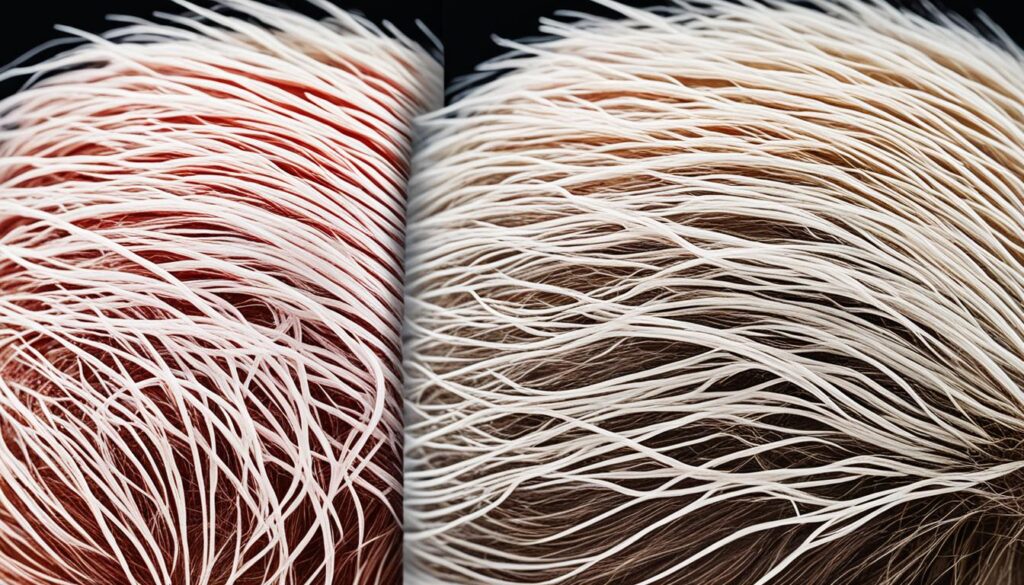
We understand the concerns that many women face when it comes to hair loss. It can be a distressing experience, affecting not only your physical appearance but also your self-confidence. While hair loss can occur for various reasons, there are specific scalp conditions that specifically affect women and contribute to hair thinning and loss. Understanding these conditions is essential in order to seek appropriate treatment options and prevent further hair loss.
One of the most common scalp conditions causing hair loss in women is female-pattern baldness. This condition is characterized by hair thinning and loss at the part line and on the top of the head. It is often influenced by genetic and hormonal factors, such as menopause. Another condition is alopecia areata, which leads to patchy hair loss in circular patterns. Traction alopecia, on the other hand, is a result of wearing tight hairstyles that exert constant tension and pulling on the hair. Lastly, there is frontal fibrosing alopecia, primarily affecting older women and causing a receding hairline.
Early identification of these scalp conditions is crucial in order to explore suitable treatment options and prevent further hair loss. There are various methods available to combat female hair loss, depending on the specific condition. These treatments may include topical medications, oral medications, and lifestyle modifications.
- Female scalp conditions can be a significant cause of hair loss in women.
- Common conditions include female-pattern baldness, alopecia areata, traction alopecia, and frontal fibrosing alopecia.
- Identifying these conditions early on can help prevent further hair loss.
- Treatment options may include topical medications, oral medications, and lifestyle modifications.
- Consulting with a dermatologist is recommended for personalized advice and treatment.
Female Pattern Baldness: A Common Cause of Hair Loss in Women
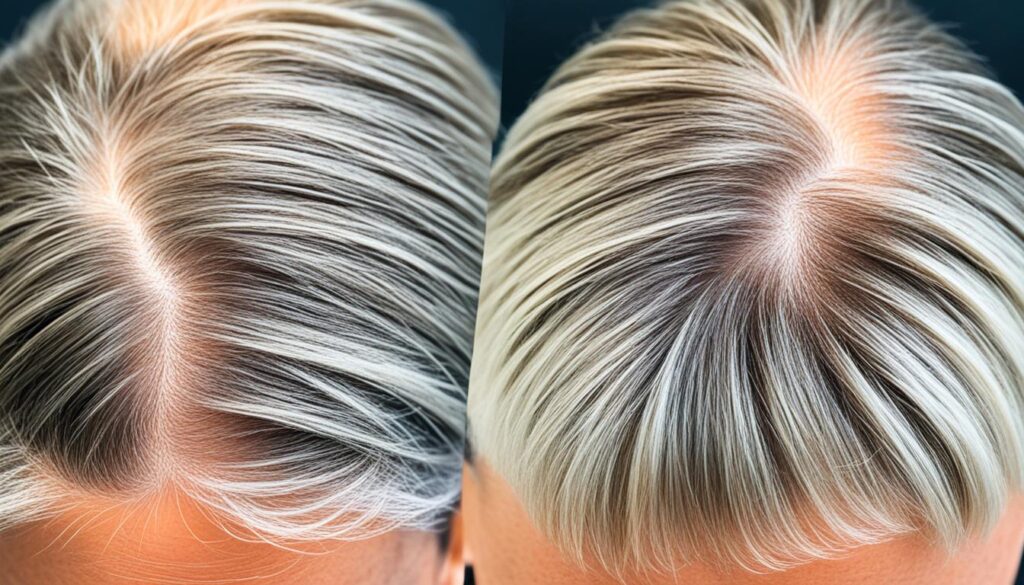
Female pattern baldness, also known as androgenic alopecia, is the most common cause of hair loss in women. It is characterized by hair thinning and loss, mainly at the top-central portion of the head and the part line.
This condition is influenced by genetics and hormonal changes, such as menopause. While there is no cure for female pattern baldness, there are several treatment options available to slow down the progression of hair loss and promote hair regrowth. These options include:
- Topical medications: These are applied directly to the scalp to stimulate hair growth and prevent further thinning.
- Oral medications: These prescription drugs can help reduce hair loss and stimulate regrowth.
- Low-level laser therapy: This non-invasive treatment uses red light therapy to stimulate hair follicles and promote regrowth.
By exploring these treatment options, women with female pattern baldness can take proactive steps to manage their hair loss and regain confidence in their appearance.

Understanding Female Pattern Baldness
Female pattern baldness, or androgenic alopecia, is the most common type of hair loss in women, affecting approximately 30 million women in the United States alone.
Key Facts:
| Prevalence | Symptoms | Causes |
|---|---|---|
| Up to 50% of women experience hair thinning by age 50 | Hair gradually thins and becomes less dense, mainly at the crown and part line | Genetics and hormonal changes (e.g., menopause) play a significant role |
Female pattern baldness typically begins with thinning hair and gradually progresses to wider areas of hair loss. While the exact cause is not fully understood, it is believed to be influenced by a combination of genetic and hormonal factors. Dihydrotestosterone (DHT), a hormone derived from testosterone, is thought to be responsible for shrinking hair follicles and shortening the hair growth cycle. This results in progressively shorter, finer hair.
Although female pattern baldness is not preventable, early intervention can significantly slow down the progression and improve the chances of regrowth. It is essential for women experiencing hair thinning or loss to consult with a dermatologist or hair loss specialist to determine the most suitable treatment options.
Alopecia Areata: Sudden Hair Loss in Circular Patches
Alopecia areata is a common autoimmune condition characterized by sudden hair loss in circular or patchy patterns. It occurs when the immune system mistakenly attacks the hair follicles, leading to hair loss. While the exact cause of alopecia areata is unknown, it is believed to involve a combination of genetic and environmental factors.
In most cases, alopecia areata is characterized by small, round patches of hair loss on the scalp. These patches may gradually enlarge or combine, resulting in more extensive hair loss. In some cases, all hair on the scalp or even the entire body may be lost, a condition known as alopecia totalis or alopecia universalis.
Fortunately, alopecia areata does not cause permanent hair loss in most cases. Hair usually regrows on its own within a year, although it may be a different color or texture initially. However, for some individuals, the hair loss may be more extensive or recurring, leading to significant emotional distress.
Treatment options for alopecia areata focus on managing the immune system’s response and promoting hair regrowth. Some of the commonly used treatments include:
- Corticosteroid injections: These injections are directly administered into the affected areas to suppress the immune response and stimulate hair regrowth.
- Topical immunotherapy: This treatment involves applying a chemical solution, such as diphencyprone (DPCP) or squaric acid dibutyl ester (SADBE), to the scalp to provoke an allergic reaction and stimulate hair regrowth.
- Oral medications: Certain medications, such as corticosteroids or immunosuppressants, may be prescribed to suppress the immune system and reduce inflammation in the hair follicles.
It is important for individuals with alopecia areata to consult with a dermatologist to determine the most suitable treatment approach based on the severity and extent of their hair loss. Additionally, supportive measures such as counseling and support groups can be beneficial in managing the emotional impact of hair loss.
Observing proper hair care and avoiding harsh treatments or hairstyles that cause pulling or tugging on the hair can also help prevent further hair loss and support regrowth.
“Alopecia areata can be a distressing condition, but with appropriate treatment and support, individuals can navigate the challenges and experience regrowth of their hair.”
Traction Alopecia: Hair Loss Due to Hairstyles
Traction alopecia is a type of hair loss that occurs when the hair is subjected to frequent tension or pulling, often caused by tight hairstyles such as braids, cornrows, and tight ponytails. The constant pulling places excessive stress on the hair follicles, leading to hair loss over time.
Prevention is crucial in managing traction alopecia. By avoiding tight hairstyles and opting for looser, less restrictive styles, you can minimize the risk of further hair loss. Additionally, practicing gentle hair care techniques, such as using wide-toothed combs and avoiding excessive heat styling, can help protect your hair follicles from damage.
In some cases, hair regrowth is possible with proper treatment. By making necessary changes to your hairstyling habits and incorporating specific regrowth strategies, you can encourage the revitalization of affected hair follicles. Topical medications, such as minoxidil, can also be utilized to promote hair regrowth and prevent further hair loss.
To better understand the impact of traction alopecia and the effectiveness of different treatment approaches, refer to the table below:
| Traction Alopecia Treatment Options | Description |
|---|---|
| Changing Hairstyling Habits | Adopt looser hairstyles that exert less tension on the hair. Avoid hairstyles that pull too tightly on the scalp. |
| Topical Medications | Use minoxidil, a hair regrowth treatment approved by the FDA, to stimulate hair growth and prevent further hair loss. |
| Scalp Massage | Gently massage the scalp to increase blood circulation, promoting the delivery of nutrients to hair follicles. |
| Nutritional Supplements | Supplement your diet with key nutrients, such as biotin and vitamins A, C, and E, to support healthy hair growth. |
Understanding the causes and prevention strategies for traction alopecia is essential in preserving the health and fullness of your hair. By taking proactive measures and seeking appropriate treatment, you can mitigate the effects of traction alopecia and promote hair regrowth.

Conclusion
Female scalp conditions are a common cause of hair loss in women. Early identification of these conditions is crucial to prevent further hair loss and promote hair regrowth. Treatment options vary depending on the specific scalp condition, but can include topical medications, oral medications, and lifestyle modifications.
With advancements in hair loss treatments, there are now more options available for women to find relief from the distressing effects of scalp conditions causing hair loss. Consulting with a dermatologist is recommended for a thorough evaluation to determine the underlying cause and explore suitable treatment options.
If you are experiencing hair loss, don’t hesitate to seek professional help. We understand how hair loss can affect one’s confidence and overall well-being, and we are here to provide support and guidance in finding the right solution for you. Remember, you are not alone in this journey, and there are effective female hair loss treatment options available to help restore your hair and boost your self-esteem.
FAQ
What are the common scalp conditions that can cause hair loss in women?
Common scalp conditions that can cause hair loss in women include female-pattern baldness, alopecia areata, traction alopecia, and frontal fibrosing alopecia.
What is female-pattern baldness?
Female-pattern baldness, also known as androgenic alopecia, is the most common cause of hair loss in women. It is characterized by hair thinning and loss at the top-central portion of the head and the part line.
What causes alopecia areata?
Alopecia areata is an autoimmune condition where the immune system attacks the hair follicles, causing sudden hair loss in circular or patchy patterns.
How does traction alopecia occur?
Traction alopecia occurs when there is repeated tension or pulling on the hair, often due to tight hairstyles like braids, cornrows, and tight ponytails.
How can I prevent hair loss from traction alopecia?
Preventing hair loss from traction alopecia involves avoiding tight hairstyles and using gentle hair care practices. Changing hairstyling habits and using topical medications may help promote regrowth.