
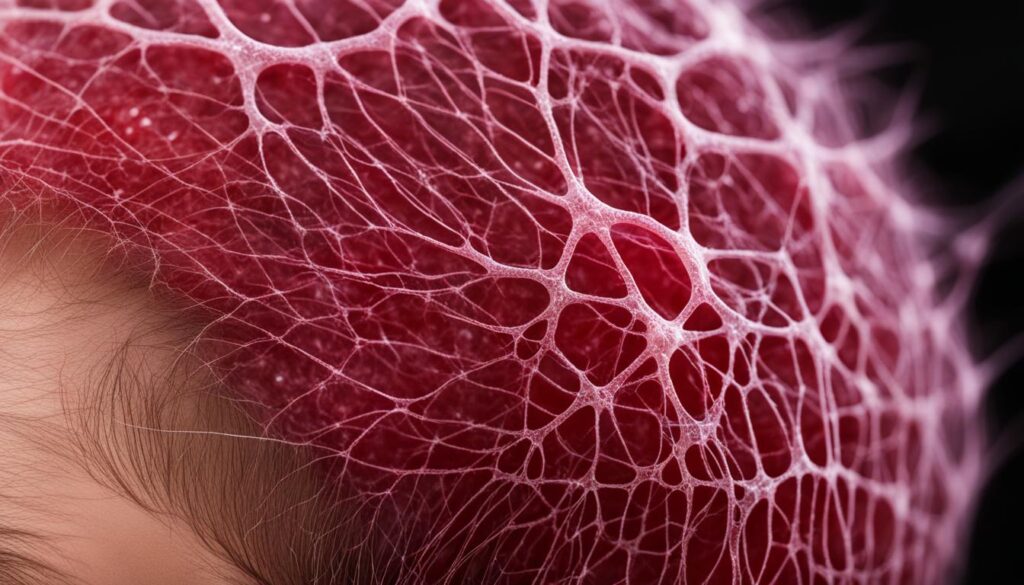
Did you know that over 50 million men and 30 million women in the United States alone suffer from hair loss?
The impact of hair loss goes beyond mere aesthetics; it can have a profound effect on an individual’s self-esteem and quality of life. Fortunately, advancements in regenerative medicine have opened up new possibilities for hair restoration. Stem cell therapy, with its potential to rejuvenate hair follicles and stimulate hair regrowth, is at the forefront of this groundbreaking development.
Key Takeaways:
- Over 80 million people in the United States are affected by hair loss.
- Stem cell therapy holds great promise for hair restoration.
- Advancements in regenerative medicine have paved the way for innovative treatments.
- Stem cell therapy can rejuvenate hair follicles and stimulate hair regrowth.
- Further research and development are needed to unlock the full potential of stem cell therapy for hair loss treatment.
How Stem Cell Therapy Works for Hair Restoration
Stem cell therapy for hair restoration is a cutting-edge treatment that harnesses the regenerative power of stem cells to promote hair growth. This innovative approach holds great promise in the field of hair restoration and has the potential to revolutionize traditional hair transplant methods.
The process begins with the extraction of a small skin sample from the patient’s scalp, which contains hair follicles. These hair follicles are rich in stem cells, the building blocks of tissue regeneration. The sample is then taken to a laboratory for replication, where the stem cells are isolated and cultured to increase their numbers.
Once an adequate amount of stem cells has been obtained, they are carefully implanted back into the patient’s scalp in areas experiencing hair loss. The implanted stem cells work to stimulate the dormant hair follicles, promoting new hair growth. This process not only activates the existing hair follicles but also encourages the regeneration of new follicles, resulting in improved hair density and coverage.
The Potential of Stem Cells in Hair Follicle Regeneration
The use of stem cells in hair restoration has shown promising results in various research studies. Stem cells have the remarkable ability to differentiate into different cell types, including hair follicle cells. By targeting the hair follicles directly, stem cell therapy can restore their function and promote natural hair growth.
Researchers continue to explore different approaches and techniques in stem cell research to optimize the effectiveness of hair restoration treatments. While stem cell therapy for hair restoration is still in the research stage and not yet FDA approved, the potential it holds for addressing hair loss and improving patient outcomes is significant.
| Benefits of Stem Cell Therapy for Hair Restoration |
|---|
| Stimulation of dormant hair follicles |
| Promotion of new hair follicle regeneration |
| Improved hair density and coverage |
| Potential for long-lasting results |
| Minimized scarring and recovery time |
While more research and clinical trials are necessary to fully establish the efficacy of stem cell therapy for hair restoration, the current findings are promising. With further advancements and FDA approval, stem cell therapy has the potential to become a mainstream treatment option for individuals experiencing hair loss.
The Success and Potential of Stem Cell Therapy for Hair Restoration
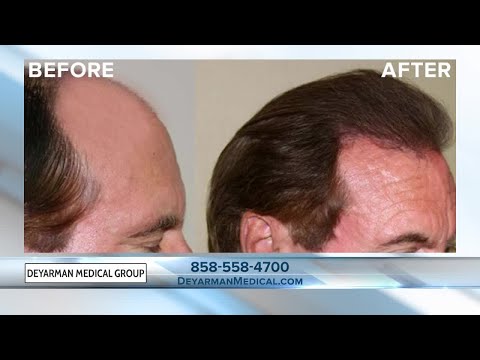
Research on stem cell therapy for hair restoration has shown promising results. Numerous studies have reported significant improvements in hair density after stem cell treatments. This breakthrough research has shed light on the potential of stem cells to effectively treat various hair loss conditions, including male and female pattern baldness and cicatricial alopecia.
One of the key advantages of stem cell therapy is the minimal recovery time involved. Unlike traditional hair transplant procedures, which often require weeks of downtime, patients who undergo stem cell therapy experience a quicker recovery period. Additionally, the side effects associated with stem cell treatments are generally mild, making it a safe and well-tolerated option for individuals seeking to restore their hair.
Although the exact cost of stem cell hair transplants is still undetermined due to ongoing research, the potential benefits it offers are undeniable. With further development and refinement, stem cell therapy has the potential to revolutionize the field of hair restoration and provide innovative solutions for those suffering from hair loss.
FAQ
What is stem cell therapy for hair restoration?
Stem cell therapy for hair restoration involves the use of stem cells to regenerate hair growth. Hair follicles are extracted from a small skin sample, replicated in a laboratory, and then implanted back into areas of hair loss on the scalp. This innovative approach allows for hair growth in both the donor area and the transplanted areas.
How does stem cell therapy work for hair restoration?
Stem cell therapy for hair restoration works by using stem cells to stimulate hair follicle regeneration. The procedure begins with the extraction of a small skin sample containing hair follicles. These follicles are then replicated in a laboratory and implanted back into the scalp in areas of hair loss. The stem cells promote hair growth, resulting in the restoration of hair in both the donor area and the transplanted areas.
Is stem cell therapy for hair restoration FDA approved?
Currently, stem cell therapy for hair restoration is still in the research stage and is not yet FDA approved. However, numerous studies and research have been conducted to explore the effectiveness of stem cells in treating hair loss. With further research and development, stem cell therapy has the potential to become a future treatment option for hair loss.
What are the potential benefits of stem cell therapy for hair restoration?
Research on stem cell therapy for hair restoration has shown promising results. Studies have reported an increase in hair density after stem cell treatments. Stem cell therapy has been found to be effective in treating various hair loss conditions, including male and female pattern baldness and cicatricial alopecia. Additionally, recovery time after the procedure is minimal, and the side effects are generally mild.
How much does stem cell therapy for hair restoration cost?
The cost of stem cell therapy for hair restoration is still undetermined as it is currently in the research stage. As the field progresses and more advancements are made, the cost may vary depending on various factors such as the extent of hair loss, the number of treatments required, and the clinic or provider performing the procedure.