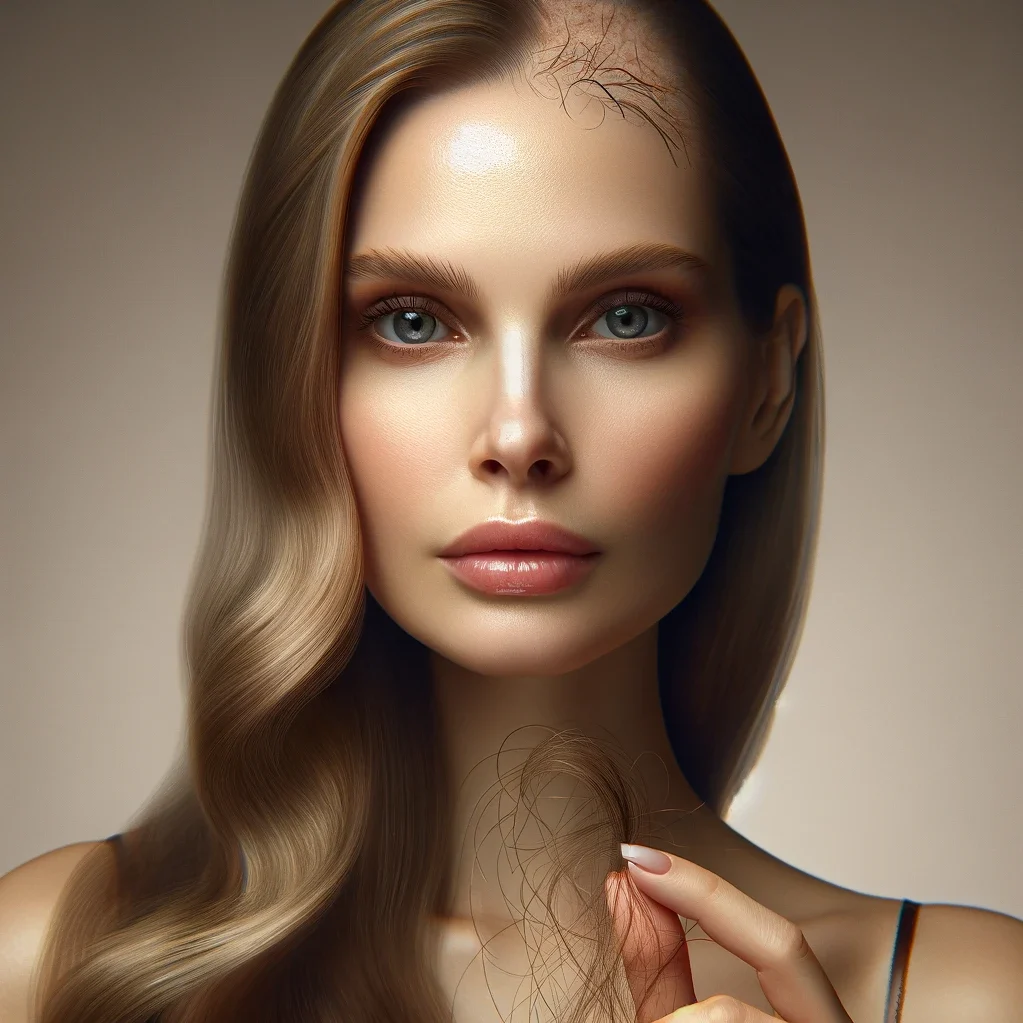
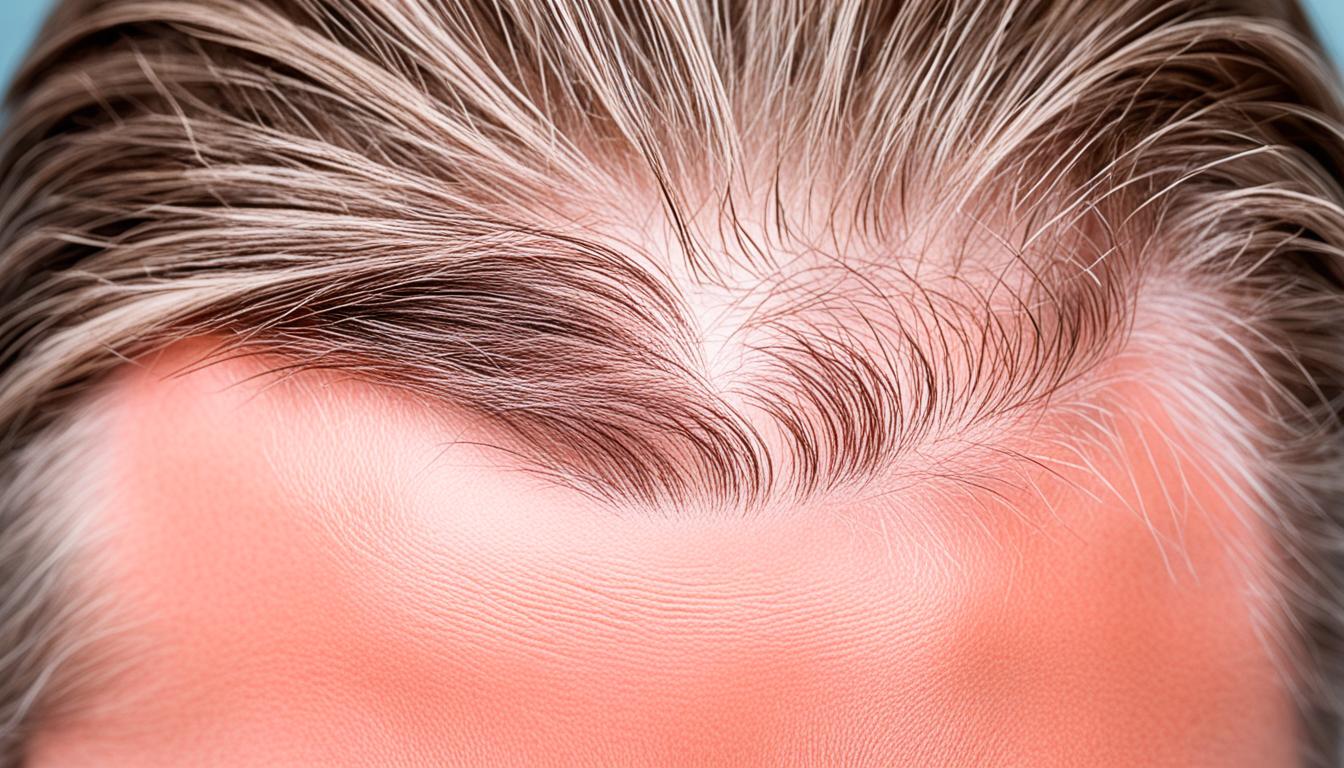
Postpartum hair loss is a common occurrence for new mothers. During pregnancy, hormonal changes prevent normal hair shedding, resulting in thick and lustrous hair. However, after giving birth, hormone levels return to normal and hair shedding resumes. This temporary condition, known as postpartum alopecia, typically occurs around three months after delivery and can last for up to a year. It is important to note that postpartum hair loss is not true hair loss but rather the shedding of excess hair gained during pregnancy. While it cannot be completely prevented, maintaining a healthy diet rich in protein and iron can support hair strength and health during this period.
Key Takeaways:
- Postpartum hair loss is a common occurrence after pregnancy.
- It is caused by hormonal changes in the body.
- Postpartum alopecia typically occurs around three months after delivery.
- The shedding of excess hair gained during pregnancy is not true hair loss.
- A healthy diet can support hair strength and health during this period.
Now, let’s move on to understanding the causes and duration of postpartum hair loss.
Causes and Duration of Postpartum Hair Loss
Postpartum hair loss is a common concern for new mothers, caused by hormonal changes in the body after giving birth. The drop in estrogen levels triggers the shedding of excess hair that was retained during pregnancy. This phenomenon, known as telogen effluvium, is a temporary phase that typically lasts for three to six months, although it can extend up to a year in some cases.
While postpartum hair loss may be distressing, it is important to understand that it does not indicate permanent hair loss. The majority of women will experience hair regrowth and return to their pre-pregnancy hair density within a year.
To visualize the duration of postpartum hair loss, refer to the table below:
| Duration | Description |
|---|---|
| 3-6 months | Typical duration of postpartum hair loss |
| Up to a year | Extended duration in some cases |
Throughout this phase, it is important to be patient and focus on remedies for postpartum alopecia that promote hair growth and restoration. Additional sections of this article will provide further guidance on how to cope with postpartum hair loss and prevent further hair loss after giving birth.
Stay tuned for Section 3, where we will delve into coping strategies for postpartum hair loss.
Coping with Postpartum Hair Loss
While there is no way to prevent postpartum hair loss entirely, there are strategies that can help minimize its impact. Maintaining a healthy diet with adequate protein and iron is crucial for supporting hair growth and strength. Additionally, being gentle with the hair, using appropriate hair care products, and avoiding heat styling can help prevent further damage and breakage.
It is important to use gentle shampoos and conditioners specifically formulated for postpartum hair loss treatment, as they can provide nourishment to the hair follicles and promote healthier regrowth. Look for products containing ingredients like biotin, keratin, and vitamins A, C, and E, which have been proven to support hair growth.
Seeking professional advice from a hairstylist experienced in postpartum hair loss can provide valuable insights and recommendations for hairstyles that can minimize the appearance of thinning hair. They can suggest cuts, styles, or hair accessories that add volume and create the illusion of fuller hair.
It is also important to prioritize self-care and limit activities that could exacerbate hair loss. Avoiding tight hairstyles, such as ponytails and braids, can reduce tension on the hair follicles and minimize hair breakage. Embracing natural hairstyles that require minimal manipulation can also help protect the hair and prevent further damage.
In the midst of dealing with postpartum hair loss, it is essential to remember that this is a temporary phase and that gradual regrowth will occur over time. Patience and self-compassion are key during this period of transition.
If you are experiencing excessive hair loss or if it is accompanied by other concerning symptoms, it is important to seek medical advice. Postpartum hair loss can sometimes be a sign of an underlying health issue, such as a thyroid disorder. A healthcare professional can help identify any underlying causes and recommend appropriate treatment options.
By taking care of your physical and emotional well-being and following these strategies, you can effectively cope with postpartum hair loss and promote healthy hair regrowth.
Hair Care Tips for Postpartum Hair Loss
| Tip | Description |
|---|---|
| 1. Maintain a healthy diet | Ensure your diet is rich in protein and iron to support hair growth and strength. |
| 2. Use appropriate hair care products | Choose gentle shampoos and conditioners formulated for postpartum hair loss treatment. Look for ingredients like biotin, keratin, and vitamins A, C, and E. |
| 3. Avoid heat styling | Minimize the use of hot styling tools like curling irons and straighteners, as they can cause further damage to the hair. |
| 4. Seek professional advice | Consult with a hairstylist experienced in postpartum hair loss for personalized recommendations on hairstyles and hair care techniques. |
| 5. Be gentle with your hair | Avoid tight hairstyles and excessive brushing to prevent hair breakage and minimize tension on the hair follicles. |
Conclusion
Dealing with postpartum hair loss, also known as postpartum alopecia, can be a challenging experience for new mothers. However, it is important to remember that this is a temporary condition that affects many women after pregnancy. Understanding the causes and duration of postpartum hair loss can help alleviate concerns and provide reassurance.
While it may be disheartening to see changes in hair density and appearance, there are steps that can be taken to minimize the impact of postpartum hair loss. Maintaining a healthy lifestyle, including a diet rich in protein and iron, can support hair growth and strength. Additionally, being gentle with the hair, using appropriate hair care products, and avoiding heat styling can help prevent further damage and breakage.
Seeking professional advice from a hairstylist experienced in postpartum hair loss can provide helpful recommendations for hairstyles that can minimize the appearance of thinning hair. If the hair loss seems excessive or is accompanied by other concerning symptoms, it is important to consult with a healthcare professional to rule out any underlying health issues.
Remember, postpartum hair loss is a natural phase that will gradually resolve over time. With patience and proper care, your hair will regain its pre-pregnancy thickness and density. So, stay positive, take care of yourself, and embrace the journey of motherhood, knowing that your hair will bounce back.
FAQ
What is postpartum alopecia?
Postpartum alopecia refers to the temporary hair loss that many women experience after giving birth. It is caused by hormonal changes in the body.
When does postpartum hair loss occur?
Postpartum hair loss typically occurs around three months after delivery and can last for up to a year.
Is postpartum hair loss permanent?
No, postpartum hair loss is a temporary condition. Most women will experience regrowth and return to their pre-pregnancy hair density within a year.
Can postpartum hair loss be prevented?
While postpartum hair loss cannot be completely prevented, maintaining a healthy diet rich in protein and iron can support hair strength and health during this period.
What causes postpartum hair loss?
Postpartum hair loss is primarily caused by hormonal changes in the body after giving birth. The drop in estrogen levels triggers the shedding of excess hair gained during pregnancy.
How long does postpartum hair loss last?
Postpartum hair loss typically lasts for three to six months but can extend up to a year in some cases.
How can I minimize the impact of postpartum hair loss?
Maintaining a healthy diet, being gentle with your hair, using appropriate hair care products, and avoiding heat styling can help minimize damage and breakage. Seeking professional advice can also provide recommendations for hairstyles that can minimize the appearance of thinning hair.
When should I seek medical advice for postpartum hair loss?
If the hair loss seems excessive or is accompanied by other symptoms, it is important to seek medical advice as it could be indicative of an underlying health issue.
Will my hair regain its pre-pregnancy thickness and density?
Yes, postpartum hair loss is a temporary phase. With time, your hair will regain its pre-pregnancy thickness and density.