
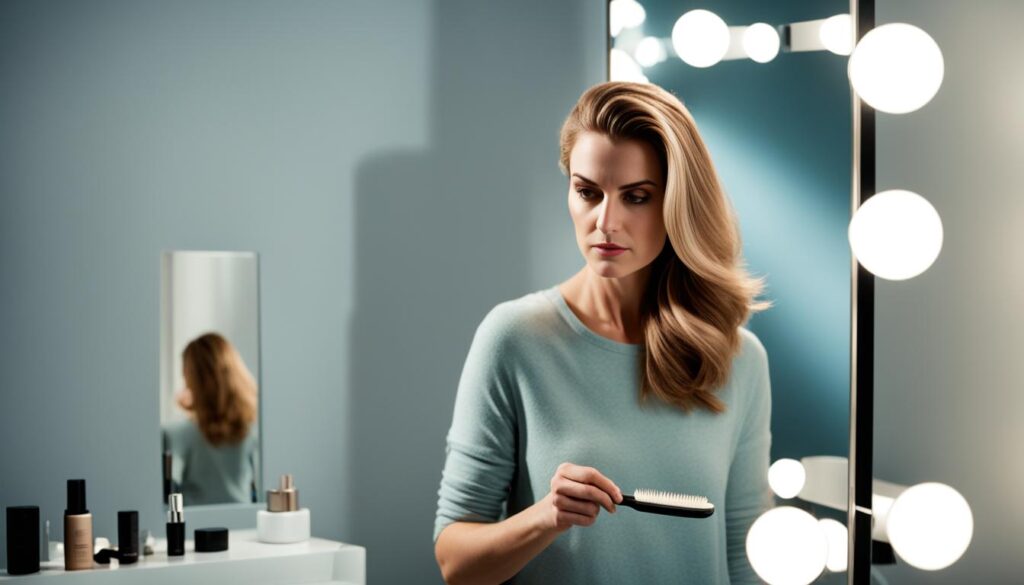
Did you know that approximately 40% of women experience significant hair loss by the age of 40? Hair loss, also known as alopecia, can have a profound impact on a woman’s self-esteem and overall well-being. While hair loss is often associated with men, it is a common issue that affects women as well.
There are multiple reasons why women may experience hair loss, ranging from hormonal changes to medical conditions and genetic predisposition. Understanding the causes of hair loss in women is crucial in order to find effective solutions and regain confidence.
Key Takeaways:
- Hair loss in women affects approximately 40% of women by the age of 40.
- Hormonal changes, such as those during pregnancy or menopause, can contribute to hair loss in women.
- Medical conditions, including autoimmune disorders, can also cause hair loss in women.
- Genetic factors play a role in female pattern baldness, the most common type of hair loss in women.
- Nutritional deficiencies and high levels of stress can exacerbate hair loss in women.
Understanding the Different Types of Hair Loss in Women
Hair loss in women can manifest in various forms depending on the underlying cause. It is important to identify the specific type of hair loss in order to determine the most appropriate treatment approach. Let’s explore some of the common types of hair loss seen in women:
Female Pattern Hair Loss (FPHL)
Female pattern hair loss, also known as androgenetic alopecia, is the most common type of hair loss in women. It is characterized by a gradual thinning of hair on the scalp, primarily at the crown and along the center part. FPHL is often hereditary and tends to occur with age. Hormonal changes and genetic predisposition play a significant role in its development.
Telogen Effluvium
Telogen effluvium is another form of hair loss that can occur due to hormonal changes or significant stress. During telogen effluvium, a large number of hair follicles enter the resting phase, resulting in excessive shedding. This type of hair loss is often temporary and can resolve once the underlying cause is addressed.
Nutritional Deficiencies
Nutritional deficiencies, such as inadequate intake of iron, vitamin D, or protein, can contribute to hair loss in women. These deficiencies can weaken the hair follicles, leading to hair thinning and breakage. Ensuring a balanced diet and addressing any nutritional deficiencies can help improve hair health.
Medical Conditions
Several medical conditions can cause hair loss in women. Thyroid problems, such as hypothyroidism or hyperthyroidism, can disrupt the normal hair growth cycle and result in hair loss. Autoimmune disorders, such as alopecia areata or lupus, can also lead to hair loss as the body’s immune system mistakenly attacks the hair follicles.
Types of Hair Loss in Women
| Type | Description | Causes |
|---|---|---|
| Female Pattern Hair Loss (FPHL) | Gradual thinning of hair on the scalp | Hormonal changes, genetic predisposition |
| Telogen Effluvium | Excessive shedding due to hormonal changes or stress | Hormonal changes, significant stress |
| Nutritional Deficiencies | Weakened hair follicles leading to thinning and breakage | Inadequate intake of iron, vitamin D, or protein |
| Medical Conditions | Disruption of hair growth cycle due to underlying medical conditions | Thyroid problems, autoimmune disorders |
Understanding the different types of hair loss in women is crucial for determining the appropriate treatment options. By addressing the underlying cause, it becomes possible to effectively manage and minimize further hair loss, leading to healthier and more vibrant hair.

Treatment Options for Hair Loss in Women
For women experiencing hair loss, there are a variety of treatment options available to help restore hair growth and prevent further loss. One such option is topical minoxidil, which is an FDA-approved treatment that can be easily obtained over the counter. Applied directly to the scalp, minoxidil stimulates hair follicles, promoting regrowth and preventing future hair loss.
Another effective treatment option for hair loss in women is low-light lasers. These devices, available in the form of combs or caps, emit low-energy light that stimulates the hair follicles, encouraging them to regrow hair. This non-invasive treatment can be used at home and has shown promising results in clinical studies.
Oral antiandrogen therapies, such as cyproterone acetate and spironolactone, are prescribed by healthcare professionals to target the hormonal factors contributing to hair loss in women. By blocking specific hormones, these medications can help slow down or even reverse hair loss. It is important to consult with a doctor before starting any oral medication.
Platelet-rich plasma (PRP) treatment is another innovative option for hair loss in women. During this procedure, a small amount of the patient’s blood is drawn and processed to isolate platelets, which are then injected into the scalp. Platelets contain growth factors that stimulate hair follicles, promoting hair regrowth and improving hair density.
Microneedling, when combined with topical minoxidil, can also be an effective treatment for hair loss in women. This procedure involves using a device with tiny needles to create controlled micro-injuries in the scalp, which stimulate the body’s natural healing response and hair growth. When combined with minoxidil, microneedling can enhance the absorption of the medication and improve its effectiveness.
When considering treatment options for hair loss in women, it is important to consult with a healthcare professional who can assess your specific case and recommend the most appropriate course of action. They can help determine which treatment option, whether it be topical minoxidil, low-light lasers, oral antiandrogen therapies, platelet-rich plasma treatment, or microneedling, will provide the best results for your individual needs.
FAQ
What are the common causes of hair loss in women?
Hair loss in women can be caused by hormonal changes, medical conditions, genetic predisposition, nutritional deficiencies, and high levels of stress.
How do hormonal changes contribute to hair loss in women?
Hormonal changes due to pregnancy, childbirth, menopause, and thyroid problems can lead to hair loss in women.
Are there any medical conditions that can cause hair loss in women?
Yes, certain medical conditions such as alopecia areata and autoimmune disorders can contribute to hair loss in women.
Is hair loss in women influenced by genetics?
Yes, genetic factors can play a role in hair loss in women, with female pattern baldness being the most common type.
Can nutritional deficiencies and stress contribute to hair loss in women?
Yes, nutritional deficiencies, such as iron or vitamin D deficiency, and high levels of stress can exacerbate hair loss in women.
What are the different types of hair loss in women?
The different types of hair loss in women include female pattern hair loss, telogen effluvium, and hair loss due to medical conditions or nutritional deficiencies.
What treatment options are available for hair loss in women?
Treatment options for hair loss in women include topical minoxidil, low-light lasers, oral antiandrogen therapies, platelet-rich plasma treatment, and microneedling.
How does topical minoxidil work for hair loss in women?
Topical minoxidil is an FDA-approved treatment that can stimulate hair growth and prevent further hair loss in women.
What are low-light lasers used for in the treatment of hair loss in women?
Low-light lasers, in the form of combs or caps, use low-energy light to stimulate hair follicles and promote regrowth in women.
Can oral antiandrogen therapies help with hair loss in women?
Yes, medications such as cyproterone acetate and spironolactone can be prescribed to target hormonal factors contributing to hair loss in women.
How does platelet-rich plasma (PRP) treatment work for hair loss in women?
Platelet-rich plasma (PRP) treatment involves injecting plasma from the patient’s blood into the scalp to promote hair growth in women.
Is microneedling an effective treatment for hair loss in women?
Microneedling, when combined with topical minoxidil, can be effective in treating hair loss in women.