
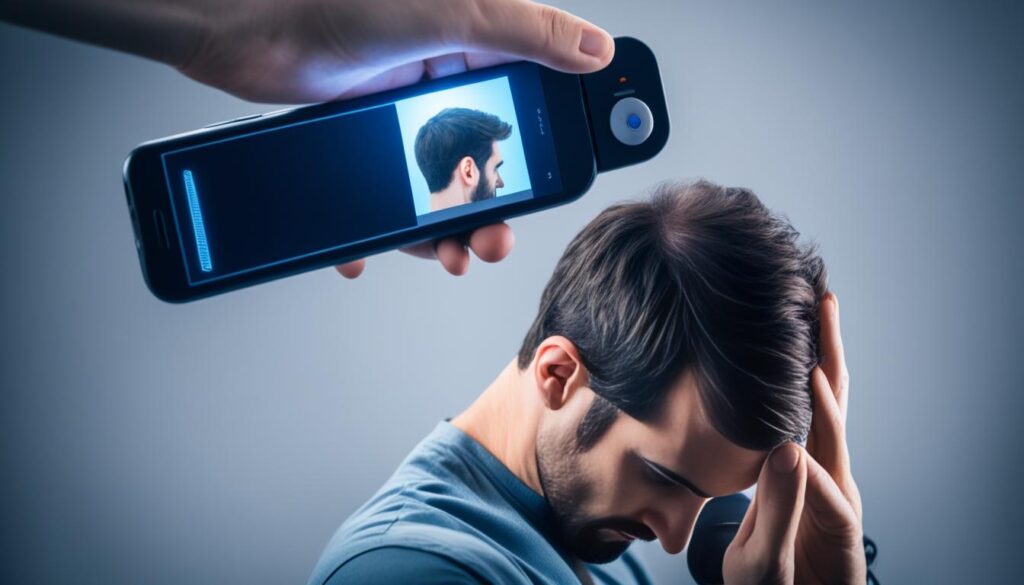
Did you know that there is a potential link between cell phone use and hair loss? Recent studies have shed light on the effects of cell phone radiation on our hair follicles, revealing possible hair loss caused by prolonged mobile phone usage. This unexpected fact has sparked research into the impact of cell phone radiation on hair thinning and even conditions like alopecia.
Key Takeaways:
- Exposure to cell phone radiation can potentially cause hair loss through DNA breakage, generation of reactive oxygen species, and hormonal regulation changes.
- Avoid holding your mobile phone against your ear for prolonged periods. Use speakerphone or headphones to minimize direct contact between the phone and your skin.
- To promote hair health and prevent damage caused by cell phone use, consider taking hair health supplements and using appropriate hair care products.
- Research indicates a correlation between excessive screen time and hair loss, as blue light emitted by screens can disrupt sleep patterns and increase stress levels.
- To mitigate the effects of screen time on hair health, limit screen usage, prioritize face-to-face interactions, take breaks from screens, and ensure adequate sleep.
- Advancements in technology have led to innovative diagnostic tools for hair loss, such as smartphone dermatoscopes and algorithms for hair analysis.
- Early diagnosis of hair loss conditions is crucial for personalized treatment plans and disease tracking over time.
The Relationship Between Screen Time and Hair Loss
Excessive screen time has become a prevalent issue in our modern society, with many individuals spending hours each day glued to their phones, tablets, and computers. While technology has undoubtedly brought numerous benefits, it’s important to be aware of the potential effects excessive screen time can have on our health, including our hair.
One of the primary concerns regarding screen time and hair loss is the impact of blue light emitted by screens. Blue light has a short wavelength and a high-energy output, making it capable of penetrating the skin and affecting the underlying cells and tissues, including the hair follicles. Prolonged exposure to blue light, especially before bedtime, can disrupt the natural sleep-wake cycle, known as the circadian rhythm, leading to stress and other health problems.
Stress, in turn, can contribute to hair loss. It triggers the body’s production of cortisol, a hormone associated with various physiological processes, including hair growth and follicle health. When cortisol levels are elevated due to stress, it can disrupt the natural hair growth cycle and result in hair thinning or excessive shedding.
Moreover, excessive screen time can also lead to hair damage through indirect mechanisms. Spending excessive time indoors, staring at screens, often means less time spent outdoors, where exposure to fresh air and sunlight can help nourish and rejuvenate the hair. Furthermore, sedentary screen time can reduce physical activity levels, which may compromise overall hair health.
To mitigate the potential negative effects of screen time on hair health, it is crucial to establish healthy screen habits. Limiting screen usage, especially before bedtime, can help regulate the sleep-wake cycle and reduce the disruption of the circadian rhythm. Taking regular breaks from screens, engaging in face-to-face interactions with loved ones, and participating in outdoor activities can also promote overall well-being and help reduce stress levels.
Additionally, it’s essential to prioritize self-care and pay attention to hair health. Using gentle hair care products, avoiding excessive heat styling, and nourishing the hair with a balanced diet rich in vitamins and minerals can help counteract the potential damage caused by screen time-induced stress and other factors.

| Effects of Excessive Screen Time on Hair Loss | Preventive Measures |
|---|---|
| Disruption of sleep patterns and circadian rhythm | Limit screen usage before bedtime |
| Elevated stress levels and cortisol production | Take breaks from screens and engage in stress-reducing activities |
| Reduced exposure to natural sunlight and outdoor activities | Make time for outdoor activities and prioritize sunlight exposure |
| Less physical activity and compromised overall health | Stay active and maintain a healthy lifestyle |
| Indirect damage to hair health through neglect | Use gentle hair care products and maintain a nutritious diet |
By being mindful of our screen time habits and taking proactive steps to prioritize our well-being, we can minimize the potential adverse effects on hair health. Remember, moderation and balance are key in maintaining healthy habits and ensuring overall wellness.
Advancements in Hair Loss Diagnosis and Treatment
Researchers have made significant strides in the field of hair loss diagnosis and treatment, leveraging innovative technology to revolutionize patient care. One such advancement is the development of a smartphone dermatoscope, a cutting-edge device that combines magnification and illumination capabilities to capture highly detailed images of the hair and scalp.
These images are then analyzed using an advanced algorithm, enabling automated hair counting with exceptional accuracy. This groundbreaking technology eliminates the need for manual hair counting, streamlining the diagnostic process and allowing for timely and precise identification of hair loss conditions.
Early diagnosis plays a crucial role in addressing hair loss, as it allows for personalized treatment plans tailored to each individual’s unique needs. With the aid of automated hair counting and in-depth analysis provided by the smartphone dermatoscope and algorithm, healthcare professionals can formulate targeted treatment strategies and track the progress of hair loss over time.
As the demand for advanced technology in hair loss diagnosis grows, so does the potential for improved patient care outcomes. These groundbreaking diagnostic tools pave the way for personalized and effective interventions, contributing to the early detection and intervention in hair loss conditions. By leveraging these advancements, we are able to provide proactive and tailored care, ensuring optimal outcomes for individuals suffering from hair loss.
FAQ
Can cell phone use cause hair loss?
Research suggests that prolonged cell phone use, particularly when the phone is held against the ear, may be linked to hair loss. Exposure to cell phone radiation can potentially cause DNA breakage, generation of reactive oxygen species, and changes in hormone regulation, which can contribute to hair loss.
How can I minimize the effects of cell phone radiation on my hair?
To minimize direct contact between your cell phone and your skin, it is advisable to use speakerphone or headphones instead of holding the phone against your head. Additionally, taking hair health supplements and using appropriate hair care products can help promote hair health and prevent damage caused by cell phone use.
Is screen time linked to hair loss?
Yes, excessive screen time, including the use of phones, tablets, and computers, has been associated with hair damage and hair loss. Prolonged exposure to the blue light emitted by screens, especially before bedtime, can disrupt sleep patterns and increase stress levels, which are factors that contribute to hair loss.
How can I mitigate the effects of screen time on my hair?
To mitigate the effects of screen time on hair health, it is recommended to limit screen usage, especially before bedtime. Engaging in face-to-face interactions, taking breaks from screens, and prioritizing adequate sleep can help reduce stress and promote overall hair health.
Are there any advancements in hair loss diagnosis and treatment?
Yes, researchers have developed innovative technology to enhance the diagnosis and treatment of hair loss. One such advancement is the use of a smartphone dermatoscope, which combines magnification and illumination abilities to capture detailed images of the hair and scalp. These images are then analyzed by an algorithm, enabling quick and accurate hair count analysis. This technology allows for early diagnosis and personalized treatment plans for hair loss conditions.