
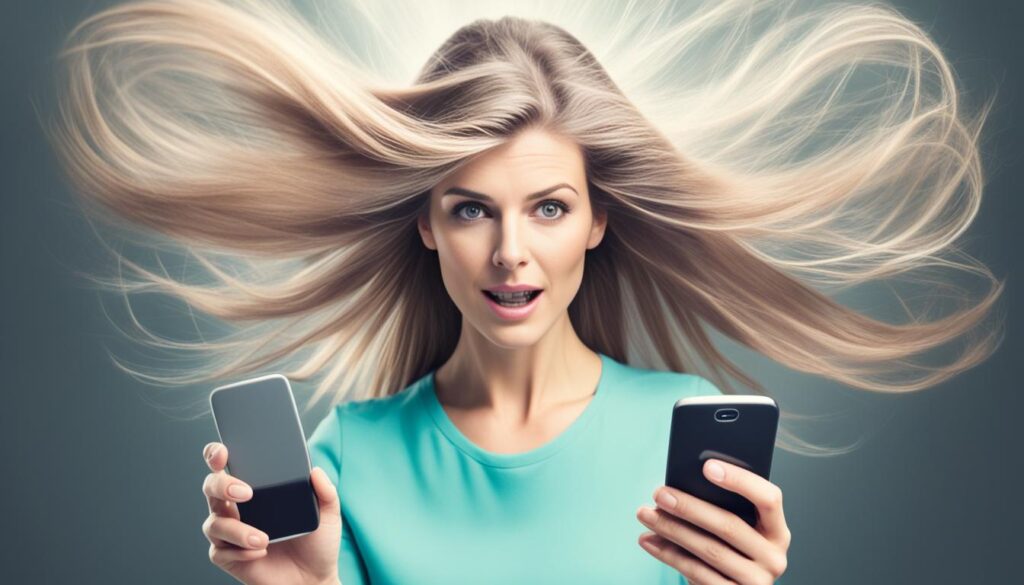
Did you know that prolonged cell phone use has been linked to hair loss? It may sound surprising, but several studies have suggested a potential connection between cell phone radiation and hair loss. In fact, a 2016 study published in the Journal of Cosmetology and Trichology found that exposure to cell phone radiation could contribute to hair loss.
Key Takeaways:
- Studies suggest a potential link between cell phone radiation and hair loss.
- Exposure to cell phone radiation may lead to DNA breakage, genotoxic effects, and disrupted hair growth cycles.
- Other factors, such as emotional issues, hormonal imbalances, thyroid problems, malnutrition, autoimmune diseases, and scalp allergies/infections, can also contribute to hair loss.
- Reducing screen time and minimizing exposure to excessive radiation can help mitigate potential risks.
- Consulting with a hair restoration specialist is advisable for those experiencing unusual hair loss patterns.
Factors That Can Cause Hair Loss
Hair loss can be attributed to various factors, including emotional and psychological issues, hormonal imbalances and changes, thyroid issues, malnutrition, autoimmune disease, allergy, and infection.
Emotional and Psychological Issues
Stress and anxiety can have a significant impact on hair health. Psychological distress can disrupt the normal hair growth cycle, leading to increased hair shedding and thinning. Additionally, certain psychiatric conditions and mood disorders may also contribute to hair loss.
Hormonal Imbalances and Changes
Hormonal fluctuations, particularly during menopause, can cause hair loss. The decrease in estrogen levels and the increase in androgen hormones can disrupt the hair growth cycle, leading to increased hair shedding and reduced hair density.
Thyroid Issues
Hair health is closely linked to thyroid function. Both hypothyroidism (underactive thyroid) and hyperthyroidism (overactive thyroid) can contribute to hair loss. Thyroid hormones play a crucial role in regulating hair growth, and any imbalance can disrupt the normal cycle, leading to hair loss.
Malnutrition
Adequate nutrition is essential for healthy hair growth. Malnutrition and deficiencies in key vitamins and minerals can impact the hair follicles’ health, leading to hair loss. Nutrients like vitamin B12, iron, and zinc are particularly important for maintaining strong and vibrant hair.
Autoimmune Disease
Autoimmune diseases, such as alopecia areata, can directly target the hair follicles, resulting in hair loss. These conditions occur when the immune system mistakenly attacks the hair follicles, leading to hair thinning, patchy hair loss, or complete baldness in some cases.
Allergy and Infection
Allergies and infections of the scalp can cause inflammation and damage to the hair follicles, leading to hair loss. Scalp conditions like scalp psoriasis, seborrheic dermatitis, and fungal infections can all contribute to hair loss if left untreated.
| Factors | Potential Impact |
|---|---|
| Emotional and Psychological Issues | Disrupt hair growth cycle, leading to increased shedding and thinning |
| Hormonal Imbalances and Changes | Alteration of the hair growth cycle, causing increased hair shedding and reduced hair density |
| Thyroid Issues | Disruption of normal hair growth due to imbalances in thyroid hormones |
| Malnutrition | Deficiencies in essential nutrients weaken the hair follicles, leading to hair loss |
| Autoimmune Disease | Direct attack on hair follicles by the immune system, resulting in hair loss |
| Allergy and Infection | Inflammation and damage to hair follicles caused by scalp allergies and infections |

The Relationship Between Screen Time and Hair Loss
Excessive screen time, particularly on devices like smartphones, has been associated with hair loss. A study published in the Journal of Cosmetology and Trichology found a relationship between hair loss and long mobile calls, especially when the phone was held against the ear.
While the exact mechanism is not fully understood, it is believed that exposure to cellphone radiation can lead to DNA breakage, genotoxic effects, and altered hormonal regulation, all of which can contribute to hair loss. The excessive screen time may exacerbate these effects, increasing the risk of hair loss.
One of the key factors contributing to the association between screen time and hair loss is the blue light emitted by electronic devices. Blue light has been shown to disrupt sleep patterns by inhibiting the production of melatonin, the sleep hormone. Poor sleep quality and disruption of the sleep-wake cycle can have negative effects on hair health and growth.
Moreover, excessive screen time can also lead to increased stress levels. The constant exposure to emails, notifications, and social media can create a sense of overwhelm and contribute to chronic stress. Stress is known to disrupt the normal hair growth cycle and can lead to excessive shedding and hair loss.
“Excessive screen time, blue light exposure, and chronic stress can have detrimental effects on hair health, potentially leading to hair loss.”
To mitigate the potential negative impact of excessive screen time on hair health, it is important to take breaks from screens, practice good sleep hygiene, and manage stress effectively. Implementing screen-free zones or designated screen-free times during the day can help reduce overall exposure to blue light. Creating a relaxing bedtime routine, dimming screens, and using blue light filters or glasses in the evening can promote better sleep patterns.
In addition, it is crucial to address and manage stress effectively through practices such as exercise, mindfulness, and seeking support from friends, family, or professionals when needed. Taking proactive steps to reduce stress can promote overall well-being and help maintain healthy hair growth.

Overall, while the relationship between screen time and hair loss is not fully understood, the potential effects of excessive screen time, blue light exposure, and chronic stress on hair health should not be ignored. Being mindful of our screen usage, prioritizing healthy sleep habits, and effectively managing stress can contribute to maintaining optimal hair health.
Conclusion
After reviewing the available evidence, it is clear that there is a potential link between cell phone radiation and hair loss. While the research is not yet conclusive, multiple studies have suggested that prolonged exposure to cell phone radiation can have detrimental effects on our hair.
Cell phone radiation has been found to possibly cause DNA breakage, genotoxic effects, hormonal imbalances, and disruption of the hair growth cycle. However, it’s important to note that there are also other factors that can contribute to hair loss, such as emotional and psychological issues, hormonal imbalances, thyroid problems, malnutrition, autoimmune diseases, and allergies/infections.
To minimize the potential risks, it is advisable to be mindful of our screen time and take steps to reduce exposure to excessive radiation. Additionally, managing stress levels is crucial as increased stress can also contribute to hair loss. If you are experiencing unusual hair loss patterns, it is recommended to consult with a hair restoration physician for further evaluation and guidance.
FAQ
Is there evidence that cell phone radiation can cause hair loss?
Several studies have suggested a potential link between prolonged cell phone use and hair loss. While the evidence is not conclusive, a 2016 study found that exposure to cell phone radiation could lead to hair loss.
What are the factors that can cause hair loss?
Hair loss can be caused by various factors, including emotional and psychological issues such as stress and anxiety, hormonal imbalances and changes, thyroid issues, malnutrition, autoimmune diseases, and allergy and scalp infections.
How does excessive screen time relate to hair loss?
Excessive screen time, particularly on smartphones, has been associated with hair loss. It is believed that exposure to cellphone radiation can lead to DNA breakage, genotoxic effects, and altered hormonal regulation, all of which can contribute to hair loss. Increased stress levels and poor sleep patterns due to excessive screen time may also play a role.
What is the conclusion regarding the evidence of hair loss from cell phone radiation?
While the evidence is not conclusive, there are studies suggesting a potential relationship between cell phone radiation and hair loss. It is important to be mindful of screen time and take steps to minimize exposure to excessive radiation and reduce stress levels.