
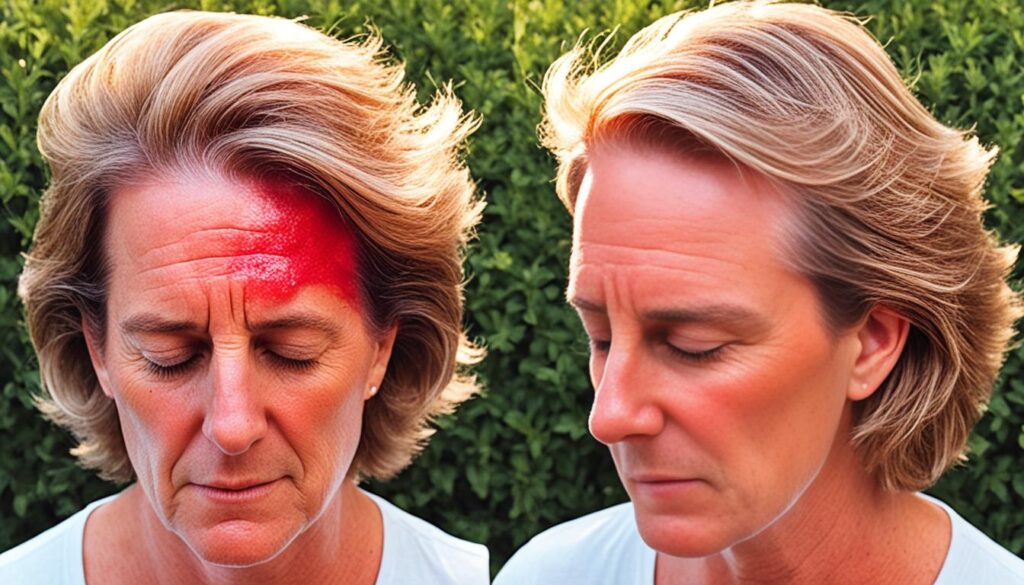
Prolonged sun exposure can have detrimental effects on scalp health. The sun’s ultraviolet (UV) rays can damage the proteins and pigments in the hair, leading to weaker and more brittle strands. UV rays can also strip the hair of its natural oils, causing dryness and frizz. The scalp is also at risk of sunburn, especially in areas where the hair is thin or parted. Additionally, continual UV exposure can degrade the protective melanin pigments in the hair, resulting in hair lightening and potential long-term consequences for scalp health.
Key Takeaways:
- Prolonged sun exposure can damage hair proteins and pigments, leading to weaker and more brittle strands.
- UV rays can strip the hair of its natural oils, causing dryness and frizz.
- The scalp is at risk of sunburn, particularly in areas where the hair is thin or parted.
- Continual UV exposure can degrade the protective melanin pigments in the hair, resulting in hair lightening and potential long-term scalp issues.
The Benefits and Risks of Sun Exposure for Hair
Sun exposure can have both benefits and risks for hair health. Let’s explore how spending time in the sun can affect your locks.
The Benefits
One of the major benefits of sun exposure is the production of vitamin D. When UV rays from the sun hit the skin, they trigger the synthesis of this essential vitamin. Vitamin D plays a crucial role in hair health as it promotes hair growth and can help prevent hair loss.
Fun fact: Did you know that spending time in the sun can also give your hair natural highlights? Sunlight can lighten the pigments in your hair, creating subtle and natural-looking color variations.
“Sun exposure stimulates the production of vitamin D, which is vital for hair growth and can give your locks a beautiful, sun-kissed glow.”
The Risks
While there are benefits, excessive sun exposure can cause significant damage to your hair. UV rays can degrade the proteins in your strands, leading to weaker hair that is more prone to breakage. This protein degradation can also result in duller hair color.
Sun exposure can also cause dryness and frizz formation in your hair. The sun’s rays can strip away the natural oils that keep your locks moisturized, leaving them dry and more prone to frizz.
Additionally, your scalp is at risk of sunburn when exposed to the sun for extended periods. Sunburn on the scalp can be painful and potentially worsen any existing issues, such as thinning hair or scalp sensitivity.
“Excessive sun exposure can lead to hair protein degradation, dryness, frizz, and scalp sunburn, posing risks to the overall health and appearance of your locks.”
To strike a balance between enjoying the benefits of sun exposure and protecting your hair, it’s important to take precautionary measures. This includes using hair products with UV protection, wearing a hat or head covering to shield your hair and scalp from direct sunlight, and avoiding prolonged exposure during peak UV hours.

The image above visually represents the effects of sun exposure on hair. As you can see, the sun’s rays can have both positive and negative impacts on your locks.
Tips for Protecting Your Scalp and Hair from Sun Damage
To ensure the health and vitality of your scalp and hair, it’s crucial to take proactive measures to protect them from sun damage. Follow these expert tips to shield your hair and scalp from the harmful effects of prolonged sun exposure:
1. Sun Protection for Hair: Use Scalp Sunscreen
Invest in a quality scalp sunscreen to shield your scalp from harmful UV rays. Apply it generously to your exposed scalp, especially along the parting line or where the hair is thin. Look for sunscreens specifically formulated for the scalp that provide broad-spectrum protection against UVA and UVB rays.
2. Wear a Hat or Head Covering
Another effective way to protect your scalp and hair from the sun is by wearing a wide-brimmed hat or head covering. This offers an additional layer of defense, shading your hair and scalp from direct sunlight and reducing UV exposure.
3. Use UV Protection Hair Products
Consider incorporating UV protection hair products into your hair care routine. These products contain UV filters that create a barrier against damaging rays. Look for shampoos, conditioners, and styling products labeled with SPF or UV protection.
4. Hydrate Your Hair
Proper hydration is crucial for healthy hair, especially in the face of sun exposure. To keep your hair moisturized and nourished, use hydrating hair treatments such as deep conditioning masks or leave-in conditioners. Additionally, remember to drink enough water and eat a nutrient-rich diet for overall hair health.
5. Protecting Hair Color
If you have color-treated hair, take extra precautions to protect your hair color from fading due to sun exposure. Use protective styling products, such as serums or sprays, that offer UV protection for your hair color. Additionally, wearing a hat or head covering can help preserve vibrant hair color for longer.
By following these simple yet effective tips, you can provide your scalp and hair with essential sun protection, preventing sun-induced damage such as dryness, breakage, scalp sunburn, and color fading. Shielding your scalp and hair from the sun’s harmful rays will help maintain their health, vitality, and natural beauty.
FAQ
How does prolonged sun exposure impact scalp health?
Prolonged sun exposure can result in weakened and brittle hair strands due to damage to proteins and pigments. It can also strip the hair of natural oils, leading to dryness and frizz. Additionally, the scalp is at risk of sunburn, especially in areas where the hair is thin or parted. Continual UV exposure can degrade the protective melanin pigments in the hair, resulting in hair lightening and potential long-term consequences for scalp health.
What are the benefits and risks of sun exposure for hair?
Sun exposure can promote hair growth by stimulating the production of vitamin D. It can also slow the growth of skin cells on the scalp, reducing acne. However, excessive sun exposure can damage the hair, degrading proteins and causing weaker strands and duller hair color. It can also lead to dryness, increased frizz, and breakage. Sunburn on the scalp can cause inflammation and potentially worsen thinning hair.
How can I protect my scalp and hair from sun damage?
To protect your scalp and hair, it’s recommended to use sunscreen specifically designed for the scalp and wear a hat or head covering that shades the hair and scalp from direct sunlight. Using hair products with UV filters can provide added protection. Additionally, staying hydrated by using hydrating hair treatments and incorporating a nutrient-rich diet is important. Avoiding peak UV hours and seeking shade when possible can also reduce exposure. If your hair is color-treated, taking precautions such as using protective styling products can help prevent color fading caused by the sun.