
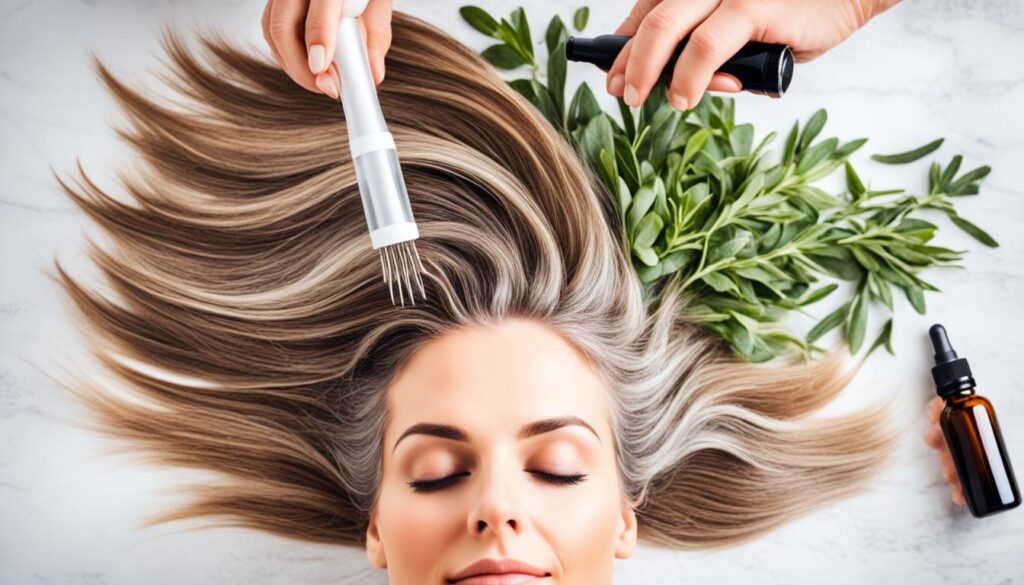
Did you know that stress can cause hair thinning and even hair loss? Yes, it’s true. Significant emotional stress, such as a break-up, job loss, or loss of a loved one, can lead to hair loss. In fact, stress-induced hair thinning is more common than you might think!
When we experience high levels of stress, our bodies release hormones like cortisol and adrenaline, which can impact the hair follicles’ ability to function properly. This disruption in the hair growth cycle can result in more hair follicles entering the resting phase and eventually shedding.
But don’t worry, there are ways to stop hair thinning from stress quickly and regain a healthy head of hair. In this article, we will share with you our top tips and remedies to prevent hair loss caused by stress and promote hair regrowth. So, keep reading to discover how to combat stress-related hair thinning!
Key Takeaways:
- Stress can cause hair thinning and hair loss.
- High levels of stress hormones can disrupt the hair growth cycle.
- Addressing the underlying stress is crucial for preventing hair loss.
- Implementing healthy lifestyle habits and using natural remedies can promote hair regrowth.
- Consulting with a healthcare professional may be necessary for personalized treatment options.
How Stress Causes Hair Loss
Stress can have a direct impact on hair health, leading to hair thinning and loss. When you experience high levels of stress, it can disrupt the normal hair growth cycle, pushing more hair follicles into the resting phase. This imbalance between the growth and resting phases results in increased shedding and thinning of the hair.
The exact mechanisms behind how stress causes hair loss are still not fully understood. However, it is believed that stress hormones, such as cortisol and adrenaline, play a significant role in interfering with the hair follicle’s function and nutrient supply. These hormones can negatively affect the hair follicle’s ability to receive essential nutrients, leading to weakened hair strands and eventual hair loss.
Stress-related hair loss is usually temporary and can be resolved by effectively managing stress and creating a conducive environment for healthy hair growth. By taking proactive measures to reduce stress levels and prioritize self-care, you can combat stress-related hair thinning and promote overall hair health.

Effects of Stress on Hair Growth Cycle
High levels of stress can disturb the natural balance of the hair growth cycle. Typically, hair follicles go through a continuous cycle of growth, resting, and shedding. However, when stress comes into play, more hair follicles enter the resting phase, known as telogen. This shift causes a significant increase in hair shedding and thinning.
During periods of stress, the body diverts its resources away from non-essential functions, including hair growth. Stress hormones can restrict blood flow to the scalp, depriving the hair follicles of vital nutrients and oxygen. This restriction can weaken the hair roots, leading to brittle, thinning hair.
Reducing stress levels and creating a healthy environment for hair growth are crucial for preventing stress-related hair thinning and preserving a full, healthy mane.
Tips to Manage Stress for Healthy Hair
To combat stress-related hair thinning, it is important to implement stress management techniques into your daily routine. Here are some effective strategies to help you manage stress and promote healthy hair:
- Practice stress-reducing activities such as yoga, meditation, or deep breathing exercises.
- Engage in regular physical exercise to release endorphins and reduce stress levels.
- Establish a consistent sleep routine to ensure adequate rest and rejuvenation.
- Adopt a well-balanced diet rich in vitamins, minerals, and proteins to support overall hair health.
- Consider attending therapy or counseling sessions to help address and manage stress triggers effectively.
Creating a Healthy Environment for Hair Growth
Apart from managing stress, it is crucial to create a healthy environment for optimal hair growth. Here are some additional steps you can take:
- Use gentle hair care products and avoid harsh chemicals that can further damage the hair.
- Avoid excessive heat styling and use heat protectants when necessary.
- Massage your scalp regularly to improve blood circulation and stimulate hair follicles.
- Consider incorporating hair growth supplements or topical treatments recommended by a healthcare professional.
| Stress Management Techniques | Benefits for Hair Health |
|---|---|
| Yoga and meditation | Reduces stress hormone levels and promotes relaxation, supporting healthy hair growth. |
| Regular exercise | Boosts blood circulation, ensuring proper nutrient supply to the hair follicles. |
| Adequate sleep | Supports overall well-being, including hair health and growth. |
| Healthy diet | Provides essential vitamins, minerals, and proteins for strong, vibrant hair. |
How to Regain Hair Loss from Stress
Regaining hair loss from stress involves addressing the underlying stress and implementing strategies to promote hair growth. By taking proactive steps, you can stop stress-induced hair shedding fast and achieve thicker, healthier hair.
Promoting a Healthy Hair Growth Environment
To combat stress-related hair loss, it’s essential to maintain a nutritious diet rich in proteins and vital nutrients. Adequate intake of biotin and vitamin D can support hair growth. Additionally, topical treatments such as hair growth serums or oils can stimulate follicles and encourage hair regrowth.
Prioritizing Sleep and Stress Reduction
Sleep plays a crucial role in the body’s healing and regeneration process, including hair growth. Ensure you’re getting sufficient quality sleep to allow your hair follicles to recover. Managing stress levels is equally important, and activities like yoga, meditation, and spending time outdoors can significantly reduce stress and promote hair growth.
Improving Blood Circulation and Seeking Support
Scalp massages are an effective way to enhance blood flow to the hair follicles, providing them with essential nutrients. Consider incorporating regular scalp massages into your hair care routine to stimulate hair regrowth.
Moreover, seeking support through counseling or therapy can be beneficial in managing stress-related hair loss. Talking to a professional can help you develop healthy coping mechanisms and reduce the impact of stress on your hair.
Patiently Awaiting Hair Regrowth
While addressing stress-induced hair loss, it’s crucial to be patient. Hair regrowth can take time, typically up to a year. Stay consistent with your hair care routine, practice stress reduction techniques, and give your body the time it needs to heal and restore your hair’s thickness.

| Stress-Induced Hair Loss Solutions | Benefits |
|---|---|
| Maintain a healthy diet | Provides vital nutrients for hair growth |
| Take supplements | Supports hair growth and strengthens follicles |
| Use topical treatments | Stimulates hair regrowth and nourishes follicles |
| Prioritize sleep | Allows for natural healing and regeneration |
| Manage stress through activities | Reduces stress hormones and promotes overall well-being |
| Scalp massages | Improves blood circulation to hair follicles |
| Seek counseling or therapy | Provides additional support in managing stress-related hair loss |
Natural Remedies for Hair Growth
Looking for techniques to halt stress-related hair loss and prevent hair loss from stress naturally? We’ve got you covered with some effective stress-induced hair loss remedies. Several natural remedies can promote hair growth and help prevent stress-related hair loss. Let’s explore these remedies:
Peppermint Oil

Peppermint oil has been shown to stimulate hair growth. The menthol present in peppermint oil improves blood circulation to the scalp and promotes hair follicle regeneration. To use peppermint oil, dilute it with a carrier oil and massage it into your scalp. Leave it on for a few hours or overnight before washing it off.
Onion Juice
Onion juice is another effective natural remedy for stress-induced hair loss. It contains sulfur, which improves blood circulation and nourishes the hair follicles. Apply freshly extracted onion juice to your scalp, leave it on for 30 minutes, and then rinse thoroughly. You can repeat this process a few times a week.
Curry Leaves
Curry leaves are known for their ability to promote hair growth. You can use curry leaves in homemade hair masks or oils. To make a hair mask, grind a handful of curry leaves into a paste and mix it with a carrier oil such as coconut or olive oil. Apply the mixture to your scalp and hair, leave it on for 30 minutes, and then rinse thoroughly.
Castor Oil
Castor oil is a natural remedy that can reduce hair loss and stimulate hair growth. It is rich in ricinoleic acid, which has anti-inflammatory and antimicrobial properties. Massage castor oil into your scalp using circular motions for a few minutes. Leave it on for a few hours or overnight before shampooing your hair.
Pumpkin Seed Oil and Scalp Massage
Pumpkin seed oil is packed with nutrients that support healthy hair growth. Massage pumpkin seed oil into your scalp using your fingertips, focusing on areas where hair thinning is more pronounced. For added benefits, use a scalp massager to improve blood circulation and stimulate hair follicles.
It’s important to note that natural remedies may not work for everyone, and it’s always a good idea to consult a dermatologist or trichologist for personalized recommendations.
By incorporating these natural remedies into your hair care routine, you can take proactive steps to halt stress-related hair loss and promote healthy hair growth.
Dermatological Treatments for Hair Regrowth
When it comes to combating stress-induced hair thinning, dermatological treatments have shown great promise. These treatments are specifically designed to promote hair regrowth and restore volume to thinning hair.
Microneedling
One effective option for hair regrowth is microneedling. This procedure involves using a device with small needles to create tiny punctures on the scalp, stimulating the production of collagen and increasing blood flow to the hair follicles. This process promotes hair growth and improves the overall health of the scalp. Microneedling can be enhanced by combining it with the use of peppermint oil. Peppermint oil has been shown to have stimulating properties that can further support hair growth and minimize hair thinning caused by stress. It is important to consult with a dermatologist or a trained professional to ensure the safe and effective application of microneedling for hair regrowth.
PRP Therapy
Another dermatological treatment for stress-related hair loss is Platelet-Rich Plasma (PRP) therapy. This procedure involves extracting blood from the patient, processing it to concentrate the plasma containing growth factors, and then injecting it into the scalp. The growth factors in the plasma help stimulate hair follicles, promoting new hair growth and improving the thickness and health of existing hair. PRP therapy is a safe and effective method that can be used in combination with other treatments for optimal results. It is essential to consult with a dermatologist or hair loss specialist to determine if PRP therapy is the right solution for your specific needs.
The Benefits of Dermatological Treatments
Dermatological treatments for hair regrowth offer several advantages over other methods. They are scientifically proven to be effective in promoting hair growth and restoring hair volume. These treatments are non-invasive and can be tailored to individual needs, ensuring personalized and targeted results. By addressing stress-induced hair thinning directly at the source, these therapies provide a reliable and long-lasting solution for those experiencing stress-related hair loss. Consultation with a dermatologist or hair loss specialist is crucial to determine the most suitable treatment approach for your unique circumstances.
| Treatment | Procedure | Benefits |
|---|---|---|
| Microneedling | Using a device with small needles to stimulate hair growth on the scalp and improve blood flow to the hair follicles. | Stimulates collagen production, increases blood flow, and promotes healthy hair growth. Combined with peppermint oil for enhanced effectiveness. |
| PRP Therapy | Platelet-Rich Plasma is extracted from the patient’s blood and injected into the scalp to stimulate hair follicles. | Provides growth factors to promote hair regrowth, improve hair thickness, and enhance overall hair health. |
When considering stress-induced hair thinning treatments, dermatological interventions such as microneedling and PRP therapy offer effective solutions for regaining hair loss caused by stress. These treatments can be performed by trained professionals and can be used alongside other regrowth methods for optimal results. Consulting with a dermatologist or hair loss specialist will help determine the most suitable treatment approach for your specific needs.
Conclusion
Stress-induced hair loss can be a distressing experience, but the good news is that it is usually temporary and reversible with the right care and treatment. By addressing the underlying stress factors and adopting healthy lifestyle habits, such as managing stress levels and prioritizing self-care, you can create an optimal environment for hair regrowth.
In addition to stress management, various remedies can help promote hair growth. Natural options like peppermint oil, onion juice, and curry leaves have shown promising results in stimulating hair follicles and improving blood circulation on the scalp. These remedies can be used in homemade hair masks or oils to support healthy hair regeneration.
If natural remedies do not yield the desired results, dermatological treatments like microneedling and PRP therapy can be effective in promoting hair regrowth. These procedures should be performed by trained professionals and can be combined with other regrowth methods to optimize results.
Remember, the hair regrowth process takes time, and patience is key. If you are concerned about persistent or worsening hair loss, it is always recommended to consult with a healthcare professional or a hair loss specialist who can provide further guidance and personalized treatment options.
FAQ
How does stress cause hair loss?
Stress can cause hair loss by pushing more hair follicles into the resting phase of the hair growth cycle. This disruption in the normal balance of hair follicles leads to increased shedding. High levels of stress hormones like cortisol and adrenaline interfere with the hair follicle’s function and nutrient supply, resulting in hair loss.
Can hair loss from stress be reversed?
Yes, hair loss from stress is usually temporary and can be reversed. By addressing the underlying stress, implementing healthy lifestyle habits, and considering natural remedies or dermatological treatments, it is possible to regain hair loss from stress. Patience is key, as the hair regrowth process can take time.
What are some natural remedies for hair growth?
There are several natural remedies that can promote hair growth and help prevent stress-related hair loss. These include using peppermint oil, applying onion juice to the scalp, utilizing curry leaves in homemade hair masks or oils, massaging the scalp with castor oil, pumpkin seed oil, or a scalp massager. It’s important to note that natural remedies may not work for everyone, and consulting a dermatologist or trichologist for personalized recommendations is advised.
What are some dermatological treatments for hair regrowth?
Dermatological treatments can be effective in promoting hair regrowth for stress-related hair loss. Microneedling, which stimulates hair growth on the scalp, can be used with or without the addition of peppermint oil. PRP therapy, where platelet-rich plasma is injected into the scalp, is another treatment option. These treatments should be performed by a trained professional and can be used in combination with other regrowth methods for optimal results.
Is stress-induced hair loss permanent?
Stress-induced hair loss is usually temporary. With proper care, including addressing the underlying stress, promoting a healthy environment for hair growth, and using appropriate remedies or treatments, hair loss from stress can be reversed. It’s important to consult with a healthcare professional if concerns persist or worsen.