
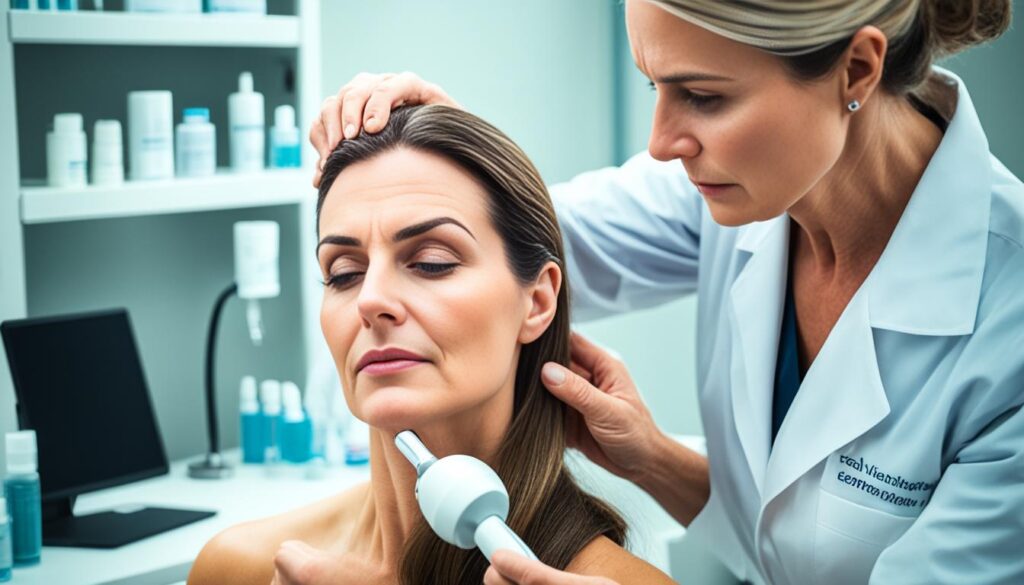
As dermatologists, we specialize in diagnosing and treating hair loss in women. We understand the distress that female hair loss can cause and are dedicated to finding effective solutions for our patients. With our in-depth knowledge of the various causes of hair loss, we can provide personalized treatments tailored to each individual’s needs.
When you visit us, we will conduct a thorough examination to determine the underlying cause of your hair loss. This may involve questioning you about your hair loss history, examining your scalp and hair, and conducting hair health tests. In some cases, we may need to perform blood tests or scalp biopsies to gather more information.
Once we have identified the cause of your hair loss, we will recommend suitable treatment options. These may include at-home treatments such as minoxidil and laser therapy, as well as procedures like corticosteroid injections and hair transplants. We may also prescribe medications like finasteride and spironolactone to address hormonal imbalances that contribute to hair loss.
Additionally, we will provide guidance on lifestyle changes that can optimize hair health and prevent further hair loss. Through our comprehensive approach, we aim to help you regain confidence and achieve healthy, beautiful hair.
Key Takeaways:
- Female hair loss can be effectively diagnosed and treated by dermatologists specializing in hair loss.
- Diagnostic procedures may include scalp examinations, hair health tests, blood tests, and scalp biopsies.
- Treatment options may range from at-home treatments like minoxidil and laser therapy to procedures like corticosteroid injections and hair transplants.
- Prescription medications like finasteride and spironolactone can also be used to address hormonal imbalances.
- Lifestyle changes recommended by dermatologists can optimize hair health and prevent further hair loss.
How Dermatologists Diagnose Female Hair Loss
When it comes to diagnosing female hair loss, dermatologists follow a systematic approach to identify the underlying causes. By conducting a thorough consultation and examination, dermatologists can gather essential information and perform necessary tests to determine the specific cause of hair loss.
Gathering Information and Consultation
During the initial consultation, dermatologists will take a detailed medical history and ask questions about the duration and onset of hair loss. This information helps them understand the potential triggers and underlying factors contributing to the hair loss.
Scalp Examination
One of the key steps in diagnosing hair loss is examining the scalp. Dermatologists carefully assess the scalp and affected areas to identify any visible signs of inflammation, infection, or scalp conditions that may be causing hair loss. This examination helps determine the overall health of the scalp and provides valuable insights into the potential causes of hair loss.
Hair Health Tests
In addition to a scalp examination, dermatologists may also conduct hair health tests to evaluate the condition of the hair. These tests can assess the thickness, density, and overall health of the hair strands. By analyzing the hair’s quality and structure, dermatologists can gain further insights into the underlying causes of hair loss.
Blood Tests
In some cases, dermatologists may order blood tests to evaluate hormone levels, check for thyroid dysfunction, or detect underlying medical conditions that can contribute to hair loss. Blood tests can provide crucial information about hormonal imbalances or deficiencies that may be affecting the hair follicles.
Scalp Biopsy
In certain situations where the cause of hair loss is not evident, dermatologists may opt for a scalp biopsy. This procedure involves taking a small sample of the scalp tissue for microscopic examination. Scalp biopsies help dermatologists identify any underlying skin diseases or inflammatory conditions that can impact hair growth.
By employing these diagnostic methods, dermatologists can pinpoint the exact cause of hair loss, enabling them to develop tailored treatment plans for their patients.
Treatment Options for Female Hair Loss
When it comes to hair loss in women, dermatologists offer a variety of treatment options to address this concern. Whether you prefer at-home treatments or more advanced procedures, there are solutions available to help you achieve healthier and fuller hair.
At-Home Treatments
If you’re looking for convenient and non-invasive options, at-home treatments can be a great choice. One popular at-home treatment is minoxidil. This topical solution is applied directly to the scalp and can stimulate hair growth while preventing further hair loss. It’s an accessible and effective option that many women have found beneficial in their hair loss journey.
Another at-home treatment option is laser therapy. Devices such as laser caps and combs emit low-level laser light to stimulate hair follicles and promote hair growth. Laser therapy can be easily incorporated into your daily routine and has shown promising results in enhancing hair thickness and density.
Microneedling is also gaining popularity as a home treatment for hair loss. This procedure involves using tiny needles to create controlled micro-injuries on the scalp, which stimulate blood flow and trigger natural hair growth. With consistent use, microneedling can help improve the overall health and thickness of your hair.
Procedures for Advanced Cases
If your hair loss is more advanced or you’re seeking permanent results, dermatologists may recommend certain procedures. Corticosteroid injections are commonly used for promoting hair regrowth. These injections are administered directly into the scalp to reduce inflammation and stimulate hair follicles, leading to improved hair growth in targeted areas.
For those looking for a permanent solution, hair transplant surgery may be an option. During this procedure, healthy hair follicles are harvested from a donor area and transplanted to areas with thinning or no hair. Hair transplants provide natural-looking results and can significantly restore hair density.
Prescription Medications
In some cases, dermatologists may prescribe medications to address the underlying causes of hair loss. Two commonly prescribed medications are finasteride and spironolactone. Finasteride is taken orally and treats hair loss by blocking the conversion of testosterone to dihydrotestosterone (DHT), a hormone linked to hair follicle damage in some individuals. Spironolactone, also taken orally, helps regulate hormone levels and can be effective in treating hair loss related to hormonal imbalances.
It’s important to consult with a dermatologist who specializes in hair loss to determine the most suitable treatment option for your specific needs. They will take into account your medical history, the severity of your hair loss, and other factors to develop a personalized treatment plan.


Topical and Oral Medications for Female Hair Loss
Dermatologists offer a variety of treatment options for female hair loss, including topical and oral medications. These medications can effectively address the underlying causes of hair loss and promote hair regrowth.
One commonly prescribed topical medication is minoxidil. Available over-the-counter, minoxidil is a topical treatment applied directly to the scalp. It stimulates hair growth and prevents further hair loss when used as directed. Minoxidil works by increasing blood flow to the hair follicles, leading to improved hair growth.
For women with more advanced hair loss, dermatologists may recommend oral medications such as finasteride and spironolactone. Initially approved for male pattern hair loss, finasteride has also demonstrated effectiveness in treating female pattern hair loss. Finasteride works by inhibiting the production of dihydrotestosterone (DHT), a hormone that contributes to hair loss. Spironolactone, on the other hand, is commonly prescribed to women with hormone-related hair loss. It acts as an androgen receptor blocker, reducing the effects of hormones on the hair follicles.
When determining the most suitable medication and dosage, dermatologists take into account the individual’s medical history and specific needs. They carefully evaluate the potential benefits and risks of each medication to ensure optimal results.

Conclusion
After considering the various factors that contribute to female hair loss and the available treatment options, it is clear that dermatologists play a vital role in addressing this common concern. With their expertise and specialized knowledge, dermatologists can accurately diagnose the underlying causes of hair loss and develop personalized treatment plans.
Whether recommending at-home treatments such as minoxidil and laser therapy, performing procedures like corticosteroid injections or hair transplants, or prescribing medications like finasteride and spironolactone, dermatologists provide comprehensive solutions tailored to each patient’s needs. Their goal is to not only stimulate hair growth and prevent further loss but also optimize overall hair health.
It is essential for women experiencing hair loss to seek professional help early on. By consulting with a dermatologist, women can regain their confidence and achieve their desired hair goals. Working with a dermatologist ensures that the underlying causes of hair loss are addressed, leading to more effective and long-lasting results.
In conclusion, the expertise and guidance of a dermatologist are invaluable when it comes to treating female hair loss. By entrusting their care to a dermatologist, women can find hope and achieve optimal hair health. Remember, you don’t have to face hair loss alone. We are here to support you every step of the way.
FAQ
What is female hair loss?
Female hair loss refers to the condition where women experience excessive hair shedding, thinning, or balding. It can be caused by various factors such as hormonal imbalances, genetics, medical conditions, or lifestyle factors.
When should I see a dermatologist for female hair loss?
It is recommended to see a dermatologist if you notice a significant increase in hair shedding, noticeable thinning of the hair, or the development of bald patches. A dermatologist can diagnose the cause of your hair loss and recommend appropriate treatments.
How do dermatologists diagnose female hair loss?
Dermatologists diagnose female hair loss by gathering information about your hair loss history, conducting a scalp examination, and potentially ordering blood tests or scalp biopsies to assess underlying causes or conditions.
What are the treatment options for female hair loss?
Treatment options for female hair loss may include at-home treatments like minoxidil and laser therapy, procedures such as corticosteroid injections and hair transplants, as well as prescription medications like finasteride and spironolactone.
What are topical and oral medications used for female hair loss?
Topical medications like minoxidil can be applied directly to the scalp to stimulate hair growth. Oral medications like finasteride and spironolactone may be prescribed to address hormonal imbalances or other underlying causes of hair loss.
What is the role of a dermatologist in treating female hair loss?
Dermatologists play a crucial role in diagnosing and treating female hair loss. They have specialized knowledge and can accurately identify the underlying causes of hair loss and recommend personalized treatment plans tailored to each patient’s needs.