

Are you considering hairline lowering surgery to enhance your facial features and boost your confidence? In this comprehensive guide, we will provide you with all the information you need to know about hairline lowering for women. From understanding the procedure and its benefits to the recovery process and potential risks, we’ve got you covered.
Hairline lowering surgery, also known as hairline surgery or forehead reduction surgery, is a transformative procedure that can address concerns related to a high hairline or forehead. By moving the hair-bearing scalp forward and securing it in a lower position, this surgery can create a more balanced and harmonious facial appearance, improving overall self-esteem.
we will discuss the process of hairline lowering surgery in detail, including the consultation with a qualified facial plastic surgeon, the surgical procedure itself, and the recovery period. We will also highlight the benefits of this procedure and the potential risks involved, so you can make an informed decision about whether hairline lowering surgery is right for you.
Key Takeaways:
- Hairline lowering surgery, also known as hairline surgery or forehead reduction surgery, can enhance facial harmony and boost confidence for women.
- The procedure involves moving the hair-bearing scalp forward to create a more balanced and harmonious facial appearance.
- Benefits include improved facial proportions, enhanced self-esteem, and the potential for better hair density.
- The process typically involves a consultation, the surgical procedure, and a recovery period of about one week.
- Risks and potential complications may include scarring, numbness, asymmetry, hair loss, and infection.
What is Hairline Lowering Surgery?
Hairline lowering surgery, also referred to as hairline surgery or forehead reduction surgery, is a cosmetic procedure designed to reduce the distance between the hairline and eyebrows. It involves moving the hair-bearing scalp forward and securing it in a lower position on the forehead. The surgery can create more balanced and harmonious facial proportions, address hairline concerns caused by genetics or hair loss, and improve overall self-esteem.
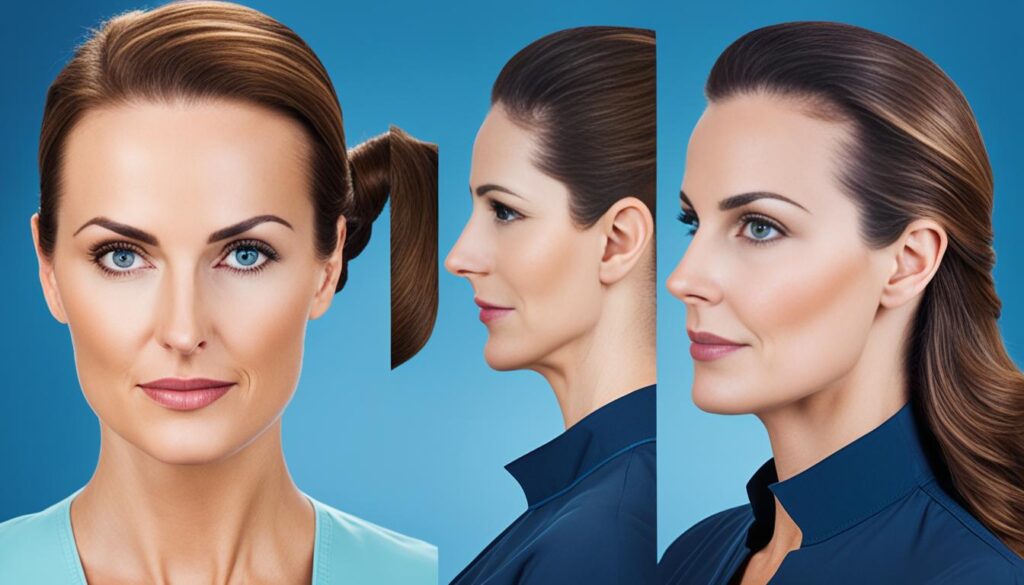

Hairline lowering surgery, also known as hairline surgery or forehead reduction surgery, is a transformative procedure that can enhance facial harmony and boost confidence. It involves repositioning the hair-bearing scalp lower on the forehead to create a more balanced appearance. This procedure is ideal for individuals bothered by a high hairline or forehead and can address hairline concerns caused by genetics or hair loss.
During hairline lowering surgery, an incision is made along the new hairline, excess forehead skin is removed, and the hair-bearing scalp is advanced forward and sutured in its new position. This process allows for a lower and more aesthetically pleasing hairline. The procedure can also be combined with other facial surgeries, such as a brow lift, for optimal results.
Hairline lowering surgery offers a range of benefits. It can improve facial proportions, enhance self-esteem, and reduce the appearance of wrinkles and forehead lines. Additionally, by lowering the hairline, this surgery can create the opportunity for better hair density compared to hair restoration procedures.
In a study published in the Archives of Facial Plastic Surgery, researchers found that hairline lowering surgery provided a significant improvement in patient satisfaction and perceived facial attractiveness.
Who is a Suitable Candidate for Hairline Lowering Surgery?
Hairline lowering surgery is typically performed on individuals with a high hairline or forehead and good scalp elasticity. It is commonly sought by women, but men can also benefit from the procedure. It is important for potential candidates to have a stable hairline without ongoing hair loss, as continued hair thinning may affect the longevity of the results. Hairline lowering surgery can also be an option for transgender patients undergoing male-to-female transition, as it can help create a more feminine appearance.
The Benefits of Hairline Lowering Surgery
Hairline lowering surgery offers numerous benefits for individuals who are bothered by a high hairline or forehead. Some of the advantages include:
- Improved Facial Proportions: Hairline lowering surgery can create a more balanced and symmetrical appearance by reducing the distance between the hairline and eyebrows, resulting in improved facial proportions.
- Enhanced Self-Esteem: Correcting a high hairline or forehead can boost self-confidence and improve overall self-esteem, allowing individuals to feel more comfortable and satisfied with their appearance.
- Reduced Appearance of Wrinkles and Forehead Lines: By lowering the hairline, hairline correction surgery can soften the appearance of wrinkles and forehead lines, helping individuals achieve a more youthful and refreshed look.
- Potential for Better Hair Density: Hairline lowering surgery involves repositioning the hair-bearing scalp forward, which can result in a denser hairline compared to other hair restoration procedures.
The long-lasting results of hairline lowering surgery can create a more balanced and youthful appearance, providing individuals with a renewed sense of confidence and improved facial harmony.
| Benefits of Hairline Lowering Surgery |
|---|
| Improved facial proportions |
| Enhanced self-esteem |
| Reduced appearance of wrinkles and forehead lines |
| Potential for better hair density |
The Hairline Lowering Surgery Process
When considering hairline lowering surgery, it’s important to understand the step-by-step process involved in this transformative procedure. Let’s take a closer look at the key stages of the hairline surgery procedure and what you can expect:
1. Consultation with a Qualified Facial Plastic Surgeon
Before undergoing hairline lowering surgery, you will have a consultation with a qualified facial plastic surgeon. During this initial appointment, the surgeon will thoroughly assess your hairline, facial features, and overall health to determine your suitability for the procedure. This consultation is an opportunity for you to ask questions, discuss your expectations, and understand the potential outcomes of the surgery.
2. Sedation or General Anesthesia
The actual hairline surgery is typically performed under sedation or general anesthesia, ensuring your comfort throughout the procedure. The choice of anesthesia will depend on your surgeon’s recommendation and your specific needs.
3. Marking the New Hairline
Prior to making any incisions, the surgeon will carefully mark the new hairline. This step is crucial in achieving the desired aesthetic outcome and ensuring a natural-looking result.
4. Incisions and Repositioning of the Scalp
Once the new hairline is marked, the surgeon will make precise incisions along the hairline and behind it. Through these incisions, the scalp is carefully lifted and repositioned to lower the hairline. Excess skin may be removed to achieve the desired result.
5. Securing the Hairline with Stitches
To ensure the new hairline remains in place, multiple layers of stitches are used to secure the scalp. These stitches help maintain the correct position of the scalp and allow for proper healing.
6. Additional Procedures (if necessary)
In some cases, additional procedures may be performed alongside hairline lowering surgery, such as a brow lift, to further enhance the overall results. Your surgeon will discuss these options with you during the consultation process.
After the surgery, you will typically be given post-operative instructions to follow, including how to care for the incision site, manage discomfort, and when to schedule follow-up appointments. It’s important to adhere to these instructions to ensure proper healing and optimal results.
Now that you understand the hairline lowering surgery process, let’s explore the recovery period and the potential risks associated with this procedure.
Recovery and Risks of Hairline Lowering Surgery
The recovery period after hairline lowering surgery typically lasts about one week, during which time patients may experience swelling, bruising, and discomfort. Pain medication may be prescribed to manage any discomfort. It’s important to follow post-operative care instructions provided by the surgeon, including keeping the incision clean, avoiding strenuous activities, and attending follow-up appointments.
Risks and potential complications of hairline lowering surgery include scarring, numbness, asymmetry, hair loss, and infection. However, when performed by a skilled and experienced surgeon, the procedure is generally safe and has a high level of patient satisfaction.
“The recovery period after hairline lowering surgery is a crucial time for patients to take it easy and prioritize healing. Following the surgeon’s instructions and taking any prescribed pain medication can help manage discomfort during this period.”
Common Risks and Complications
| Risks | Potential Complications |
|---|---|
| Scarring | Numbness |
| Asymmetry | Hair Loss |
| Infection |

Note: It’s essential to consult with a qualified facial plastic surgeon to discuss the potential risks, benefits, and recovery process specific to your individual case.
Hairline Lowering Surgery Candidates
When considering hairline lowering surgery, it’s important to determine if you are an ideal candidate for the procedure. Here are some factors to consider:
- High Forehead: Candidates for hairline lowering surgery typically have a high forehead that they would like to reduce. This procedure can help create a more balanced facial appearance by lowering the hairline.
- Good Scalp Elasticity: Candidates should have good scalp elasticity to allow for the movement and repositioning of the hair-bearing scalp. This ensures proper healing and natural-looking results.
- No Significant Hair Thinning or Loss: Hairline lowering surgery may not be suitable for individuals with significant hair thinning or hair loss. It is important to have enough hair density to achieve the desired results.
- Gender: While hairline lowering surgery is commonly performed on women, men can also benefit from the procedure. Both genders can achieve a more balanced and aesthetically pleasing hairline.
- No Strong Family History of Hair Loss: Candidates without a strong family history of hair loss are generally better suited for the surgery. Ongoing hair loss can potentially impact the longevity of the results.
Additionally, hairline lowering surgery can be an option for transgender patients undergoing male-to-female transition. This procedure can help create a more feminine appearance and contribute to facial harmony.

| Eligibility Criteria | Requirements |
|---|---|
| High Forehead | Visible forehead that the patient wishes to reduce |
| Good Scalp Elasticity | Flexible scalp to allow for repositioning |
| No Significant Hair Thinning or Loss | Adequate hair density for optimal results |
| Gender | Both men and women can be candidates |
| No Strong Family History of Hair Loss | Lower risk of future hair loss impacting results |
Conclusion
Hairline lowering surgery, also known as hairline surgery or forehead reduction surgery, offers a transformative solution for women looking to improve facial harmony and boost confidence. Throughout this comprehensive guide, we have covered the key aspects of the procedure, including its benefits, process, recovery, risks, and candidacy criteria:
- Benefits: Hairline lowering surgery can enhance facial proportions, improve self-esteem, minimize the appearance of wrinkles, and potentially improve hair density.
- Process: The surgical process involves consultation, sedation or general anesthesia, marking the new hairline, making incisions, repositioning the scalp, removing excess skin, and securing the hairline with stitches.
- Recovery and Risks: The recovery period usually lasts about one week, and patients may experience swelling, bruising, and discomfort. Risks include scarring, numbness, asymmetry, hair loss, and infection.
- Candidacy: Ideal candidates have a high forehead, good scalp elasticity, and no significant hair thinning or loss. Hairline lowering surgery is commonly performed on women, but men can also benefit from it.
To make an informed decision about hairline lowering surgery, it is crucial to consult with a qualified facial plastic surgeon who can assess your individual suitability and guide you throughout the process. With their expertise, you can achieve the desired results and increase your facial harmony and overall confidence.
FAQ
What is hairline lowering surgery?
Hairline lowering surgery, also known as hairline surgery or forehead reduction surgery, is a cosmetic procedure designed to reduce the distance between the hairline and eyebrows. It involves moving the hair-bearing scalp forward and securing it in a lower position on the forehead.
What are the benefits of hairline lowering surgery?
The benefits of hairline lowering surgery include improved facial proportions, enhanced self-esteem, reduced appearance of wrinkles and forehead lines, and the potential for better hair density compared to hair restoration procedures. The surgery can provide long-lasting results and create a more balanced and youthful appearance.
What is the process of hairline lowering surgery?
The hairline lowering surgery process typically involves a consultation with a qualified facial plastic surgeon, who will assess your suitability for the procedure. The surgery is usually performed under sedation or general anesthesia, and it takes approximately two to three hours to complete. The surgeon will carefully mark the new hairline, make incisions, reposition the scalp, remove excess skin, and secure the hairline with multiple layers of stitches.
What is the recovery period after hairline lowering surgery?
The recovery period after hairline lowering surgery typically lasts about one week, during which time patients may experience swelling, bruising, and discomfort. Pain medication may be prescribed to manage any discomfort. It’s important to follow post-operative care instructions provided by the surgeon, including keeping the incision clean, avoiding strenuous activities, and attending follow-up appointments.
What are the risks of hairline lowering surgery?
Risks and potential complications of hairline lowering surgery include scarring, numbness, asymmetry, hair loss, and infection. However, when performed by a skilled and experienced surgeon, the procedure is generally safe and has a high level of patient satisfaction.
Who is a candidate for hairline lowering surgery?
Ideal candidates for hairline lowering surgery are individuals with a high forehead, good scalp elasticity, and no significant hair thinning or hair loss. The procedure is commonly performed on women, but men can also benefit from it. Hairline lowering surgery can also be an option for transgender patients undergoing male-to-female transition, as it can help create a more feminine appearance.