
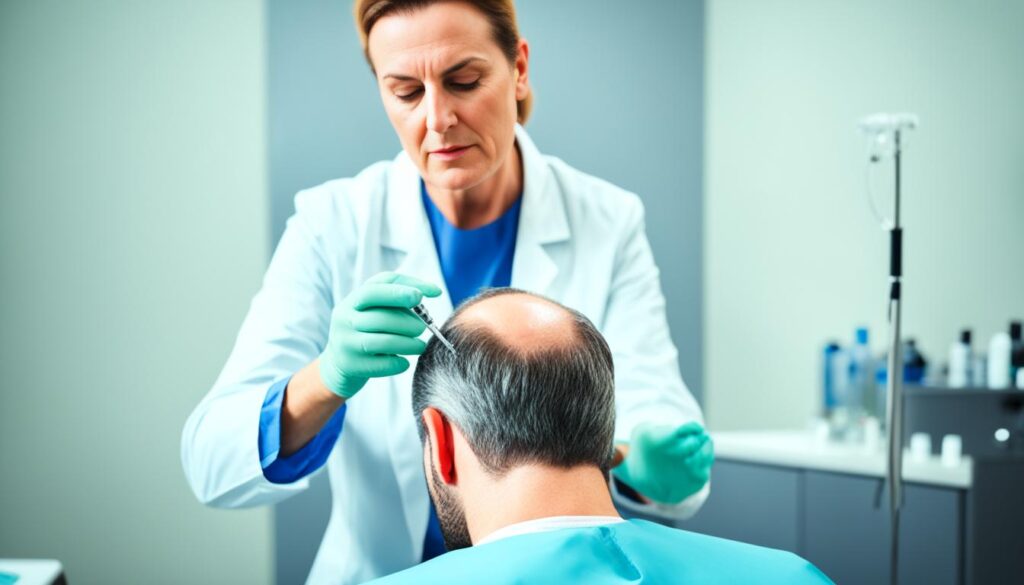
Are you struggling with hair loss and looking for an effective solution? Look no further than PRP therapy. Platelet-rich plasma (PRP) therapy is a breakthrough treatment for hair loss that has been gaining popularity in recent years.
PRP therapy involves injecting concentrated platelet-rich plasma into the scalp to stimulate hair growth and thickness. This innovative procedure harnesses the healing power of your own blood to rejuvenate dormant hair follicles and promote natural hair regrowth.
How does it work? The process begins with a simple blood draw, after which the blood is processed in a centrifuge to separate the platelet-rich plasma. The PRP is then carefully injected into the scalp in areas where hair growth is desired.
The benefits of PRP therapy for hair rejuvenation go beyond just regrowing hair. This treatment can lead to thicker and fuller hair, improve scalp health, and is minimally invasive with few side effects. Plus, it can be tailored to your specific needs and is suitable for both men and women dealing with various types of hair loss.
Key Takeaways:
- PRP therapy is a cutting-edge treatment for hair loss that involves injecting platelet-rich plasma into the scalp.
- This therapy stimulates hair growth and thickness by rejuvenating dormant hair follicles.
- PRP therapy offers benefits such as natural hair regrowth, improved scalp health, and minimal side effects.
- Treatment plans can be customized to individual needs and are suitable for both men and women.
- Consultation with a healthcare professional is essential to determine if PRP therapy is right for you.
How Does PRP Therapy Work for Hair Loss?
PRP therapy harnesses the healing properties of platelet-rich plasma (PRP) to stimulate hair growth and combat hair loss. The process involves a three-step procedure that utilizes the patient’s own blood.
Step 1: Drawing Blood
During the first step, a small amount of the patient’s blood is drawn. This blood sample contains valuable platelets that play a crucial role in the hair regrowth process.
Step 2: Processing the Blood
Next, the collected blood sample is placed in a specialized centrifuge machine. The machine spins the blood at a high speed, separating the different components based on their density.
The goal of this step is to extract the platelet-rich plasma (PRP) from the rest of the blood. The platelet-rich plasma contains a concentrated amount of growth factors, proteins, and cytokines that aid in tissue regeneration and revitalization.
Step 3: Injecting the Platelet-Rich Plasma
Once the PRP is extracted, it is carefully injected into the scalp in the areas where hair growth is desired. The injection process involves precise targeting to ensure optimal absorption and effectiveness.
When the platelet-rich plasma is injected into the scalp, it stimulates dormant hair follicles, promotes blood supply, and rejuvenates the hair growth cycle. The growth factors and proteins present in the PRP help nourish and encourage the growth of new hair strands.
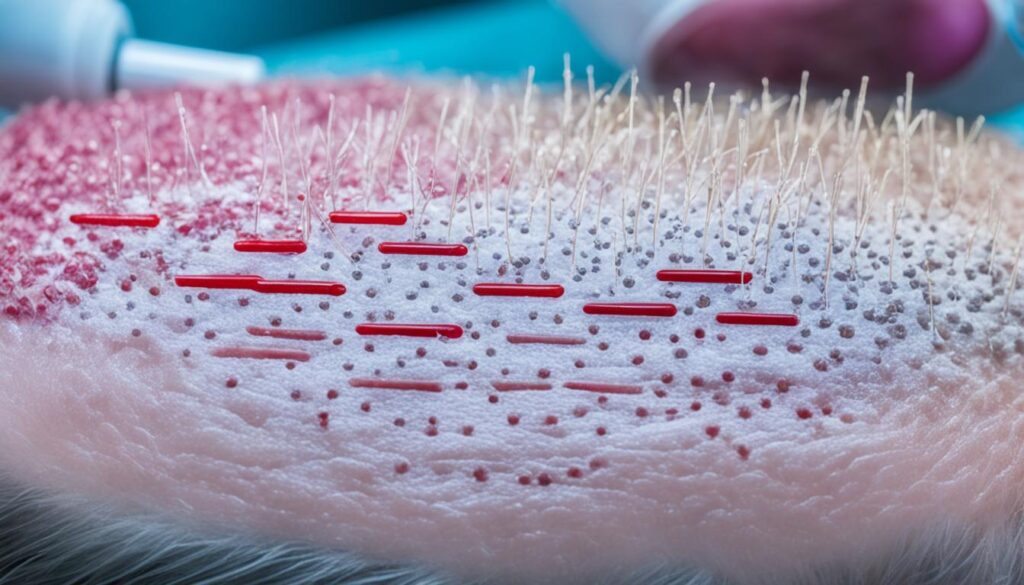

Through this scientifically-backed therapy, PRP treatment not only promotes hair regrowth but also improves the overall thickness and density of the hair. The natural healing properties of platelet-rich plasma offer a safe and effective solution for individuals struggling with hair loss.
Benefits of PRP Therapy for Hair Rejuvenation
PRP therapy offers several benefits for hair rejuvenation. It promotes natural hair regrowth by stimulating the body’s healing response and revitalizing dormant hair follicles. Through the use of platelet-rich plasma, PRP therapy delivers essential growth factors and proteins to the scalp, encouraging the regeneration of healthy hair.
The therapy can also lead to thicker and fuller hair, improving overall hair density and thickness. By strengthening existing hair strands and promoting the growth of new ones, PRP therapy restores volume and creates a more luxurious and vibrant appearance.
Additionally, PRP therapy plays a crucial role in improving scalp health. By increasing blood flow to the scalp and reducing inflammation, PRP therapy creates a favorable environment for hair growth. It nourishes the hair follicles and enhances the overall health of the scalp, preventing further hair loss and promoting the longevity of existing hair.
One of the significant advantages of PRP therapy is that it is minimally invasive. The treatment utilizes the patient’s own blood, eliminating the need for surgery or synthetic chemicals. The platelet-rich plasma is extracted and injected into the scalp, delivering targeted, natural rejuvenation without the risks associated with more invasive procedures.
Treatment plans for PRP therapy can be tailored to individual needs. Every person’s hair loss situation is unique, and PRP therapy recognizes this by providing personalized treatment plans. By working closely with a healthcare professional, patients can receive a customized approach that considers various factors, including the severity of hair loss, overall hair health, and individual goals.
“PRP therapy offers a holistic and personalized solution for individuals dealing with hair loss. By harnessing the body’s natural healing properties, we can achieve remarkable results, restoring both confidence and hair vitality.”
Key Benefits of PRP Therapy for Hair Rejuvenation:
- Promotes natural hair regrowth
- Enhances hair thickness and density
- Improves overall scalp health
- Minimally invasive treatment
- Customized treatment plans
- Few side effects

| Benefits | Description |
|---|---|
| Natural hair regrowth | Stimulates the body’s healing response and revitalizes dormant hair follicles. |
| Thicker and fuller hair | Improves overall hair density and thickness by strengthening existing hair strands and promoting the growth of new ones. |
| Improved scalp health | Increases blood flow, reduces inflammation, and creates a favorable environment for hair growth. |
| Minimally invasive | Utilizes the patient’s own blood and eliminates the need for surgery or synthetic chemicals. |
| Tailored treatment plans | Customized approach that considers individual needs, severity of hair loss, and overall hair health. |
| Few side effects | Mild bruising or tenderness at the injection sites, with minimal risks compared to invasive procedures. |
PRP Therapy for Hair Loss: Is It Effective?
While PRP therapy is a relatively new procedure for hair loss, there is increasing clinical evidence that suggests it can be effective. Many studies have reported positive results in terms of hair regrowth, thickness, and overall patient satisfaction.
“PRP therapy has shown promising results in treating hair loss. Patients have reported significant improvements in hair density and quality after undergoing PRP treatments.”
Although long-term data on PRP therapy for hair loss is still limited, ongoing research is helping to fill this gap and provide valuable insights. Studies are being conducted to understand which patients benefit most from PRP therapy and how it can be used in conjunction with other treatments.
- Combining PRP with other treatments: Research suggests that PRP therapy, when used as part of a comprehensive treatment plan that includes medication or other interventions, may enhance the effectiveness of hair loss treatment.
- Patient satisfaction: Overall, patient satisfaction with PRP therapy for hair loss is encouraging. Many individuals have reported positive experiences, noting improvements in hair growth, thickness, and overall hair quality.
| PRP Therapy for Hair Loss: Is It Effective? | Yes | No |
|---|---|---|
| Long-term data on PRP therapy | + | – |
| PRP in conjunction with other treatments | + | – |
| Patient satisfaction | + | – |
It’s important to note that individual results may vary, as each person’s response to PRP therapy can be different. The effectiveness of PRP therapy for hair loss can also depend on factors such as the severity of hair loss and the underlying cause.
As ongoing research continues to shed light on the effectiveness of PRP therapy, it is recommended to consult with a healthcare professional to determine if it is a suitable option for your individual needs.
Consultation with a Healthcare Professional
Considering PRP therapy for hair loss? Schedule a consultation with a healthcare professional to discuss your hair loss concerns, evaluate your individual case, and develop a personalized treatment plan.

Conclusion
PRP therapy for hair loss shows great promise as a treatment option, offering the potential for natural hair regrowth, thicker and fuller hair, improved scalp health, and minimal side effects. However, it is crucial to consult with a healthcare professional to determine if PRP therapy is suitable for your specific needs. They can provide personalized advice and create a treatment plan that incorporates PRP therapy, considering factors such as your medical history, current medications, and overall hair loss condition.
PRP therapy should be seen as part of a comprehensive approach to hair loss treatment. It is not a standalone solution, but rather an effective addition to other interventions, such as medication or lifestyle changes. Consulting with a healthcare professional ensures that PRP therapy is integrated correctly into your personalized treatment plan, increasing the chance of achieving optimal results.
If you are considering PRP therapy for hair loss, it is important to understand that individual results may vary. While numerous studies have reported positive outcomes and patient satisfaction, more long-term data is still needed to fully understand the therapy’s effectiveness. Ongoing research continues to provide valuable insights into which patients benefit most from PRP therapy and how it can be combined with other treatments.
By seeking a consultation with a healthcare professional, you can receive expert guidance and make informed decisions regarding your hair loss treatment. They will ensure that PRP therapy is utilized appropriately and help you regain your confidence by rejuvenating your hair. Take that important step today and explore PRP therapy as an option to address your hair loss concerns.
FAQ
What is PRP therapy for hair loss?
PRP therapy for hair loss is a treatment that involves injecting platelet-rich plasma (PRP) into the scalp to stimulate hair growth and increase hair density.
How does PRP therapy work for hair loss?
PRP therapy works by extracting a small amount of the patient’s blood, processing it to separate the platelet-rich plasma, and then injecting it into the scalp. The growth factors and proteins present in the platelets help rejuvenate dormant hair follicles and promote new hair growth.
What are the benefits of PRP therapy for hair rejuvenation?
PRP therapy offers several benefits, including natural hair regrowth, thicker and fuller hair, improved scalp health, and minimal side effects. It is a minimally invasive treatment that can be tailored to individual needs.
Is PRP therapy effective for hair loss?
While research on long-term effectiveness is limited, many studies have shown positive results in terms of hair regrowth and patient satisfaction. PRP therapy may be more effective when used in combination with other treatments.
Do I need to consult with a healthcare professional before considering PRP therapy?
Yes, it is important to consult with a healthcare professional to determine if PRP therapy is suitable for your individual needs. They can provide personalized advice and develop a treatment plan based on factors such as your medical history and current medications.