
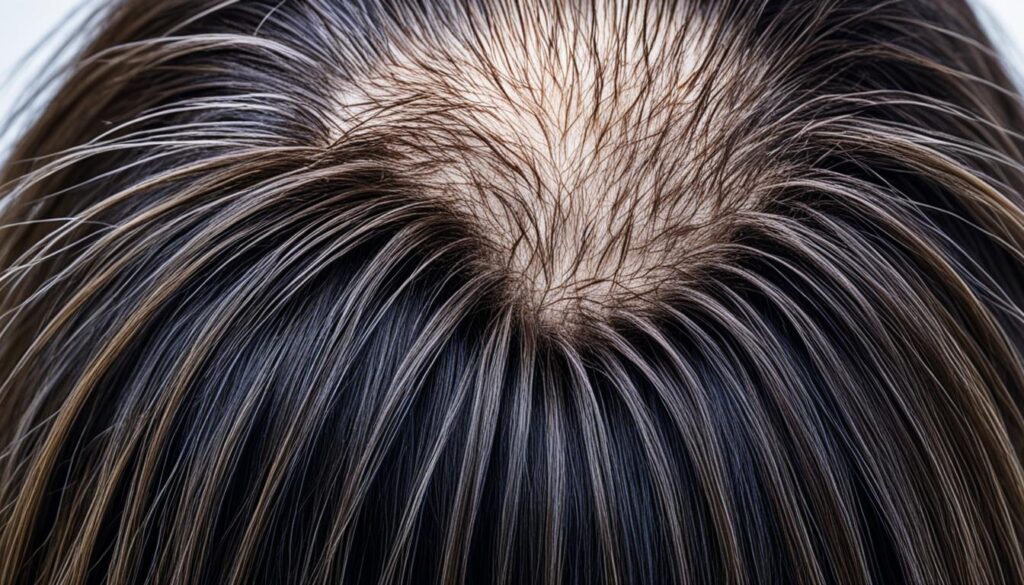
Female crown hair loss, also known as women’s crown baldness or female pattern hair loss, is a common concern among women. It is characterized by hair thinning on the top and crown of the scalp, leading to a bald spot on the top of the head. Unlike male pattern baldness, female crown hair loss rarely progresses to total or near-total baldness.
The causes of female crown hair loss can vary and may include factors such as aging, hormonal changes, family history, and certain medications. Understanding the underlying cause is crucial in determining the most effective treatment approach for regrowing hair and preventing further hair loss.
In this article, we will explore the patterns of female pattern baldness, the diagnosis process, available treatment options, and self-care practices that can promote healthy hair. By gaining a better understanding of female crown hair loss, you can make informed decisions and regain confidence in addressing this common concern.

Key Takeaways:
- Female crown hair loss is a common type of hair loss in women characterized by thinning hair on the top and crown of the scalp.
- Causes of female crown hair loss include aging, hormonal changes, family history, and certain medications.
- Diagnosis is usually based on the appearance and pattern of hair loss, ruling out other potential causes.
- Treatment options for female crown hair loss include medications like minoxidil, hair transplant procedures, and non-pharmacological approaches.
- Self-care practices such as maintaining a healthy diet, proper hair care, and avoiding damaging treatments can support overall hair health.
Understanding Female Pattern Baldness
Female pattern baldness, also known as female pattern hair loss, is a common condition characterized by hair thinning mainly on the top and crown of the scalp. The hair loss pattern often resembles a “Christmas tree” shape, with thinning starting at the center hair part and gradually widening. Unlike male pattern baldness, women with female pattern baldness rarely experience total or near-total baldness. However, the impact on self-esteem can still be significant.
The causes of female pattern baldness can vary and may include factors such as aging, changes in hormone levels, family history, heavy menstrual bleeding, and certain medications like estrogenic oral contraceptives. Female pattern baldness may also be associated with increased androgen levels, leading to thinner hair on the head and coarser hair on the face. It is important to note that itching or skin sores on the scalp are generally not observed in cases of female pattern baldness.
Diagnosing female pattern baldness involves considering the appearance and pattern of hair loss, ruling out other potential causes, and evaluating the individual’s medical history. This typically starts with a physical examination and a discussion about symptoms and family history. In some cases, additional tests, such as blood work or a scalp biopsy, may be recommended to confirm the diagnosis.
While female pattern baldness cannot be completely reversed, various treatment options can help slow down hair loss, stimulate hair regrowth, and improve the overall appearance of the hair. Treatment options range from topical medications like minoxidil to non-pharmacological solutions such as hair styling techniques and hairpieces. Additionally, maintaining a healthy lifestyle, managing stress levels, and practicing proper hair care can support overall hair health.
Female Pattern Baldness Treatment Options
| Treatment Option | Description |
|---|---|
| Minoxidil | A topical medication that enhances hair growth and slows down hair loss |
| Hair Transplant | A surgical procedure that involves transferring hair follicles from donor areas to areas with thinning or no hair |
| Hormone Therapy | Medications that help balance hormone levels and reduce hair loss |
| Platelet-Rich Plasma (PRP) Therapy | A procedure that uses the patient’s own blood plasma to stimulate hair growth |
It is important for individuals experiencing female pattern baldness to consult with a healthcare professional or a specialist in hair loss to determine the most suitable treatment approach based on their specific needs and circumstances. With the right treatment and support, finding solutions to manage female pattern baldness is possible, leading to an improvement in overall confidence and well-being.
Diagnosis of Female Pattern Baldness
Diagnosing female pattern baldness involves ruling out other potential causes of hair loss and considering the individual’s medical history. We carefully examine the appearance and pattern of hair loss to determine if it aligns with female pattern baldness. Additionally, we look for other signs indicative of excessive androgens (male hormones) in the body. These signs may include:
- Abnormal hair growth: We assess for abnormal new hair growth on the face or between the belly button and pubic area.
- Menstrual changes: Changes in menstrual periods can be a potential indication of hormonal imbalances.
- Acne: Acne is another sign of hormonal fluctuations and can be associated with female pattern baldness.
In some cases, we may recommend a skin biopsy of the scalp or blood tests to further investigate underlying skin disorders or hormonal imbalances contributing to hair loss. Dermoscopy, which involves a microscopic examination of the hair structure, can also provide valuable insights into any structural abnormalities.


“Diagnosis of female pattern baldness involves ruling out other potential causes, assessing the appearance and pattern of hair loss, and considering the individual’s medical history.”
If you are experiencing hair loss, especially if accompanied by itching, skin irritation, or other symptoms, it is crucial to consult with a healthcare provider. Seeking professional advice ensures an accurate diagnosis and appropriate management of your condition.
Treatment Options for Female Pattern Baldness
When it comes to treating female pattern baldness, there are a variety of options available. The primary treatment approved by the FDA is minoxidil, a topical medication that stimulates hair growth and slows down hair loss. Minoxidil comes in 2% or 5% formulations and needs to be applied continuously to maintain its effectiveness. If minoxidil doesn’t show satisfactory results, there are other medications that can be considered, such as spironolactone, cimetidine, birth control pills, and ketoconazole.
For women with significant hair loss who do not respond well to medical treatments, hair transplant procedures can be an option. Hair transplant involves removing small plugs of hair from areas with thicker growth and transplanting them into balding areas, resulting in a natural-looking and permanent solution.
In addition to medical treatments, there are non-pharmacological solutions that can provide cosmetic improvement and help conceal hair loss. Hair weaving, hairpieces, and changes in hairstyle can be effective in enhancing the overall appearance of the hair.
It is essential to consult with a healthcare professional to determine the most suitable treatment approach for your individual case. They can provide personalized recommendations based on the severity of your hair loss and your specific needs and goals.
| Treatment Option | Description |
|---|---|
| Minoxidil | A topical medication that stimulates hair growth and slows down hair loss. |
| Other Medications | If minoxidil is not effective, medications like spironolactone, cimetidine, birth control pills, or ketoconazole may be recommended. |
| Hair Transplant | A surgical procedure that involves transplanting hair from areas with thicker growth to balding areas. |
| Non-Pharmacological Solutions | Options like hair weaving, hairpieces, and changes in hairstyle can provide cosmetic improvement and help conceal hair loss. |
Additional Treatment Options for Female Hair Loss
Besides the standard treatment options, there are additional treatments available for female hair loss. These alternative approaches can offer new possibilities for regrowth and restoration. Let’s explore some of these options:
1. Light Therapy
Light therapy involves using low-level laser devices or lasers to stimulate hair follicles and promote hair growth. When used in conjunction with minoxidil, light therapy can help improve hair recovery and overall satisfaction with treatment.
2. Ketoconazole
Ketoconazole is an antifungal medication that may be beneficial in reducing inflammation and improving hair strength and appearance, particularly in cases of androgenetic alopecia. It helps to combat the underlying fungal factors that contribute to hair loss.
3. Corticosteroid Injections
Corticosteroid injections or topical corticosteroids can be useful for conditions like alopecia areata. These treatments encourage new hair growth and reduce hair loss by reducing inflammation and suppressing the immune response.
4. Platelet-Rich Plasma Therapy
Platelet-rich plasma therapy involves injecting the patient’s own platelet-rich plasma into the scalp. This treatment has shown promising results in reducing hair loss, increasing hair density, and improving hair diameter. The platelets contain growth factors that stimulate hair follicles and promote hair growth.
5. Hormone Therapy
Hormone therapy refers to the use of medications such as birth control pills, hormone replacement therapy, or antiandrogen medications to address hormone imbalances that contribute to hair loss. These treatments regulate hormone levels to promote hair growth and slow down hair loss.
6. Hair Transplantation
Hair transplantation is a surgical procedure in which hair follicles from areas of thicker growth are extracted and transplanted into balding areas. This procedure is typically reserved for women with significant hair loss who do not respond well to other medical treatments.
7. Scalp Massage
Scalp massage can be a simple and affordable way to promote hair growth. Massaging the scalp increases blood flow to the hair follicles, providing essential nutrients and oxygen for healthy hair growth. It can also help reduce stress, which is known to contribute to hair loss.
Incorporating these additional treatment options into a comprehensive approach to female hair loss can provide more choices and potentially improve outcomes. It’s important to consult with a healthcare professional to determine the most suitable treatment or combination of treatments for individual needs.

Self-Care and Lifestyle Changes for Healthy Hair
In addition to medical treatments, taking care of your hair and making certain lifestyle changes can contribute to maintaining healthy hair and potentially slowing down hair loss. Here are some tips to promote optimal hair health:
Nutritious Diet for Healthy Hair
A well-balanced diet rich in a variety of fruits, vegetables, and essential nutrients is essential for supporting normal hair growth. Include foods that are high in vitamins A, C, and E, as well as biotin, zinc, and omega-3 fatty acids. These nutrients can help nourish the hair follicles and enhance hair strength. It is also important to monitor iron levels and address any deficiencies, as iron plays a crucial role in healthy hair growth.
Gentle Hair Care Practices
Proper hair care practices can help prevent damage to the hair shaft and minimize hair loss. Use gentle shampoos and conditioners that are suitable for your hair type. Avoid excessive heat styling, such as curling irons and straighteners, as they can weaken the hair and lead to breakage. Harsh chemical dyes should also be avoided, as they can cause scalp irritation and damage the hair shaft. Opt for natural alternatives or consult a professional stylist for safer coloring options.
Medicated Shampoos
Medicated shampoos, particularly those containing ketoconazole, can be beneficial in reducing and preventing hair loss. Ketoconazole is an antifungal medication that helps reduce inflammation and support a healthy scalp environment. It may help improve hair strength and appearance, especially in cases of androgenetic alopecia.
Scalp Massage for Hair Growth
Regular scalp massage can increase blood flow to the scalp and promote thicker hair growth. Using your fingertips, apply gentle pressure in circular motions to massage the scalp. This can help stimulate the hair follicles and encourage optimal nutrient delivery to the hair roots. Incorporate scalp massage into your hair care routine for improved hair health.
Remember, adopting a comprehensive approach to hair care that includes a nutritious diet, gentle hair care practices, medicated shampoos, and regular scalp massage can contribute to maintaining healthy hair and potentially slow down hair loss. It’s important to consult with a healthcare professional or dermatologist for personalized advice and recommendations based on your specific needs and concerns.
Understanding Female Hair Loss Patterns
Female hair loss can be caused by various factors, but one of the most common causes is androgenetic alopecia, also known as female pattern baldness. Androgenetic alopecia is characterized by a gradual thinning of each hair strand and a shorter hair cycle, resulting in reduced hair density and overall hair loss.
There are several factors that contribute to the development of androgenetic alopecia in women. Firstly, genetics play a significant role, as the condition tends to run in families. Hormonal imbalances, such as an excess of androgens (male hormones) or an imbalance between androgens and female hormones, can also contribute to hair loss. Inflammatory scalp conditions, such as scalp psoriasis or seborrheic dermatitis, can further exacerbate hair loss. Finally, the natural aging process can lead to a decrease in hair follicle size and activity, resulting in thinner and weaker hair.
When it comes to the pattern of hair loss in females with androgenetic alopecia, it differs from that in males. Women typically experience a widening parting at the center of the hair, known as a “Christmas tree” pattern, as well as overall thinning or patchiness throughout the scalp. Unlike men, women rarely experience complete or near-complete baldness.
To accurately diagnose the underlying causes of female hair loss, it is essential to consult a healthcare professional. They will perform a comprehensive evaluation, which may include a physical examination, a thorough medical history review, and possibly additional tests to rule out other potential causes of hair loss.
By understanding the specific patterns of female hair loss and the contributing factors, individuals can seek appropriate treatment options and address the root cause of their hair loss.
| Cause of Female Hair Loss | Targeted Treatment Approach |
|---|---|
| Genetics | Hair transplant, medication therapy |
| Hormonal imbalances | Hormone therapy, medication therapy |
| Inflammatory scalp conditions | Medicated shampoos, topical treatments for inflammation |
| Aging | Topical treatments to stimulate hair growth, lifestyle changes |
Understanding the specific causes and patterns of female hair loss is crucial for effective treatment and management. By addressing the underlying factors contributing to hair loss, individuals can seek appropriate treatment options and regain confidence in their hair’s appearance.
Conclusion
Female crown hair loss can be a distressing experience, but it is important to remember that there are effective solutions available. By understanding the causes, patterns, and treatment options for female pattern baldness, individuals can make informed decisions about their hair loss journey and regain confidence.
Treatment options for female crown hair loss range from topical medications like minoxidil to non-pharmacological solutions like hair weaving and styling techniques. In more severe cases, hair transplant procedures may be recommended. Additionally, there are other treatment options, such as light therapy, ketoconazole, corticosteroid injections, platelet-rich plasma therapy, hormone therapy, and scalp massage, that can further support hair regrowth.
It is also important to maintain a healthy lifestyle and practice proper hair care to support overall hair health. This includes eating a nutritious diet, using gentle shampoos, conditioning regularly, and avoiding damaging treatments. Consulting with a healthcare professional is essential to determine the most suitable treatment approach and regain confidence in addressing female crown hair loss.
FAQ
What is female crown hair loss?
Female crown hair loss, also known as female pattern baldness, is a common type of hair loss in women characterized by hair thinning on the top and crown of the scalp.
How does female pattern baldness differ from male pattern baldness?
Female pattern baldness rarely progresses to total or near-total baldness, unlike male pattern baldness. Women with female pattern baldness usually experience hair thinning primarily on the top and crown of the scalp, while the front hairline remains unaffected.
What are the causes of female crown hair loss?
Female crown hair loss can be attributed to factors such as aging, hormonal changes, family history, and certain medications.
How is female pattern baldness diagnosed?
Female pattern baldness is usually diagnosed based on the appearance and pattern of hair loss, ruling out other potential causes, and considering the individual’s medical history.
What are the treatment options for female pattern baldness?
Treatment options for female pattern baldness include medications like minoxidil, hair transplant procedures, and non-pharmacological approaches like hair weaving and styling techniques.
Are there any additional treatment options for female hair loss?
Additional treatment options for female hair loss include low-level light therapy, ketoconazole, corticosteroid injections, platelet-rich plasma therapy, hormone therapy, and scalp massage.
What self-care and lifestyle changes can help with female hair loss?
Maintaining a nutritious diet, using proper hair care practices, and avoiding damaging treatments can support overall hair health and possibly slow down hair loss.
What are the causes of female hair loss patterns?
Female hair loss patterns, such as androgenetic alopecia, are believed to be influenced by genetic factors, hormonal imbalances, and inflammatory conditions affecting the scalp.