
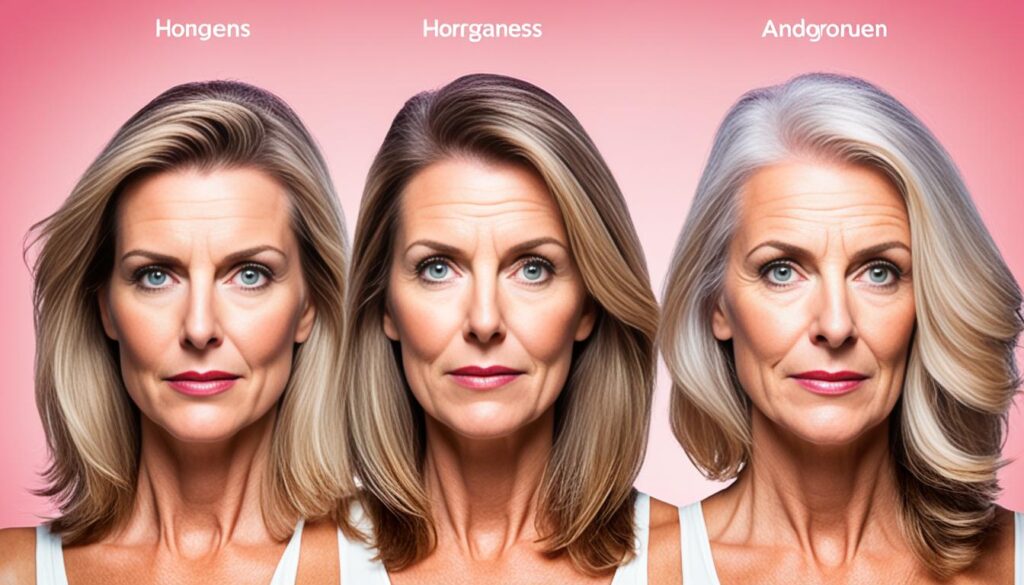
Hair thinning in women can be a frustrating and distressing experience. It often stems from hormonal imbalances, such as in female pattern hair loss. Research indicates that hormones play a crucial role in the hair follicles’ cycle between rest and growth [1][2][3]. Stress can also contribute to hair loss, as stress hormones like cortisol can target and damage the hair follicles [1][23]. Additionally, hormonal changes during pregnancy and menopause can influence hair health [12][13][14].
Understanding these hormone mechanisms is vital for effectively managing and treating hormonal hair thinning in females. By recognizing the underlying causes and implementing appropriate measures, women can take proactive steps towards maintaining healthy hair.

Key Takeaways:
- Hormonal imbalances, such as those in female pattern hair loss, can contribute to hair thinning in women.
- Stress hormones like cortisol can damage the hair follicles, leading to hair loss.
- Pregnancy and menopause can cause hormonal changes that affect hair health.
- Understanding the role of hormones is essential for managing hair thinning in females.
- Seeking appropriate treatment and adopting holistic approaches can help support hair regrowth and manage hormonal hair thinning.
The Role of Estrogen, Progesterone, and Androgens
Hormones play a crucial role in maintaining hair health in women. Estrogen, progesterone, and androgens, such as dihydrotestosterone (DHT), have significant effects on hair follicles and can contribute to hair loss in women.
The Impact of Estrogen and Progesterone
During pregnancy, women experience increased levels of estrogen and progesterone, which can enhance the growth phase of hair follicles. This hormonal surge often results in thick and shiny hair, leaving expectant mothers with a beautiful mane [12]. However, after pregnancy, as hormone levels readjust, many women experience postpartum hair loss. This temporary condition occurs as the body adapts to the new hormonal balance [12].
Similarly, during menopause, the decline in estrogen levels can lead to hair thinning. Estrogen helps prolong the hair growth phase, and its reduction can disrupt the hair’s normal cycle, resulting in reduced hair density [14].
The Influence of Androgens, Specifically DHT
Androgens, including DHT, can have detrimental effects on hair follicles. High levels of DHT can cause hair follicles to shrink, leading to hair thinning and eventual hair loss [4][33]. The sensitivity of hair follicles to DHT varies among individuals, which is why some women are more prone to hormonal hair loss than others.
Understanding the impact of these hormonal imbalances on hair can guide us in finding suitable remedies and solutions for female hair thinning.
| Hormone | Effect on Hair |
|---|---|
| Estrogen | Prolongs the hair growth phase, leading to thicker hair |
| Progesterone | Enhances the growth phase of hair follicles |
| Androgens | Particularly DHT, can shrink hair follicles, leading to hair loss |
Table: Hormonal Influences on Hair Health
Knowing how estrogen, progesterone, and androgens affect hair can help us develop targeted hormonal hair loss remedies and female hair thinning solutions. By addressing these hormone imbalances and their effects, we can take proactive steps towards restoring hair health.
Stress and Its Impact on Hair Thinning
Stress is a common factor contributing to hair loss in women. When the body is in a state of stress, resources are diverted away from hair growth, resulting in hair follicle damage and hair shedding(23)(25). Chronic stress can lead to telogen effluvium, a condition where hair prematurely enters the resting phase(25). Managing stress through stress-reduction strategies and lifestyle changes can be beneficial for preventing and managing hair loss in women(23). Additionally, incorporating natural remedies, such as maintaining a healthy diet, exercising regularly, and getting enough sleep, can promote overall hair health and potentially reduce hair thinning(23)
.
| Stress-Reduction Strategies for Managing Hair Loss in Women | Natural Remedies for Hormonal Hair Thinning |
|---|---|
| – Practice mindfulness and relaxation techniques | – Maintain a healthy diet rich in vitamins and minerals |
| – Engage in regular physical exercise | – Incorporate essential oils, such as lavender or rosemary, in hair care routine |
| – Get enough quality sleep | – Use natural hair care products without harsh chemicals |
| – Seek support from friends, family, or professionals | – Massage scalp with essential oils to promote circulation |
By implementing these stress-reduction strategies and natural remedies, women can take proactive steps in managing hair loss and promoting healthy hair growth.
Other Factors Affecting Hair Thinning
While hormonal imbalances play a significant role in hair thinning in women, there are other factors that can contribute to this condition. These include:
- Iron Deficiency Anemia: Low levels of serum ferritin, a protein that stores iron, can lead to hair loss [6]. Ensuring an adequate intake of iron-rich foods or taking iron supplements can help support hair regrowth.
- Thyroid Hormone Imbalances: Conditions like hypothyroidism (low thyroid hormone levels) or hyperthyroidism (excessive thyroid hormone levels) can impact hair health and result in hair thinning [8]. Proper diagnosis and treatment of thyroid disorders can help improve hair growth.
- Vitamin D Deficiency: Insufficient levels of vitamin D have been associated with hair loss [10]. Maintaining adequate vitamin D levels, either through exposure to sunlight or vitamin D supplementation, is crucial for the health of hair follicles.
It’s important to identify these factors and address them appropriately to support hair regrowth and manage hair thinning in women. In addition to addressing these underlying causes, implementing suitable hair care practices can also contribute to the overall health of the hair.

Key Factors Affecting Hair Thinning in Women
| Factors | Effects on Hair Health |
|---|---|
| Iron Deficiency Anemia | Can result in hair loss |
| Thyroid Hormone Imbalances | Can affect hair health and lead to hair thinning |
| Vitamin D Deficiency | Associated with hair loss; maintaining adequate levels important for hair follicle health |
Addressing these factors and adopting appropriate hair care practices can help support hair regrowth and manage hair thinning in women. It’s essential to consult with a healthcare professional for a comprehensive evaluation and personalized treatment plan.
Conclusion
Hormonal hair thinning in women is a complex issue influenced by various hormonal imbalances and factors. Understanding the role of estrogen, progesterone, and androgens, as well as the impact of stress, iron deficiency, thyroid imbalances, and vitamin D deficiency, is crucial for effectively managing and treating female hair loss.
Incorporating natural remedies can complement medical treatments and promote hair regrowth. By addressing the underlying hormonal causes and adopting holistic approaches, women can take proactive steps towards managing hormonal hair thinning and maintaining healthy hair.
With the right women’s hair loss treatment, a combination of medical intervention and natural remedies for hormonal hair thinning, it is possible to regain confidence and achieve healthier, fuller hair.
FAQ
What is hormonal hair thinning in women?
Hormonal hair thinning in women refers to hair loss or thinning that is caused by hormonal imbalances, such as in conditions like female pattern hair loss or hormonal changes during pregnancy and menopause.
What are the main causes of hair loss in women?
Hormonal imbalances, including elevated levels of androgens like dihydrotestosterone (DHT), are significant causes of hair loss in women. Other factors like stress, iron deficiency anemia, thyroid imbalances, and vitamin D deficiency can also contribute to hair thinning.
Are there remedies for hormonal hair loss in women?
The treatment of hormonal hair loss in women typically involves managing the underlying hormonal imbalances. Medical treatments, lifestyle changes, and natural remedies like stress reduction strategies, maintaining a healthy diet, regular exercise, and adequate sleep can also support hair regrowth and manage hair thinning.
How can stress impact hair thinning in women?
Stress can contribute to hair loss in women by diverting resources away from hair growth and damaging hair follicles. Chronic stress can result in a condition called telogen effluvium, where hair prematurely enters the resting phase.
What are some other factors that can affect hair thinning in women?
Other factors that can contribute to hormonal hair thinning in women include iron deficiency anemia, thyroid hormone imbalances (hypothyroidism or hyperthyroidism), and vitamin D deficiency. Identifying and addressing these factors, along with adopting appropriate hair care practices, can support hair regrowth and manage hair thinning.