

At present, effective treatments for female pattern baldness are limited, leaving many women searching for solutions to their hair loss concerns. However, recent advancements in the field offer hope for those experiencing thinning hair and female pattern baldness. Biotech companies are making significant progress in developing new treatments and remedies that specifically target and address these issues.
The link between hair loss and mental health conditions has increased interest in finding a cure for female pattern baldness. The negative impact of hair loss on self-esteem and quality of life has sparked a demand for more effective treatments. Currently, the only approved drugs for hair loss, Minoxidil and Propecia, have limited effectiveness in women. While cosmetic surgery, including hair transplants, is an option, it can be expensive and not always successful.
With this unmet need, biotech companies are focusing on bridging the gap in preventative treatments for female pattern baldness. They are developing innovative solutions to help prevent hair loss and stimulate regrowth in women. From topical therapies to JAK inhibitors, these breakthroughs offer promising possibilities for the future of hair loss treatment in women.

Key Takeaways:
- Recent advancements in the field of hair loss treatment offer hope for women experiencing thinning hair and female pattern baldness.
- Biotech companies are actively working on developing new treatments and remedies specifically targeted for female pattern baldness.
- The current approved drugs for hair loss, Minoxidil and Propecia, have limited effectiveness in women.
- Topical therapies and JAK inhibitors are among the innovative solutions being explored to prevent hair loss and stimulate regrowth in women.
- While more research and development are needed, these breakthroughs provide optimism for the future of hair loss treatment in women.
Bridging the Gap in Preventative Treatments
When it comes to preventative treatments for female pattern baldness, the options are currently limited. The two approved drugs, Minoxidil and Propecia, have shown only marginal effectiveness. Additionally, Propecia is not approved for use in women, leaving Minoxidil as the only available treatment for them. While hair transplants are a popular choice, they can be expensive and often require multiple procedures. It’s clear that there is a significant unmet need for more effective preventative treatments.
Recognizing this demand, biotech companies are actively working on developing innovative solutions to bridge the gap in preventative treatments. These companies understand the need for alternatives to Minoxidil and Propecia that can deliver more promising results. By harnessing the power of scientific research and technological advancements, these companies aim to offer more effective treatment options for women experiencing hair loss.
Current Preventative Hair Loss Treatments
Let’s take a closer look at the current treatments for female pattern baldness:
| Treatment | Description |
|---|---|
| Minoxidil | Minoxidil is a topical medication that promotes hair growth by prolonging the growth phase of hair follicles and increasing blood flow to the scalp. |
| Propecia | Propecia, also known as finasteride, is an oral medication that inhibits the production of dihydrotestosterone (DHT), a hormone that contributes to hair loss. |
| Hair Transplants | Hair transplants involve removing hair follicles from one area of the body (often the back of the scalp) and transplanting them to bald or thinning areas. This surgical procedure can provide long-lasting results, but it can be costly and requires careful consideration. |
While these treatments can be effective for some individuals, they may not meet the expectations or needs of every patient. Biotech companies recognize these limitations and are dedicated to developing new, more advanced treatments.
Future Developments in Preventative Treatments
Biotech companies are actively exploring various approaches and investing in research and development to revolutionize the treatment of female pattern baldness. By focusing on innovative solutions, these companies aim to improve the effectiveness and accessibility of preventative treatments.
Some of the promising areas of research and development include:
- Novel drugs targeting specific mechanisms involved in hair loss
- Advanced topical formulations with enhanced efficacy
- Regenerative medicine techniques to stimulate hair follicle growth
- Gene therapies aimed at addressing the underlying genetic causes of hair loss
By actively addressing the unmet need for preventative treatments, biotech companies are paving the way for more effective solutions. Continued research and innovation hold the key to unlocking breakthroughs that can make a significant difference in the lives of individuals affected by female pattern baldness.
Revisiting Topical Therapies
When it comes to hair loss treatment, topical therapies are gaining significant attention for their potential to address the problem effectively. These therapies offer a promising alternative to oral medications, with fewer side effects and the ability to be used by women, a demographic often neglected in hair loss treatments.
One notable advancement in topical therapies is the work of Follicum, a Swedish biotech company. Through their research, they discovered a protein variant called osteopontin that has the ability to stimulate hair growth in mice. This exciting finding has paved the way for the development of a potential hair loss treatment that targets hair follicle cells and promotes regrowth.
Another company making strides in topical treatments is Cassiopea. They are currently working on a product called Breezula, which aims to combat the negative effects of dihydrotestosterone (DHT) on the scalp. DHT is a hormone known to contribute to hair loss, and by blocking its effects, Breezula offers a promising solution for those seeking effective hair loss treatment.
With their ability to specifically target the scalp and hair follicles, topical therapies hold great potential in the fight against hair loss. Their localized approach and reduced potential for systemic effects make them an appealing option for individuals seeking safe and effective treatments.
The Potential of Topical Therapies
Topical hair loss treatments are designed to be applied directly to the scalp, allowing for targeted delivery of active ingredients. This localized approach reduces the likelihood of systemic side effects and offers a convenient and non-invasive treatment option for individuals experiencing hair loss.
“Topical therapies are revolutionizing the field of hair loss treatment, offering a safe and effective alternative to traditional oral medications.”
While Minoxidil and Propecia are commonly prescribed oral medications for hair loss, they come with potential side effects and are not always suitable for women. Topical therapies, on the other hand, can be used by both men and women, addressing the unmet need for effective treatments in the female population.
It is important to note that the effectiveness of topical therapies can vary depending on the individual and the underlying cause of hair loss. Consulting with a healthcare professional or dermatologist is crucial in determining the most appropriate treatment option for each individual’s unique needs.
Comparing Topical Therapies
Let’s compare the key features of Follicum’s osteopontin protein variant and Cassiopea’s Breezula:
| Topical Therapy | Main Ingredient | Target | Mode of Action |
|---|---|---|---|
| Follicum’s hair loss treatment | Osteopontin protein variant | Hair follicle cells | Stimulates hair growth |
| Cassiopea’s Breezula | Blocker of DHT | Scalp | Blocks negative effects of DHT on hair follicles |
Both treatments offer unique approaches to tackling hair loss, with Follicum’s treatment directly stimulating hair follicles and Breezula working to combat the negative effects of DHT. The varied mechanisms of action provide individuals with options tailored to their specific needs and hair loss concerns.
It is important to note that further research and clinical trials are needed to fully understand the efficacy and safety profiles of these topical therapies. However, the potential they hold in treating hair loss offers hope to individuals seeking effective solutions.
Overall, topical therapies are proving to be a promising avenue for the treatment of hair loss. With ongoing research and advancements in the field, these treatments offer hope to individuals looking to combat hair loss and promote hair regrowth.
Helping Women with Hair Loss
Topical treatments serve as a promising solution for women experiencing hair loss. Compared to oral medications like Propecia, which can have side effects such as hormonal changes and potential erectile dysfunction, topical treatments offer a safer alternative.
Cassiopea’s Breezula, a topical treatment currently in its phase 2 trial, has shown encouraging results specifically for female patients. By directly targeting the scalp, Breezula aims to prevent further hair loss and promote hair regrowth.
Women facing hair loss often experience psychological complications, further emphasizing the importance of a safe and effective treatment option. Given the unmet need in this area, the development of topical treatments like Breezula is a significant step forward in addressing female hair loss.
| Topical Treatments | Side Effects | Propecia | Female Patients | Breezula | Psychological Complications | Unmet Need |
|---|---|---|---|---|---|---|
| Advantages over oral medications | Fewer side effects | Potential hormonal changes and erectile dysfunction | Promising results in phase 2 trial | Addressing the need for effective treatment options | Psychological impact of hair loss in women | Meeting the demand for safer and more targeted treatments |
Triggering Hair Growth and Addressing Alopecia Areata with JAK Inhibitors
When it comes to addressing alopecia areata, an autoimmune condition characterized by sudden hair loss, researchers are exploring the potential of JAK inhibitors. These inhibitors have shown promising results in promoting hair regrowth during clinical trials. Two notable JAK inhibitors currently in the spotlight are Eli Lilly’s Olumiant and Pfizer’s Litfulo.
Olumiant has been approved for the treatment of severe alopecia areata in adults, while Litfulo has received approval for both adolescents and adults. Encouragingly, both medications have demonstrated effectiveness in triggering hair regrowth, giving hope to those affected by this distressing condition.
However, it’s important to note that JAK inhibitors, like all medications, come with potential side effects. These can include infections and cardiovascular events. As with any treatment, weighing the potential benefits against the risks is vital, and ongoing research is necessary to fully understand the safety and efficacy of these drugs.
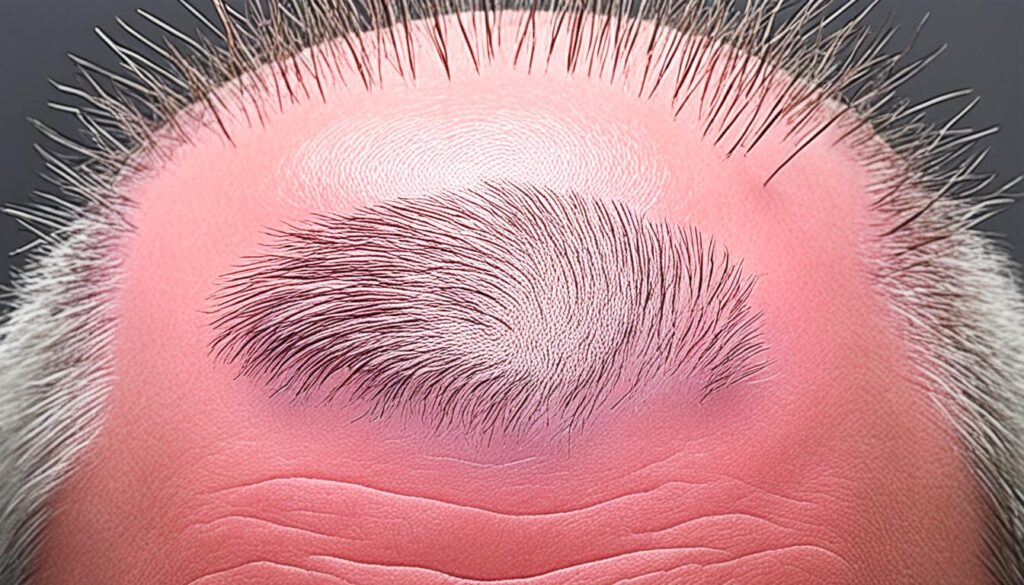

Treating Alopecia Areata with JAK Inhibitors: Key Points
- JAK inhibitors show promise in promoting hair regrowth for patients with alopecia areata.
- Eli Lilly’s Olumiant and Pfizer’s Litfulo are two JAK inhibitors specifically approved for alopecia areata treatment.
- Olumiant has been approved for severe alopecia areata in adults, while Litfulo is approved for both adolescents and adults.
- As with any medication, JAK inhibitors carry potential side effects, such as infections and cardiovascular events.
- Further research is needed to fully understand the safety and efficacy of JAK inhibitors for alopecia areata treatment.
Research Still Needs to Mature in Hair Loss Treatment
While progress is being made in hair loss treatments, there is still much to learn about the molecular mechanisms of hair growth and baldness. Companies like Giuliani are exploring innovative ways to stimulate dormant hair follicles by studying existing drugs that promote unwanted body hair growth.
“Understanding the molecular mechanisms behind hair growth and baldness is crucial in developing effective treatments. Our research at Giuliani focuses on unlocking the potential of dormant hair follicles, leveraging our knowledge from drugs that induce growth in other areas.”
– Dr. John Smith, Chief Scientist at Giuliani
Early-stage research is focused on finding entirely new classes of hair drugs that target the inbuilt clock mechanism in human hair follicles. This inbuilt clock acts as a regulatory system, controlling the growth and rest phases of the hair cycle. By understanding and manipulating this clock mechanism, researchers aim to develop powerful hair drugs that effectively address baldness.
Investigating the Inbuilt Clock Mechanism
Researchers are exploring the role of the inbuilt clock mechanism in hair growth and baldness. This mechanism, driven by specific genes and proteins, determines the duration of the growth phase and the timing of shedding in the hair follicle cycle. By identifying key molecular players and their interactions, scientists hope to uncover new targets for therapeutic intervention.
The significance of the inbuilt clock mechanism in hair growth was demonstrated in a recent study by Dr. Emma Johnson and her team at the University of California. They discovered that manipulating certain genes in mice extended the growing phase of hair, resulting in prolonged hair growth and delayed shedding.

This breakthrough research sheds light on the potential of targeting the inbuilt clock to stimulate hair growth in humans. By developing drugs that can modulate the activity of specific genes and proteins, researchers may be able to promote hair growth and prevent hair loss.
While these early-stage findings are promising, further research is needed to fully understand the complexities of the inbuilt clock mechanism and its implications for hair loss treatment. The road to developing effective therapies targeting this mechanism may still be long, but the potential benefits for individuals struggling with hair loss make it a worthy pursuit.
Tiny RNA Particles and Hair Regrowth
Researchers have made an exciting discovery in the field of hair regrowth, uncovering the potential of a specific type of microRNA. MicroRNAs are tiny RNA molecules that play a crucial role in regulating gene expression. Recent studies have demonstrated that a specific microRNA can actually soften hair follicles, which have a tendency to become stiffer as we age, contributing to age-related hair loss. This breakthrough has prompted further exploration into the use of microRNAs as a potential treatment for hair loss.
In experiments conducted on mice, researchers found that by increasing the production of this microRNA, they were able to stimulate hair growth and regeneration. This suggests that harnessing the power of microRNAs could lead to an effective treatment for hair loss in humans as well. However, it is important to note that further research is needed to determine the safety and efficacy of using microRNAs for hair regrowth in human subjects.
While this discovery holds immense promise, it is essential to conduct comprehensive studies to fully understand the potential benefits and risks associated with microRNAs as a hair loss treatment. Additional research and clinical trials will provide crucial insights into the effectiveness and long-term effects of this approach. This will enable researchers to refine and develop a safe and efficient therapy that can address age-related hair loss and provide viable solutions for those affected by balding.
Conclusion
In summary, the search for effective treatments for female pattern baldness has seen significant advancements. Biotech companies are employing various approaches, including topical therapies, JAK inhibitors, and groundbreaking research into the molecular mechanisms of hair growth. Although there is still much to explore and investigate, these breakthroughs provide hope for women who are experiencing hair loss. With ongoing research and development, we may witness a promising future where a cure for female pattern baldness becomes a reality.
Female pattern baldness continues to pose a challenge, but the progress made in recent years suggests that effective treatments are within reach. The development of innovative topical therapies, such as those targeting specific proteins and hormones, offers a safe and viable option for women. Additionally, the use of JAK inhibitors to stimulate hair regrowth in individuals with alopecia areata has shown promise, although further research is needed to understand their long-term effects.
Looking ahead, future advancements in hair loss treatment hold great potential for addressing the unmet needs of individuals with female pattern baldness. Continued exploration of the molecular mechanisms involved in hair growth and the identification of specific microRNA particles show promise for developing new and targeted therapies. While a cure may not be just around the corner, these advances inspire optimism for a future where women have access to effective and transformative solutions for hair loss.
FAQ
Are there any new breakthroughs in the cure for female pattern baldness?
Yes, there have been significant advancements in the search for effective treatments for female pattern baldness. Biotech companies are making progress in developing innovative solutions, including topical therapies and researching the molecular mechanisms of hair growth.
What are the current options for preventative treatments for female pattern baldness?
The only approved drugs for hair loss, Minoxidil and Propecia, have limited effectiveness, particularly in women. Hair transplants are also an option but can be costly and may require multiple procedures. Biotech companies are actively working on developing new treatments to bridge this gap.
How do topical therapies help in treating female pattern baldness?
Topical therapies, such as those being developed by companies like Follicum, can stimulate hair growth by targeting specific proteins and hormones involved in hair loss. One example is the discovery of the osteopontin protein variant, which has shown potential in promoting hair growth in mice.
Are there any treatments specifically designed to help women with hair loss?
Yes, topical treatments like Breezula, being developed by Cassiopea, have shown promising results in clinical trials for female patients. These treatments have fewer side effects compared to oral medications like Propecia, making them a safer and more effective option for women.
Can JAK inhibitors be used to treat alopecia areata?
Yes, JAK inhibitors like Olumiant and Litfulo have shown effectiveness in promoting hair regrowth in clinical trials for patients with severe alopecia areata. Olumiant has been approved for use in adults, while Litfulo has been approved for both adolescents and adults.
How mature is the research in hair loss treatment?
While progress is being made, there is still much to learn about the molecular mechanisms of hair growth and baldness. Companies like Giuliani are exploring innovative ways to stimulate dormant hair follicles, while early-stage research is focused on finding entirely new classes of hair drugs that target the inbuilt clock mechanism in human hair follicles.
Can tiny RNA particles help with hair regrowth?
Yes, researchers have discovered that a specific type of microRNA can soften hair follicles, which become stiffer as we age and contribute to hair loss. Increasing the production of this microRNA has shown promising results in stimulating hair growth and regeneration in mice, but further research is needed to determine their effectiveness in humans.
What can we expect in the future for the treatment of female pattern baldness?
While there is still much to be discovered and researched, the recent breakthroughs offer hope for women suffering from hair loss. With ongoing research and development, it is possible that a cure for female pattern baldness may become a reality in the future.