

Female pattern baldness is the most common type of hair loss in women. It is characterized by hair thinning mainly on the top and crown of the scalp, starting with a widening through the center hair part. This pattern of hair loss is known as the Christmas tree pattern. The front hairline remains unaffected, and the hair loss rarely progresses to total baldness. Female pattern baldness is diagnosed based on ruling out other causes of hair loss, examining the appearance and pattern of hair loss, and considering the patient’s medical history. There is no known prevention for female pattern baldness, but treatments such as minoxidil, spironolactone, and hair transplant can help manage the condition.

Key Takeaways:
- Female pattern baldness is the most common type of hair loss in women.
- It is characterized by hair thinning mainly on the top and crown of the scalp, creating a Christmas tree pattern.
- There is no known prevention for female pattern baldness.
- Treatments such as minoxidil, spironolactone, and hair transplant can help manage the condition.
- Seeking medical advice is important for proper diagnosis and personalized treatment.
Causes of Female Pattern Baldness
The exact cause of female pattern baldness is not well understood. It is believed to be influenced by a combination of factors, including genetics, hormonal changes, aging, and certain medications.
- Genetics: Family history plays a significant role in the development of female pattern baldness. If there is a history of male or female pattern baldness in your family, you may be at a higher risk.
- Hormonal changes: Hormonal imbalances, such as those that occur during menopause or pregnancy, can contribute to hair loss in women. Fluctuations in estrogen and progesterone levels can affect the hair growth cycle.
- Effects of aging: As women age, their hair follicles may become miniaturized, resulting in thinner and finer hair. The hair growth cycle also slows down, leading to increased hair shedding and reduced regrowth.
- Medication-induced hair loss: Certain medications, such as oral contraceptives containing estrogen, anti-depressants, beta-blockers, and chemotherapy drugs, can cause hair loss as a side effect.
Understanding the underlying causes of female pattern baldness is crucial in determining the most effective treatment options. It is recommended to consult with a healthcare professional specializing in hair loss to diagnose the specific cause of your hair thinning and develop an appropriate treatment plan.
Symptoms of Female Pattern Hair Loss
Female pattern hair loss, also known as female pattern baldness or androgenetic alopecia, presents with distinctive symptoms that can be identified through careful observation. Understanding these symptoms is crucial for timely diagnosis and appropriate treatment. Let’s explore the key signs of female pattern hair loss:
Hair Thinning in Women
The primary symptom of female pattern hair loss is hair thinning, predominantly affecting the top and crown areas of the scalp. This progressive thinning leads to a reduction in hair density, making the scalp more visible. Women may notice that their hair feels sparser than before, lacking the same volume and thickness. The gradual nature of hair thinning in female pattern baldness distinguishes it from other forms of hair loss.
Christmas Tree Pattern Baldness
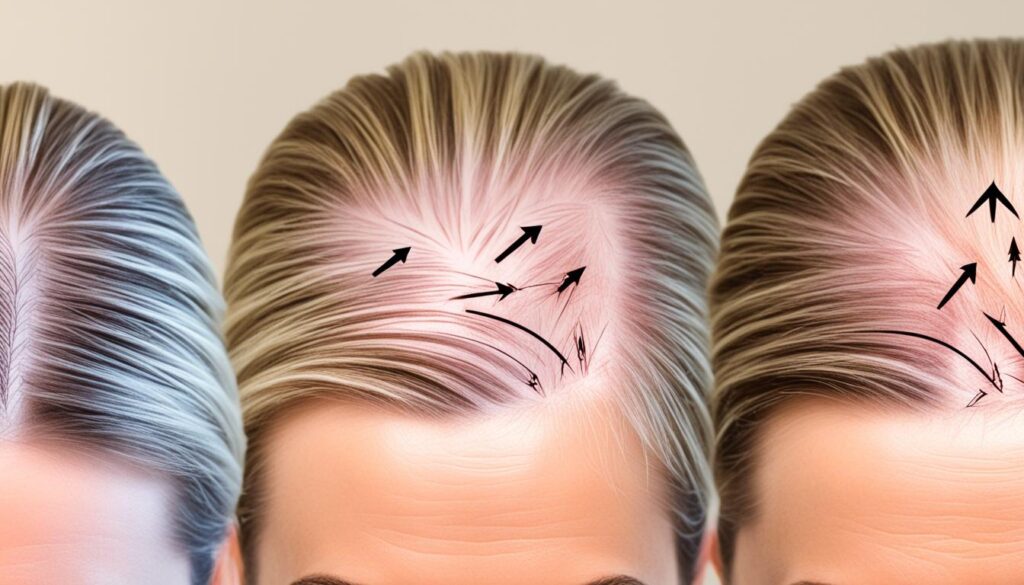
A characteristic feature of female pattern hair loss is the emergence of a unique pattern resembling a Christmas tree. The widening of the center hair part creates a triangular or diffused shape, radiating outwards like the branches of a tree. This specific pattern, often referred to as “Christmas tree pattern baldness,” is a hallmark of female pattern hair loss.
Change in Hair Texture and Quality
Women with female pattern hair loss may also experience a change in the texture and quality of their hair. The affected hair follicles produce finer and shorter strands, leading to an overall decrease in hair thickness. Over time, hair becomes more fragile, brittle, and prone to breakage. These changes in hair texture can contribute to noticeable differences in the appearance and manageability of the hair.
It is essential to recognize these symptoms and seek professional evaluation if you suspect female pattern hair loss. Early detection can significantly improve treatment outcomes and help preserve the overall health and well-being of your hair.
Diagnosing Female Pattern Baldness
Diagnosing female pattern baldness involves a comprehensive evaluation to rule out other possible causes of hair loss and determine the most appropriate treatment approach. It requires a thorough examination of the patient’s medical history, along with physical assessments to identify key signs and symptoms.
One crucial aspect of diagnosing female pattern baldness is ruling out other potential causes of hair loss. This may include evaluating the patient for conditions such as thyroid disease or iron deficiency, as these can contribute to hair thinning. By eliminating other underlying factors, healthcare providers can focus on identifying the precise cause of female pattern baldness.
During the diagnostic process, the healthcare provider will carefully assess the appearance and pattern of the hair loss. Female pattern baldness typically presents as hair thinning predominantly on the top and crown of the scalp, while the front hairline remains intact. This distinct pattern, often referred to as the “Christmas tree pattern,” is a key indicator of female pattern baldness.
Additionally, signs of androgen excess in women can provide valuable information for diagnosing female pattern baldness. Excessive new hair growth in unusual areas, changes in menstrual periods, and the development of acne may suggest an underlying hormonal imbalance contributing to hair loss.
In some cases, further diagnostic tests may be necessary to confirm the diagnosis and assess the specific characteristics of the hair loss. A skin biopsy of the scalp can help identify any potential skin disorders that may be causing the hair loss. This procedure involves the extraction of a small sample of skin from the affected area for microscopic examination.

Dermoscopy is another diagnostic tool that can aid in the evaluation of female pattern baldness. It involves examining the hair and scalp using a special device that magnifies the structures of the hair follicles and scalp. This technique allows healthcare providers to assess the hair shaft’s structure and determine if any abnormalities are contributing to the hair loss.
By conducting a thorough diagnostic process, healthcare providers can accurately diagnose female pattern baldness and develop a personalized treatment plan to address the specific needs of each patient.
Treating Female Pattern Hair Loss
When it comes to female pattern hair loss, there are several treatment options available to help women manage and improve their condition. From FDA-approved medications to surgical procedures, here’s what you need to know:
1. Minoxidil for Female Hair Loss
The main FDA-approved medication for treating female pattern hair loss is minoxidil. This topical solution is applied directly to the scalp and has been shown to stimulate hair growth in about 1 in 4 or 5 women. Minoxidil works by revitalizing hair follicles and increasing blood flow to the scalp, which can lead to thicker, healthier hair.
2. Other Medications for Female Pattern Baldness
If minoxidil is not effective in treating female pattern baldness, there are other medications that may be prescribed. These include spironolactone, cimetidine, birth control pills, and ketoconazole. These medications help address hormonal imbalances, inflammation, and other underlying causes of hair loss in women.
3. Hair Transplant for Female Hair Loss
In cases where medical treatment does not yield significant cosmetic improvements, hair transplant surgery may be considered. Hair transplant involves removing healthy hair follicles from one part of the scalp (donor area) and transplanting them to areas of thinning or balding hair (recipient area). This procedure can provide permanent and natural-looking results for women with severe hair loss.
It’s important to consult with a qualified healthcare professional or hair loss specialist to determine the most suitable treatment option for your specific needs. They will take into account factors such as the extent of hair loss, overall health, and individual goals before recommending the best course of action.
Managing Female Pattern Baldness
While there is no known prevention for female pattern baldness, there are effective ways to manage and cope with the condition. By taking proactive steps to maintain the overall health of your scalp and hair, you can help prevent further hair loss and promote hair regrowth.
Preventing Female Hair Loss
- Eat a balanced diet rich in vitamins and minerals that promote hair health, such as iron, biotin, and zinc.
- Avoid excessive heat styling and chemical treatments that can damage the hair shaft and lead to breakage.
- Minimize stress levels through relaxation techniques, exercise, and self-care activities.
- Address any underlying medical conditions, such as thyroid disorders or hormonal imbalances, that may contribute to hair thinning.
In addition to these preventive measures, there are various remedies and treatments available that can help manage female pattern baldness.
Remedies for Hair Thinning
Here are some potential remedies that may help alleviate hair thinning:
- Using volumizing shampoos and conditioners to create the appearance of thicker hair.
- Trying hair growth serums or supplements containing ingredients like biotin or keratin.
- Using laser therapy devices, which can stimulate hair follicles and promote hair growth.
- Exploring natural remedies like essential oils or scalp massages to improve blood circulation.
“The key to managing female pattern baldness is to have a comprehensive approach that combines preventive measures, remedies, and professional treatments. It’s important to consult with a dermatologist or hair specialist to determine the best course of action for your specific situation.”
Navigating the emotional aspect of hair loss is also an important part of managing female pattern baldness.
Coping with Hair Loss and Boosting Self-Esteem
- Talk to loved ones or join support groups with individuals who are going through similar experiences.
- Consider trying new hairstyles or experimenting with wigs or hairpieces to enhance your confidence.
- Focus on other aspects of your physical appearance that you feel proud of and use them to boost your self-esteem.
- Practice self-care and engage in activities that make you feel good about yourself.

Remember, every individual’s experience with female pattern baldness is unique, and what works for one person may not work for another. It’s essential to find a management approach that suits your needs and empowers you to feel confident and comfortable in your own skin.
Conclusion
Female pattern baldness, also known as male pattern hair loss in females, is a common condition characterized by hair thinning on the top and crown of the scalp. It is primarily caused by a combination of genetic factors, hormonal changes, the natural aging process, and certain medications. Although there is no guaranteed method to prevent female pattern baldness, there are several treatment options available to help manage the condition.
Treatment for female pattern baldness may include the use of medications like minoxidil, which stimulates hair growth and can be applied topically to the scalp. Additionally, other prescription drugs such as spironolactone, cimetidine, birth control pills, or ketoconazole may be recommended if minoxidil does not yield desired results. In severe cases where medication does not provide significant improvement, a hair transplant procedure can be considered.
Managing female pattern baldness involves a comprehensive diagnosis and the development of a personalized treatment plan. It is important to address any underlying medical conditions that may contribute to hair thinning, and to take steps to maintain overall scalp and hair health. Coping with female pattern baldness also involves addressing self-esteem and accepting one’s appearance. With proper management and support, women can find ways to feel confident and embrace their unique beauty, even with hair loss.
FAQ
What is male pattern hair loss in females?
Male pattern hair loss in females, also known as female pattern baldness, is a common condition characterized by hair thinning mainly on the top and crown of the scalp. It follows a specific pattern called the Christmas tree pattern, where the hair loss starts with a widening through the center hair part, while the front hairline remains unaffected. Unlike in men, female pattern baldness rarely progresses to total baldness.
What are the causes of female pattern baldness?
The exact cause of female pattern baldness is not well understood. It is believed to be influenced by a combination of factors, including genetics, hormonal changes, aging, and certain medications. Family history, specifically a history of male or female pattern baldness, can increase the risk of developing female pattern baldness. Other factors such as the heavy loss of blood during menstrual periods and certain medications like estrogenic oral contraceptives can also contribute to hair thinning in women.
What are the symptoms of female pattern hair loss?
The main symptom of female pattern hair loss is hair thinning, particularly on the top and crown of the scalp. It usually starts with a widening through the center hair part, creating a Christmas tree pattern. The front hairline remains unaffected, and the hair loss rarely progresses to total baldness. Women may also notice a change in the texture and quality of their hair, with the hair becoming finer and less dense over time.
How is female pattern baldness diagnosed?
Female pattern baldness is usually diagnosed by ruling out other potential causes of hair loss, such as thyroid disease or iron deficiency. The healthcare provider will also consider the appearance and pattern of hair loss, along with the patient’s medical history. Signs of androgen excess, such as abnormal new hair growth, changes in menstrual periods, and new acne, may indicate an underlying hormonal imbalance. In some cases, a skin biopsy of the scalp or blood tests may be used to diagnose skin disorders that cause hair loss. Dermoscopy, which involves examining the hair with a special device, can also help assess the structure of the hair shaft.
What are the treatment options for female pattern hair loss?
The main FDA-approved medication for treating female pattern hair loss is minoxidil. It is applied topically to the scalp and may help hair grow in about 1 in 4 or 5 women. Other medications, such as spironolactone, cimetidine, birth control pills, and ketoconazole, may also be prescribed if minoxidil does not work. Hair transplant is a surgical procedure that can be considered for women who do not respond well to medical treatment and have no significant cosmetic improvement. Other non-pharmacological options include hair weaving, hairpieces, and changes in hairstyle to improve the appearance of thinning hair.
Can female pattern baldness be prevented?
While there is no known prevention for female pattern baldness, there are ways to manage and cope with the condition. Taking steps to maintain overall scalp and hair health, such as eating a balanced diet, avoiding excessive heat and chemical treatments, and minimizing stress, can help prevent further hair loss. It is also important to address any underlying medical conditions that may contribute to hair thinning. For many women, acceptance and finding ways to boost self-esteem are crucial in managing female pattern baldness.