
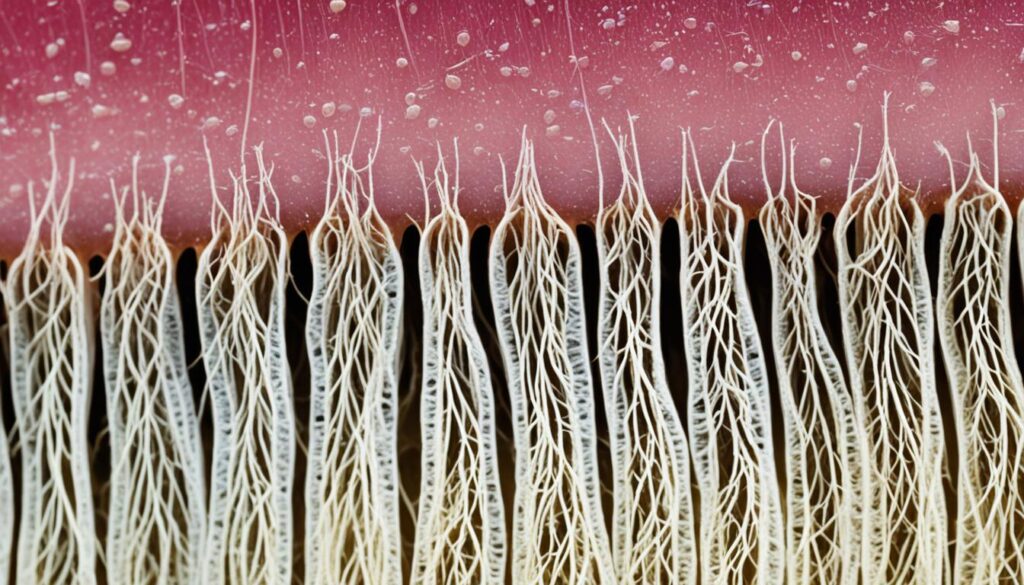
Hair loss is a common issue for both men and women, with up to 40% of women experiencing noticeable hair loss by the age of 50. In women, hormonal imbalances can often be a contributing factor to hair loss, leading to conditions such as female pattern hair loss. Understanding the causes and triggers of hormonal hair loss is key to finding effective treatment options.

Key Takeaways:
- Hormonal imbalances can contribute to hair loss in women.
- Female pattern hair loss is a common condition associated with hormonal factors.
- Identifying the causes of hormonal hair loss is crucial for effective treatment.
- Consulting with a hair loss expert can provide personalized treatment options.
- Understanding the hair growth cycle helps in recognizing abnormal hair loss patterns.
The Life Cycle of Hair
Hair growth occurs in cycles, consisting of three main phases: the anagen phase, the catagen phase, and the telogen phase. Understanding these hair growth cycles is essential in recognizing abnormal hair loss patterns and determining appropriate treatment options.
The Anagen Phase:
The anagen phase is the active phase of hair growth. It is during this phase that the hair follicles produce new hair cells, resulting in hair growth. The majority of hair on the head is in the anagen phase, which can last between 2 and 8 years. The length of the anagen phase determines the maximum potential length of the hair.
The Catagen Phase:
The catagen phase is a transitional phase that signals the end of the active hair growth. During this phase, the hair follicles shrink and detach from the blood supply, causing hair growth to stop. The catagen phase typically lasts for a few weeks.
The Telogen Phase:
The telogen phase is the resting phase of the hair growth cycle. It is during this phase that the hair strand is no longer actively growing. Instead, it remains in a dormant state until it is pushed out by the new hair growth in the anagen phase. On average, about 10-15% of hair on the scalp is in the telogen phase at any given time. After the telogen phase, the hair strand falls out, making way for new hair growth.
It is important to note that each hair follicle on the scalp is in a different stage of the hair growth cycle. This is why it is normal to shed a certain amount of hair every day, as the old hair strands in the telogen phase are replaced by new ones in the anagen phase.
“Understanding the hair growth cycle helps in recognizing abnormal hair loss patterns.”
By understanding the different phases of the hair growth cycle, we can gain insights into the timing and duration of hair growth and shedding. This understanding can aid in identifying abnormal hair loss patterns and determining if further evaluation or treatment is necessary.
| Phase | Description | Duration |
|---|---|---|
| Anagen Phase | The active phase of hair growth where new hair cells are produced | 2-8 years |
| Catagen Phase | The transitional phase signaling the end of active hair growth | A few weeks |
| Telogen Phase | The resting phase of the hair growth cycle where hair strands are in a dormant state | Up to 3 months |
Common Causes of Hair Loss in Women
Sudden and dramatic hair loss can be attributed to various factors that affect women. These causes can result in significant changes in hair thickness, volume, and overall density. Understanding the underlying reasons for hair loss is crucial in determining appropriate treatment approaches to address the issue effectively.
Telogen Effluvium
Telogen effluvium is a condition where hair shedding occurs following a significant stressor or trauma. This stress can include physical or emotional strain, major surgery, chronic illness, or severe weight loss. The condition interrupts the normal hair growth cycle, leading to increased shedding and a thinning appearance.
Hormonal Fluctuations
Hormonal fluctuations play a significant role in hair loss among women. During menopause, declining estrogen levels can lead to hair thinning, as estrogen promotes hair growth. Furthermore, conditions like polycystic ovarian syndrome (PCOS) can cause an imbalance in androgens, such as testosterone, which can contribute to hair loss.
Androgenetic Alopecia
Androgenetic alopecia, also known as female pattern hair loss, is a hereditary condition that affects women. It is characterized by a progressive thinning of the hair, particularly in the frontal and crown areas. This condition is influenced by androgens and genetic factors, leading to gradual hair loss over time.
Menopause
Menopause is a natural phase in a woman’s life that involves hormonal changes. The decrease in estrogen levels during menopause can contribute to hair loss or thinning. This hormonal shift affects the hair growth cycle, leading to hair loss and diminished hair volume.
Polycystic Ovarian Syndrome
Polycystic ovarian syndrome (PCOS) is a hormonal disorder that affects women of reproductive age. The condition is characterized by an overproduction of androgens, insulin resistance, and irregular menstrual cycles. These hormonal imbalances can cause hair thinning, excessive hair growth in other areas, and difficulty managing the condition.
Identifying the specific cause of hair loss is crucial in determining the most suitable treatment approach. By analyzing the underlying factors contributing to hair loss, medical professionals can develop personalized strategies to address hormonal imbalances and promote healthy hair regrowth.
Hormonal Shifts and Hair Loss
Hormonal shifts can have a significant impact on the health and appearance of our hair. In women, two key hormones, estrogen and androgens, play a crucial role in maintaining the hair growth cycle. When these hormonal levels become imbalanced, various hair-related issues can arise, including hair follicle shrinkage and increased shedding.
During menopause, estrogen levels naturally decrease, leading to a hormonal imbalance. This decrease in estrogen can cause hair follicles to become smaller, resulting in hair thinning and decreased hair regrowth. Additionally, an excess of androgens, such as in conditions like Polycystic Ovarian Syndrome (PCOS), can contribute to hair loss. Androgens can shorten the hair growth cycle, leading to hair shedding and a decrease in the duration of the anagen phase, where hair actively grows.
When the natural growth and shedding cycle of hair is disrupted due to hormonal shifts, hair follicles may spend less time in the anagen phase and more time in the telogen phase, where hair is in a resting state before falling out. This can result in an increase in hair shedding and a noticeable thinning of the hair.
To visualize the effects of hormonal shifts on hair follicles, take a look at the following table:
| Hormonal Shifts | Effects on Hair Follicles |
|---|---|
| Decreased estrogen levels during menopause | Hair follicle shrinkage and hair thinning |
| Excess androgens in conditions like PCOS | Shortened hair growth cycle and increased hair shedding |
Table: Effects of Hormonal Shifts on Hair Follicles
To better understand the impact of hormonal shifts on hair loss, it is important to consult with a healthcare professional who can provide a personalized diagnosis and recommend suitable treatment options. By addressing the underlying hormonal imbalances, it is possible to manage and potentially reverse the effects of hair loss caused by these shifts.

Treatment Options for Hormonal Hair Loss
When it comes to managing hormonal hair loss in women, there are several treatment options available. These treatments can help minimize hair loss, promote hair growth, and restore confidence. It is essential to understand the benefits and potential side effects of each treatment option before making a decision. Consultation with a doctor or hair loss expert is crucial in determining the most suitable treatment approach for individual needs.
1. Topical Minoxidil
Topical minoxidil is a widely recognized hair loss treatment that is available over-the-counter. It is applied directly to the scalp and promotes hair growth by prolonging the anagen phase of the hair growth cycle. Minoxidil is suitable for both men and women and can be used as a standalone treatment or in combination with other therapies.
2. Low-Light Lasers
Low-light lasers, also known as low-level laser therapy (LLLT) or red light therapy, have shown promising results in treating hair loss. These non-invasive devices emit red light, stimulating hair follicles and promoting hair growth. Low-light lasers can be used at home or in a clinical setting, making it a convenient option for many individuals.
3. Prescription Oral Medications
In some cases, prescription oral medications may be recommended to manage hormonal hair loss. Two commonly prescribed medications for women are finasteride (typically used for male pattern hair loss) and spironolactone. These medications work by blocking or reducing the effects of hormones that contribute to hair loss. It is important to note that these medications must be prescribed and monitored by a healthcare professional due to potential side effects.
4. Platelet-Rich Plasma (PRP) Therapy
Platelet-rich plasma therapy involves injecting a concentrated form of platelets derived from the patient’s own blood into the scalp. Platelets contain growth factors that stimulate hair follicle activity and promote hair regrowth. PRP therapy is a safe and effective treatment option that can be used alone or in combination with other therapies.
5. Microneedling
Microneedling, also known as collagen induction therapy, involves creating tiny punctures in the scalp using a device with fine needles. This process stimulates the production of collagen and increases blood flow to the hair follicles, promoting hair growth. Microneedling can be performed in a clinical setting or with at-home devices.
Each treatment option has its own advantages and considerations. To determine the most suitable treatment approach, it is important to consult with a healthcare professional or hair loss expert who can evaluate individual needs and provide personalized guidance.

Diagnosis and Management
Proper diagnosis and management of hair loss are crucial for effective treatment. When it comes to hormonal hair loss, consulting with a doctor is essential. Through a comprehensive examination and analysis of your medical history and lifestyle factors, a doctor can determine the underlying cause of your hair loss.
During the diagnosis process, your doctor may perform various tests, including blood tests, scalp biopsies, and hair analysis. These tests help in identifying any hormonal imbalances or deficiencies that may be contributing to your hair loss.
Based on the diagnosis, your doctor will recommend suitable treatment options tailored to your specific needs. These options may include:
- Hair Replacement Therapy: Hair replacement therapy involves procedures such as hair transplantation or scalp micropigmentation to restore the appearance of a full head of hair.
- Supplements: Certain supplements, such as biotin, vitamins, and minerals, may support hair health and growth. Your doctor may recommend specific supplements based on your individual requirements.
- Professional Guidance: Seeking guidance from a dermatologist or hair loss specialist is important for understanding the best course of action for managing hormonal hair loss. These professionals can provide expert advice and monitor your progress throughout the treatment process.
Remember, each individual’s hair loss journey is unique, and finding the right treatment approach may require some trial and error. With professional guidance and a personalized treatment plan, you can regain control over your hair loss and achieve optimal results.
Expert Advice and Support
When it comes to managing hormonal hair loss in women, seeking expert advice and support is crucial. Consulting with hair loss experts or gynecologists who specialize in women’s health can provide valuable insights and personalized treatment options based on your specific needs. These professionals have the knowledge and expertise to diagnose the underlying causes of your hair loss and recommend appropriate treatments.
With their professional diagnosis, you can gain a better understanding of the factors contributing to your hair loss and find expert treatment options that are tailored to your unique situation. Whether it’s evaluating your hormonal balance, assessing the health of your scalp, or recommending lifestyle changes, these specialists can guide you toward effective solutions.
In addition to their expertise in hair loss, gynecologists who specialize in women’s health can offer comprehensive gynecological care. Hormonal imbalance and hair loss often go hand in hand, making it essential to address any underlying gynecological issues that may be contributing to your hair loss. Regular check-ups and consultations can help ensure that your overall health is optimally managed and that any gynecological concerns are addressed.
Remember, managing hormonal hair loss requires a multidisciplinary approach. By partnering with hair loss experts and gynecologists who specialize in women’s health, you can have access to the expertise, support, and treatment options necessary to address your hair loss concerns.
| Treatment | Description |
|---|---|
| Topical minoxidil | A medication applied directly to the scalp to promote hair growth |
| Low-light lasers | Devices that stimulate hair follicles and promote regrowth |
| Prescription oral medications | Medications that target hormonal imbalances and help prevent further hair loss |
| Platelet-rich plasma | A therapy that uses your own blood platelets to promote hair regrowth |
| Microneedling | A procedure that involves creating tiny wounds on the scalp to stimulate hair growth |
Conclusion
Hormonal hair loss in women is a common issue that can have a significant impact on self-esteem and confidence. Understanding the causes and triggers of hormonal hair loss is essential for effective treatment options. By addressing the underlying hormonal imbalances and adopting a comprehensive approach to diagnosis and management, women can find solutions to manage and potentially reverse hormonal hair loss.
Managing hormonal hair loss in women requires professional guidance and expertise. Seeking the help of hair loss experts and gynecologists who specialize in women’s health is crucial in developing a personalized treatment plan. With their support, women can explore effective treatment options tailored to their specific needs and circumstances.
Effective treatment options for hormonal hair loss include topical minoxidil, low-light lasers, prescription oral medications like finasteride and spironolactone, platelet-rich plasma therapy, and microneedling. These treatments have shown promising results in promoting hair growth and reducing hair loss in women with hormonal imbalances.
In conclusion, managing hormonal hair loss in women requires a comprehensive approach that involves understanding the causes, seeking professional diagnosis, and exploring effective treatment options. With the right guidance and support, women can regain their confidence and manage hormonal hair loss successfully.
FAQ
What is hormonal hair loss in women?
Hormonal hair loss in women refers to hair thinning or shedding caused by hormonal imbalances, such as changes in estrogen levels during menopause or an overproduction of androgens in conditions like polycystic ovarian syndrome.
What is female pattern hair loss?
Female pattern hair loss is a specific type of hormonal hair loss in women characterized by a gradual thinning of hair on the top of the head, typically in a pattern similar to that seen in male pattern baldness.
What are some common causes of hormonal hair loss in women?
Hormonal hair loss in women can be caused by factors like telogen effluvium triggered by high stress or trauma, hormonal fluctuations during menopause, and conditions like androgenetic alopecia and polycystic ovarian syndrome.
How do hormonal shifts affect hair loss in women?
Hormonal shifts, such as a decrease in estrogen levels during menopause or an overproduction of androgens in conditions like polycystic ovarian syndrome, can lead to hair follicle shrinkage and hair thinning, affecting the natural growth and shedding cycle of hair.
What are the treatment options for hormonal hair loss in women?
Treatment options for hormonal hair loss in women include topical minoxidil, low-light lasers, prescription oral medications like finasteride and spironolactone, platelet-rich plasma therapy, and microneedling.
How is hormonal hair loss diagnosed and managed?
Hormonal hair loss in women is diagnosed through a thorough examination and analysis of an individual’s medical history and lifestyle factors. Management may involve hair replacement therapy, the use of supplements, and professional guidance from a dermatologist or hair loss specialist.
Is it important to seek expert advice for hormonal hair loss?
Yes, seeking expert advice and support is crucial for managing hormonal hair loss in women. Consulting with a hair loss expert or gynecologist who specializes in women’s health can provide valuable insights and personalized treatment options based on individual needs.
How can hormonal hair loss be effectively managed?
By understanding the causes and triggers of hormonal hair loss and seeking professional diagnosis and treatment, women can find effective solutions to manage and potentially reverse hormonal hair loss.