
Female pattern baldness is a common form of hair loss that affects both women and men. It is characterized by a gradual thinning of hair on the top and crown of the scalp, resulting in a “Christmas tree” pattern of hair loss. While male pattern baldness often leads to complete or near-total baldness, female pattern baldness usually does not progress to that extent.
The exact cause of female pattern baldness is not fully understood, but it may be linked to factors such as aging, hormonal changes, family history, heavy menstrual bleeding, and certain medications. Diagnosis involves ruling out other causes of hair loss and examining the appearance and pattern of hair thinning.
Although there is no known cure or prevention for female pattern baldness, there are treatment options available to manage the condition and promote hair growth. These include the use of minoxidil, hair transplants, and other medications. Additionally, there are coping strategies that can help improve self-esteem and enhance the appearance of hair loss.
In this article, we will explore the causes, diagnosis, treatment options, coping strategies, and the impact of female pattern baldness. We will provide essential information to help individuals understand this condition and make informed decisions about managing hair loss.

Key Takeaways:
- Female pattern baldness is the most common type of hair loss in women and men.
- It is characterized by hair thinning on the top and crown of the scalp, with a “Christmas tree” pattern.
- The exact cause is not fully understood, but it may be related to factors such as aging, hormones, family history, heavy menstrual bleeding, and certain medications.
- Diagnosis involves ruling out other causes of hair loss and examining the appearance and pattern of hair thinning.
- Treatment options include minoxidil, hair transplants, and other medications.
Causes of Female Male Pattern Baldness
The exact cause of female pattern baldness is not fully understood, but several factors may contribute to its development. These include:
- Androgens: Female pattern baldness is believed to be influenced by androgen hormones, especially dihydrotestosterone (DHT). Androgens can shrink hair follicles, leading to hair thinning and eventual loss.
- Aging: As women age, hormonal changes occur that can affect hair growth and lead to thinning. The production of estrogen decreases, while androgen levels may increase.
- Family history: Female pattern baldness often runs in families, suggesting a genetic predisposition to the condition. If your mother or grandmother experienced hair loss, you may be more likely to develop it as well.
- Heavy menstrual bleeding: Excessive menstrual bleeding can lead to iron deficiency anemia, which is associated with hair loss. The lack of iron can disrupt the hair growth cycle and contribute to hair thinning.
- Certain medications: The use of certain medications, such as those for treating cancer, heart disease, depression, and autoimmune disorders, may contribute to hair loss in some women.
While these factors may play a role in the development of female pattern baldness, it’s important to note that each individual’s experience with hair loss may vary. It is recommended to consult with a healthcare professional to determine the underlying cause and appropriate treatment options.
Diagnosing Female Male Pattern Baldness
Diagnosing female pattern baldness involves a thorough evaluation to rule out other potential causes of hair loss and to assess the appearance and pattern of hair loss. The diagnostic process typically includes:
- Ruling out other causes: Before diagnosing female pattern baldness, it is important to consider and eliminate other potential causes of hair loss. These may include hormonal imbalances, nutritional deficiencies, thyroid disorders, scalp infections, and certain medications.
- Medical history: A detailed medical history helps in identifying any underlying conditions or factors that may be contributing to hair loss. Information regarding family history of hair loss, previous medical conditions, surgeries, and medication use is often collected.
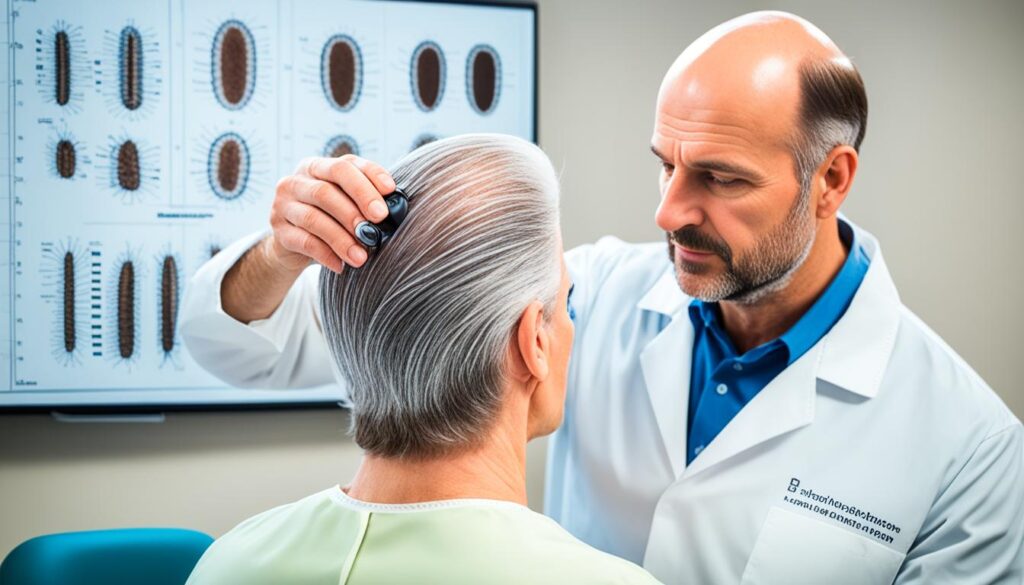
- Physical examination: A thorough physical examination of the scalp and hair follicles is conducted. This examination helps in assessing the appearance and pattern of hair loss, such as the presence of thinning hair on the top and crown of the scalp or a widening of the center hair part.
By ruling out other potential causes and carefully evaluating the appearance and pattern of hair loss, healthcare professionals can make an accurate diagnosis of female pattern baldness. This allows for the development of an appropriate treatment plan tailored to the individual’s needs.

| Diagnostic Methods | Description |
|---|---|
| Medical history assessment | A comprehensive review of the individual’s medical history, including family history of hair loss, previous medical conditions, surgeries, and medication use. |
| Physical examination | A thorough examination of the scalp and hair follicles to assess the appearance and pattern of hair loss. |
| Lab tests | In some cases, lab tests may be ordered to rule out underlying medical conditions or hormonal imbalances that could be causing hair loss. |
| Scalp biopsy | In certain situations, a small tissue sample may be taken from the scalp for further examination under a microscope to confirm the diagnosis. |
These diagnostic methods provide crucial information for accurately diagnosing female pattern baldness. It is important to consult with a healthcare professional experienced in hair loss to ensure an accurate diagnosis and appropriate treatment plan.
Treatment Options for Female Male Pattern Baldness
Managing female pattern baldness can be challenging, but there are several effective treatment options available. These treatment options aim to slow down hair loss, stimulate hair regrowth, and improve the overall appearance of the hair.
1. Minoxidil
2. Hair Transplants
Hair transplants are a surgical treatment option that involves taking hair from areas of the scalp where hair is still growing, such as the back or sides, and transplanting it to the areas of thinning or baldness. This procedure is typically performed under local anesthesia and can provide natural-looking results. However, it is important to note that hair transplants can be expensive and may require multiple sessions to achieve the desired outcome.
3. Medications
In some cases, medications may be prescribed to help manage female pattern baldness. These medications can help regulate hormone levels and address underlying health conditions that may be contributing to hair loss. Common medications used for treating female pattern baldness include oral contraceptives, anti-androgens, and certain medications used to treat other medical conditions.
| Treatment Option | Description |
|---|---|
| Minoxidil | A topical medication that stimulates hair regrowth |
| Hair Transplants | Surgical procedure to transplant hair from donor areas to balding areas |
| Medications | Prescribed medications to regulate hormones and address underlying conditions |
It is important to consult with a healthcare professional or a dermatologist to determine the most suitable treatment option based on individual needs and preferences. They can provide personalized recommendations and guidance to help manage female pattern baldness effectively.
Coping Strategies for Female Male Pattern Baldness
Coping with female male pattern baldness can be challenging, but there are various strategies that can help improve self-esteem and manage the appearance of hair loss. These include:
- Hair Weaving: Hair weaving is a non-surgical procedure that involves attaching artificial hair to existing hair or directly to the scalp. This technique can help add thickness and volume to the hair, creating a more natural-looking appearance. Hair weaving is a popular choice for individuals with female pattern baldness as it provides immediate results.
- Hairpieces: Hairpieces, such as wigs or hair extensions, are an effective way to conceal hair loss and change hairstyles. They come in various styles, colors, and lengths, allowing individuals to experiment with different looks and boost their confidence. High-quality hairpieces can be easily styled and offer a realistic appearance, making them a popular choice among individuals with female pattern baldness.
- Change in Hairstyle: Another coping strategy for female pattern baldness is to explore different hairstyles that work well with thinning hair. Certain hairstyles, such as layered cuts or shorter styles, can help create the illusion of fuller hair. Styling techniques like blow-drying or using volumizing products can also add volume and texture to the hair, camouflaging the appearance of thinning areas.
These coping strategies can help individuals with female pattern baldness feel more confident and comfortable with their appearance. Whether it’s through hair weaving, wearing hairpieces, or experimenting with different hairstyles, there are options available to manage the effects of hair loss.
Impact of Female Male Pattern Baldness
Female pattern baldness can have a significant impact on self-esteem and overall emotional well-being. The loss of hair can be distressing and may lead to feelings of embarrassment, self-consciousness, and anxiety. It is important to understand that hair loss is primarily a cosmetic concern and does not necessarily affect physical health. However, the psychological effects of female pattern baldness should not be underestimated.
One’s self-esteem and body image can be deeply affected by the presence of hair loss, especially in societal contexts where a full head of hair is often associated with beauty and youthfulness. For many individuals, the physical change brought about by female pattern baldness can be emotionally challenging, leading to a loss of confidence and a negative self-perception. The impact of hair loss can be particularly pronounced if it occurs at a young age.
The emotional distress caused by female pattern baldness can manifest in various ways. Some individuals may become less socially engaged, avoiding situations where their hair loss may be noticeable or scrutinized. Others may experience heightened anxiety or self-consciousness, constantly worrying about their appearance and how others perceive them. The impact of female pattern baldness on one’s mental health and well-being should not be overlooked.
“Hair loss for women is not just a cosmetic issue. It can have a significant impact on their sense of identity, self-esteem, and overall quality of life. We need to recognize the emotional toll that female pattern baldness can take and provide support to those affected.” – Dr. Jane Simmons, Dermatologist
If hair loss due to female pattern baldness is causing significant distress, it is important to seek support from professionals who specialize in body image or self-esteem issues. Therapists or counselors can provide guidance and help individuals develop coping strategies to navigate the emotional challenges brought about by hair loss. Building a support network of friends and loved ones who understand and empathize can also be beneficial.
While it is important to address the emotional impact of female pattern baldness, it is equally important to understand that there is no shame in embracing one’s natural appearance. Society’s standards of beauty can be unrealistic and it is crucial to cultivate self-acceptance and self-love. Various styling options, such as different hairstyles, scarves, or hats, can also help individuals feel more confident and comfortable in their own skin.
Key Points:
- Female pattern baldness can have a significant impact on self-esteem and emotional well-being.
- Hair loss can lead to feelings of embarrassment, self-consciousness, and anxiety.
- Hair loss primarily affects self-image and does not necessarily impact physical health.
- Seek support from therapists or counselors specializing in body image or self-esteem issues.
- Embrace self-acceptance and self-love, challenging societal beauty standards.
Conclusion
Female pattern baldness is a common condition characterized by hair thinning on the top and crown of the scalp. While there is no known cure for female pattern baldness, there are various treatment options available to manage the condition and promote hair growth.
One of the most effective remedies for female pattern baldness is minoxidil, a topical medication that stimulates hair growth. Minoxidil is available over-the-counter and can be applied directly to the scalp. Another solution is hair transplants, a surgical procedure where hair follicles from another part of the body are transplanted to the balding areas on the scalp. This technique provides a long-lasting solution for restoring hair.
In addition to these remedies, there are prevention strategies that can help slow down or minimize the effects of female pattern baldness. It is important to maintain a healthy lifestyle, including a balanced diet and regular exercise, as these factors can contribute to overall hair health. Avoiding hairstyles that pull tightly on the hair, reducing the use of heat styling tools, and protecting the hair from harsh chemicals can also prevent further damage and hair loss.
To improve the appearance of hair loss, various coping strategies can be employed. Hair weaving techniques can add volume and thickness to thinning hair, while hairpieces and wigs provide a temporary solution for achieving a desired hairstyle. Additionally, a change in hairstyle, such as a shorter cut or different parting, can help camouflage areas of thinning hair.
Although female pattern baldness can be distressing, it is important to remember that there are options available to manage the condition and enhance hair growth. Consulting with a dermatologist or a hair loss specialist can provide valuable guidance and personalized recommendations for the best course of action. With the right remedies, solutions, and prevention strategies, it is possible to regain confidence and embrace a fuller head of hair.
FAQ
What is female male pattern baldness?
Female male pattern baldness is the most common type of hair loss in women. It is characterized by hair thinning mainly on the top and crown of the scalp, with a widening through the center hair part. This pattern of hair loss is known as a “Christmas tree” pattern.
What causes female male pattern baldness?
The exact cause of female male pattern baldness is not fully understood, but several factors may contribute to its development. These include aging, changes in hormone levels, family history, heavy menstrual bleeding, and certain medications.
How is female male pattern baldness diagnosed?
Diagnosing female male pattern baldness involves ruling out other causes of hair loss and assessing the appearance and pattern of hair loss. The following diagnostic methods may be used: medical history, physical examination, and laboratory tests.
What are the treatment options for female male pattern baldness?
There are several treatment options available for managing female male pattern baldness. These include minoxidil, hair transplants, and other medications. The choice of treatment depends on the individual’s preferences and the extent of hair loss.
How can I cope with female male pattern baldness?
Coping with female male pattern baldness can be challenging, but there are various strategies that can help improve self-esteem and manage the appearance of hair loss. These include hair weaving, hairpieces, and changes in hairstyle.
What impact does female male pattern baldness have on self-esteem?
Female male pattern baldness can have a significant impact on self-esteem and overall emotional well-being. Hair loss can be distressing and may cause feelings of embarrassment, self-consciousness, or anxiety.
Are there any remedies or solutions for female male pattern baldness?
While there is no known cure for female male pattern baldness, there are various treatment options available to manage the condition and promote hair growth. Additionally, adopting preventive strategies such as a healthy lifestyle and avoiding harsh hair treatments may help prevent or slow down the progression of hair loss.