
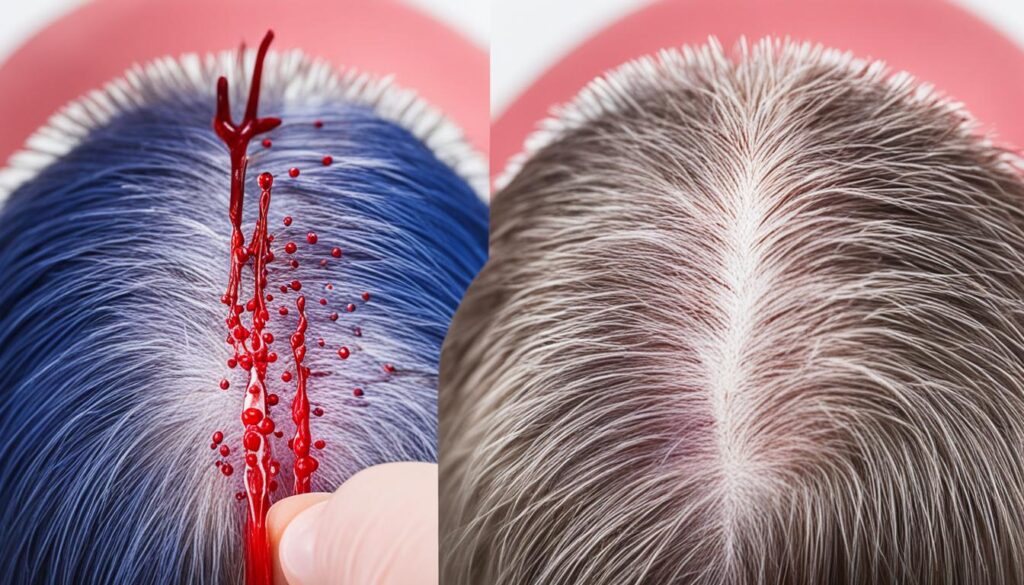
Platelet-rich plasma (PRP) has emerged as a popular treatment option for individuals dealing with alopecia, particularly androgenic alopecia, also known as male pattern baldness. PRP therapy involves using a patient’s own plasma and platelets, which contain growth factors that promote tissue regeneration and healing. This innovative approach to hair restoration has shown promising results in reducing hair loss and increasing hair count.
PRP injections for alopecia work by stimulating the stem cells in hair follicles through the growth factors present in platelets. This stimulation promotes the development of new follicles and stimulates hair growth. PRP treatments can be used alone or in combination with other procedures like hair transplants to enhance their effectiveness. The noticeable results of PRP therapy for alopecia typically become apparent after several weeks or months, and additional injections may be necessary to maintain the results.
Key Takeaways:
- Platelet-rich plasma (PRP) therapy is a popular and innovative treatment for alopecia.
- PRP injections contain growth factors that promote tissue regeneration and healing.
- PRP injections stimulate stem cells in hair follicles, promoting hair growth.
- PRP therapy can be used alone or in combination with other procedures for enhanced results.
- Results from PRP therapy for alopecia become noticeable after several weeks or months.
The benefits of platelet-rich plasma therapy for alopecia include its safety and cost-effectiveness, as the treatment utilizes the patient’s own blood cells, reducing the risk of allergic reactions. PRP therapy has been shown to improve hair volume, coverage, and overall patient satisfaction. However, it is important to note that like any medical procedure, PRP therapy comes with potential risks, including minimal pain, redness, bruising at the injection site, as well as rare risks such as bleeding, tissue damage, infection, and nerve injuries.
In conclusion, platelet-rich plasma therapy offers a promising treatment option for individuals with alopecia, especially androgenic alopecia. It taps into the regenerative and healing properties of platelets to stimulate hair growth and improve hair volume and coverage. While additional research is needed to fully understand the extent of PRP therapy’s effectiveness for alopecia, the initial results are encouraging. PRP injections can be a valuable addition to the range of treatment options available for those seeking to restore their hair and regain their confidence.
How Does Platelet-Rich Plasma Work for Alopecia?
Platelet-rich plasma (PRP) injections have emerged as a viable option for treating alopecia, offering a potential solution for those struggling with hair loss. While the exact mechanisms behind PRP’s effectiveness are not fully understood, there are indications that this innovative treatment works by stimulating hair growth through the activation of stem cells in the hair follicles.
PRP is a concentrated solution derived from the patient’s own blood, containing a high concentration of growth factors and platelets. When injected into the scalp, these growth factors are believed to promote the growth of new hair follicles and rejuvenate dormant ones, resulting in improved hair density and coverage.
One theory suggests that the growth factors in PRP stimulate the activity of dermal papilla cells, which play a crucial role in initiating and regulating hair follicle growth. By activating these cells, PRP can kickstart the hair growth process and potentially reverse the effects of alopecia.
PRP injections can be used as a standalone treatment for alopecia or in combination with other procedures, such as hair transplants, to enhance their effectiveness. This flexibility allows doctors to tailor the treatment approach based on each individual’s specific needs and goals.
The results of PRP treatment for alopecia are not immediate, as hair growth is a gradual process. Patients typically notice an improvement in hair density and quality after several weeks or months of treatment. To maintain the results, additional PRP injections may be required periodically.
Overall, PRP therapy offers a promising and innovative approach to hair restoration, providing individuals with alopecia with a potential alternative to traditional treatment options. By harnessing the regenerative properties of platelets and growth factors, PRP injections can contribute to the revitalization of hair follicles and the promotion of new hair growth.
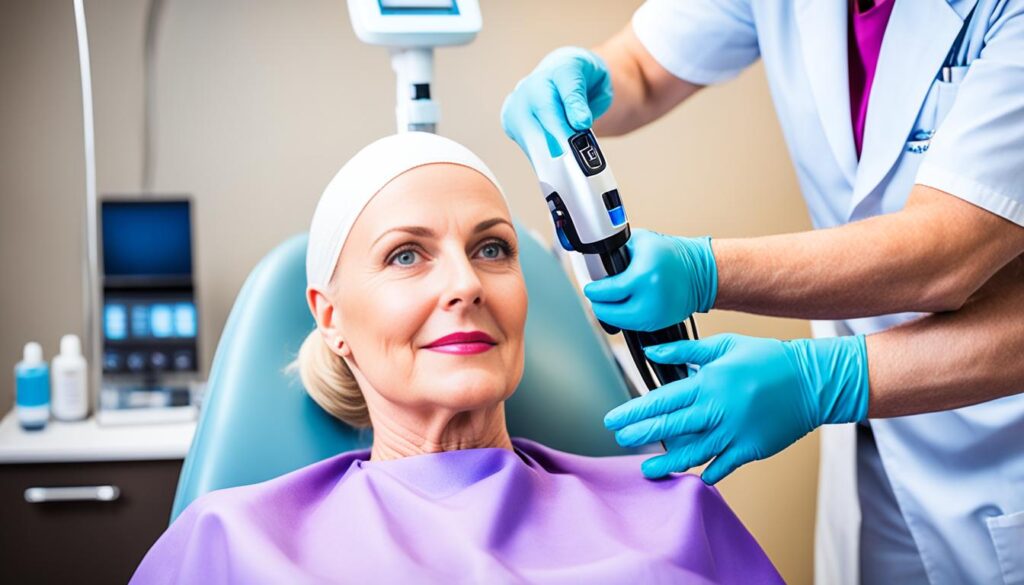

Advantages of Platelet-Rich Plasma for Hair Restoration:
- Promotes hair growth by stimulating stem cells in the hair follicles
- Can be used as a standalone treatment or in combination with other procedures
- Offers a natural and regenerative approach to hair restoration
- Can improve hair density and coverage
- Uses the patient’s own blood, minimizing the risk of allergic reactions
- Demonstrates potential for long-term results with maintenance injections
While PRP injections for alopecia show promise, it is essential to consult with a qualified medical professional to determine the most suitable treatment plan for your specific condition. They can provide a comprehensive evaluation and guide you through the available options, ensuring the best possible outcomes for your hair restoration journey.
The Benefits and Risks of Platelet-Rich Plasma for Alopecia Treatment
Platelet-rich plasma therapy for alopecia offers several benefits. It is a safe and cost-effective treatment option that utilizes the patient’s own blood cells, reducing the risk of allergic reactions. The procedure involves obtaining a blood sample from the patient, which is then centrifuged to separate the platelets. These concentrated platelets are then injected into the scalp, stimulating hair growth and improving hair volume, coverage, and overall patient satisfaction.
Unlike other hair loss treatments, platelet-rich plasma therapy is a natural and minimally invasive procedure that does not require any incisions or sutures. The use of the patient’s own blood cells eliminates the risk of rejection or adverse reactions, making it a suitable option for individuals with sensitive skin or a history of allergies.
In addition to its safety and effectiveness, platelet-rich plasma therapy for alopecia also offers the advantage of convenience. The procedure can be performed in a medical office or dermatology clinic, with minimal downtime or recovery period. Patients can resume their normal activities immediately after the treatment.
However, like any medical procedure, there are potential risks involved with platelet-rich plasma therapy. While uncommon, some patients may experience minimal pain, redness, and bruising at the injection site, which typically resolves within a few days. Rare risks may include bleeding, tissue damage, infection, and nerve injuries.
It is important for patients to consult with a qualified healthcare professional or dermatologist before undergoing platelet-rich plasma therapy for alopecia. A thorough assessment of each individual’s medical history and hair loss condition will help determine the suitability of the treatment and minimize any potential risks.
“Platelet-rich plasma therapy for alopecia is a safe and effective treatment option that can improve hair volume, coverage, and patient satisfaction. However, it is essential to carefully evaluate the risks and benefits with a healthcare professional before deciding to undergo the procedure.”
Benefits of Platelet-Rich Plasma Therapy for Alopecia:
- Safe and cost-effective treatment option
- Utilizes the patient’s own blood cells
- Reduces the risk of allergic reactions
- Natural and minimally invasive procedure
- No incisions or sutures required
- Convenient with minimal downtime
Risks of Platelet-Rich Plasma Therapy for Alopecia:
- Minimal pain, redness, and bruising at the injection site
- Rare risks of bleeding, tissue damage, infection, and nerve injuries
| Benefits of Platelet-Rich Plasma Therapy | Risks of Platelet-Rich Plasma Therapy |
|---|---|
| Safe and cost-effective treatment option | Minimal pain, redness, and bruising at the injection site |
| Utilizes the patient’s own blood cells | Rare risks of bleeding, tissue damage, infection, and nerve injuries |
| Reduces the risk of allergic reactions | |
| Natural and minimally invasive procedure | |
| No incisions or sutures required | |
| Convenient with minimal downtime |

Conclusion
Platelet-rich plasma therapy offers a promising treatment option for individuals with alopecia, especially androgenic alopecia. By harnessing the regenerative and healing properties of platelets, PRP therapy stimulates hair growth and improves hair volume and coverage. While further research is needed to fully understand the effectiveness of PRP therapy for alopecia, the initial results are encouraging.
PRP injections can be a valuable addition to the range of treatment options available for those seeking to restore their hair and regain their confidence. The use of PRP therapy for alopecia is safe and cost-effective, as it utilizes the patient’s own blood cells, reducing the risk of allergic reactions. Patients can opt for PRP injections as a standalone treatment or in combination with other procedures, such as hair transplants, to enhance their effectiveness and achieve optimal results.
With minimal pain and potential side effects that are usually temporary and mild, such as redness, bruising, and swelling at the injection site, PRP therapy offers a convenient and non-invasive option for individuals battling alopecia. It provides hope and a renewed sense of self for those struggling with hair loss.
As the field of regenerative medicine continues to advance, PRP therapy for alopecia holds promising potential. It is paving the way for innovative solutions that address the underlying causes of alopecia and promote natural hair restoration. With ongoing research and advancements, PRP therapy may become a standard and effective treatment option for individuals seeking to combat the challenges of alopecia.
FAQ
How is platelet-rich plasma used for alopecia?
Platelet-rich plasma (PRP) is used for alopecia by injecting a concentrated solution of plasma and platelets into the affected area. The growth factors present in the platelets stimulate hair growth and promote tissue regeneration in the hair follicles.
What are the benefits of platelet-rich plasma therapy for alopecia?
Platelet-rich plasma therapy offers several benefits for alopecia treatment. It is a safe and cost-effective option that uses the patient’s own blood cells, reducing the risk of allergic reactions. PRP injections can improve hair volume, coverage, and overall patient satisfaction.
How does platelet-rich plasma work for alopecia?
Platelet-rich plasma works for alopecia by stimulating stem cells in the hair follicles, promoting the development of new follicles and stimulating hair growth. It can be used as a standalone treatment or in combination with other procedures to enhance their effectiveness.
What are the risks of platelet-rich plasma therapy for alopecia?
The risks of platelet-rich plasma therapy for alopecia are minimal but can include pain, redness, bruising, bleeding, tissue damage, infection, and nerve injuries. However, these risks are rare, and PRP therapy is generally considered safe.
How long does it take to see results from platelet-rich plasma treatment for alopecia?
The results of platelet-rich plasma treatment for alopecia are most noticeable after several weeks or months. However, additional injections may be required to maintain the results.
Is platelet-rich plasma therapy a permanent solution for alopecia?
Platelet-rich plasma therapy is not considered a permanent solution for alopecia. Regular maintenance injections may be needed to sustain the results over time.