

Are there any medications for treating hair loss in women? When it comes to women’s hair loss treatment, the options may seem limited or uncertain. However, there are effective medications available that can help address the issue of female hair loss. In this article, we will explore the best drugs for women’s hair regrowth, topical treatments for women’s hair thinning, and oral medications for female hair loss.
Many prescription medications originally developed for other purposes have shown promising results in treating hair loss in women. While some treatments are FDA-approved, others are prescribed off-label, meaning they are not specifically approved for female pattern hair loss but have been found to be effective in practice.
Whether you are experiencing female pattern baldness or other forms of hair loss, understanding the range of medications available can help you make an informed decision about the most suitable treatment for your specific condition.
Medications for Female Hair Loss: Minoxidil and Topical Treatments
When it comes to finding effective medications for women’s hair loss treatment, minoxidil and topical treatments play a significant role. Originally used as a blood pressure medication, minoxidil was discovered to stimulate hair growth when applied topically. This breakthrough led to the development of topical minoxidil solutions specifically designed for women experiencing hair loss.
Topical minoxidil is available in two concentrations: 2% and 5%. While the 2% concentration is FDA-approved for women’s use, some dermatologists prescribe the 5% concentration under supervision. Clinical studies have shown that the 5% minoxidil solution is significantly more effective in retaining and regrowing hair in women with androgenetic alopecia, also known as female pattern baldness.
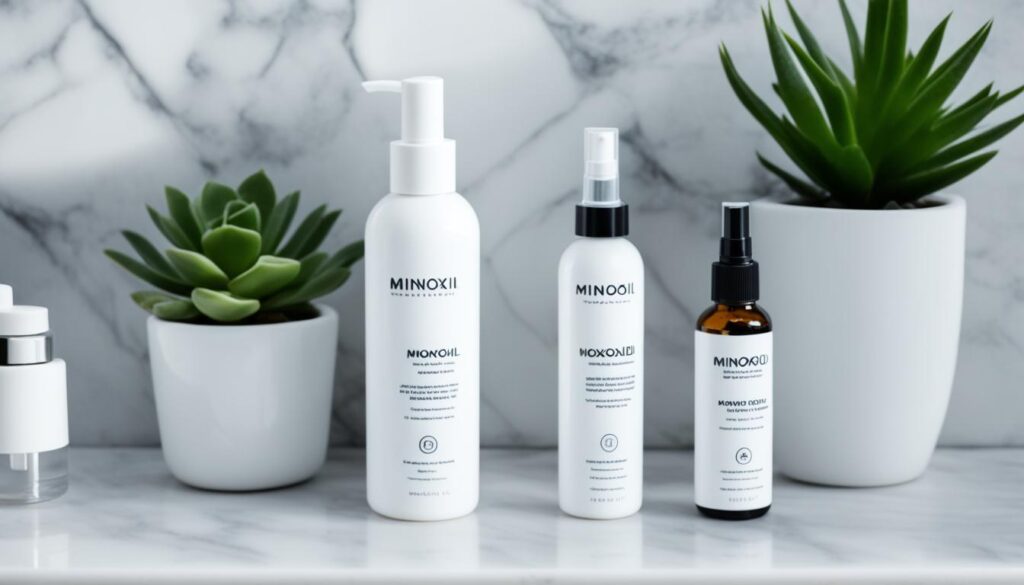

Results from these clinical studies revealed that after eight months of consistent use, 19% of women using 5% minoxidil experienced moderate regrowth, while 40% experienced minimal regrowth. On the other hand, the 2% minoxidil placebo group exhibited 7% moderate regrowth and 33% minimal regrowth. These findings highlight the effectiveness of minoxidil in promoting hair regrowth in women with androgenetic alopecia.
While minoxidil has proven to be a helpful treatment option, it’s important to note that there may be some side effects associated with its use. These can include scalp irritation and unwanted hair growth on adjacent skin. Despite these potential side effects, minoxidil remains one of the most FDA-approved and clinically studied treatments for women’s hair loss.
Medications for Female Hair Loss: Systemic Treatments and Hormonal Medications
When it comes to treating female hair loss, systemic treatments and hormonal medications play a significant role in addressing the underlying causes of hair loss. Here are some commonly used options:
Spironolactone
Spironolactone, a potassium-sparing diuretic, acts as an anti-androgen. It reduces androgen production and blocks androgen receptors, making it effective in treating hair loss associated with excessive androgen activity.
Cimetidine
Cimetidine, originally used as a histamine blocker, has shown promising anti-androgenic effects. It has been studied as a potential treatment for androgenic alopecia in women.
Cyproterone Acetate
Cyproterone acetate is primarily prescribed for hormonal disorders and severe hirsutism, but it can also be considered as a last resort for female pattern hair loss. However, caution must be exercised due to potential toxicity and side effects associated with its use.
Estrogen and Progesterone
Hormonal deficiencies, such as those experienced during menopause, can contribute to hair loss. Estrogen and progesterone pills and creams can help address hormonal imbalances and promote hair growth in these cases.
Birth Control Pills
Low-androgen index birth control pills can be used to treat hair loss in women. These pills help regulate hormone levels and may promote hair growth. However, it’s important to be mindful of potential side effects, such as an increased risk of blood clots.
Ketoconazole
Ketoconazole, originally used for fungal infections, can also be used as a topical treatment for hair loss. It works by curbing testosterone production, which can contribute to hair loss.
It’s important to note that the effectiveness of these systemic treatments and hormonal medications may vary depending on the underlying cause of hair loss. Consulting with a healthcare professional is crucial to determine the most suitable treatment options and ensure proper diagnosis.
| Treatment | Benefits | Considerations |
|---|---|---|
| Spironolactone | Reduces androgen production Blocks androgen receptors |
Potential side effects Requires monitoring |
| Cimetidine | Anti-androgen effects | Limited research Varied efficacy |
| Cyproterone Acetate | Possible treatment for severe hair loss | Last resort option due to potential toxicity and side effects |
| Estrogen and Progesterone | Effective for hormonal deficiencies Promotes hair growth |
Requires proper diagnosis Possible side effects |
| Birth Control Pills | Regulates hormone levels Promotes hair growth |
Caution for potential side effects |
| Ketoconazole | Curbs testosterone production | Topical treatment Requires consistency |
Conclusion
When it comes to women’s hair loss treatment, there are several effective medications available. These medications offer solutions for baldness and help women regrow hair, providing hope and confidence to those experiencing hair loss.
One of the most widely recognized and FDA-approved treatments is minoxidil. This topical solution has shown significant results in retaining and regrowing hair for women with androgenetic alopecia. It is essential to initiate treatment early and tailor it to the specific cause of hair loss and hair growth triggers.
For systemic treatments, medications like spironolactone, cimetidine, cyproterone acetate, estrogen/progesterone pills and creams, birth control pills, ketoconazole, finasteride, and dutasteride may be prescribed based on the underlying cause of hair loss. It is vital to consult with a healthcare professional for accurate diagnosis and guidance on the most suitable treatment options.
Remember, effective medications can provide hair loss solutions for women. Early intervention and personalized treatment plans can make a significant difference in regaining hair and restoring confidence. Don’t hesitate to explore these treatment options with professional guidance and begin your journey to healthier and fuller hair.
FAQ
Are there any medications for treating hair loss in women?
Yes, there are several medications available for treating hair loss in women.
What are the best drugs for women’s hair regrowth?
The best drugs for women’s hair regrowth include minoxidil, spironolactone, cimetidine, cyproterone acetate, estrogen/progesterone pills and creams, birth control pills, ketoconazole, finasteride, and dutasteride.
Which medications are FDA-approved for female pattern baldness?
The only FDA-approved treatment for female pattern hair loss is minoxidil.
What are the topical treatments available for women’s hair thinning?
Topical treatments such as minoxidil are commonly used for women’s hair thinning.
Are there any oral medications for female hair loss?
Yes, there are oral medications such as spironolactone, cimetidine, cyproterone acetate, estrogen/progesterone pills, birth control pills, and ketoconazole that can be used to treat female hair loss.
What are the most effective medications for female alopecia?
The effectiveness of medications for female alopecia varies depending on the individual. Treatment options should be tailored to the cause of hair loss and hair growth triggers.
Can minoxidil regrow hair in women?
Yes, minoxidil has been found to be effective in retaining and regrowing hair in women with androgenetic alopecia. Clinical studies have shown positive results.
What are the side effects of minoxidil?
Possible side effects of minoxidil include scalp irritation and unwanted hair growth on adjacent skin.
How does spironolactone work for hair loss in women?
Spironolactone is a potassium-sparing diuretic that acts as an anti-androgen, reducing androgen production and blocking androgen receptors, which can help with hair loss in women.
Can hormonal medications help with female pattern hair loss?
Yes, hormonal medications such as estrogen/progesterone pills and creams, as well as low-androgen index birth control pills, can be effective for women experiencing hair loss due to hormonal deficiencies.
What should I consider before starting any medication for female hair loss?
Before starting any medication for female hair loss, it is important to consult with a healthcare professional for a proper diagnosis and to determine the most suitable treatment options based on the underlying cause of hair loss.