

Laser therapy is a highly effective treatment option for female hair loss. It is a non-invasive, non-surgical approach that utilizes laser light to stimulate hair follicles and promote hair regrowth. This innovative treatment has been proven to slow down or stop hair loss in 85% of patients and stimulate new hair growth in 55% of cases.
Female hair loss can be caused by various factors, including genetics, hormonal changes, and aging. Laser therapy specifically targets the underlying causes of hair loss by revitalizing the hair follicles and promoting cell growth. It is FDA-approved for the treatment of androgenetic alopecia, also known as male or female pattern baldness, and can also be used for other forms of alopecia.
Key Takeaways:
- Laser therapy is a non-invasive, non-surgical treatment option for female hair loss.
- It stimulates hair follicles and promotes hair regrowth.
- Studies have shown it can slow down or stop hair loss in 85% of patients.
- Laser therapy is FDA-approved for the treatment of androgenetic alopecia.
- It can be used in conjunction with other hair loss treatments for optimal results.
How Does Laser Therapy Work?
Laser therapy, a popular non-surgical treatment option for female hair loss, harnesses the power of specific wavelengths of light to stimulate hair regrowth. By targeting the hair follicles, laser therapy promotes cell growth and rejuvenation, effectively combating female pattern hair loss.
This innovative treatment works by utilizing low-level laser therapy (LLLT) to emit a concentrated beam of light that is absorbed by the hair follicles. This absorbed light energy stimulates the stem cells within the follicles, triggering the regeneration process for hair growth.
One of the primary ways laser therapy stimulates hair regrowth is by increasing adenosine triphosphate (ATP) production in the hair follicle cells. ATP is the energy currency of cellular activity and supports the metabolic processes necessary for healthy hair growth. The enhanced metabolic activity leads to accelerated hair growth and can help counteract the effects of female pattern hair loss.
Laser therapy also improves blood flow to the scalp, promoting better circulation and nutrient delivery to the hair follicles. This increased blood flow ensures that the follicles receive a sufficient supply of oxygen and essential nutrients, promoting healthier hair growth. With improved circulation, the hair follicles become revitalized, resulting in thicker, fuller hair.
Research has shown that laser therapy is most effective when initiated in the early stages of hair loss or in cases of partial hair loss. Starting treatment early can help prevent further hair loss and increase the chances of significant regrowth. Consistency is crucial when undergoing laser therapy, as uninterrupted sessions are essential for optimal results.
“Laser therapy is a breakthrough treatment for female hair loss. By stimulating hair follicle regeneration and improving blood flow, it effectively addresses the underlying causes of female pattern hair loss.”
Combining the rejuvenating power of laser therapy with other hair restoration procedures can further enhance the results. Whether used as a standalone treatment or in conjunction with other therapies, laser therapy offers a safe, non-invasive solution for women struggling with hair loss.
| Laser Therapy Benefits | Laser Therapy Considerations |
|---|---|
|
|
Investing in laser therapy can restore confidence and provide a long-lasting solution for female hair loss. With its proven effectiveness and non-invasive nature, laser therapy is becoming an increasingly popular choice for women seeking to regain their beautiful, healthy hair.

Realistic Expectations with Laser Therapy
Laser therapy has proven to be highly effective as one of the top hair loss solutions for women. This innovative treatment option can effectively address thin, weak hair follicles, providing a solution for female hair loss. By using laser light to stimulate cell growth and revitalize hair follicles, laser therapy can make hair appear thicker, stronger, and healthier.
Studies have shown that laser therapy can slow down or even stop hair loss in 85% of patients. Furthermore, it can promote new hair growth in 55% of cases, making it an effective female hair loss remedy. However, it is important to understand the limitations of laser therapy.
Laser therapy is unable to stimulate hair growth on areas of the scalp where there are no active hair follicles. This means that if hair loss has progressed to an advanced stage or if there are bald patches where no active hair follicles exist, laser therapy may not be as effective. It is crucial to start laser therapy as early as possible for maximum benefit and to achieve optimal results.
Consistency is key when it comes to laser therapy. Results typically start to become visible after two months of treatment and continue to improve over time. However, hair loss may resume if treatment is interrupted or discontinued prematurely. Therefore, it is vital to commit to a regular treatment plan and follow it diligently.
To visualize the realistic expectations with laser therapy, refer to the table below:
| Benefits of Laser Therapy for Female Hair Loss | Limitations of Laser Therapy for Female Hair Loss |
|---|---|
|
|
By having realistic expectations, women can better understand the potential benefits and limitations of laser therapy for female hair loss. It is crucial to consult with a qualified professional to determine the most suitable treatment plan based on individual needs and goals.
Don’t Miss Out on the Benefits of Laser Therapy
While laser therapy may not be a magic solution for all cases of female hair loss, it has proven to be an effective remedy for many women. With consistent treatment and realistic expectations, laser therapy can provide visible improvements in hair thickness and overall hair health. Start your journey towards healthier, fuller hair by exploring laser therapy as a viable option for female hair loss.

LLLT Devices and Treatment
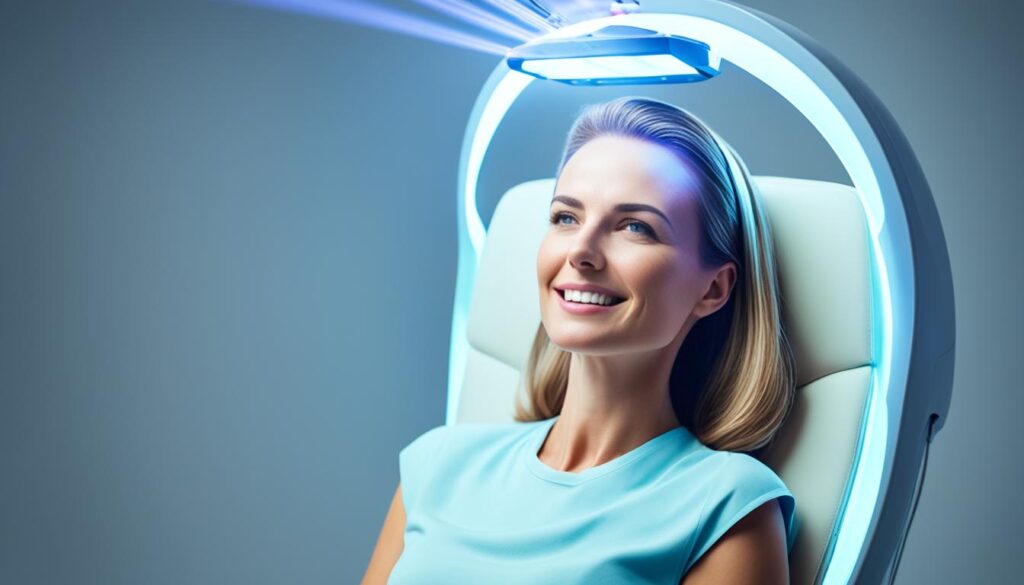
When it comes to laser treatment for thinning hair and hair growth laser therapy, there are various options available for both in-office and at-home use. In-office treatments often utilize hoods or overhead panels that emit laser light directly onto the scalp. On the other hand, portable devices are designed for convenient home use, offering flexibility and ease of application.
Some popular LLLT devices for in-home use include:
- Laser combs
- Handheld devices
- Caps or helmets
These devices are designed to emit low-level laser light, providing the same benefits as in-office treatments. They can be easily incorporated into your daily routine, allowing for consistent and targeted treatment.
However, it’s important to note that not all LLLT devices are created equal. To ensure safety and efficacy, it’s crucial to choose FDA-approved devices and be cautious when purchasing online. Consulting a medical professional who specializes in hair restoration and loss treatments is highly recommended in order to determine the most suitable LLLT device and treatment plan for your specific needs.
“When it comes to LLLT devices, quality is key. It’s important to invest in FDA-approved devices that have been clinically proven to deliver results. Consulting a professional who can guide you in selecting the right device and treatment plan is essential for achieving optimal outcomes.”
To give you a better understanding, below is a comparison table of some popular LLLT devices:
| LLLT Device | Treatment Area | Treatment Time | Key Features |
|---|---|---|---|
| Laser Comb X | Scalp | 10 minutes | Portable, ergonomic design |
| Handheld Device Y | Scalp | 15 minutes | Adjustable intensity levels |
| Capsule Z | Entire scalp | 30 minutes | Hands-free, easy to use |
Above is an illustrative table, and the actual specifications may vary depending on the brand and model of the LLLT device you choose.

Remember, laser therapy is just one component of a comprehensive hair loss treatment plan. Combining LLLT with other hair restoration procedures and seeking professional guidance can help maximize results and address the underlying causes of thinning hair.
Hair Restoration Procedures
In addition to laser therapy, there are various hair restoration procedures available for women experiencing hair loss. These procedures offer non-surgical options for those seeking to restore their hair and regain their confidence. Here are some of the most effective and popular hair restoration treatments:
- Non-Surgical Hair Loss Treatments: These treatments include topical solutions, scalp massages, and prescription medications that can help stimulate hair growth and prevent further loss. They are typically used in the early stages of hair loss or as maintenance therapies.
- FUE Hair Transplant: FUE (Follicular Unit Extraction) is a minimally invasive hair transplant procedure where individual hair follicles are harvested and transplanted into the thinning or balding areas. It provides natural-looking results with minimal scarring and a quick recovery time.
- Platelet Rich Plasma (PRP) Hair Restoration: PRP therapy involves injecting platelet-rich plasma derived from the patient’s own blood into the scalp. This stimulates hair growth by enhancing the blood supply to the hair follicles and promoting the production of new collagen and elastin.
- Keralase™ Hair Restoration: Keralase™ is a revolutionary treatment that combines gentle exfoliation, deep pore cleansing, and the application of a proprietary emulsion to nourish and revitalize the scalp. It promotes hair growth and improves overall hair health.
- Hair Replacement for Women: Hair replacement systems are customized hairpieces or wigs that are designed to blend seamlessly with natural hair. They are an excellent option for women who want an immediate and natural-looking solution for hair loss.
Consulting with a hair restoration specialist is crucial to determine the most suitable treatment option based on individual needs and goals. They will assess the extent of hair loss, evaluate the underlying causes, and recommend the most appropriate combination of treatments for optimal results.
Comparative Analysis of Hair Restoration Procedures
| Procedure | Benefits | Considerations |
|---|---|---|
| Non-Surgical Hair Loss Treatments | – Non-invasive and easy to incorporate into daily routine – Suitable for various stages of hair loss – Can be used in conjunction with other treatments |
– Results may vary – Requires consistent and long-term use |
| FUE Hair Transplant | – Provides long-lasting and natural-looking results – Minimal scarring and quick recovery time – Suitable for both men and women |
– Higher cost compared to non-surgical options – Limited availability |
| Platelet Rich Plasma (PRP) Hair Restoration | – Uses the patient’s own blood for a natural treatment – Stimulates hair growth and improves hair quality – Minimal downtime and quick procedure |
– Multiple sessions may be required for optimal results – Results may vary |
| Keralase™ Hair Restoration | – Restores scalp health and promotes hair growth – Customizable treatment for individual needs – Safe and effective for various hair types |
– Results may take time to become noticeable – May require multiple sessions for optimal results |
| Hair Replacement for Women | – Instant solution for hair loss – Natural-looking and customizable options – Low maintenance and easy to use |
– Requires periodic adjustments or replacements – Doesn’t address underlying causes of hair loss |
Each hair restoration procedure offers its own unique benefits and considerations. Consulting with a hair restoration specialist can help determine the most suitable treatment option based on factors such as the extent of hair loss, overall health, and individual preferences. With the right combination of treatments, women can regain their confidence and achieve the hair they desire.
Conclusion
Laser therapy is a highly effective and FDA-approved treatment option for female hair loss. It has shown promising results in slowing down or halting hair loss in the majority of patients, while also promoting new hair growth. While laser therapy may not be effective for advanced stages of hair loss or areas with no active hair follicles, it is most beneficial when started early and used consistently.
For optimal results, laser therapy can be complemented with other hair restoration procedures. Consulting a hair restoration specialist is recommended to determine the most suitable treatment plan tailored to individual needs and goals. With its non-invasive nature and minimal side effects, laser therapy offers a convenient and safe solution for women experiencing hair loss.
So, if you are looking for a reliable and proven treatment option for female hair loss, consider laser therapy. By stimulating hair regrowth and preventing further loss, this innovative treatment can help you regain confidence and achieve luscious, healthy hair.
FAQ
What is laser therapy for female hair loss?
Laser therapy is a non-invasive, non-surgical treatment option for female hair loss. It uses laser light to stimulate cell growth and revitalize hair follicles.
How does laser therapy work?
Laser therapy works by emitting a specific wavelength of light that is absorbed by the hair follicles. This light stimulates the stem cells responsible for hair follicle regeneration, promoting hair regrowth. It also increases the production of ATP and enhances the metabolic process of cells, resulting in faster hair growth.
Can laser therapy stop hair loss in all cases?
Laser therapy can slow down or stop hair loss in 85% of patients. However, it cannot stimulate hair growth on areas of the scalp where there are no active hair follicles.
When should I start laser therapy?
It is best to start laser therapy as soon as possible for maximum benefit. Results typically start to appear after two months of treatment and continue to improve over time.
How often do I need to undergo laser therapy?
Consistency is important, as hair loss may resume if treatment is interrupted. The frequency of laser therapy sessions will depend on the specific treatment plan recommended by a hair restoration specialist.
What are the different ways laser therapy can be administered?
Laser therapy can be administered in various ways, both in-office and at home. In-office treatments may involve the use of hoods or overhead panels. There are also portable devices available for home use, such as laser combs, handheld devices, and wearable devices like caps or helmets.
Are there other procedures available for female hair loss?
Yes, there are other hair restoration procedures available for women experiencing hair loss. These include FUE Hair Transplant, Platelet Rich Plasma (PRP) Hair Restoration, Keralase™ Hair Restoration, Hair Replacement for Women, and Non-Surgical Hair Loss Treatments.
How do I choose the right LLLT device and treatment plan?
Consulting a medical professional specializing in hair restoration and loss treatments is recommended to determine the most suitable LLLT device and treatment plan for your specific needs and goals.