
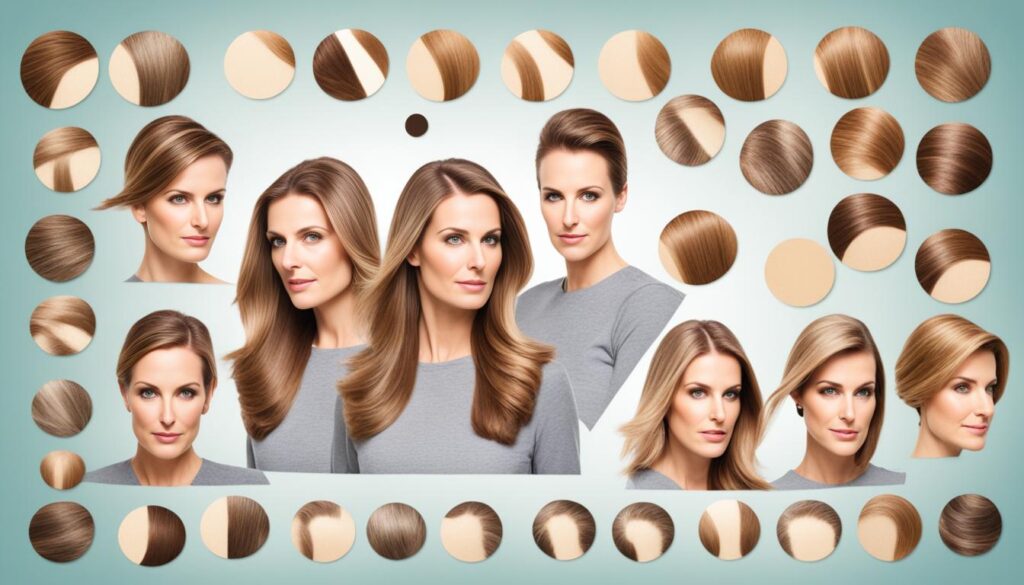
Have you ever thought about different women’s hair loss? It shows up in many ways. There are types like female pattern baldness and alopecia areata. Learn about these to find the best solutions.
We’ll talk about many types of hair loss in women. For example, there’s female pattern baldness, telogen effluvium, alopecia areata, and more. This information helps women care for their hair and get the right help.
Key Takeaways
- Hair loss in women can manifest in various forms, each with its unique characteristics and underlying causes.
- Understanding the different types of hair loss is crucial for women to seek the appropriate medical attention and manage their condition effectively.
- Factors like changes in hormones, medical conditions, medications, stress, and poor diet can cause hair loss in women.
- Treatments for hair loss include medicine, laser treatment, and hair surgery.
- It’s best to see a doctor who specializes in skin or hair for help.
Understanding Hair Loss in Women
Hair loss in women happens for many reasons. These include changes in hormones, health issues, some medicines, stress, and not getting enough nutrients. Your age, family history, how you style your hair, and certain medical conditions can also make you lose hair.
Causes and Risk Factors
Several things can make women lose hair. This includes thyroid problems, PCOS, low iron in the blood, and diseases where the body fights itself. Drugs for cancer and very stressful life events can also cause hair loss. Not eating well and lacking certain nutrients are other reasons.
Women may lose hair if it runs in their family, or because of their age. How they style their hair, especially if it’s done tightly, or if they often use strong chemicals on their hair can make it worse.
Prevalence and Impact
It’s not uncommon for women to lose hair. Studies show that about 30% of women may lose hair sometime in their life. Hair loss can deeply affect how a woman feels about herself. It can lower her self-esteem, make her feel less confident, and affect her life in many ways.
Women may feel anxious or sad. It can even harm their relationships with others, both in their personal life and at work.

Female Pattern Baldness
Female pattern baldness is a type of hair loss that many women face. It’s when hair gradually thins, especially on the top and front of the scalp. Symptoms can be a wider part line, less hair, and a moving hairline back.
Symptoms and Characteristics
This hair loss makes hair thinner, especially at the crown and temples. It also makes the part line wider, hair thinner, and the hairline move back. The hair loss isn’t in just one spot but spreads all over the scalp.
Treatment Options
Women with this issue have many treatment choices. Minoxidil and other topical meds can help make hair grow and stop hair loss. Doctors might also pick anti-androgen meds to balance hormones.
Laser therapy and hair transplants are other options for treatment. The right choice depends on how bad the hair loss is and how well the treatments work.
Telogen Effluvium
Telogen effluvium is a common type of hair loss. It happens when many hair follicles enter the resting phase too soon. This phase can start because of stress, illness, or hormonal changes. Symptoms include thinning hair, but it’s usually not permanent.
Dealing with telogen effluvium means finding and treating its cause. Care like reducing stress, eating well, and being healthy can help. Sometimes, doctors suggest using special shampoos or taking medicine to grow hair back.
If you think you have telogen effluvium, see a doctor. They can help find what’s wrong and tell you the best treatment for telogen effluvium. With the right help, most people get their hair growing back again.
Alopecia Areata
Alopecia areata is when the body’s immune system attacks hair follicles. This can lead to patchy hair loss on the scalp and other parts of the body. There are different types: alopecia areata (localized hair loss), alopecia totalis (complete scalp hair loss), and alopecia universalis (loss of body hair).
Types and Manifestations
Alopecia areata often starts with small, round, hairless patches on the scalp. These patches are smooth and clearly defined. Sometimes, it can spread to cover larger areas or all of the scalp or body. Each person’s experience with alopecia areata is unique, so a doctor should check it.
Management Strategies
Managing alopecia areata depends on the person’s needs and how severe it is. Treatments may include:
- Topical or intralesional corticosteroids for reducing inflammation and helping hair regrow in certain spots
- Immunotherapy by using certain contact chemicals to boost the immune system and regrow hair
- Supportive therapies like managing stress and changing diet to help the body heal
The right treatment is chosen based on how bad the hair loss is and how someone responds to treatments. Working with a dermatologist or hair specialist is important. They can create a treatment plan and check on how well it is working.

Traction Alopecia
Traction alopecia is hair loss from pulling too hard or often on hair. It comes from wearing tight styles like ponytails, buns, or braids for a long time. This may make the hairline go back, create bald spots, or even hurt the hair roots badly.
Preventive Measures
To stop traction alopecia, reduce the pressure on your hair and head. Some good ways to do this are:
- Avoid wearing hairstyles that tug on your hair, like tight ponytails and braids.
- Choose hair products that are soft on your hair and head.
- Give your hair a break from tight styles to let your scalp relax and repair.
- Massage your scalp gently to help blood flow and grow healthy hair.
- Get advice from a skin doctor or hair expert for how to stop traction alopecia.
Following these steps can lower the chance of getting traction alopecia. It helps keep your hair healthy and strong.
Types of Hair Loss in Women
Women can face many types of hair loss. This includes anagen effluvium and scarring alopecia. Each type has its own causes and treatment. It’s vital for women to know this for proper care.
Anagen Effluvium
Anagen effluvium makes hair shed quickly. It usually happens after taking certain medicines. Getting help fast is important to regrow hair.
Scarring Alopecia
Scarring alopecia is hair loss that doesn’t grow back. It’s caused by damage or inflammation of hair follicles. Early treatment is key to stopping further loss.
Diffuse Hair Loss
Diffuse hair loss makes hair look thin all over. It can be caused by stress or illness. It’s often temporary, but finding the reason helps with regrowth.
Frontal Fibrosing Alopecia
Frontal fibrosing alopecia affects the front of the head and temples. It happens more to older women. Starting treatment early helps keep hair loss from getting worse.
Seeking Professional Help
Are you losing hair, like female pattern baldness or others? It is key to see a specialist like a dermatologist. They are experts in hair and scalp issues. They will find what’s causing your hair loss and tell you the right treatment plan.
Getting help early is important when you lose hair. A dermatologist for hair loss in women can help a lot. They will work with you to grow healthy hair again. Many women find success with the right hair loss treatment for women, making their hair and scalp better.
Quickly get in touch with a doctor if you’re losing hair. They offer special care and advice. This care can really help you get back your healthy, full hair. Start by finding a good dermatologist or a hair specialist.