

Stress can have a profound impact on our overall well-being, affecting various aspects of our physical and mental health. One area where stress can often manifest is in our hair health, leading to a condition called telogen effluvium. Telogen effluvium is a type of hair loss that occurs when significant stress pushes our hair follicles into a resting phase, causing sudden and noticeable hair shedding.
Telogen effluvium is just one of the three types of hair loss that can be related to stress, the others being trichotillomania and alopecia areata. Understanding the connection between stress and these hair loss conditions is crucial for managing both our psychological well-being and our hair health.
Key Takeaways:
- Telogen effluvium is a type of hair loss caused by significant stress, which pushes hair follicles into a resting phase.
- Stress can also contribute to other types of hair loss, such as trichotillomania and alopecia areata.
- Managing stress is essential for promoting hair regrowth and overall hair health.
- Telogen effluvium typically resolves on its own, but seeking medical care may be necessary for chronic or concerning cases of hair loss.
- A balanced diet, avoiding harsh hair treatments, and practicing stress management techniques are important for preventing and managing stress-induced hair loss.
The Link Between Stress and Hair Loss
Research has shown that chronic stress can have a significant impact on hair health, leading to hair loss. When we experience prolonged stress, it can impair the stem cells responsible for hair growth, resulting in shedding and thinning of the hair. This phenomenon is known as stress-related hair shedding or telogen effluvium. Understanding the connection between stress and hair loss is crucial for effectively managing and preventing this condition.
In addition to affecting hair follicle stem cells, long-term stress is associated with an array of health problems, such as depression, anxiety, and disruptions in bodily functions. Stress disrupts the natural hair growth cycle, which consists of stages of growth, degeneration, and rest. Stem cells play a vital role in regenerating hair during the growth phase. However, chronic stress can interfere with this cycle and inhibit hair regrowth.
To prevent and treat telogen effluvium, it is important to focus on managing stress levels and addressing its underlying causes. By effectively managing stress, individuals can minimize its impact on hair health and promote hair regrowth.
Telogen Effluvium Prevention
To prevent telogen effluvium and minimize stress-induced hair shedding, consider the following strategies:
- Practice stress management techniques, such as meditation, deep breathing exercises, and mindfulness.
- Engage in regular physical activity to reduce stress and improve overall well-being.
- Ensure a balanced diet rich in essential nutrients, including proteins, vitamins, and minerals, to support healthy hair growth.
- Avoid harsh hairstyling practices, such as tight hairstyles, excessive heat styling, and chemical treatments that can damage the hair.
Treatment Options for Telogen Effluvium
If stress-related hair shedding persists or becomes severe, it may be necessary to seek professional treatment. A dermatologist can provide a comprehensive evaluation and recommend appropriate treatment options tailored to your specific needs. These may include:
- Topical medications that promote hair regrowth and prevent further hair loss.
- Oral medications, such as minoxidil or finasteride, which can help stimulate hair growth.
- In-office procedures, such as platelet-rich plasma (PRP) therapy or low-level laser therapy, which can stimulate hair follicles and promote regrowth.
Remember, addressing stress and seeking appropriate treatment options can help prevent and treat telogen effluvium, ultimately supporting hair regrowth and overall well-being.
The Mechanism of Stress-Induced Hair Loss
When it comes to stress-induced hair loss, understanding the underlying mechanism can provide valuable insights into addressing this issue effectively. Researchers have delved into the intricate workings of how chronic stress impacts the hair follicles and triggers hair loss.
One key finding is the role of a molecule called GAS6 in hair growth regulation. It has been discovered that chronic stress interferes with the secretion of GAS6 by dermal papilla cells, located beneath the hair follicles. This interference is caused by corticosterone, a stress hormone that inhibits the production of GAS6.
GAS6 plays a crucial role in activating hair follicle stem cells, which are responsible for promoting hair growth. Therefore, when its production is inhibited, hair follicle stem cells cannot function optimally, resulting in hair loss. This sheds light on the connection between stress and telogen effluvium, where the disrupted balance of this molecule contributes to hair loss due to stress.

By unraveling the mechanism of stress-induced hair loss, scientists hope to develop potential treatments that can counteract the underlying causes and activate hair follicle stem cells. Understanding the complex interplay between stress hormones and hair growth regulators offers promising avenues for targeted interventions.
The Role of GAS6 in Hair Growth
GAS6 is a critical molecule involved in regulating hair growth. It acts as a signaling molecule that binds to receptor tyrosine kinases, activating pathways that promote the proliferation of hair follicle stem cells and their subsequent differentiation into hair shaft-producing cells.
When GAS6 is secreted by dermal papilla cells, it binds to its receptor, AXL, on hair follicle stem cells. This interaction stimulates the proliferation and survival of these stem cells, leading to the growth of new hair strands. However, in the presence of chronic stress and elevated corticosterone levels, the secretion of GAS6 is impaired, disrupting this vital signaling pathway.
This disruption in GAS6 signaling hinders the activation of hair follicle stem cells and interferes with their ability to regenerate new hair strands, leading to hair loss due to stress. Addressing this imbalance in GAS6 production and activation of hair follicle stem cells could potentially prevent or mitigate stress-induced hair loss.
| Causes of Telogen Effluvium | Symptoms of Telogen Effluvium |
|---|---|
| Chronic stress and anxiety | Diffuse hair loss |
| Major life events or trauma | Thinning hair |
| Drastic weight loss or nutritional deficiencies | Hair shedding |
| Hormonal imbalances | Increased hair shedding when brushing or washing |
In summary, chronic stress affects the hair follicle stem cells by disrupting the secretion of GAS6, an essential molecule for hair growth. This disturbance in the balance of hair growth regulators can lead to stress-induced hair loss. By comprehending this mechanism, scientists strive to develop targeted treatments that promote hair regrowth and restore the vitality of the hair follicles.
Symptoms and Characteristics of Telogen Effluvium
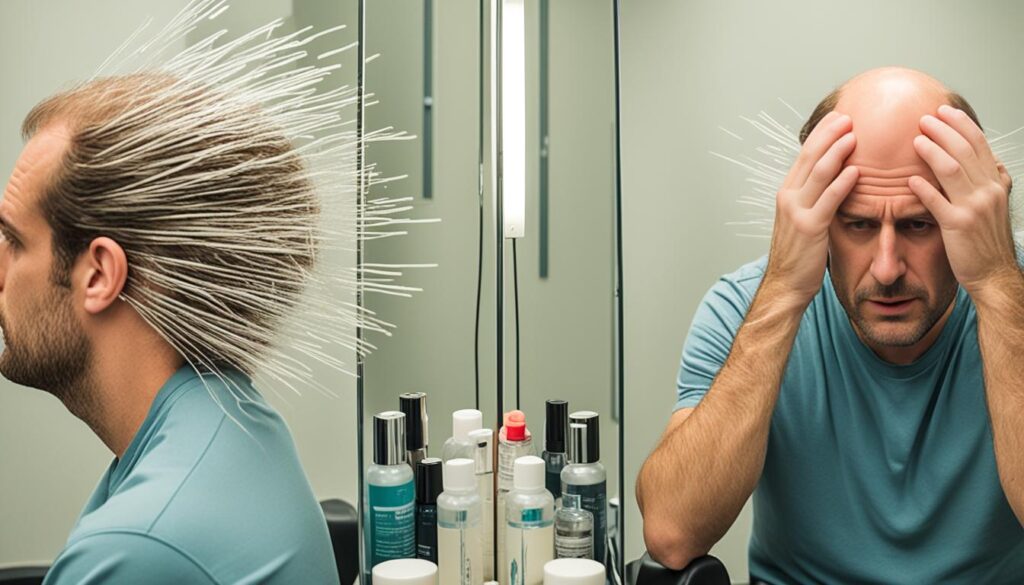
Telogen effluvium is a type of hair loss that is often triggered by stress. Understanding the symptoms and characteristics of this condition can help individuals recognize and manage stress-induced hair thinning.
One of the main features of telogen effluvium is sudden and diffuse hair loss. This means that hair shedding occurs all over the scalp rather than in specific areas. The shedding usually occurs about three months after the stress trigger, as the hair follicles prematurely enter the resting phase.
The hair loss associated with telogen effluvium is generally temporary, and hair regrowth occurs at a slow rate of approximately half an inch per month. While waiting for regrowth, it’s important to remember that the condition does not usually result in complete baldness.
Diffuse thinning is a common characteristic of telogen effluvium, where the hair appears thinner overall. However, it’s important to note that the severity of thinning can vary from person to person.
Although telogen effluvium can be distressing, it is typically self-resolving and should resolve on its own over time. Managing stress and practicing self-care techniques can help support hair health and promote the regrowth of lost hair.
Preventing and Managing Telogen Effluvium
While there is no proven way to prevent or stop an episode of telogen effluvium, there are strategies that can support overall hair health.
Maintaining a balanced diet, particularly one that includes sufficient protein, is important for hair growth. Protein-rich foods such as lean meats, fish, eggs, nuts, and legumes can provide the essential nutrients needed for strong and healthy hair.
Avoiding tight hairstyles, excessive heat styling, and chemical-based treatments can also help minimize hair loss and breakage. Give your hair a break from constant tension and heat, and opt for gentle styling options that promote hair health.
Prioritizing emotional well-being is crucial in managing stress-induced hair thinning. Stress management techniques like meditation, deep breathing exercises, and engaging in hobbies or activities that bring joy can help reduce stress levels and their impact on hair health.
It’s essential to remember that taking care of your mental and emotional health is just as important as maintaining your physical health. Managing stress is not only beneficial for your overall well-being but also for the health of your hair.
By incorporating these strategies into your lifestyle, you can take proactive steps to cope with stress-induced hair thinning and promote healthier, more resilient hair.
Seeking Medical Care for Chronic Hair Loss
If you are experiencing hair loss due to stress that has become chronic or if you notice patchy hair loss accompanied by redness, itching, or pain, it is advisable to seek medical care from a dermatologist. A dermatologist specializes in diagnosing and treating conditions related to the skin, hair, and nails, and can provide a comprehensive evaluation to determine the underlying cause of your hair loss.
During your visit, the dermatologist will take a detailed medical history, examine your scalp and hair, and may order additional tests to rule out any underlying medical conditions. Once a diagnosis of stress-induced hair loss, such as telogen effluvium, has been confirmed, the dermatologist can recommend appropriate treatment options based on your specific needs.
Treatment options for telogen effluvium can vary depending on the severity and duration of the condition. They may include:
- Topical medications: Dermatologists may prescribe medications applied directly to the scalp to stimulate hair growth and promote regrowth.
- Oral medications: In some cases, oral medications such as minoxidil or finasteride may be prescribed to help promote hair regrowth.
- Platelet-rich plasma (PRP) therapy: This treatment involves injecting a concentration of your own platelets into the scalp to stimulate hair growth.
- Low-level laser therapy: Also known as red light therapy, this treatment uses low-energy laser light to stimulate hair follicles and promote regrowth.
It’s important to consult a medical professional to determine the most suitable treatment option for your specific condition. They can guide you through the process, address any concerns you may have, and monitor your progress to ensure effective management of stress-induced hair loss.
Treatment Options for Telogen Effluvium
| Treatment Option | Description |
|---|---|
| Topical medications | Medications applied directly to the scalp to stimulate hair growth and promote regrowth. |
| Oral medications | Medications taken orally to help promote hair regrowth. |
| Platelet-rich plasma (PRP) therapy | Injection of a concentration of your own platelets into the scalp to stimulate hair growth. |
| Low-level laser therapy | Use of low-energy laser light to stimulate hair follicles and promote regrowth. |

Consulting a dermatologist for medical care is crucial for effectively managing stress-induced hair loss. They can provide personalized treatment options tailored to your specific needs and help you on your journey to regaining healthy hair.
Conclusion
Understanding the link between stress and telogen effluvium is crucial for recognizing the potential impact of stress on hair health. Stress-induced hair loss, although distressing, is often temporary and reversible. By actively managing stress levels, adopting a healthy lifestyle, and seeking appropriate medical care when necessary, individuals can support hair regrowth and overall well-being. It is essential to prioritize mental and emotional well-being as part of maintaining hair health and managing stress-related hair shedding.
FAQ
How does stress contribute to hair loss?
Stress can cause three types of hair loss: telogen effluvium, trichotillomania, and alopecia areata. Telogen effluvium occurs when stress pushes hair follicles into a resting phase, causing sudden hair loss. Trichotillomania is an urge to pull out hair as a way to deal with stress, and alopecia areata is an autoimmune condition triggered by stress.
What are the causes of telogen effluvium?
Telogen effluvium can be caused by significant stress, illness, hormonal changes, nutritional deficiencies, and certain medications.
How can I manage stress for hair health?
Managing stress can help promote hair regrowth. Some strategies include practicing stress management techniques, seeking therapy or counseling, adopting a healthy lifestyle with regular exercise and good nutrition, and engaging in activities that reduce stress, such as meditation or hobbies.
Is stress-induced hair loss permanent?
Stress-induced hair loss is often temporary and reversible. By addressing the underlying stress and promoting a healthy lifestyle, hair regrowth can occur.
How can telogen effluvium be prevented?
There is no proven way to prevent telogen effluvium, but maintaining a balanced diet, avoiding tight hairstyles and excessive heat styling, and practicing stress management techniques may minimize hair loss and promote hair health.
When should I seek medical care for chronic hair loss?
If hair loss due to stress becomes chronic, patchy, or is accompanied by redness, itching, or pain, it is advisable to seek medical care from a dermatologist, who can evaluate the underlying cause and recommend appropriate treatment options.
What treatment options are available for telogen effluvium?
Treatment options for telogen effluvium may include topical medications, oral medications, platelet-rich plasma therapy (PRP), low-level laser therapy, or other procedures recommended by a dermatologist.
How can I cope with stress-induced hair thinning?
Coping with stress-induced hair thinning involves managing stress through relaxation techniques, talking to a trusted friend or therapist, seeking support from a support group, and focusing on self-care activities.