

I. Introduction
Hair loss is a deeply personal and often emotional experience, particularly for women. While it’s commonly associated with men, female pattern hair loss (FPHL) affects millions of women worldwide. This comprehensive guide aims to shed light on this often misunderstood condition, offering hope and practical solutions for those affected.
Female pattern hair loss, also known as androgenetic alopecia in women, is a progressive condition that can start as early as the teenage years but more commonly begins around menopause. It’s characterized by gradual thinning of hair, primarily at the crown and along the part line. Unlike male pattern baldness, women typically don’t experience a receding hairline or complete baldness. Instead, the hair becomes thinner over time, with the scalp becoming more visible.
The impact of FPHL extends far beyond the physical changes. For many women, hair is closely tied to identity, femininity, and self-esteem. Hair loss can lead to feelings of self-consciousness, anxiety, and even depression. Understanding this condition and the available treatment options is crucial for empowering women to take control of their hair health and overall well-being.
In this blog post, we’ll delve into the causes of female pattern hair loss, how it’s diagnosed, and the various treatment options available. We’ll also explore lifestyle changes that can support hair health and discuss ways to cope with the emotional aspects of hair loss.
II. Understanding Female Pattern Hair Loss
A. What is androgenetic alopecia?
Androgenetic alopecia, the medical term for female pattern hair loss, is a complex condition influenced by both genetic and hormonal factors. Despite its name, which suggests a purely androgenic (male hormone) cause, the reality is more nuanced.
1. Genetic factors: FPHL has a strong genetic component. If you have a family history of hair loss in either male or female relatives, you may be at higher risk. However, the inheritance pattern is complex and not fully understood.
2. Hormonal influences: Androgens, particularly dihydrotestosterone (DHT), play a role in FPHL. In susceptible hair follicles, DHT can cause them to shrink, leading to thinner, shorter hairs over time. However, women with FPHL don’t necessarily have higher androgen levels; instead, their hair follicles may be more sensitive to normal androgen levels.
B. The Ludwig Classification system
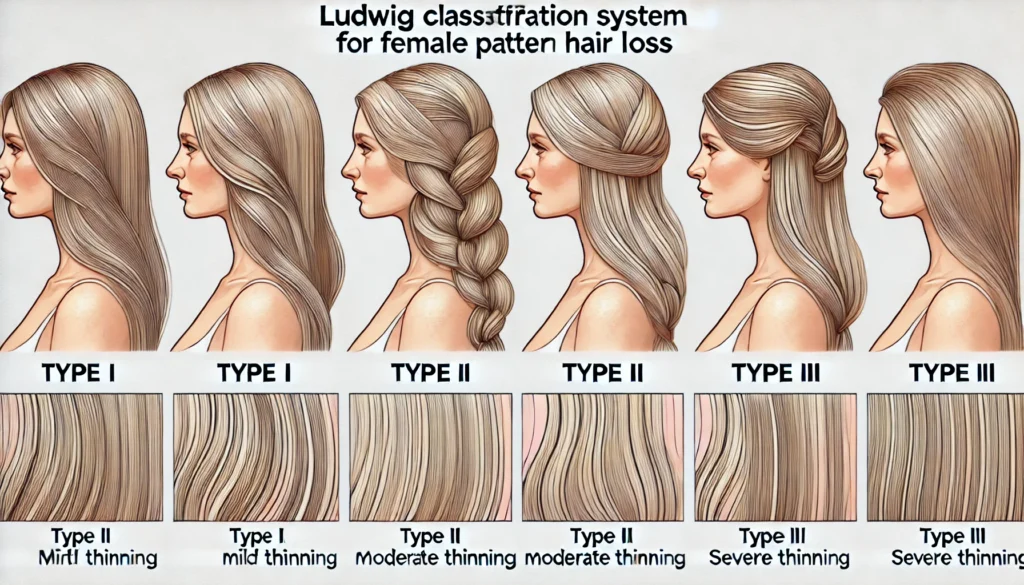
To standardize the description and diagnosis of FPHL, dermatologists often use the Ludwig Classification system. This system categorizes the progression of hair loss into three main stages:
1. Type I: Mild thinning of the hair on the crown, often first noticeable as a widening of the center hair part. 2. Type II: Increased thinning on the crown with widening of the part. 3. Type III: Diffuse thinning throughout the top of the scalp, with a see-through appearance.
Understanding where you fall on this scale can help in determining the most appropriate treatment approach.
C. The hair growth cycle
To comprehend how FPHL affects hair, it’s essential to understand the normal hair growth cycle:
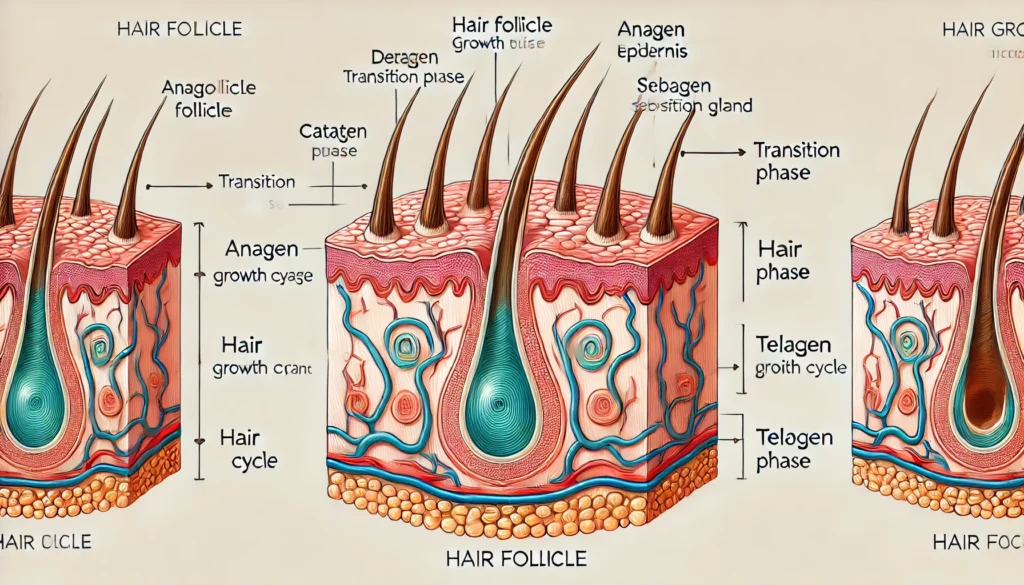
1. Anagen phase: The active growth phase, lasting 2-7 years. 2. Catagen phase: A short transitional phase lasting about 2 weeks. 3. Telogen phase: The resting phase, lasting about 3 months, after which the hair is shed.
In FPHL, the anagen phase gradually shortens, while the telogen phase lengthens. This leads to more hairs being in the resting phase at any given time, resulting in increased shedding and thinner-appearing hair.
D. Follicular miniaturization
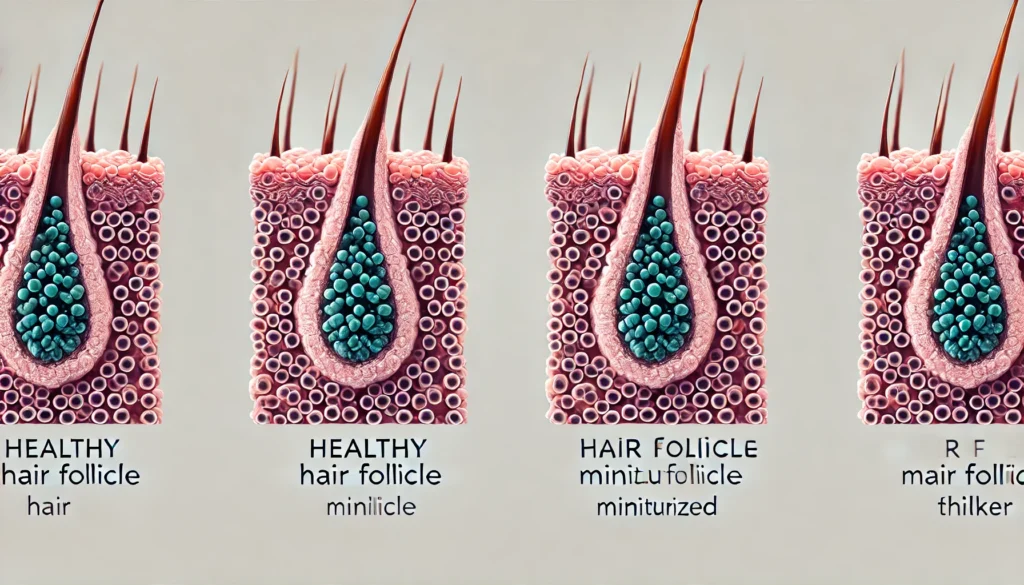
A key feature of FPHL is follicular miniaturization. In this process:
1. Definition and process: Hair follicles gradually shrink over time. 2. Impact on hair appearance: They produce thinner, shorter hairs with each growth cycle. Eventually, they may stop producing visible hairs altogether.
This process explains why women with FPHL often notice their hair becoming finer and less voluminous over time.
III. Diagnosing Female Pattern Hair Loss
A. Common symptoms and signs
The onset of FPHL can be subtle. Women may notice:
- Gradual thinning at the part line
- Decreased volume and fullness of hair
- More visible scalp, especially at the crown
- Increased hair shedding, particularly noticeable on pillows or in the shower drain
B. Medical history and scalp examination
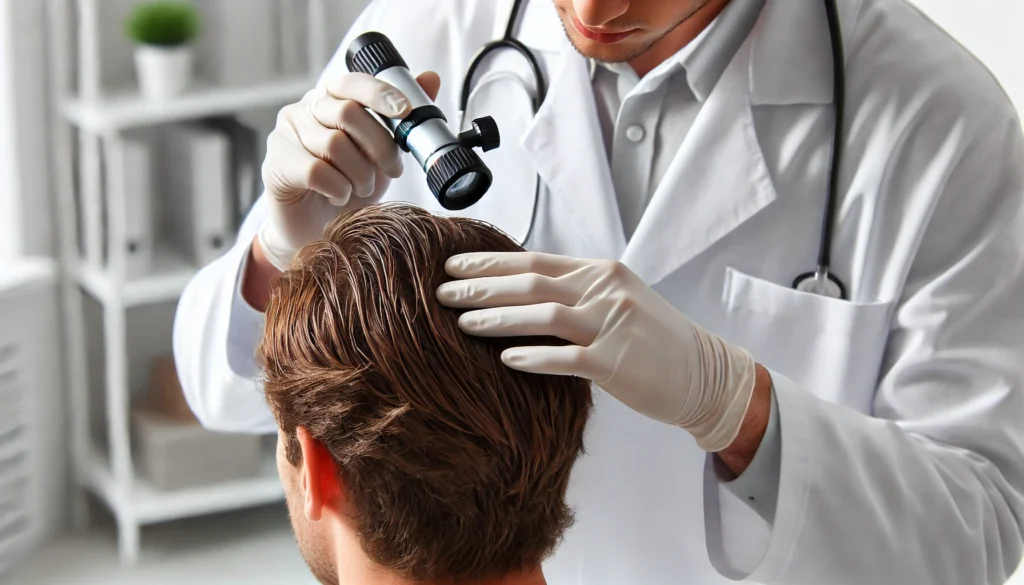
Diagnosis typically involves:
- A thorough medical history, including family history of hair loss
- Scalp examination, often using a dermatoscope for closer inspection
- Assessment of hair shedding and hair shaft characteristics
C. Potential underlying causes
While FPHL is often genetic, other factors can contribute to or exacerbate hair loss:
1. Hormonal imbalances: Conditions like polycystic ovary syndrome (PCOS) can increase androgen levels. 2. Nutritional deficiencies: Iron deficiency, in particular, can contribute to hair loss. 3. Medical conditions: Thyroid disorders, autoimmune diseases, and other health issues can impact hair growth.
D. Diagnostic tests
To rule out other causes of hair loss and confirm the diagnosis, your doctor may recommend:
1. Blood tests: These can check for hormonal imbalances, nutritional deficiencies, or underlying health conditions. 2. Scalp biopsy: In some cases, a small sample of scalp tissue may be taken to examine the hair follicles more closely.
IV. Treatment Options for Female Pattern Hair Loss

A. Topical treatments
1. Minoxidil (Rogaine)
Minoxidil is the only FDA-approved topical treatment for FPHL. It works by:
- Prolonging the anagen (growth) phase of hair follicles
- Increasing blood flow to the scalp
- Enlarging miniaturized follicles
Application instructions:
- Apply to dry scalp twice daily
- Massage gently into affected areas
- Consistency is key; results may take 3-6 months to become noticeable
Efficacy and potential side effects:
- Studies show improved hair density in many women
- Side effects may include scalp irritation or unwanted hair growth on the face
2. Other over-the-counter options
While less studied, some women find benefits from:
- Caffeine-containing topical products
- Essential oil blends (e.g., rosemary, peppermint)
- Peptide-based scalp treatments
B. Oral medications
1. Anti-androgens
a. Spironolactone (Aldactone):
- Originally a blood pressure medication
- Blocks androgen receptors
- Can be particularly effective for women with PCOS
b. Finasteride:
- Primarily used in men but may be prescribed for postmenopausal women
- Inhibits the conversion of testosterone to DHT
2. Oral contraceptives
For women of reproductive age, birth control pills can help balance hormones and potentially improve hair loss, especially those with anti-androgenic properties.
C. Nutritional supplements

1. Iron supplements:
- Essential for women with confirmed iron deficiency
- Should only be taken under medical supervision
2. Other potentially beneficial supplements:
- Biotin (Vitamin B7)
- Vitamin D
- Zinc
- Omega-3 fatty acids
It’s crucial to consult with a healthcare provider before starting any supplement regimen, as excessive intake of certain nutrients can be harmful.
D. Advanced treatments
1. Platelet-rich plasma (PRP) injections:
- Uses a concentration of a patient’s own platelets to accelerate healing
- May stimulate hair follicles and promote new growth
- Requires multiple sessions and maintenance treatments
2. Low-level laser therapy:
- Uses red light to stimulate hair follicles
- Available in-office or as at-home devices
- May improve hair density and thickness in some women
E. Hair transplantation
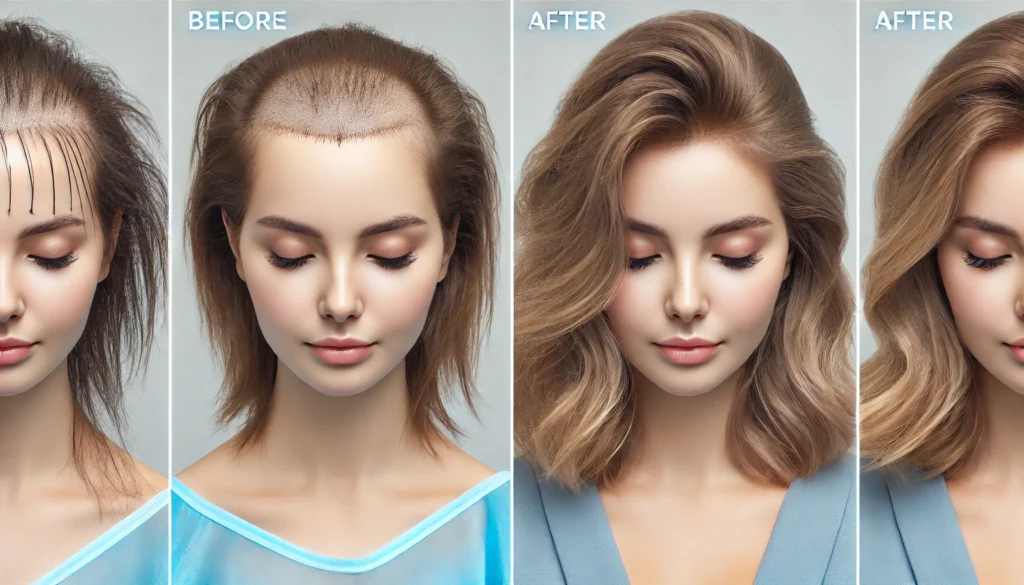
1. Follicular unit transplantation technique:
- Individual hair follicles are harvested from donor areas (usually the back of the head) and transplanted to thinning areas
- Creates a natural-looking result
2. Candidacy for the procedure:
- Best for women with stable hair loss and sufficient donor hair
- May not be suitable for those with diffuse thinning
3. Pros and cons:
- Can provide long-lasting results
- Surgical procedure with associated risks and recovery time
- Can be expensive and may require multiple sessions
V. Lifestyle Changes and Hair Care Tips
A. Gentle hair care practices
- Use sulfate-free, gentle shampoos
- Avoid harsh chemical treatments and excessive heat styling
- Be gentle when brushing or styling hair to minimize breakage
B. Scalp health maintenance
- Regular scalp massages to promote blood flow
- Keep the scalp clean and free from buildup
- Consider using a scalp exfoliator to remove dead skin cells
C. Diet and nutrition for healthy hair
- Ensure adequate protein intake
- Consume a variety of fruits and vegetables for essential vitamins and minerals
- Stay hydrated
D. Stress management techniques
- Practice relaxation methods like meditation or yoga
- Get regular exercise
- Prioritize sleep and self-care
VI. Coping with Female Pattern Hair Loss
A. Psychological impact
Hair loss can significantly affect a woman’s self-esteem and quality of life. It’s important to acknowledge these feelings and seek support when needed.
B. Support groups and resources

- Online forums and communities
- Local support groups
- Professional counseling or therapy
C. Cosmetic solutions
- Wigs and hairpieces
- Scalp micropigmentation
- Hair fibers and concealers
- Strategic hairstyling techniques
VII. Future Treatments and Research
A. Emerging therapies
- Stem cell treatments
- JAK inhibitors
- Exosome therapy
B. Ongoing clinical trials
Researchers are constantly exploring new treatments for FPHL. Stay informed about clinical trials in your area that may offer access to cutting-edge therapies.
C. Potential breakthroughs
The field of hair restoration is rapidly evolving, with promising developments in:
- Gene therapy
- 3D-printed hair follicles
- Hair cloning technology
VIII. Conclusion
Female pattern hair loss is a complex condition that affects millions of women worldwide. While it can be distressing, it’s important to remember that you’re not alone, and there are many options available to manage and treat this condition.
Early diagnosis and intervention are key to achieving the best results. If you’re noticing signs of hair thinning, don’t hesitate to consult with a dermatologist or trichologist. They can provide a proper diagnosis and create a tailored treatment plan that addresses your specific needs and concerns.
Remember that treating FPHL is often a journey that requires patience and persistence. What works for one woman may not work for another, so be prepared to try different approaches under professional guidance.
Most importantly, be kind to yourself throughout this process. Your worth is not determined by the thickness of your hair. With the right support and treatment, many women find ways to manage their hair loss effectively and regain their confidence.
IX. Call to Action

- If you’re experiencing hair loss, schedule an appointment with a dermatologist or trichologist to get a proper diagnosis and discuss treatment options.
- We’d love to hear about your experiences with female pattern hair loss. Share your story in the comments below – your insights could help other women facing similar challenges.
- Stay informed about the latest developments in hair loss treatment by subscribing to our newsletter. We’ll keep you updated on new research, treatment options, and tips for maintaining healthy hair.
Remember, you’re not alone in this journey. By sharing our experiences and supporting one another, we can navigate the challenges of hair loss together and emerge stronger and more confident.