
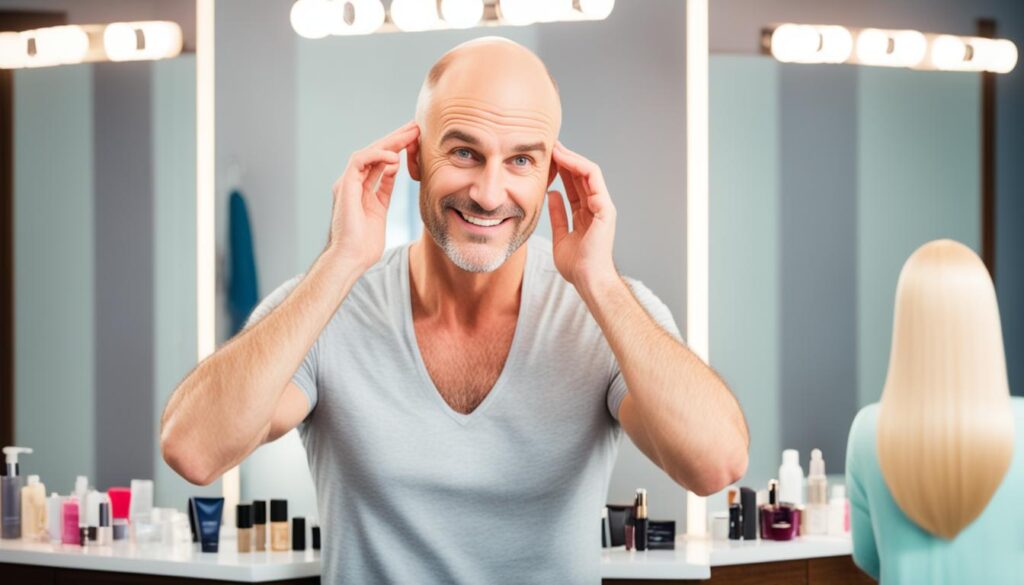
Hair loss can have a significant impact on body image, leading to feelings of insecurity, lower self-esteem, and increased levels of anxiety and depression. Both men and women can experience body image issues due to hair loss, which can be caused by various factors such as cancer treatments, hormonal changes, autoimmune diseases, stress, age, and medication side effects.
Coping with body image problems due to hair loss requires a multi-faceted approach that involves seeking support from healthcare professionals, considering treatment options, managing stress, and finding strategies to boost self-confidence. It is crucial to address the emotional challenges associated with hair loss and find effective coping mechanisms to regain a positive body image.
There are various resources available to assist individuals in navigating the impact of hair loss on body image. Counseling, support groups, and wearable hair options like wigs can provide valuable support and help individuals cope with the emotional and psychological effects of losing hair.
Key Takeaways:
- Hair loss can lead to body image issues and impact self-esteem and mental health.
- Support from healthcare professionals, treatment options, stress management, and strategies to boost self-confidence are essential in coping with body image problems caused by hair loss.
- Counseling, support groups, and wearable hair options like wigs can provide valuable support for individuals dealing with hair loss.
Understanding the Psychological Impact of Hair Loss
Hair loss can have a profound psychological impact on individuals, affecting their self-esteem, body image, and overall mental health. People often associate hair with their identity and may experience a range of negative emotions, including shame, anger, fear, and depression, when they start losing their hair. The psychological effects of hair loss can vary from person to person, but it is important to acknowledge and address these feelings in order to promote emotional well-being. Understanding and accepting the psychological impact of hair loss is the first step towards finding effective coping strategies and regaining confidence.

Identity and Self-Esteem
Our hair is often seen as a significant component of our identity, and when it starts thinning or falling out, it can have a profound impact on how we see ourselves. Many individuals feel a loss of attractiveness and may question their self-worth as a result. This can lead to a decrease in self-esteem and overall confidence.
“Losing my hair made me feel like I was losing a part of myself. I didn’t feel as attractive or confident, and it took a toll on my mental health.”
The Emotional Rollercoaster
Dealing with hair loss can trigger a range of negative emotions. Some individuals may feel shame and embarrassment, leading them to withdraw socially and avoid situations where their hair loss is more noticeable. Others may experience anger or frustration at their changing appearance. Fear and anxiety about the future and potential further hair loss are also common. All these emotions can contribute to feelings of sadness and even depression.
Addressing the Psychological Impact
Recognizing and addressing the psychological impact of hair loss is crucial for individuals seeking to improve their mental well-being. It’s essential to practice self-care and engage in activities that promote self-confidence. This may involve seeking support from loved ones, joining support groups, or considering professional counseling or therapy.
By addressing the emotional aspects of hair loss, individuals can develop strategies to cope with the psychological impact and regain a positive body image. It’s important to remember that everyone’s journey with hair loss is unique, and finding what works best for you in terms of self-care and emotional well-being is key.
Coping Strategies for Body Image Issues Due to Hair Loss
Coping with body image issues caused by hair loss can be a challenging process. However, by implementing various strategies, individuals can effectively manage the emotional impact of hair loss and boost their self-confidence. Here are some coping strategies to consider:
1. Seek Support
It is crucial to seek support from loved ones, healthcare professionals, and support groups who can provide empathy and understanding. Openly discussing your concerns and emotions related to hair loss can help you process your feelings and find validation. Remember, you are not alone in this journey.
2. Explore Treatment Options
Exploring treatment options can provide hope and a sense of control over the situation. Consult with healthcare professionals to discuss potential medications or hair restoration therapies that may be suitable for your specific needs. Understanding the available options can empower you to make informed decisions about managing your hair loss.
3. Engage in Self-Care Practices
Engaging in self-care practices can contribute to your overall well-being and boost your self-confidence. Incorporate regular exercise into your routine to release endorphins, reduce stress, and improve your mood. Practice mindfulness techniques, such as meditation or deep breathing, to help manage any negative thoughts or concerns you may have about your body image.
Maintaining a healthy lifestyle by eating well-balanced meals, getting adequate sleep, and taking care of your skin and overall grooming can also enhance your self-esteem and make you feel more confident in your appearance.
4. Embrace Alternative Hairstyles and Accessories
Experimenting with different hairstyles or accessories can help you feel more comfortable and confident while navigating hair loss. Try out different wigs, scarves, hats, or headbands that suit your style and allow you to express yourself. Embracing alternative hairstyles and accessories can be a fun way to embrace your uniqueness and maintain your sense of identity.
5. Practice Positive Self-Talk
Developing a positive self-talk routine is essential for boosting self-confidence. Instead of focusing on your hair loss, shift your attention to your inner qualities, strengths, and accomplishments. Remind yourself of all the amazing things you have achieved and the positive aspects of your life. Emphasizing your inner beauty and capabilities will help you maintain a positive body image despite hair loss.
| Coping Strategies Checklist | |
|---|---|
| 1. | Seek support from loved ones, healthcare professionals, and support groups. |
| 2. | Explore treatment options and consult with healthcare professionals. |
| 3. | Engage in self-care practices such as exercise, mindfulness, and maintaining a healthy lifestyle. |
| 4. | Experiment with alternative hairstyles and accessories. |
| 5. | Practice positive self-talk and focus on your inner qualities. |
Remember, coping with body image issues due to hair loss is a personal journey, and it is important to be patient and kind to yourself throughout the process. By implementing these coping strategies and seeking the necessary support, you can navigate the challenges of hair loss with resilience and regain a positive body image.

Psychological Support for Hair Loss Patients
Seeking psychological support is crucial for individuals experiencing hair loss. Professional counselors or therapists can provide a safe space for individuals to express their emotions, navigate the challenges associated with hair loss, and develop coping strategies.
Counseling sessions may involve cognitive-behavioral therapy (CBT), which focuses on changing negative thought patterns and behaviors, or other therapeutic approaches tailored to the individual’s specific needs. Joining support groups, either in-person or online, can also provide a sense of community and connection with others who are going through similar experiences.
Dealing with hair loss can be emotionally challenging, and the role of psychological support cannot be underestimated. By addressing the psychological impact of hair loss, individuals can gain the tools and strategies needed to cope effectively and improve their overall well-being.
| Benefits of Psychological Support for Hair Loss Patients |
|---|
| Provides a safe space to express emotions |
| Offers guidance in navigating the challenges of hair loss |
| Helps in developing coping strategies |
| Provides an opportunity for cognitive-behavioral therapy and other therapeutic approaches |
| Offers a sense of community and connection through support groups |
Psychological support is an integral part of the holistic approach to managing hair loss. It allows individuals to address the emotional impact, gain a sense of control, and enhance their overall well-being.
Testimonials
“Meeting with a counselor was a game-changer for me. It gave me a space to talk about my feelings and fears regarding my hair loss. Through therapy, I learned coping strategies and gained self-confidence. I couldn’t be more grateful for the support I received.”
Emily Davis
“Joining a support group made me realize that I’m not alone in this journey. Hearing others’ stories and experiences helped me feel understood and provided me with the support I needed to navigate the challenges of hair loss. I highly recommend seeking psychological support.”
Michael Johnson

Practical Tips to Boost Self-Confidence
Maintaining self-confidence can be challenging for individuals dealing with body image issues due to hair loss. However, there are practical tips that can help boost self-esteem and promote a positive self-image.
Experimenting with different hairstyles or accessories, such as hats or scarves, can help individuals feel more comfortable and confident in their appearance. Finding a style that suits you and allows you to express yourself can be empowering.
Engaging in regular physical activity not only has numerous health benefits but can also boost self-confidence. Exercise releases endorphins, which are known to improve mood and overall well-being. Whether it’s going for a walk, practicing yoga, or joining a dance class, finding an activity that you enjoy can make a difference in how you feel about yourself.
Practicing self-care rituals, such as skincare and grooming routines, can also contribute to a sense of well-being. Taking the time to take care of yourself can help you feel refreshed and more confident in your appearance.
Lastly, it’s essential to shift the emphasis from hair loss to your inner qualities and personal accomplishments. Recognize your strengths and celebrate your achievements. Remind yourself of the unique qualities that make you who you are, beyond your external appearance.
Remember:
“Beauty begins the moment you decide to be yourself.” – Coco Chanel
Boosting self-confidence with hair loss is a journey, and it may take time to fully embrace and accept your changing appearance. However, by implementing these practical tips and adopting a positive mindset, you can regain your self-assurance and embrace your unique beauty.
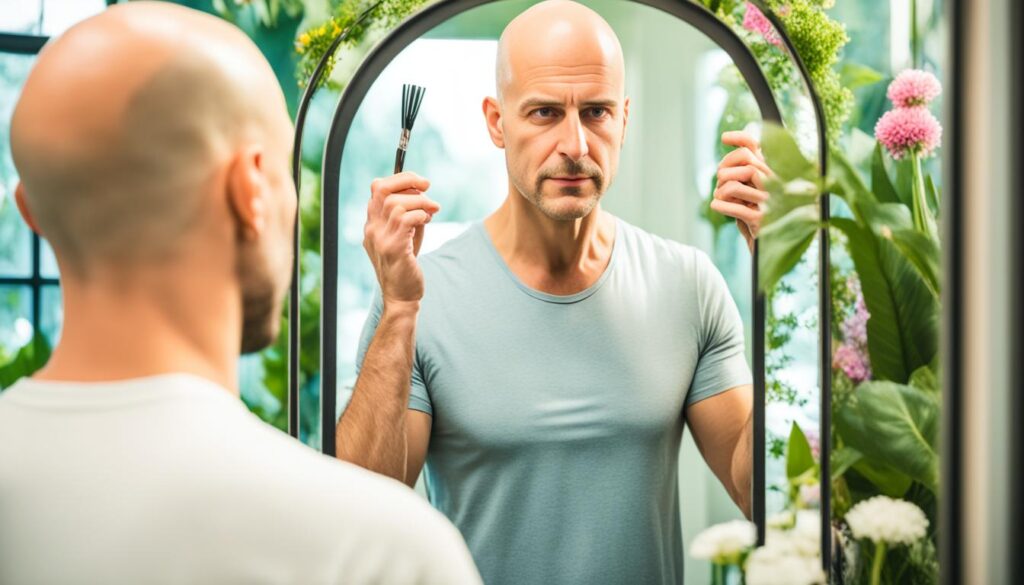
Note: The image above is for illustrative purposes only and does not depict any specific individual.
Resources for Hair Loss and Body Image Support
Dealing with body image issues due to hair loss can be challenging, but there are various resources available to provide support and guidance. Whether you are seeking wearable hair solutions or counseling services tailored for cancer patients, these resources can help you navigate the emotional impact of hair loss and boost your self-esteem.
Wig Banks: The Wig Bank and TLC (from the American Cancer Society) offer affordable options for individuals looking for high-quality wigs and other wearable hair solutions. These organizations ensure that you have access to a wide range of options to help you feel confident and comfortable in your appearance.
PsychOncology Programs: Dedicated psychOncology programs specialize in providing counseling and support for cancer patients facing body image concerns. These programs understand the unique challenges individuals with cancer experience and offer tailored support to help you navigate the emotional impact of hair loss and body image struggles.
Cancer Transitions Programs: Cancer Transitions programs focus on providing support and resources to cancer survivors. These programs address various aspects of survivorship, including body image issues and coping strategies. Participating in these programs can provide you with a supportive community and valuable tools to navigate the challenges of hair loss.
American Cancer Society: The American Cancer Society offers a wealth of articles and information on hair loss, body image, and related topics. Their resources provide valuable insights, guidance, and support for individuals dealing with hair loss and body image issues. Exploring their resources can help you gain a better understanding of your experience and find valuable strategies for coping and building self-confidence.
Remember, you are not alone in your journey. These resources are here to support you in overcoming body image issues and regaining your confidence. Reach out, explore, and find the support that resonates with you. Together, we can navigate the challenges of hair loss and foster a positive body image.
Conclusion
Body image issues due to hair loss can have a profound impact on individuals, affecting their emotional well-being and self-confidence. Understanding the psychological effects of hair loss is crucial in managing these body image concerns. By seeking professional support, exploring treatment options, and adopting coping strategies, individuals can navigate the challenges of hair loss with resilience and regain a positive body image.
It is important to remember that everyone’s journey with hair loss is unique, and there is no one-size-fits-all approach to coping. However, there are some general coping tips that can be helpful. Engaging in self-care practices, such as exercise and mindfulness, can contribute to overall well-being and boost self-confidence. Finding support from loved ones and support groups can provide empathy and understanding, helping individuals process their emotions and find validation.
Furthermore, it is essential to explore treatment options that align with personal preferences and goals. Whether it’s considering medications, hair restoration therapies, or wearable hair solutions like wigs, finding the right approach can provide hope and a sense of control over one’s appearance.
As individuals navigate the challenges of body image issues due to hair loss, it is important to be kind to oneself and remember that self-worth is not solely determined by external appearance. Focusing on inner qualities, personal accomplishments, and embracing individual strengths can contribute to a positive self-image and overall well-being.
FAQ
How does hair loss affect body image?
Hair loss can have a significant impact on body image, leading to feelings of insecurity, lower self-esteem, and increased levels of anxiety and depression. It can affect both men and women and may be caused by factors such as cancer treatments, hormonal changes, autoimmune diseases, stress, age, and medication side effects.
How can I cope with body image issues caused by hair loss?
Coping with body image issues due to hair loss requires a multi-faceted approach. Seek support from healthcare professionals, consider treatment options, manage stress, and find strategies to boost self-confidence. Resources like counseling, support groups, and wearable hair options like wigs can assist in navigating the emotional challenges associated with hair loss.
What is the psychological impact of hair loss?
Hair loss can have a profound psychological impact on individuals, affecting their self-esteem, body image, and overall mental health. People often associate their hair with their identity and may experience negative emotions such as shame, anger, fear, and depression when they start losing it. Understanding and accepting the psychological impact of hair loss is the first step towards finding effective coping strategies and regaining confidence.
How can I manage the emotional impact of hair loss?
Coping with body image issues due to hair loss involves adopting various strategies to manage the emotional impact. Seek support from loved ones, healthcare professionals, and support groups who can provide empathy and understanding. Explore treatment options, such as medications or hair restoration therapies. Engage in self-care practices like exercise, mindfulness, and maintaining a healthy lifestyle.
Should I seek psychological support for hair loss?
Seeking psychological support is crucial for individuals experiencing hair loss. Professional counselors or therapists can provide a safe space to express emotions, navigate challenges associated with hair loss, and develop coping strategies. Counseling sessions may involve cognitive-behavioral therapy (CBT) or other therapeutic approaches tailored to your needs. Joining support groups, either in-person or online, can also provide a sense of community and connection.
How can I boost my self-confidence with hair loss?
Maintaining self-confidence can be challenging for individuals dealing with body image issues due to hair loss. However, there are practical tips that can help boost self-esteem and promote a positive self-image. Experiment with different hairstyles or accessories. Engage in regular physical activity and practice self-care rituals. Focus on inner qualities and personal accomplishments rather than external appearance.
What resources are available for hair loss and body image support?
Various resources are available to support individuals experiencing body image issues due to hair loss. Wig banks offer affordable options for wearable hair solutions. PsychOncology programs and Cancer Transitions programs provide counseling and support tailored for cancer patients dealing with body image concerns. Organizations like the American Cancer Society offer articles and information on hair loss and body image.
How can I conclude my journey with hair loss?
Remember, everyone’s journey with hair loss is unique, and it is important to be kind to oneself while going through this process. By understanding and addressing the psychological impact of hair loss, seeking support, adopting coping strategies, and focusing on self-care, individuals can navigate the challenges of hair loss with resilience and regain a positive body image.