
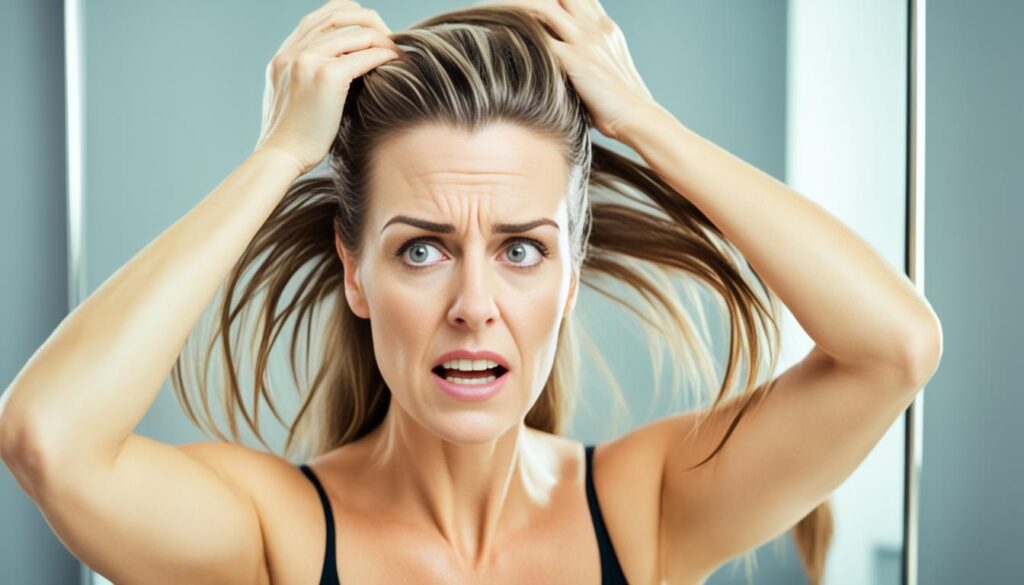
Did you know that greasy hair is often caused by a hormonal imbalance?
It’s true! The overproduction of sebum, the natural oil produced by the scalp, can be attributed to hormonal changes in the body. Whether it’s puberty, pregnancy, or menopause, these hormonal fluctuations can result in an oily scalp and greasy hair.
But hormonal imbalance isn’t the only factor that contributes to greasy hair. Environmental factors like heat and humidity, over-washing, using the wrong products, poor diet, stress, and certain medical conditions can also play a role in oily scalp.
To manage greasy hair due to hormonal imbalance, it’s important to understand the underlying causes and implement proper hair care strategies. This article will explore the connection between hormonal changes and greasy hair, environmental factors that contribute to oily scalp, hair care practices for greasy hair, lifestyle factors to consider, and tips for managing greasy hair caused by hormonal imbalance.
Key Takeaways:
- Hormonal imbalance can lead to greasy hair due to the overproduction of sebum.
- Environmental factors like heat and humidity can stimulate sweat production on the scalp, resulting in greasy hair.
- Over-washing and using the wrong hair care products can exacerbate greasy hair.
- Poor diet, stress, and certain medical conditions can contribute to hormonal imbalance and greasy hair.
- Managing greasy hair caused by hormonal imbalance involves finding the right hair care routine, addressing lifestyle factors, and seeking medical advice when needed.
Hormonal Changes and Greasy Hair
Hormonal changes can have a significant impact on the production of sebum, contributing to greasy hair. This section will explore the connection between hormonal imbalance and the health of the hair, including the regulation of sebum production.
During puberty, pregnancy, and menopause, the body experiences fluctuations in hormones such as estrogen and progesterone. These hormonal changes can affect the hair follicles and the amount of sebum produced by the scalp. As a result, individuals may notice an increase in scalp oil production and greasy hair.

Understanding the relationship between hormonal imbalance and greasy hair is crucial for managing and improving hair health. By addressing the underlying hormonal factors, individuals can make informed decisions about their hair care routine and take steps to balance sebum production.
Environmental Factors and Greasy Hair
Environmental factors play a significant role in the development of greasy hair. Heat and humidity can have a direct impact on the production of sweat on the scalp, which can mix with sebum and lead to greasy hair. The combination of sweat and sebum creates an ideal environment for bacterial growth, further contributing to the greasy appearance.
Regular exercise, although essential for overall health, can also contribute to an oily scalp. Physical activity and sweat can stimulate the sebaceous glands, leading to an increased production of sebum. This excess sebum can make the hair appear greasier and weigh it down.
Quotes:
“Heat and humidity can increase sweat production on the scalp, leading to greasy hair.”
In addition to environmental factors, the use of hot styling tools can also exacerbate greasy hair. High temperatures from styling tools like flat irons and curling wands can cause the scalp to produce more sebum as a defense mechanism against heat damage. Consequently, the excess sebum can result in greasier strands.
To manage greasy hair caused by environmental factors, it is important to adopt appropriate strategies. Using a dry shampoo specifically formulated for oily hair between washes can help absorb excess oils and provide a fresher appearance. However, it is crucial not to solely rely on dry shampoo, as excessive use can lead to clogged pores and further scalp issues.
- Wash hair regularly with a gentle, clarifying shampoo to remove excess oils and dirt.
- Use lukewarm water when washing hair to avoid stimulating the sebaceous glands.
- Avoid over-conditioning the scalp, as this can contribute to greasiness. Instead, focus on conditioning the lengths and ends of the hair.
- Allow hair to air dry whenever possible, as heat from blow dryers can stimulate the production of sebum.
Recommended Products:
| Product | Description |
|---|---|
| Dry Shampoo for Oily Hair | An oil-absorbing dry shampoo that refreshes and revitalizes greasy hair between washes. |
| Gentle Clarifying Shampoo | A clarifying shampoo that effectively removes excess oils and buildup without stripping the hair. |

Hair Care Practices for Greasy Hair
Proper hair care practices are crucial for managing greasy hair. Certain habits, such as over-washing the hair, can strip away the natural oils produced by the scalp, causing it to compensate by producing more sebum. Additionally, using the wrong hair care products, like heavy or drying formulas, can contribute to the greasy appearance of the hair.
To combat greasy hair, it’s important to find the right balance in your hair care routine. Start by choosing lightweight, natural products that are specifically formulated for oily hair. These products can help cleanse the scalp without over-stimulating sebum production.
Tip: Opt for gentle, sulfate-free shampoos and clarifying formulas that can effectively remove excess oils without stripping the hair.
When conditioning your hair, focus on the ends rather than applying conditioner directly to the roots. This helps prevent the roots from becoming weighed down and greasy. Additionally, consider using a leave-in conditioner or a lightweight hair serum that adds moisture to the ends of the hair without making it look greasy.
To make it easier to incorporate these hair care practices into your routine, here are some conditioning tips for oily hair:
- Apply conditioner only to the ends of the hair, avoiding the scalp.
- Rinse thoroughly to ensure no residue is left behind.
- Use a wide-toothed comb to distribute the conditioner evenly.
- Consider using a weekly deep cleansing treatment to remove buildup.
By adopting these hair care practices and making small adjustments to your routine, you can effectively manage greasy hair and maintain a healthier, more balanced scalp.

Lifestyle Factors and Greasy Hair
Lifestyle choices can have a significant impact on the condition of your hair, including whether it becomes greasy or not. Poor diet, high in sugar and fat, can contribute to the overproduction of sebum, resulting in oily hair. Consuming a diet rich in processed foods, fried foods, and sugary snacks can disrupt the balance of hormones and lead to greasy strands.
In addition to diet, stress can also play a role in the oiliness of your hair. When you’re stressed, your body produces more cortisol, a stress hormone, which can stimulate the sebaceous glands on your scalp to produce more sebum. This excess oil can leave your hair feeling greasy and weighed down.
Certain medical conditions can also contribute to greasy hair. For example, polycystic ovary syndrome (PCOS) and hypothyroidism are two conditions that can cause hormonal imbalances, leading to excessive sebum production. If you suspect that an underlying medical condition may be causing your greasy hair, it’s essential to seek medical advice for proper diagnosis and treatment.
To manage greasy hair caused by lifestyle factors, it’s crucial to address the root causes. Focus on adopting a balanced and nutritious diet that includes plenty of fruits, vegetables, and lean proteins. Avoid excessive consumption of sugary and fatty foods. Regular exercise and stress management techniques such as meditation or yoga can help reduce stress levels and promote a healthy hormonal balance.
Remember to consult with a healthcare professional or dermatologist for personalized advice regarding your specific hair concerns and medical conditions.
| Lifestyle Factors | Effects on Hair |
|---|---|
| Poor diet | Can contribute to the overproduction of sebum, leading to oily hair |
| Stress | Can stimulate sebaceous glands to produce more sebum, resulting in greasy hair |
| Medical conditions | Hormonal imbalances caused by conditions such as PCOS and hypothyroidism can lead to excessive sebum production and greasy hair |
Seeking Professional Advice
If you’re struggling with greasy hair and suspect that it may be related to your lifestyle or a medical condition, it’s essential to consult with a healthcare professional or dermatologist. They can provide guidance on managing the underlying causes of greasy hair and recommend personalized strategies for maintaining a healthy scalp and hair.
Hormonal Changes Across Life Stages
Hormonal changes occur at different life stages, including puberty, pregnancy, and menopause, and can significantly impact the appearance and behavior of the hair. Understanding how hormones affect the hair during these stages can help individuals adapt their hair care routines accordingly.
Hair Changes During Puberty
During puberty, hormonal fluctuations can lead to noticeable changes in hair texture and oiliness. As hormone levels increase, the sebaceous glands in the scalp produce more sebum, resulting in greasier hair. This excess oil can make the hair appear limp and weighed down.
Additionally, the increase in androgens, such as testosterone, can also affect the thickness and growth rate of the hair. Some individuals may experience an increase in hair volume and thickness during puberty, while others may notice their hair becoming thinner and more brittle.
Hair Changes During Pregnancy
Pregnancy hormones can have a significant impact on the hair, often leading to noticeable changes in hair thickness and texture. Many pregnant individuals experience thicker and fuller hair due to elevated estrogen levels, which extends the hair’s growth phase and reduces shedding.
However, hormonal fluctuations during pregnancy can also result in drier hair. This is because the increased hormone levels can affect the hair’s ability to retain moisture, making it more prone to dryness and breakage. Using moisturizing and nourishing hair care products can help alleviate these dryness concerns.
Hair Changes During Menopause
Menopause is a significant life stage that brings about hormonal changes. As estrogen and progesterone levels decline, women may experience various hair-related issues, including hair thinning, dryness, and greying.
The decline in estrogen can lead to a decrease in hair volume and thickness. Additionally, the decrease in natural oil production can result in dry and brittle hair. Some women may also notice an increase in hair greying or changes in their hair’s texture.
It is important for individuals experiencing these changes to adapt their hair care routines to address these specific concerns. Using moisture-rich hair care products, incorporating nourishing treatments, and consulting with a healthcare professional or a dermatologist specializing in hair can help manage these hair changes effectively.
| Hormonal Change | Hair Changes |
|---|---|
| Puberty | – Changes in hair texture and oiliness – Potential increase or decrease in hair thickness |
| Pregnancy | – Thicker and fuller hair – Potential increase in dryness and breakage |
| Menopause | – Hair thinning – Dryness and brittleness – Changes in hair color and texture |
Tips for Managing Greasy Hair Due to Hormonal Imbalance
Managing greasy hair caused by a hormonal imbalance requires a comprehensive approach that combines proper hair care practices with natural remedies and a balanced diet. By addressing the underlying hormonal imbalance, individuals can effectively balance their hormones and improve the health of their hair.
Natural Remedies for Greasy Hair Hormonal Imbalance
There are several natural remedies that can help manage greasy hair due to hormonal imbalance:
- Apple cider vinegar rinses: Dilute apple cider vinegar with water and use it as a final rinse after shampooing to help balance the pH level of the scalp and reduce excess oil production.
- Tea tree oil: Add a few drops of tea tree oil to your shampoo or mix it with a carrier oil like coconut oil and massage it onto your scalp to help control sebum production and combat greasiness.
- A balanced diet: Consuming a diet rich in fruits, vegetables, and lean proteins can provide essential nutrients and help balance hormones, leading to healthier hair.
Balancing Hormones for Greasy Hair
In addition to natural remedies, consulting with an endocrinologist or healthcare professional who specializes in hormones can provide valuable guidance on hormone balance. They may recommend specific hormonal therapies or lifestyle changes that can help manage greasy hair and restore hormonal equilibrium. Identifying and addressing any underlying hormonal imbalances is vital for long-term improvement in hair health.
By adopting these tips and incorporating natural remedies and professional advice, individuals can effectively manage greasy hair caused by hormonal imbalance and enjoy healthier, more balanced locks.
| Natural Remedies | Description |
|---|---|
| Apple Cider Vinegar Rinses | Dilutes apple cider vinegar with water and use it as a final rinse after shampooing to help balance the pH level of the scalp and reduce excess oil production. |
| Tea Tree Oil | Add a few drops of tea tree oil to your shampoo or mix it with a carrier oil like coconut oil and massage it onto your scalp to help control sebum production and combat greasiness. |
| Balanced Diet | Consume a diet rich in fruits, vegetables, and lean proteins to provide essential nutrients and help balance hormones, leading to healthier hair. |
Conclusion
Managing greasy hair caused by hormonal imbalance requires a comprehensive approach that addresses the underlying causes and implements appropriate hair care strategies. Hormonal changes during puberty, pregnancy, and menopause, along with environmental factors, lifestyle factors, and certain medical conditions, can contribute to an oily scalp.
By finding the right balance in hair care practices, individuals can achieve healthier, less greasy hair. This includes using lightweight, natural products specifically formulated for oily hair, avoiding over-washing and using the wrong hair care products. Conditioning should be done judiciously, focusing on the ends of the hair while avoiding the roots.
In addition to proper hair care, addressing lifestyle factors such as maintaining a balanced diet, managing stress levels, and seeking medical advice when needed is crucial. Balancing hormones through natural remedies like apple cider vinegar rinses and incorporating a diet rich in fruits, vegetables, and lean proteins can contribute to improved hair health. Consulting with an endocrinologist or healthcare professional specializing in hormones can provide valuable guidance on hormone balance.
By understanding and implementing these tips and strategies, individuals can effectively manage greasy hair caused by hormonal imbalance and achieve healthier, more balanced hair.
FAQ
What causes greasy hair due to hormonal imbalance?
Greasy hair is often caused by a hormonal imbalance that results in the overproduction of sebum, the natural oil produced by the scalp. Hormonal changes, such as puberty, pregnancy, and menopause, can contribute to greasy hair. Other factors like heat and humidity, over-washing, using the wrong products, poor diet, stress, and certain medical conditions can also play a role in oily scalp.
How do hormonal changes affect greasy hair?
Hormonal changes, such as those experienced during puberty, pregnancy, and menopause, can impact the production of sebum and contribute to greasy hair. The fluctuation of hormones like estrogen and progesterone can affect the health of the hair follicles and the regulation of sebum production. Understanding the connection between hormonal imbalance and greasy hair is essential for managing and improving hair health.
Do environmental factors contribute to greasy hair?
Yes, environmental factors like heat and humidity can stimulate the production of sweat on the scalp, leading to the mixing of sweat and sebum and resulting in greasy hair. Regular exposure to hot styling tools can also cause the scalp to produce more sebum to protect against heat damage. Using dry shampoo between washes can help absorb excess oils and maintain a fresher appearance. However, it’s important not to rely too heavily on dry shampoo, as it can clog the pores and cause further issues.
How do hair care practices affect greasy hair?
Over-washing the hair can strip away natural oils from the scalp, leading to an overproduction of sebum as the skin tries to compensate for the dryness. Using the wrong hair care products, such as heavy or drying formulas, can also contribute to greasy hair. It’s important to find the right balance and use lightweight, natural products specifically formulated for oily hair. Conditioning should be done judiciously, focusing on the ends of the hair and avoiding the roots to prevent greasiness.
Do lifestyle factors play a role in greasy hair?
Yes, lifestyle factors like poor diet, high in sugar and fat, can contribute to greasy hair. Stress can also impact the production of sebum, leading to greasier strands. Certain medical conditions, such as polycystic ovary syndrome (PCOS) and hypothyroidism, can cause hormonal imbalances that result in oily hair. Addressing these lifestyle factors and seeking medical advice for underlying conditions can help manage greasy hair.
How do hormonal changes impact hair across life stages?
Hormonal changes occur at different life stages, including puberty, pregnancy, and menopause, and can affect the appearance and behavior of the hair. During puberty, hormones can change the texture and oiliness of the hair. Pregnancy hormones can lead to thicker and sometimes drier hair, while hormonal fluctuations during menopause can result in hair thinning, dryness, and greying. Understanding these changes can help individuals adapt their hair care routines accordingly.
What are some tips for managing greasy hair due to hormonal imbalance?
Managing greasy hair caused by a hormonal imbalance involves a comprehensive approach. Along with adopting proper hair care practices, natural remedies like apple cider vinegar rinses, tea tree oil, and a balanced diet rich in fruits, vegetables, and lean proteins can help balance hormones and improve hair health. Consulting with an endocrinologist or healthcare professional specializing in hormones can provide valuable guidance on hormone balance.
How can I balance hormones for greasy hair?
Balancing hormones for greasy hair can be achieved through natural remedies and a balanced diet. Incorporating foods rich in vitamins and minerals, avoiding processed foods, and managing stress levels can help regulate hormone production. Additionally, using gentle and specific hair care products for oily hair can assist in managing and reducing excess oil production.