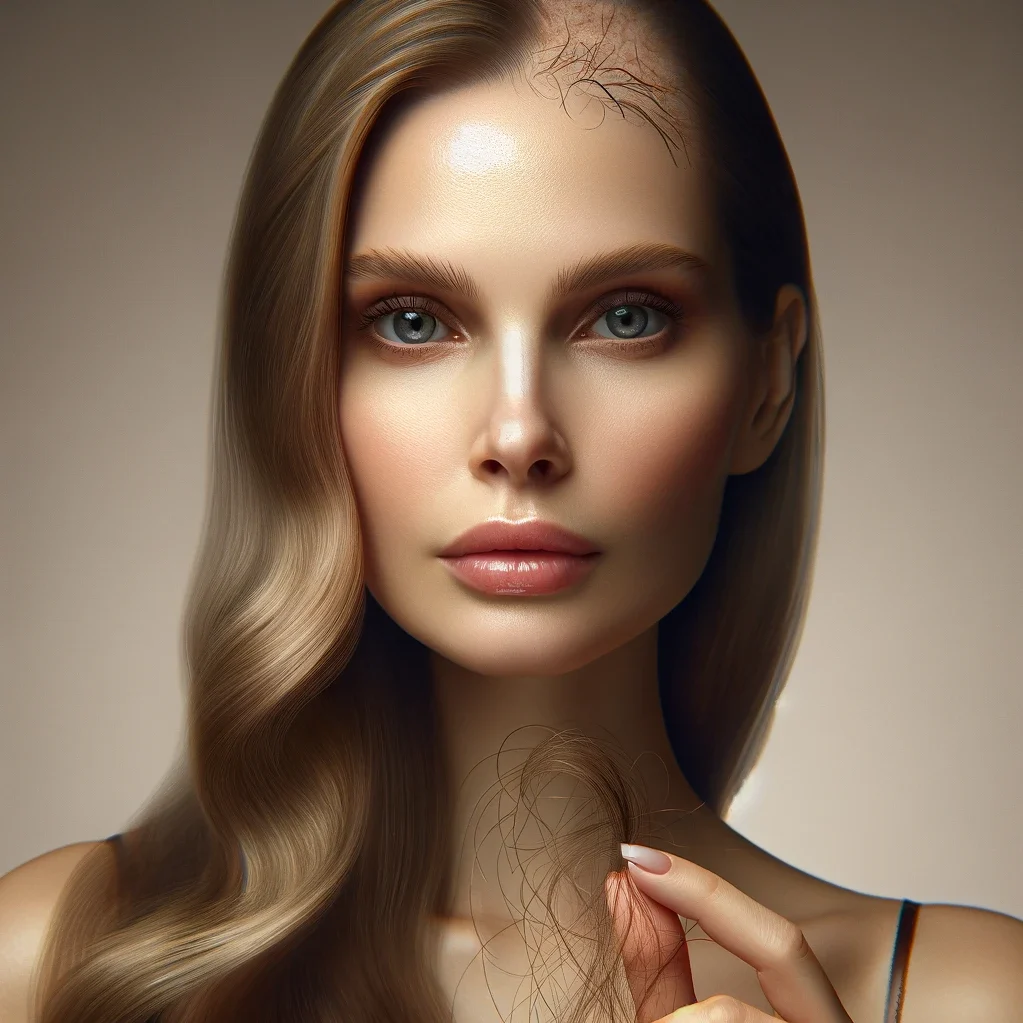
Hair loss is a common concern for women, with up to 40% experiencing noticeable hair loss by the age of 50. Unlike men, women may notice their part becoming wider or their ponytail thinning instead of specific bald patches. The hair growth cycle consists of three phases: the anagen phase (growth), the catagen phase (transition), and the telogen phase (resting). While losing 50 to 100 strands per day is normal, excessive shedding or visible thinning should be addressed with a doctor.
Various factors can contribute to rapid hair loss in women, including specific medications, high stress levels, and hormonal imbalances. Female pattern hair loss (FPHL), also known as androgenetic alopecia, is the most common form of hair loss in women. FPHL is often inherited and typically affects women in their 40s, 50s, or 60s.
Treatment options for hair loss in women include topical minoxidil, low-light lasers, prescription oral medications, platelet-rich plasma treatment, and microneedling. Consulting with a doctor is crucial to diagnose the cause of hair loss and determine the best treatment approach.
Key Takeaways:
- Rapid hair loss in women can occur due to various factors, including medications, stress, and hormonal imbalances.
- Female pattern hair loss (FPHL), also known as androgenetic alopecia, is the most common type of hair loss in women.
- Treatment options for hair loss in women include topical minoxidil, low-light lasers, prescription oral medications, platelet-rich plasma treatment, and microneedling.
- Consulting with a doctor is essential to diagnose the cause of hair loss and determine the most suitable treatment approach.
- Addressing hair loss requires early intervention and personalized treatment to achieve the best results.
Common Causes of Hair Loss in Women
Women experiencing rapid hair loss often wonder about the underlying causes. In this section, we will explore two common culprits: telogen effluvium and female pattern hair loss.
Telogen effluvium is a condition characterized by excessive shedding of hair. It occurs when hair follicles prematurely enter the resting phase, called telogen, causing hair to fall out in larger quantities than usual. Various factors can trigger telogen effluvium, such as:
- Childbirth
- Severe infection or fever
- Crash diets with low calorie and protein intake
- Iron deficiency and vitamin D deficiency
- Psychological stress
- Thyroid disease
- Certain medications
Female pattern hair loss (FPHL) is an inherited condition that affects a significant number of women. Hormonal shifts play a key role in FPHL. Specifically, the drop in estrogen levels during menopause can lead to shrinking hair follicles and eventual hair loss. Women with polycystic ovarian syndrome (PCOS) also often experience hair loss due to the overproduction of androgens, such as testosterone.
Both telogen effluvium and female pattern hair loss contribute to thinning hair and female pattern baldness. Recognizing the specific cause of hair loss is essential for effective treatment. In the next section, we will discuss various options available for addressing hair loss in women.
We should note that hair loss can be a complex issue, and it’s recommended to consult with a healthcare professional or dermatologist for a proper diagnosis and personalized treatment plan.
Hair Loss Treatments for Women
Fortunately, there are various treatment options available for women experiencing hair loss. One effective option is topical minoxidil, an FDA-approved medication that can be applied directly to the scalp daily. It is available in different strengths over the counter. Another treatment option is low-light lasers, such as laser combs and caps. These devices stimulate hair follicles with low-energy light and have gained FDA approval for hair growth treatment.
Prescription oral medications like finasteride and spironolactone can also be used off-label by dermatologists to address hair loss in women. While they are not specifically approved for female pattern hair loss, they have shown positive results in some cases. Platelet-rich plasma (PRP) treatment is another option, involving injecting the patient’s own plasma into the scalp to stimulate hair regrowth. Although PRP is FDA-approved for certain orthopedic uses, more research is needed to establish its effectiveness in hair regrowth.
Microneedling is a procedure often used in combination with topical minoxidil. It involves creating tiny holes in the scalp using fine needles and then applying the topical treatment. Microneedling can help improve absorption and enhance the effectiveness of minoxidil. Consulting with a healthcare professional or dermatologist is crucial in determining the most suitable treatment option for addressing hair loss in women.
FAQ
Is hair loss a common issue for women?
Yes, hair loss is not just a concern for men but is also a common issue faced by women. In fact, up to 40% of women will experience noticeable hair loss by the age of 50.
How can I tell if I’m experiencing hair loss?
Unlike men who often develop specific bald patches or a receding hairline, women may notice that their part looks wider or their ponytail becomes thinner. Excessive shedding or visible thinning can also be signs of hair loss.
What are the phases of the hair growth cycle?
The hair growth cycle consists of three phases: the anagen phase (growth phase), the catagen phase (transition phase), and the telogen phase (resting phase).
How much hair loss is considered normal?
Losing 50 to 100 strands of hair per day is considered normal. However, if you start to notice excessive shedding or visible thinning, it’s important to speak to your doctor.
What can cause rapid hair loss in women?
Rapid hair loss in women can be caused by factors such as specific medications, high stress levels, and hormonal imbalances.
What is the most common type of hair loss in women?
The most common type of hair loss in women is female pattern hair loss (FPHL), also known as androgenetic alopecia. It is inherited and typically affects women in their 40s, 50s, or 60s.
What are the treatment options for hair loss in women?
Treatment options for hair loss in women include topical minoxidil, low-light lasers, prescription oral medications, platelet-rich plasma treatment, and microneedling. Consulting with a doctor can help determine the best approach.