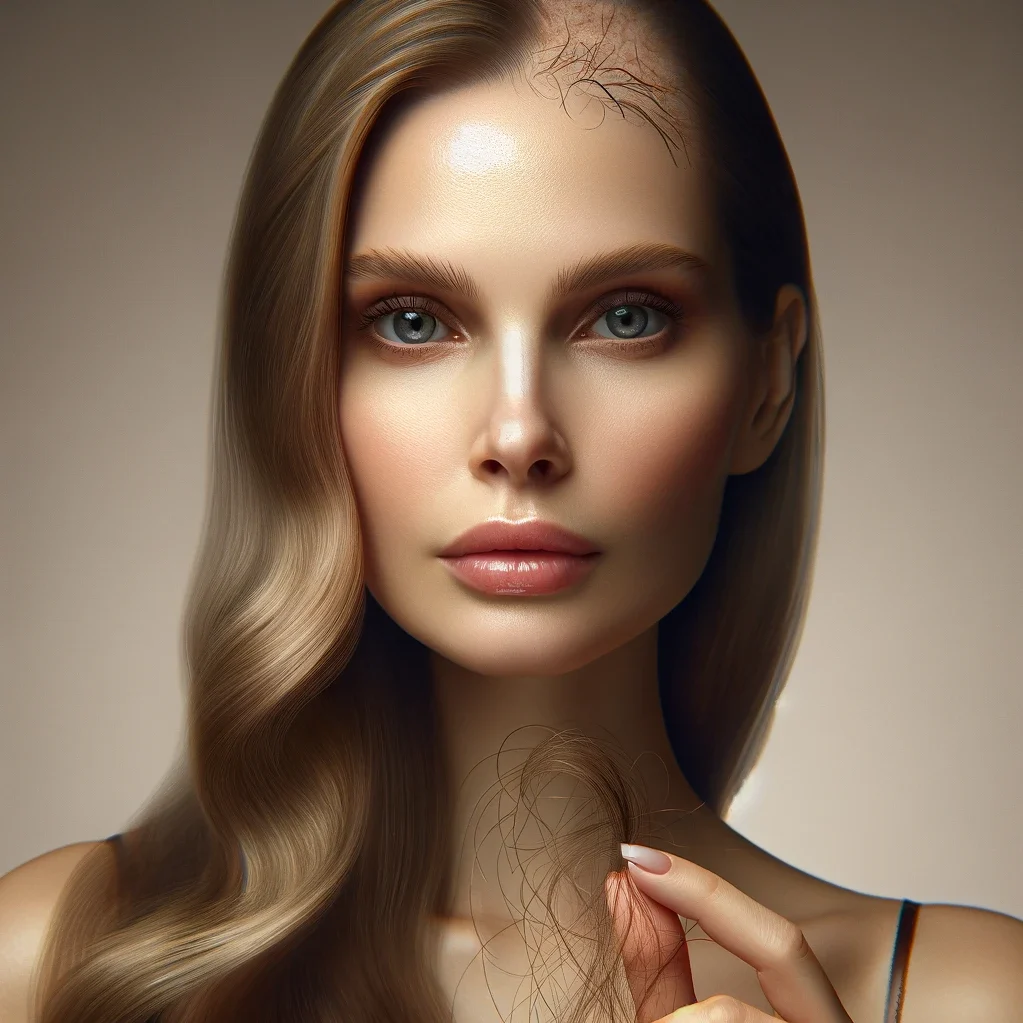
Hair loss is a common issue that affects both men and women. In fact, up to 40% of women will experience noticeable hair loss by the age of 50. Women often experience thinning hair rather than specific bald patches, with their part looking wider or their ponytail appearing thinner.
The life cycle of hair involves three phases: the anagen phase (growth phase), the catagen phase (transition phase), and the telogen phase (resting phase). It’s normal to lose 50-100 strands of hair per day. However, if you notice an increase in hair fall or visible thinning, it’s important to consult with a doctor.
Hair loss in women can have various causes, including medication side effects, high stress levels, nutritional deficiencies, and hormonal imbalances. The most common type of hair loss in women is female pattern hair loss (FPHL), which is influenced by genetics and hormonal changes.
Treatment options for hair loss in women include topical minoxidil, low-light lasers, prescription oral medications, platelet-rich plasma therapy, and microneedling.
Key Takeaways:
- Up to 40% of women will experience noticeable hair loss by the age of 50.
- Thinning hair is a common symptom, with the part looking wider or the ponytail appearing thinner.
- Hair loss in women can be caused by medication side effects, high stress levels, nutritional deficiencies, and hormonal imbalances.
- The most common type of hair loss in women is female pattern hair loss (FPHL).
- Treatment options for hair loss in women include topical minoxidil, low-light lasers, prescription oral medications, platelet-rich plasma therapy, and microneedling.
Causes of Hair Loss in Women
There are several possible causes of hair loss in women. Telogen effluvium is a type of temporary hair loss that occurs due to high levels of stress, certain medications, nutritional deficiencies (such as iron and vitamin D), thyroid diseases, and psychological conditions like depression and anxiety. It is characterized by excessive shedding of hair during the resting phase of the hair growth cycle, also known as the telogen phase.
Female pattern hair loss (FPHL) is the most common type of hair loss in women and is characterized by a gradual thinning of the hair on the top third to half of the scalp. FPHL has a genetic component and is influenced by hormonal changes, particularly during menopause and in women with polycystic ovarian syndrome (PCOS). It is important to understand that FPHL is a chronic and progressive condition that requires long-term management.
Aside from telogen effluvium and female pattern hair loss, there are other causes of hair loss in women that should be considered:
| Cause | Description |
|---|---|
| Childbirth | Hormonal changes during and after pregnancy can cause temporary hair loss. |
| Severe infections or high fevers | Illnesses that cause a significant immune response can lead to hair loss. |
| Crash diets | Drastically reducing caloric intake can lead to nutritional deficiencies that affect hair health. |
| Certain medications | Some medications, such as chemotherapy drugs or anticoagulants, can cause hair loss as a side effect. |
If you are experiencing hair loss, it is important to consult with a healthcare professional or dermatologist to determine the underlying cause and develop an appropriate treatment plan.
Hair Loss Treatments for Women
Fortunately, there are effective treatments available for women experiencing hair loss. One popular option is topical minoxidil, an FDA-approved medication that can be applied directly to the scalp. Minoxidil works by stimulating hair growth and can help to increase hair density and thickness. It is available over-the-counter in various strengths and formulations, making it convenient and accessible for many women.
Another option for hair loss treatment is low-light lasers. These devices, such as laser combs and caps, use low-energy light to stimulate hair follicles and promote hair growth. The light is thought to increase blood flow to the scalp, nourishing the hair follicles and encouraging new hair growth. Low-light laser therapy is non-invasive and can be used in the comfort of your own home.
For women with more severe or persistent hair loss, platelet-rich plasma (PRP) therapy and microneedling are options to consider. PRP therapy involves injecting the patient’s own plasma, which is rich in growth factors, into the scalp to stimulate hair regrowth. Microneedling, often used in conjunction with topical minoxidil, creates tiny puncture wounds in the scalp to enhance the absorption of the medication and promote hair growth. Both PRP therapy and microneedling are performed by trained healthcare professionals.
When seeking hair loss treatment, it’s important to consult with a doctor or dermatologist who specializes in hair loss to determine the underlying cause of your specific hair loss and to discuss the most appropriate treatment options for you. They will evaluate your medical history, perform any necessary tests or examinations, and develop a personalized treatment plan that may include one or more of the available options, such as topical minoxidil, low-light lasers, platelet-rich plasma therapy, or microneedling. With the right treatment approach, many women can effectively manage and even reverse their hair loss.
FAQ
What are the common causes of hair loss in women?
Hair loss in women can be caused by various factors such as medication side effects, high stress levels, nutritional deficiencies, and hormonal imbalances.
What is female pattern hair loss (FPHL)?
Female pattern hair loss is the most common type of hair loss in women, characterized by a gradual thinning of the hair on the top third to half of the scalp. It is influenced by genetics and hormonal changes.
How can hair loss in women be treated?
Treatment options for hair loss in women include topical minoxidil, low-light lasers, prescription oral medications, platelet-rich plasma therapy, and microneedling. Consultation with a doctor is recommended to determine the most suitable treatment.
What is topical minoxidil?
Topical minoxidil is an FDA-approved medication that can be applied to the scalp to stimulate hair growth in women experiencing hair loss.
How do low-light lasers work for hair loss treatment?
Low-light lasers, such as laser combs and caps, emit low-energy light that stimulates hair follicles and promotes hair growth. They can be used as a treatment option for hair loss in women.
What is platelet-rich plasma therapy?
Platelet-rich plasma therapy involves injecting plasma from the patient’s blood into the scalp to stimulate hair regrowth. It is a treatment option for women experiencing hair loss.
How does microneedling help with hair loss?
Microneedling, often used in combination with topical minoxidil, creates small punctures in the scalp to enhance the absorption of medication and stimulate hair growth in women with hair loss.