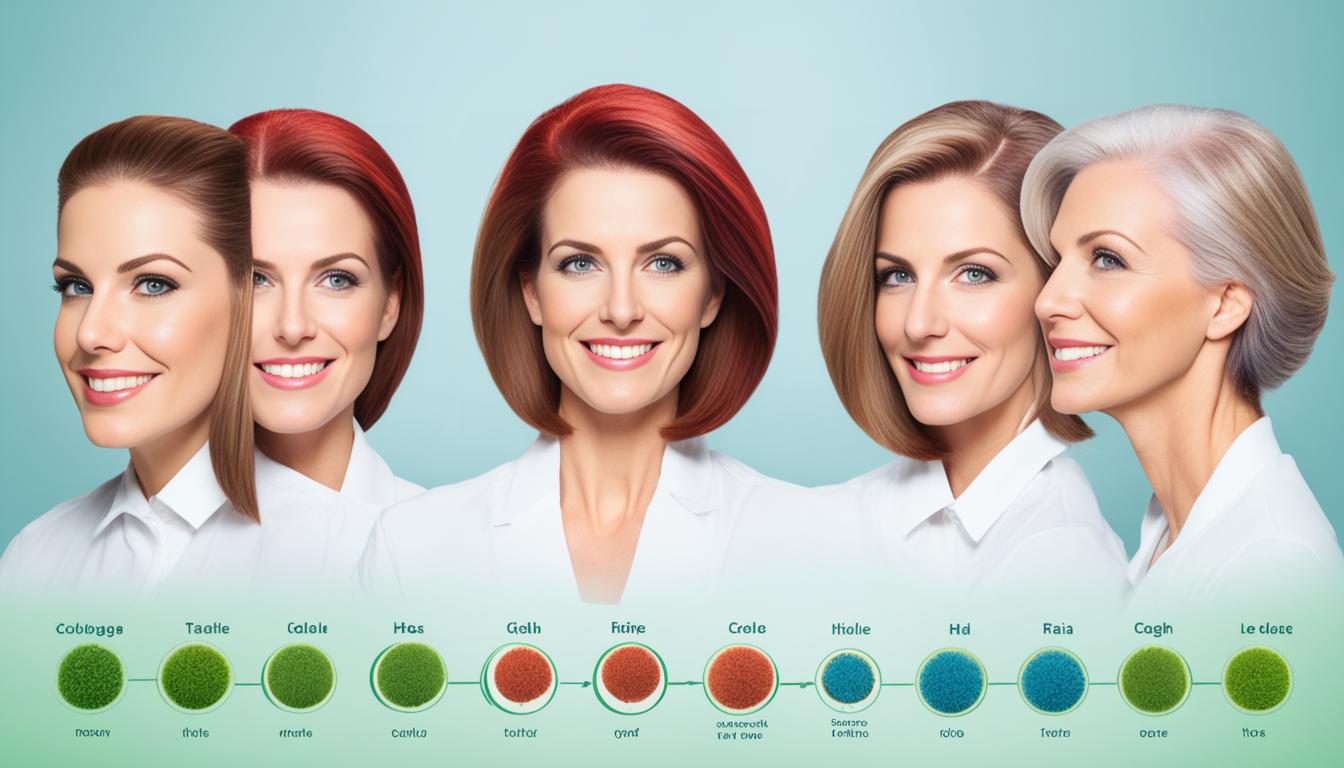
Did you know that on average, a person loses around 50 to 100 hairs per day? That may sound alarming, but it’s a normal part of the hair growth cycle. Understanding the hair growth cycle is essential for maintaining healthy and luscious locks. Hair growth goes through four distinct stages, each with its own timeline and significance.
Key Takeaways:
- The hair growth cycle consists of four stages: anagen, catagen, telogen, and exogen.
- The anagen phase is the growth phase, lasting 3-5 years on average.
- The catagen phase is a short transitional phase that lasts around 10 days.
- The telogen phase is the resting phase, lasting approximately 3 months.
- The exogen phase is the shedding phase, allowing for new hair growth.
Anagen Phase – The Growth Phase
The anagen phase is a vital stage in the hair growth cycle, representing the active phase of hair growth. During this phase, hair follicles undergo rapid cell division, resulting in the growth of new hair strands. It is during the anagen phase that individuals can witness visible changes in their hair length and volume.
Throughout the anagen phase, hair grows at an average rate of around half an inch per month. However, it’s important to note that hair growth can vary based on factors such as genetics, overall health, and external conditions. Hair tends to grow faster during the summer months compared to the winter season.
The duration of the anagen phase is a critical factor in determining the maximum length a person’s hair can reach. On average, the anagen phase lasts between 3 to 5 years. However, individuals of Asian descent have been observed to have longer anagen phases, which can extend up to 7 years.
To better understand the anagen phase and its significance in achieving long hair, take a look at the hair growth timeline below:
Anagen Phase Timeline
- Phase Duration: 3 to 5 years (can extend up to 7 years in individuals of Asian descent)
- Rate of Growth: Approximately half an inch per month
- Seasonal Variation: Faster growth in summer, slower growth in winter
Image:
As the anagen phase plays a crucial role in hair growth, it is essential to provide proper care and nourishment to your hair during this phase. This can include maintaining a healthy diet, practicing good hair care habits, and avoiding stressors that may disrupt the hair growth cycle.
Catagen Phase – The Transition Phase
After the anagen phase, the hair cycle enters the catagen phase, a short transitional period. During this phase, individual hairs are cut off from the blood supply and the cells that produce new hair. Approximately 3% of hairs are in this stage at any time. The catagen phase lasts around 10 days before transitioning to the next phase.
| Phase | Duration | Description |
|---|---|---|
| Anagen | 3-5 years | The active phase of hair growth. |
| Catagen | 10 days | The transitional phase between anagen and telogen. |
| Telogen | Approximately 3 months | The resting phase. |
| Exogen | Varies | The shedding phase. |
During the catagen phase, the hair follicles shrink and detach from the blood vessels that supply nourishment. The cells responsible for producing new hair stop dividing and the hair shaft moves upward towards the skin’s surface. This phase signifies the end of active hair growth and prepares the hair for transition into the telogen phase.
In comparison to the anagen phase, the catagen phase is relatively short, lasting only about 10 days. It accounts for a small percentage of the hair on the scalp, approximately 3%. Once the catagen phase is complete, the hair cycle progresses into the telogen phase.
Telogen Phase – The Resting Phase
The telogen phase is an essential part of the hair growth cycle. During this resting phase, hair strands remain in the follicles but are not actively growing. It accounts for approximately 10-15% of your hairs at any given time.
This phase is characterized by a temporary pause in hair growth as the follicles take a break before transitioning into the next phase. It typically lasts around 3 months or 100 days, but the duration can vary among individuals. During this time, new hairs start to form in the follicles that have just released hairs during the previous phase.

Exogen Phase – The Shedding Phase
During the exogen phase, which is the final stage of the hair growth cycle, individual hair strands are released from the follicles and naturally fall out. This shedding phase paves the way for the start of a new growth cycle.
Unlike other phases of the hair growth cycle, the exogen phase happens at different times for each hair follicle, preventing all hair from falling out simultaneously. This ensures that your scalp maintains a healthy coverage of hair throughout the shedding process.
On a daily basis, it is normal to shed around 80 to 100 hairs from your head. This shedding is a natural part of the hair growth cycle and signifies that your hair is undergoing renewal and regeneration.
Understanding the duration and significance of the exogen phase is essential in recognizing what is considered normal hair shedding and what may be a cause for concern. Excessive hair loss that goes beyond the normal range may indicate an underlying issue that requires further attention and evaluation.
| Phase | Duration |
|---|---|
| Anagen (Growth Phase) | 3-5 years (up to 7 years in certain cases) |
| Catagen (Transition Phase) | Around 10 days |
| Telogen (Resting Phase) | Approximately 3 months (100 days) |
| Exogen (Shedding Phase) | N/A |
By recognizing the natural shedding process and staying aware of what is considered within the normal range, individuals can maintain confidence in their hair’s health and appearance.
Factors Influencing Hair Growth Cycle
Several factors can disrupt the hair growth cycle, leading to hair loss, hair thinning, and problems with hair growth. These factors include metabolic imbalances, illness, and improper nutrition. Restrictive dieting or high fever can trigger telogen effluvium, resulting in sudden hair fall a few months later. A consistent diet that includes a healthy balance of vitamins, iron, fiber, and protein can support the hair growth cycle.
Stress can also impact the hair growth cycle by prolonging the resting phases. Stress-related hair loss, known as telogen effluvium, occurs when stress causes a larger number of hair follicles to enter the resting phase prematurely. This disruption leads to excessive shedding and hair thinning. Therefore, managing stress through mindfulness techniques such as meditation, yoga, and counseling can play a vital role in maintaining a healthy hair growth cycle.
In addition to managing stress, proper nutrition is essential for supporting the hair growth cycle. A diet rich in key nutrients can promote healthy hair growth and prevent disruption. Here are some nutrients that play a crucial role:
- Vitamins: Vitamins such as vitamin A, vitamin C, vitamin D, and vitamin E are important for promoting hair health. They help in the production of sebum, a natural hair conditioner, and protect the hair from damage.
- Iron: Iron is necessary for the production of hemoglobin, a protein that carries oxygen to the hair follicles. A deficiency in iron can lead to hair loss and hair thinning.
- Fiber: A diet rich in fiber promotes a healthy gut and digestion, which in turn supports hair growth. Good sources of fiber include fruits, vegetables, whole grains, and legumes.
- Protein: Hair is primarily made up of protein. Consuming enough protein is crucial for maintaining the strength and health of the hair. Good sources of protein include lean meats, poultry, fish, eggs, dairy products, and plant-based sources like tofu and legumes.
Incorporating these nutrients into your diet and maintaining a healthy lifestyle can significantly influence the hair growth cycle, ensuring optimal hair health and growth.
Maintaining a Healthy Hair Growth Cycle
To maintain a healthy hair growth cycle, we need to prioritize good nutrition, reduce stress levels, and practice proper hair care. It’s important to understand that our hair reflects our overall health and well-being. By adopting certain lifestyle habits and making conscious choices, we can support the growth and maintenance of strong and beautiful hair.
Nourish Your Hair from Within
A healthy hair diet plays a crucial role in maintaining optimal hair growth. Make sure to include protein-rich foods like lean meats, fish, eggs, and legumes in your meals. Additionally, vitamins such as vitamin D and vitamin C, along with minerals like iron and zinc, are essential for healthy hair. Incorporate foods like spinach, citrus fruits, nuts, seeds, and whole grains into your diet to provide your hair with the necessary nutrients.
Consider including supplements like folic acid and vitamin B12 after consulting with a healthcare professional. These supplements can further support healthy hair growth and prevent deficiencies that may hamper the hair growth cycle.
Manage Stress Levels
Stress can disrupt the hair growth cycle and lead to hair loss. It’s crucial to find healthy ways to manage stress and promote relaxation. Techniques such as yoga, meditation, and deep breathing exercises can help reduce stress levels and improve overall well-being. If you’re struggling with chronic stress, consider seeking counseling or therapy to address underlying issues and develop effective coping mechanisms.
Practice Proper Hair Care
Using the right hair care products and following a gentle hair care routine can contribute to maintaining a healthy hair growth cycle. Choose shampoos and conditioners that are suitable for your hair type and address specific concerns like dryness, oiliness, or damage. Avoid excessive heat styling, harsh chemical treatments, and tight hairstyles that can put strain on your hair follicles.
When washing your hair, gently massage the scalp to stimulate blood flow and promote hair growth. Pat your hair dry with a soft towel instead of rubbing aggressively. Opt for wide-toothed combs or brushes with gentle bristles to prevent breakage and minimize damage.
Remember to protect your hair from environmental factors such as sun exposure and pollution. Wear a hat or use hair products with UV protection when spending prolonged periods outdoors.
By adopting a holistic approach that combines proper nutrition, stress management, and gentle hair care, you can maintain a healthy hair growth cycle and support the overall health of your hair. Remember, healthy hair is a reflection of a healthy body.
Conclusion
Understanding the hair growth cycle is crucial for maintaining healthy, vibrant hair. The four stages of the hair growth cycle – anagen, catagen, telogen, and exogen – each play a specific role in the growth and shedding of hair. By knowing how this cycle works, individuals can take proactive steps to ensure their hair remains in optimal condition.
Factors that disrupt the hair growth cycle, such as stress and poor nutrition, can lead to hair loss and thinning. It is important to prioritize good nutrition by incorporating a diet rich in protein, vitamins, iron, zinc, folic acid, and vitamin B12. These nutrients are essential for promoting healthy hair growth.
In addition to nutrition, managing stress levels is crucial for maintaining a healthy hair growth cycle. Techniques like yoga, meditation, and counseling can help individuals reduce their stress levels and minimize its impact on hair health.
Finally, practicing proper hair care is essential for maintaining a healthy hair growth cycle. Using the right shampoo and conditioner for your hair type, treating your hair gently, and avoiding excessive heat or chemical treatments will promote hair vitality and minimize damage.
FAQ
Why is understanding the hair growth cycle important?
Understanding the hair growth cycle is important because it enables you to develop effective hair care strategies and maintain healthy hair.
What are the stages of the hair growth cycle?
The stages of the hair growth cycle are the anagen phase (growth phase), the catagen phase (transition phase), the telogen phase (resting phase), and the exogen phase (shedding phase).
How long does the anagen phase last?
The anagen phase lasts an average of 3-5 years, but it can be longer in people of Asian descent, reaching up to 7 years.
What happens during the catagen phase?
The catagen phase is a short transitional period during which individual hairs are cut off from the blood supply and the cells that produce new hair. Approximately 3% of hairs are in this stage at any time.
How long does the telogen phase last?
The telogen phase lasts approximately 3 months or 100 days. This is a resting period where strands remain in the follicles but are not actively growing.
What is the exogen phase?
The exogen phase is the final stage of the hair growth cycle, where individual hair strands are released from the follicles and fall out. This allows for the start of a new growth cycle.
What factors can disrupt the hair growth cycle?
Factors that can disrupt the hair growth cycle include metabolic imbalances, illness, improper nutrition, and stress.
How can I maintain a healthy hair growth cycle?
To maintain a healthy hair growth cycle, it is important to prioritize good nutrition, reduce stress levels, and practice proper hair care.
2 thoughts on “Understanding the Why Hair Growth Cycle Matters”