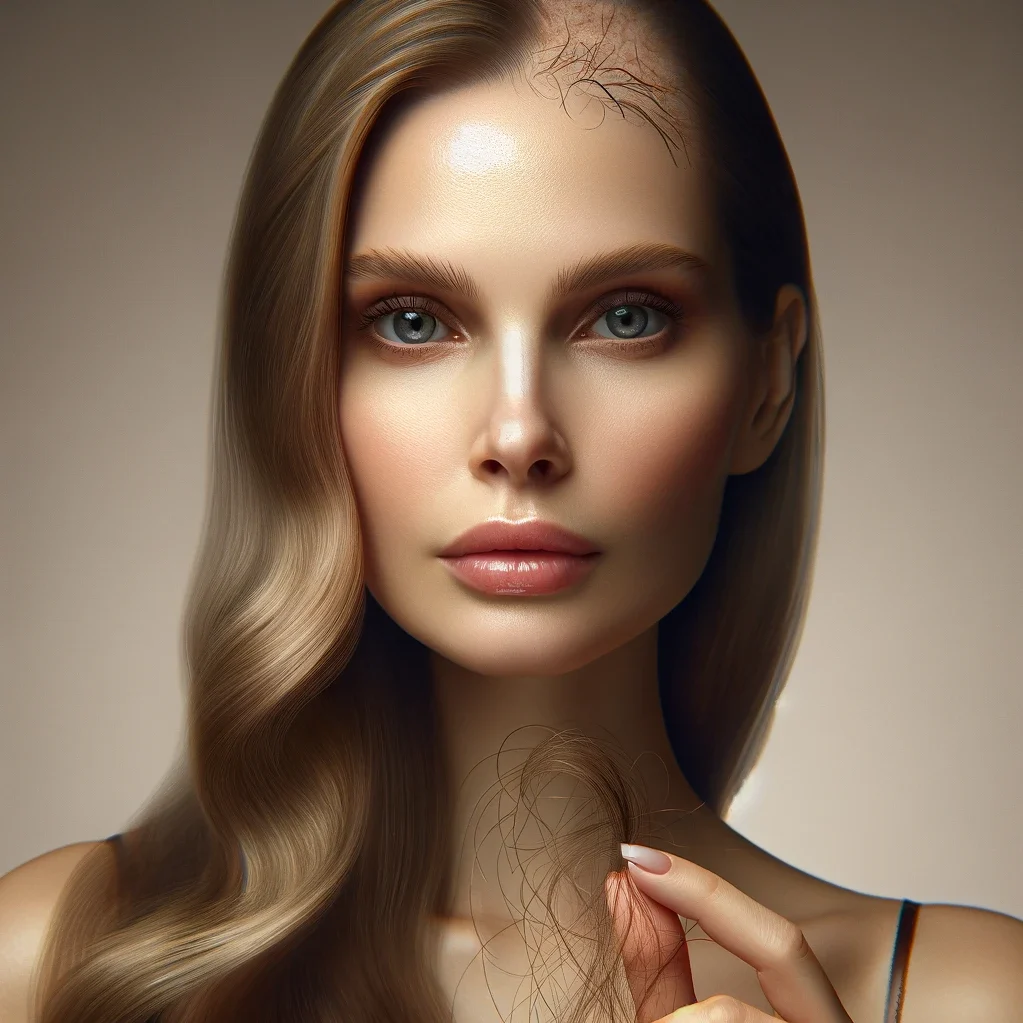

Female pattern baldness, also known as female pattern hair loss, is a common condition that affects postmenopausal women. While the exact cause of this condition is still not fully understood, it is believed to be influenced by a combination of genetic, hormonal, and environmental factors.
Research has shown that female pattern baldness has a polygenic mode of inheritance, meaning that multiple genes contribute to its development. Androgens, which play a crucial role in male pattern baldness, have a less clear impact on female pattern baldness. Some women with this condition do not show signs of androgen excess.
Other factors that can contribute to female pattern baldness include age, certain medications, weight loss, stress, and hormonal therapies with proandrogenic effects. Understanding the genetic factors involved in female baldness can help identify individuals at risk and develop targeted treatments.
Key Takeaways:
- Female pattern baldness is a complex condition influenced by genetic, hormonal, and environmental factors.
- Multiple genes contribute to the development of female pattern baldness, with a polygenic mode of inheritance.
- Androgens may not play the same role in female pattern baldness as they do in male pattern baldness.
- Other factors such as age, medications, weight loss, stress, and hormonal therapies can contribute to female pattern baldness.
- Understanding the genetic factors involved in female baldness can help identify at-risk individuals and develop personalized treatments.
Pathophysiology of Female Pattern Baldness
In order to understand female pattern baldness, it is essential to delve into its pathophysiology. This condition entails a decline in the hair follicles’ ability to produce hair, resulting in hair loss. Several factors contribute to the pathophysiological changes observed in female pattern baldness.
One key aspect is hair follicle miniaturization. The hair follicles undergo a process of miniaturization, leading to the production of small, vellus-like follicles. This process is characterized by a decrease in the duration of the active growth phase of the hair follicle (anagen) and an increase in the resting phase (telogen).
Furthermore, the presence of a chronic inflammatory infiltrate around the follicular infundibulum is often observed in individuals with female pattern baldness. This mild to moderate inflammation contributes to the progressive hair loss seen in affected individuals.
While androgens have been implicated in male pattern baldness, their role in female pattern baldness is still not fully understood. Some women with female pattern baldness do not exhibit signs of androgen excess, suggesting the involvement of other mechanisms. In addition to androgen stimulation, there may also be androgen-independent mechanisms at play.
Age is another factor that influences the pathophysiology of female pattern baldness. As women age, there is a natural decline in hair density and diameter, which contributes to the overall thinning of the hair.
Other contributing factors to female pattern baldness include certain medications, weight loss, stress, and hormonal therapies with proandrogenic effects. These external influences can exacerbate the hair loss process in individuals with a genetic predisposition.
Overall, the pathophysiology of female pattern baldness involves a complex interplay of factors, including hair follicle miniaturization, alterations in the anagen/telogen phases, chronic inflammatory infiltrate, and both androgen stimulation and androgen-independent mechanisms. Understanding these underlying mechanisms is crucial in developing effective treatments for female pattern baldness.
Other factors influencing female pattern baldness
Apart from the previously mentioned factors, certain lifestyle and environmental factors can also influence the development and progression of female pattern baldness. These factors include:
- Medications: Certain medications, such as chemotherapy drugs and some antidepressants, have been associated with hair loss in women.
- Weight loss: Rapid weight loss, whether intentional or unintentional, can contribute to hair thinning and loss.
- Stress: Physical or emotional stress can trigger or worsen hair loss in women with a genetic predisposition.
- Hormonal therapies: Hormonal therapies that have proandrogenic effects, such as oral contraceptives or hormone replacement therapy, can impact hair growth and contribute to female pattern baldness.
It is important to consider these additional factors when evaluating and managing female pattern baldness to ensure a comprehensive approach to treatment.
Genetic Factors in Female Baldness
Genetic factors are known to play a significant role in female pattern baldness. This condition follows a polygenic mode of inheritance, meaning that multiple genes contribute to its development. Two specific genetic markers associated with female pattern baldness are the androgen receptor gene and the ectodysplasin A2 receptor locus on the X-chromosome.
The androgen receptor gene is involved in the response to androgen hormones, which have been implicated in male pattern baldness. While the role of androgens in female pattern baldness is not fully understood, the androgen receptor gene is believed to influence the age of onset, pattern, progression, and severity of hair loss in affected women.
The ectodysplasin A2 receptor locus, located on the X-chromosome, is another genetic marker associated with female pattern baldness. This locus is thought to be involved in regulating hair follicle development and maintenance, potentially influencing the manifestation of hair loss in women.
Understanding the genetic factors involved in female baldness is crucial for identifying individuals at risk and developing personalized treatment strategies. By analyzing these genetic markers, healthcare professionals can determine the likelihood of hair loss and design interventions tailored to the specific needs and genetic profile of each patient.
| Genetic Factors in Female Baldness | Description |
|---|---|
| Androgen Receptor Gene | Influences the age of onset, pattern, progression, and severity of hair loss in women with female pattern baldness. Regulates the response to androgen hormones. |
| Ectodysplasin A2 Receptor Locus | Located on the X-chromosome, this genetic marker is involved in hair follicle development and maintenance. May impact the manifestation of hair loss in women. |
By conducting genetic testing and considering these genetic factors, medical professionals can gain valuable insights into the underlying mechanisms of female baldness and provide targeted treatments that address the specific genetic profile of each individual.
Environmental Factors and Other Influences
In addition to genetic factors, environmental factors can also contribute to the development of female pattern baldness. Understanding and addressing these factors is essential in evaluating and treating female baldness effectively.
Medications
Some medications can have a significant impact on hair health and may contribute to hair loss in women. Chemotherapy drugs and certain antidepressants, for example, are known to cause hair loss as a side effect. It’s important to be aware of the potential hair-related effects of any medications being taken and to discuss concerns with a healthcare provider.
Weight Loss
Rapid weight loss, especially when accompanied by nutritional deficiencies, can trigger or exacerbate hair loss in women. The body considers hair to be non-essential for survival, so when nutritional intake is compromised, it may redirect nutrients away from hair growth. This can lead to hair thinning and loss. Maintaining a balanced and nutritious diet is crucial for maintaining healthy hair.
Stress
Physical or emotional stress can have a profound impact on the body, including the hair follicles. Stress-induced hair loss, known as telogen effluvium, can occur when the body experiences a significant shock or trauma. This type of hair loss is usually temporary and the hair typically regrows once the underlying stressor is addressed. Finding healthy ways to manage and cope with stress is important for overall well-being and hair health.
Hormonal Therapies
Certain hormonal therapies used for various medical conditions, such as hormone replacement therapy or oral contraceptives with proandrogenic effects, can trigger or worsen hair loss in women with a genetic predisposition. These therapies can affect the balance of hormones in the body, potentially leading to hair follicle miniaturization and thinning. It’s crucial to discuss the potential hair-related side effects of any hormonal treatments with a healthcare provider.
Other Medical Conditions
Medical conditions such as hypothyroidism and hyperprolactinemia have been associated with female pattern baldness. Hypothyroidism, or an underactive thyroid, can disrupt the balance of hormones in the body and lead to hair loss. Hyperprolactinemia, characterized by elevated levels of the hormone prolactin, can also cause hair thinning and loss. Addressing and managing these underlying medical conditions can help mitigate hair loss in women.
It is important to consider these environmental factors when evaluating and treating female pattern baldness. By addressing underlying causes and making appropriate lifestyle changes, it is possible to minimize the impact of these factors on hair health and promote hair regrowth.
In the next section, we will explore the prevalence and impact of female baldness on women’s lives.
Prevalence and Impact of Female Baldness
Female pattern baldness is a common condition that affects a significant number of women. Various studies have reported different prevalence rates, with estimates ranging from 2% to 87% depending on the study population and diagnostic criteria used.
Female baldness can have a significant impact on quality of life, with many women experiencing psychological effects such as emotional distress, reduced self-esteem, and negative body image. Hair loss can be especially distressing for women due to societal beauty standards and cultural expectations.
Recognizing the impact of female baldness on mental well-being is crucial in providing appropriate support and treatment.
Conclusion
Female pattern baldness is a multifactorial condition influenced by genetic, hormonal, and environmental factors. Although the exact mechanism behind the interplay of these factors in causing hair loss is still not fully understood, identifying the genetic factors involved can aid in predicting susceptibility and tailoring treatment approaches. Notably, genetic markers like the androgen receptor gene and the ectodysplasin A2 receptor locus have been associated with the age of onset, pattern, progression, and severity of female pattern baldness.
In addition to genetics, environmental factors such as medication usage, weight loss, stress, and hormonal therapies can contribute to hair loss in women with a genetic predisposition. Considering these environmental influences is crucial for effective evaluation and management of female baldness. It is important to recognize the psychological impact of hair loss on a woman’s quality of life, including emotional distress, reduced self-esteem, and negative body image. Addressing these concerns and providing appropriate support and treatment is paramount.
Further research is required to gain a comprehensive understanding of the pathophysiology of female pattern baldness and to develop targeted therapies. By unraveling the intricate genetic, hormonal, and environmental factors contributing to this condition, we can improve diagnostic accuracy and enhance the effectiveness of treatment options. Ultimately, our goal is to empower women facing hair loss, improve their well-being, and restore their confidence.
FAQ
What is female pattern baldness?
Female pattern baldness, also known as female pattern hair loss, is a common form of hair loss that primarily affects postmenopausal women.
What are the genetic factors involved in female baldness?
Female pattern baldness has a polygenic mode of inheritance, meaning that multiple genes contribute to its development. The androgen receptor gene and the ectodysplasin A2 receptor locus on the X-chromosome have been identified as genetic markers for female pattern baldness.
What is the role of androgens in female pattern baldness?
While androgen hormones have been implicated in male pattern baldness, their role in female pattern baldness is still not fully understood. Some women with female pattern baldness do not show signs of androgen excess, suggesting the involvement of other mechanisms.
What are the environmental factors that can contribute to female baldness?
Certain medications, rapid weight loss, physical or emotional stress, and hormonal therapies with proandrogenic effects can trigger or exacerbate hair loss in women with a genetic predisposition. Other medical conditions, such as hypothyroidism and hyperprolactinemia, have also been associated with female pattern baldness.
How common is female pattern baldness?
The prevalence of female pattern baldness varies depending on the study population and diagnostic criteria used, with estimates ranging from 2% to 87%. It can have a significant impact on quality of life, with many women experiencing psychological effects such as emotional distress, reduced self-esteem, and negative body image.
What is the significance of understanding the genetic factors in female baldness?
Understanding the genetic factors involved in female baldness can help in identifying individuals at risk and developing personalized treatment strategies.
What is the pathophysiology of female pattern baldness?
The pathophysiology of female pattern baldness involves a decline in the ability of hair follicles to produce hair. This is characterized by a decrease in the duration of the active growth phase of the hair follicle (anagen) and an increase in the resting phase (telogen). Hair follicles undergo a process of miniaturization, leading to the production of small vellus-like follicles. In addition, there is often a mild to moderate chronic inflammatory infiltrate around the follicular infundibulum.
What are the impacts of female pattern baldness on quality of life?
Female pattern baldness can have a significant impact on quality of life, with many women experiencing psychological effects such as emotional distress, reduced self-esteem, and negative body image. Recognizing the impact of female baldness on mental well-being is crucial in providing appropriate support and treatment.
Are there any other influences on female pattern baldness?
Yes, certain medications, weight loss, stress, and hormonal therapies with proandrogenic effects can also contribute to hair loss in women with a genetic predisposition. Other medical conditions, such as hypothyroidism and hyperprolactinemia, have been associated with female pattern baldness as well.
Can female pattern baldness be treated?
While there is no cure for female pattern baldness, various treatment options are available to manage the condition and promote hair growth. These include topical medications, oral medications, laser therapy, and hair transplantation. It is important to consult with a healthcare professional to determine the most appropriate treatment approach based on individual needs and goals.