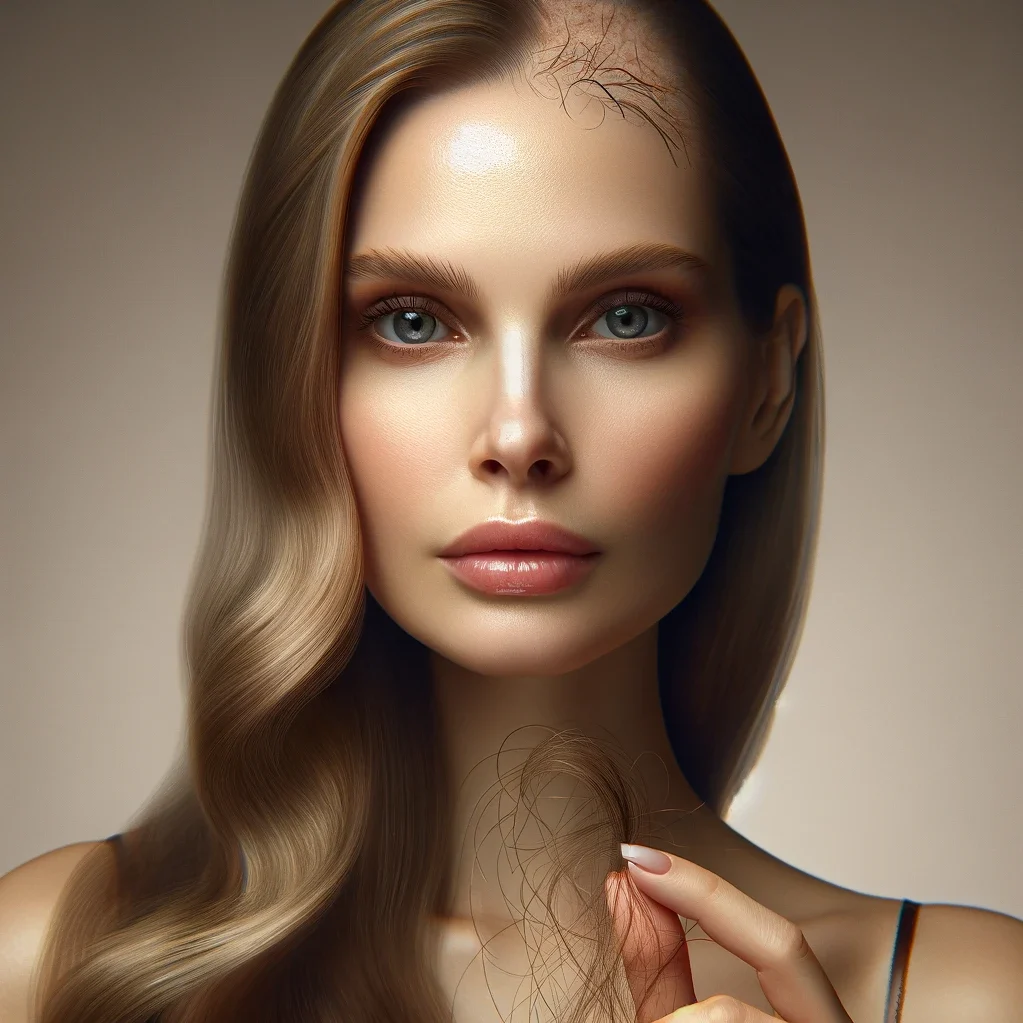
The medical professionals teams , they understand that many people seek general information about female hair loss causes, symptoms, types, and potential treatments. Hair loss can be a distressing experience for anyone, but it can be particularly challenging for women. It can affect their self-esteem and confidence, and in some cases, it can be an indication of underlying medical conditions.

We believe that it is crucial to provide accurate and comprehensive educational pages that cover these aspects of female hair loss. We aim to provide reliable information that can help people understand the causes, symptoms, and types of hair loss in women. We also aim to provide information about the potential treatments that are available, including medications and surgery. By doing so, we hope to empower women with the knowledge they need to make informed decisions about their hair loss treatment options.
Key Takeaways
- Understanding the causes and symptoms of female hair loss is crucial to identifying the underlying condition and potential treatment options.
- Medical insights and diagnosis are essential to identify the type of hair loss and the best course of treatment.
- Treatment options for female hair loss include medications and surgery, and it is crucial to discuss these options with a qualified medical professional.
Understanding Hair Loss in Women

Hair loss is a common issue that affects many women. In this section, we will cover the causes, symptoms, and types of hair loss in women, as well as potential treatments.
Causes of Female Hair Loss
Several factors can contribute to hair loss in women. Some of the most common causes include aging, genetics, autoimmune diseases, hormonal changes, menopause, stress, iron deficiency, thyroid problems, and nutritional deficiencies.
Autoimmune diseases such as alopecia areata can also cause hair loss in women. This condition occurs when the immune system attacks hair follicles, leading to hair loss in patches.
Another common cause of hair loss in women is telogen effluvium. This condition occurs when the body experiences a significant shock, such as surgery, childbirth, or a major illness. As a result, hair follicles enter the resting phase, and hair falls out.
Common Types and Symptoms
There are several types of hair loss that women may experience. Androgenic alopecia, also known as female pattern baldness, is the most common type. This condition is caused by genetics and hormonal changes and often results in thinning hair on the top and sides of the head.
Traction alopecia is another type of hair loss that can occur in women who wear tight hairstyles, such as braids or ponytails. This condition occurs when the hair is pulled too tightly, leading to damage and hair loss.
Anagen effluvium is a type of hair loss that occurs as a result of chemotherapy. This treatment targets rapidly dividing cells, including hair follicles, leading to hair loss.
Cicatricial alopecia is a type of hair loss that occurs as a result of scarring on the scalp. This condition can be caused by a variety of factors, including infections, injuries, and autoimmune diseases.
If you are experiencing hair loss, it is essential to consult with a healthcare professional to determine the underlying cause and develop an appropriate treatment plan.
Medical Insights and Diagnosis

Role of Dermatology
When it comes to hair loss, dermatologists are the medical professionals best equipped to help you diagnose and treat the underlying cause. Dermatologists specialize in the study of skin, hair, and nails, and they can help you identify whether your hair loss is due to a medical condition or a genetic predisposition.
Dermatologists can also help you determine the best course of treatment for your hair loss. Depending on the underlying cause, your dermatologist may recommend medical treatments such as topical or oral medications, hair transplant surgery, or other procedures.
Diagnostic Procedures
In order to accurately diagnose the cause of your hair loss, your dermatologist may perform a scalp examination. During this exam, your dermatologist will inspect your scalp and hair follicles for signs of inflammation, infection, or scarring.
Your dermatologist may also order blood tests or a biopsy to help diagnose the underlying cause of your hair loss. Blood tests can help identify underlying medical conditions such as thyroid disease or anemia, while a biopsy can help your dermatologist determine whether your hair loss is due to a medical condition or a genetic predisposition.
According to the American Academy of Dermatology, it is important to seek medical attention for hair loss as soon as possible. Early diagnosis and treatment can help prevent further hair loss and improve the chances of successful treatment.
In summary, if you are experiencing hair loss, it is important to consult with a dermatologist for an accurate diagnosis and appropriate treatment. Your dermatologist can help you identify the underlying cause of your hair loss and recommend the best course of treatment for your individual needs.
Treatment Options for Female Hair Loss
Female hair loss can be a distressing experience, but there are several treatment options available to help manage the condition. The treatment options for female hair loss can be broadly categorized into three main groups: Medications and Topical Treatments, Lifestyle and Home Remedies, and Surgical and Non-Surgical Procedures.
Medications and Topical Treatments
Medications and topical treatments are often the first line of treatment for female hair loss. Minoxidil and Finasteride are two of the most commonly used medications for treating hair loss in women. Minoxidil is a topical treatment that is applied directly to the scalp to stimulate hair growth. Finasteride is an oral medication that is used to block the production of DHT, a hormone that can cause hair loss.
Corticosteroids are another type of medication that can be used to treat hair loss. They work by reducing inflammation and suppressing the immune system, which can help to slow down hair loss. However, they are usually only used for short periods of time due to their potential side effects.
Lifestyle and Home Remedies
In addition to medications and topical treatments, there are several lifestyle and home remedies that can help to manage female hair loss. One of the most important things you can do is to take good care of your hair. This means avoiding hairstyles that pull on your hair, using gentle hair care products, and avoiding excessive heat styling.
Nutritional supplements can also be helpful in promoting hair growth. Biotin, iron, and zinc are all important nutrients for healthy hair, and taking supplements can help to ensure that you are getting enough of these nutrients in your diet.
Stress management is also an important aspect of managing female hair loss. Stress can cause hair loss, so finding ways to manage stress, such as through exercise, meditation, or counseling, can be helpful in promoting hair growth.
Surgical and Non-Surgical Procedures
For more severe cases of female hair loss, surgical and non-surgical procedures may be necessary. Hair transplant surgery involves taking hair from one part of the scalp and transplanting it to the balding area. Laser therapy is another option that involves using low-level laser light to stimulate hair growth.
In conclusion, there are several treatment options available for female hair loss, ranging from medications and topical treatments to lifestyle and home remedies, and surgical and non-surgical procedures. It is important to work with a healthcare professional to determine the best treatment plan for your individual needs.
Frequently Asked Questions
What nutritional deficiencies are linked to hair loss in women?
Hair loss in women can be linked to various nutritional deficiencies, such as iron, zinc, biotin, and protein deficiencies. Iron is essential for healthy hair growth, and low levels of iron can lead to hair loss. Zinc is also important for hair growth and repair, and a deficiency in zinc can result in hair loss. Biotin is a B-vitamin that helps in the formation of keratin, which is a protein that makes up hair, skin, and nails. Protein is a building block of hair, and insufficient protein intake can lead to hair loss.
What are common medical conditions that can lead to hair loss in females?
Medical conditions such as thyroid disorders, polycystic ovary syndrome (PCOS), and autoimmune diseases like alopecia areata can lead to hair loss in females. Thyroid disorders like hypothyroidism and hyperthyroidism can cause hair loss due to hormonal imbalances. PCOS is a hormonal disorder that can cause hair loss due to high levels of androgens. Alopecia areata is an autoimmune disease that causes hair loss in patches.
What are effective strategies for managing hormonal hair loss in women?
Effective strategies for managing hormonal hair loss in women include medication, lifestyle changes, and hair care techniques. Medications like spironolactone, finasteride, and birth control pills can help manage hormonal imbalances that cause hair loss. Lifestyle changes like stress reduction, exercise, and a healthy diet can also help manage hormonal hair loss. Hair care techniques like gentle brushing, avoiding tight hairstyles, and using mild shampoos can help prevent further hair loss.
What home remedies can help with female hair thinning at the frontal scalp?
Home remedies that can help with female hair thinning at the frontal scalp include massaging the scalp with essential oils like rosemary, lavender, and peppermint oil. These oils can improve blood circulation to the scalp and promote hair growth. Aloe vera gel can also be applied to the scalp to soothe and moisturize the scalp, which can help prevent hair loss.
How can women address hair shedding from the root?
Women can address hair shedding from the root by identifying and addressing the underlying cause of hair loss. Nutritional deficiencies, medical conditions, and hormonal imbalances can all lead to hair shedding from the root. Once the underlying cause is identified, appropriate treatment can be prescribed.
What are the typical patterns and classifications of hair loss experienced by women?
The typical patterns and classifications of hair loss experienced by women include female pattern hair loss (FPHL), telogen effluvium, and alopecia areata. FPHL is the most common type of hair loss in women and is characterized by thinning hair on the crown and front of the scalp. Telogen effluvium is a temporary hair loss condition that can be caused by stress, illness, or hormonal changes. Alopecia areata is an autoimmune disease that causes hair loss in patches.