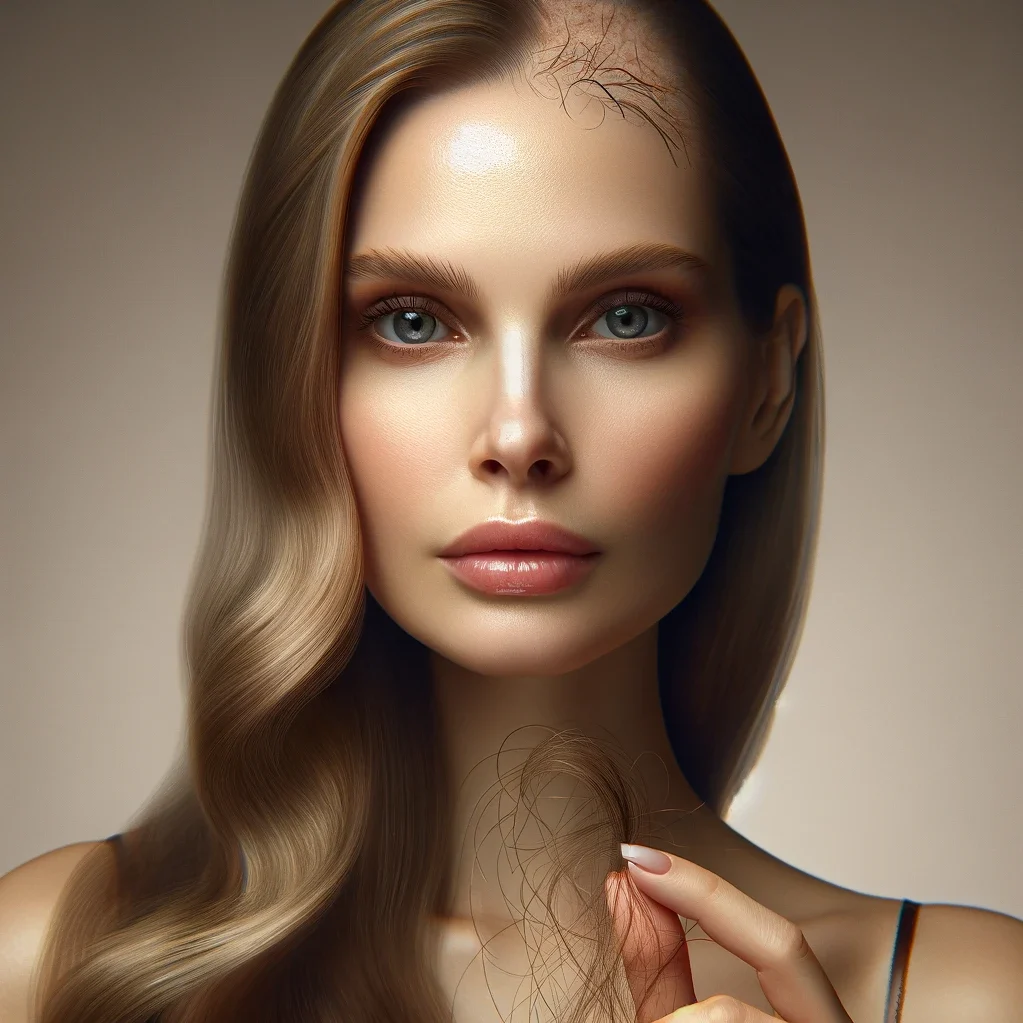
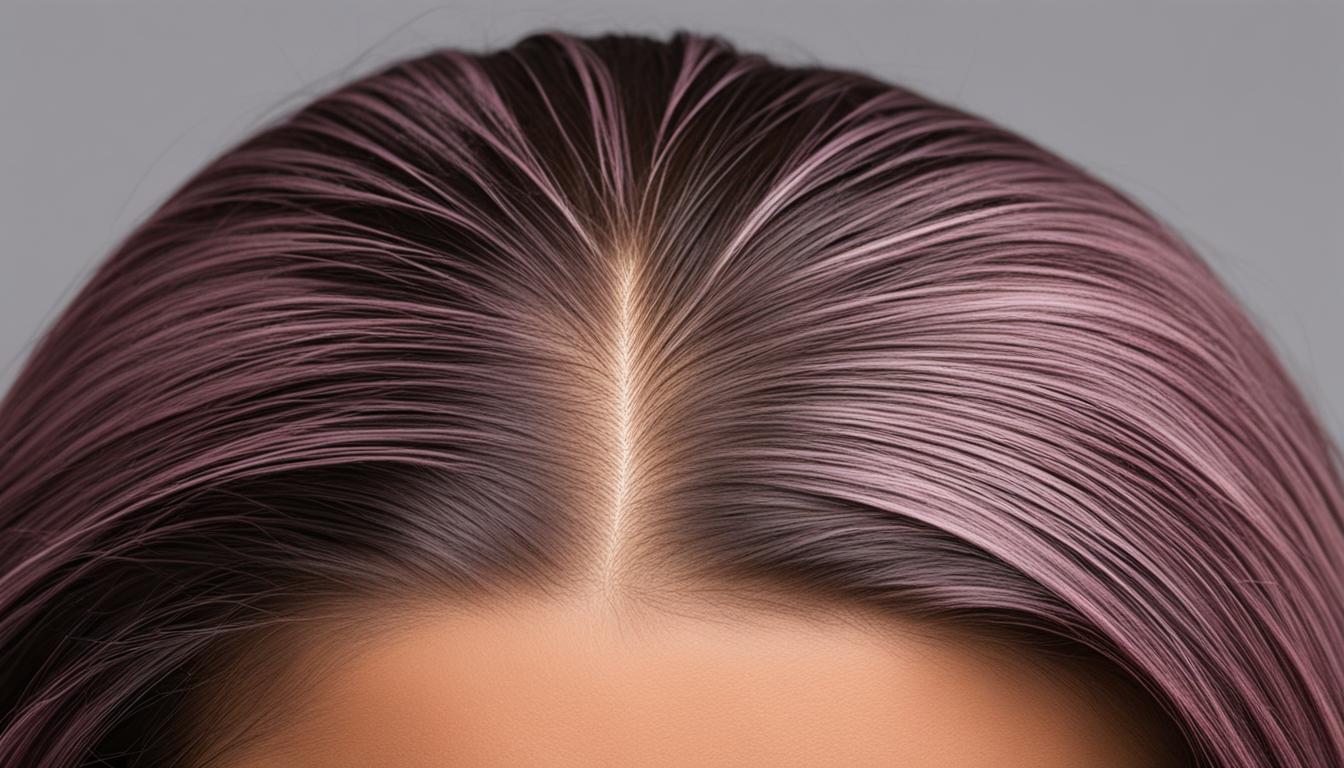
In the United States, hair loss affects approximately 30 million women, with female pattern baldness being the most common type of hair loss in women. This condition, scientifically known as androgenetic alopecia, can have a significant impact on a woman’s self-esteem and confidence. It is essential to understand the available treatment options to effectively manage and potentially reverse hair loss in women.
Key Takeaways:
- Female pattern baldness is the most common type of hair loss in women.
- Early diagnosis and treatment are crucial to halt the progression of hair loss.
- Topical minoxidil is the first-line treatment for female pattern baldness.
- Oral medications, such as antiandrogens and finasteride, can be prescribed for more severe cases.
- Seeking guidance from a healthcare professional experienced in treating female pattern baldness yields the best outcomes.
Topical Minoxidil: A Key Treatment for Female Pattern Baldness
When it comes to women’s hair loss solutions, topical minoxidil stands out as a trusted remedy for treating female hair thinning and addressing the challenges of female pattern baldness. Available over-the-counter, this widely used treatment has shown remarkable effectiveness in stimulating hair regrowth and halting further hair loss.
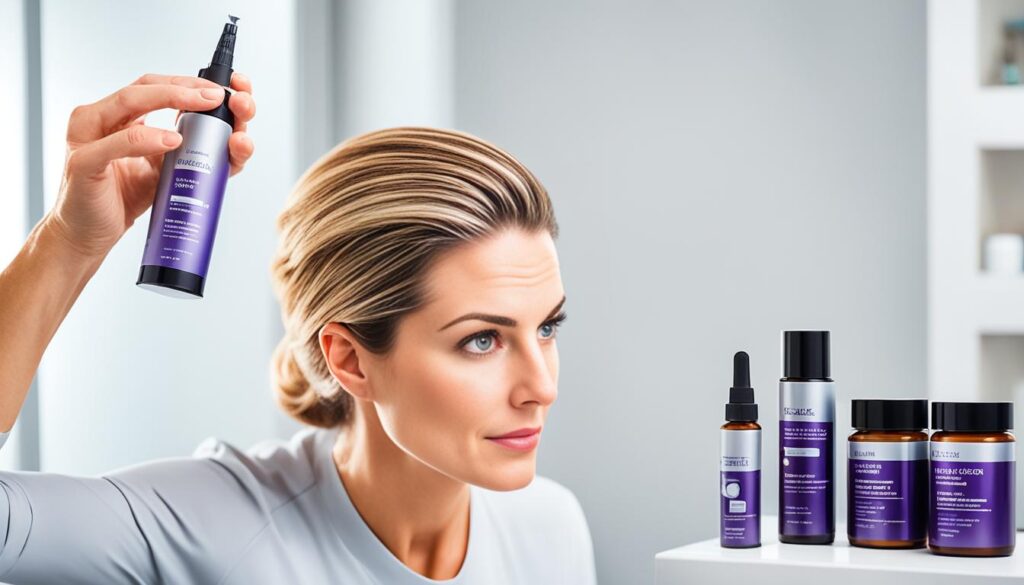
Scientific studies have proven that minoxidil works by increasing blood flow to the hair follicles, encouraging their revitalization. This promotes the growth of new, healthy hair. Women with mild-to-moderate female pattern baldness have particularly benefited from minoxidil’s regenerative properties.
Application of topical minoxidil directly to the scalp once or twice daily, depending on the product strength, is the recommended dosage. It is essential to follow the instructions provided by the specific product for optimal results.
In most cases, topical minoxidil is well-tolerated, with minimal side effects. Some users may experience mild scalp irritation or dryness, which can be managed by adjusting the frequency or concentration of the treatment.
Topical minoxidil is the go-to treatment for women experiencing hair thinning and female pattern baldness. It is easy to use, easily accessible, and has demonstrated significant positive effects in restoring hair growth and improving the overall appearance.
Consulting with a dermatologist or trichologist before starting any hair loss treatment is essential. They can help diagnose the cause of hair loss and provide tailored guidance on how to best address the issue. By combining topical minoxidil with professional advice, women can take a proactive approach to managing their hair loss and promoting healthy hair growth.
Medications for Treating Female Pattern Baldness
In addition to minoxidil, there are oral medications available for managing hair loss in women. These medications offer options for women with thinning hair, providing a way to stop female hair loss and promote female hair restoration.
Antiandrogen therapies, such as cyproterone acetate and spironolactone, are commonly prescribed to treat female pattern baldness. These medications work by blocking the effects of androgens on the hair follicles, slowing down hair loss and potentially promoting regrowth. Clinical studies have shown promising results with antiandrogen therapies, offering hope for women struggling with thinning hair.
“Antiandrogen therapies can help block the effects of androgens and slow down hair loss in women with female pattern baldness.”
Another oral medication, finasteride, has also shown efficacy in treating female pattern baldness. Finasteride inhibits the conversion of testosterone to dihydrotestosterone, a hormone responsible for hair follicle miniaturization. It is important to note that finasteride is not FDA-approved for use in women and should only be prescribed by a healthcare professional experienced in treating female pattern baldness.
“Finasteride has shown promise in treating female pattern baldness, but it should only be prescribed by an experienced healthcare professional due to its off-label use in women.”
When considering medications for managing hair loss, it is crucial for women to consult with a healthcare professional who specializes in treating female pattern baldness. They can provide personalized guidance and recommend the most suitable options based on individual needs.
Conclusion
Female pattern baldness can have a significant impact on a woman’s self-esteem and quality of life. Thankfully, there are effective treatments available to manage and even reverse hair loss in women. One of the primary treatments is topical minoxidil, which has been proven successful in stopping hair loss and promoting regrowth.
In cases of more severe hair loss, healthcare professionals may prescribe oral medications such as antiandrogens or finasteride. These medications can help slow down hair loss and even encourage regrowth, but it’s important to seek guidance from a qualified professional experienced in treating female pattern baldness.
Early diagnosis and treatment are key to achieving the best outcomes for women experiencing hair loss. By taking the right approach and using appropriate treatments, women can regain their confidence and restore their hair. If you’re facing this challenge, don’t hesitate to reach out to a healthcare professional who can provide guidance and support in finding the most suitable solution for you.
FAQ
What is female pattern baldness?
Female pattern baldness, also known as androgenetic alopecia, is the most common type of hair loss in women. It is characterized by thinning of the central scalp and a Christmas tree pattern along the midline part of the hair.
What is the best treatment for female pattern baldness?
Topical minoxidil is considered the first-line treatment for female pattern baldness. It is available over-the-counter and works by increasing blood flow to the hair follicles, promoting hair growth.
How does minoxidil work?
Minoxidil works by increasing blood flow to the hair follicles, which stimulates hair growth and helps to prevent further hair loss. It is applied directly to the scalp once or twice a day, depending on the product strength.
Are there any side effects of minoxidil?
Minoxidil is generally well-tolerated with minimal side effects. Some people may experience scalp irritation or dryness, but these side effects are usually mild and transient.
What other medications can be prescribed to treat female pattern baldness?
In addition to minoxidil, oral medications such as antiandrogens (cyproterone acetate and spironolactone) and finasteride may be prescribed to treat female pattern baldness. These medications help block the effects of androgens on the hair follicles and can slow down hair loss or promote regrowth in some cases.
Is finasteride safe for women?
Finasteride is not FDA-approved for use in women and should only be prescribed by a healthcare professional experienced in treating female pattern baldness. Its use should be carefully considered and monitored for potential side effects.
How important is early diagnosis and treatment for female pattern baldness?
Early diagnosis and treatment are crucial to halt the progression of female pattern baldness and preserve as much hair as possible. Seeking early intervention can lead to better treatment outcomes and improved quality of life for women experiencing hair loss.