
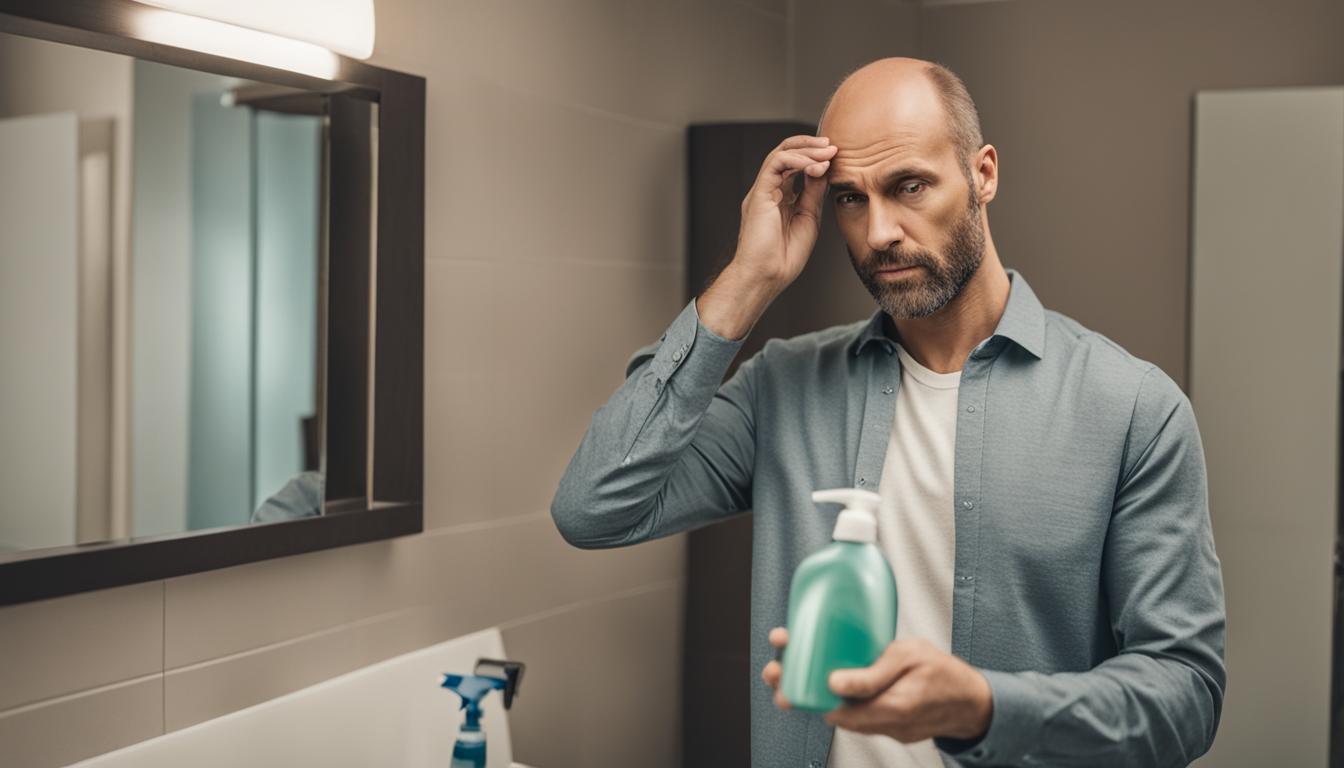
Did you know that approximately 50 million men in the United States are affected by hair loss? That’s a staggering number, highlighting the significant impact of this common condition on men’s confidence and well-being. Hair loss, particularly male pattern baldness, can be a sensitive topic for many men, but the good news is that there are various solutions and tips to help manage and even prevent hair loss.
Key Takeaways:
- Hair loss affects around 50 million men in the United States.
- Understanding the causes of hair loss is crucial in finding effective solutions.
- Male pattern baldness is the most common type of hair loss in men.
- Treatments for hair loss range from medications to hair transplants and laser treatments.
- Lifestyle changes and natural remedies can complement medical treatments for hair regrowth.
Medication Options for Hair Loss
When it comes to treating hair loss, there are several medication options available that can help combat male pattern baldness and promote hair regrowth. Two commonly used medications for hair loss treatment are minoxidil and finasteride.
Minoxidil
Minoxidil is an FDA-approved over-the-counter medication that has been found to effectively promote hair growth and prevent further hair loss. It works by stimulating the hair follicles and increasing blood flow to the scalp, resulting in improved hair regrowth for many individuals.
Minoxidil is available in various strengths and forms, such as liquid or foam, and can be applied directly to the scalp. It is important to note that minoxidil needs to be used consistently and regularly to see the desired results. While it may take several months to notice a significant difference, it is essential to continue using minoxidil as directed to maintain the progress made.
Finasteride
Finasteride is a prescription medication primarily used for the treatment of male pattern baldness. It works by inhibiting the conversion of testosterone into dihydrotestosterone (DHT), a hormone that causes hair follicles to shrink and ultimately leads to hair loss. By reducing DHT levels, finasteride helps to slow down hair loss and promote hair regrowth.
Unlike minoxidil, finasteride is taken orally in the form of a pill. It should be used as directed by a healthcare professional, and results may take several months to become noticeable. It is essential to note that finasteride may not be suitable for everyone and may have potential side effects. Consultation with a doctor or dermatologist is necessary before starting finasteride treatment.
Combination Treatments
In some cases, healthcare professionals may recommend a combination of minoxidil and finasteride for treating hair loss. This approach aims to maximize the effectiveness of both medications and provide improved results for individuals experiencing male pattern baldness.
It is important to note that while minoxidil and finasteride have shown positive results in many cases, they may not work for everyone. Each individual’s response to medication can vary, and it is essential to consult with a healthcare professional to determine the most suitable treatment option.
| Medication | Description | Administration | Results |
|---|---|---|---|
| Minoxidil | An FDA-approved over-the-counter medication that stimulates hair follicles and promotes hair growth. | Applied directly to the scalp in liquid or foam form. | Results may take several months to become noticeable and must be continued for maintenance. |
| Finasteride | A prescription medication that inhibits the production of DHT, a hormone that causes hair follicles to shrink. | Taken orally as a pill under the guidance of a healthcare professional. | Results may take several months to become noticeable and must be continued for maintenance. |
For individuals seeking convenience and privacy, some online platforms offer consultations for hair loss medications and discreet shipping options, making it more accessible and convenient to obtain the necessary treatment.

Hair Transplants and Laser Treatment
Hair transplants are a popular solution for individuals experiencing hair loss. This procedure involves moving healthy hair from one part of the scalp to the areas with thinning or balding hair. The result is a natural-looking hairline and increased hair density.
There are two primary methods used for hair transplants: Follicular Unit Transplantation (FUT) and Follicular Unit Extraction (FUE). Both techniques have their advantages and are performed under local anesthesia.
FUT involves removing a strip of skin from the back or sides of the scalp. Skilled technicians then dissect the strip into individual follicular units, which contain 1-4 hairs each. These units are then transplanted into the recipient areas of the scalp.
FUE involves the direct extraction of individual hair follicles from the scalp. This method does not require the removal of a strip of skin. Instead, a small punch tool is used to extract each hair follicle separately. FUE provides the benefit of minimal scarring and a quicker recovery time compared to FUT.
Alongside hair transplants, laser treatment has emerged as a potential option for hair loss. Specifically, Low-Level Laser Therapy (LLLT) is thought to stimulate hair growth by reducing inflammation in the scalp and promoting blood circulation to the hair follicles.
Although the effectiveness of laser treatments for hair loss is supported by limited studies, many consider LLLT to be a safe and non-invasive approach to addressing male pattern hair loss.
Hair Transplant vs. Laser Treatment: A Comparison
| Factors | Hair Transplants | Laser Treatment (LLLT) |
|---|---|---|
| Efficacy | Permanent solution, offering long-lasting results. | Results vary, and may require ongoing treatment maintenance. |
| Procedure | Invasive with local anesthesia, involving the transplantation of healthy hair follicles. | Non-invasive, painless treatment performed with a laser device. |
| Recovery Time | Requires a recovery period of a few weeks with potential scarring. | No downtime, minimal to no side effects. |
| Candidate Suitability | Best suited for individuals with sufficient donor hair and stable hair loss. | Generally suitable for individuals with mild to moderate hair loss. |
Table: Comparison of Hair Transplants and Laser Treatment (LLLT)
Conclusion
Managing hair loss can be a challenge, but there are effective solutions available. Male pattern hair loss, influenced by genetics and hormones, is a common condition that affects many men. While there is no cure for male pattern baldness, there are various treatments and lifestyle changes that can slow down hair loss and promote hair regrowth.
Medications like minoxidil and finasteride have shown positive results in managing hair loss. Minoxidil, available over-the-counter, can encourage hair growth and prevent further hair loss. Finasteride, a prescription pill, slows down the production of DHT, a hormone responsible for shrinking hair follicles. These medications, along with hair transplants and laser treatments, provide effective options for individuals looking to manage hair loss.
In addition to medical treatments, certain lifestyle changes can contribute to hair loss prevention. Quitting smoking, regular scalp massages, and maintaining a balanced diet rich in essential nutrients can support overall hair health. Additionally, natural remedies like oils, saw palmetto, biotin, onion juice, and green tea may have potential benefits for hair regrowth.
When it comes to managing hair loss, it is crucial to consult with a doctor or dermatologist who can provide personalized advice and treatment options. They can evaluate your specific case, recommend the most suitable solutions, and help you navigate the journey towards regaining your hair and confidence.
FAQ
What are the causes of hair loss in men?
Hair loss in men can be caused by genetics, medical conditions, and stress.
What are the options for hair loss treatment?
Hair loss treatments range from hair transplants and laser treatments to medications.
What medications are available for male pattern baldness?
Medication options for male pattern baldness include minoxidil and finasteride.
How do minoxidil and finasteride work?
Minoxidil is an FDA-approved over-the-counter medication that can encourage hair growth and prevent hair loss. Finasteride is a prescription pill that slows down the body’s production of DHT, a hormone that causes hair follicles to shrink.
Can I use a combination of minoxidil and finasteride for hair loss?
Combination minoxidil and finasteride treatments may be prescribed for managing hair loss.
How long does it take for hair loss medications to show results?
Hair loss medications can take several months to show results, and they need to be continued for maintenance.
Can I consult with a doctor or dermatologist for hair loss treatment recommendations?
It’s always important to consult with a healthcare professional for personalized treatment recommendations.
What are hair transplants and laser treatments?
Hair transplants involve moving healthy hair from one part of the scalp to the balding areas. Laser treatments, specifically low-level laser therapy (LLLT), are thought to reduce inflammation and promote hair growth.
What are the methods used for hair transplants?
The two main methods for hair transplants are follicular unit transplantation (FUT) and follicular unit extraction (FUE). FUT involves removing a strip of skin from the scalp, while FUE involves directly extracting hair follicles.
Are laser treatments effective for hair loss?
Limited studies support the effectiveness of laser treatments for hair loss, but they are generally considered safe and can be used to treat male pattern hair loss.
Can lifestyle changes help prevent hair loss?
Yes, lifestyle changes such as quitting smoking, scalp massage, and maintaining a balanced diet can contribute to hair loss prevention.
Are there any natural remedies for hair regrowth?
Natural remedies like oils, saw palmetto, biotin, onion juice, and green tea may potentially aid in hair regrowth. However, it’s important to note that scientific evidence for their effectiveness is limited.