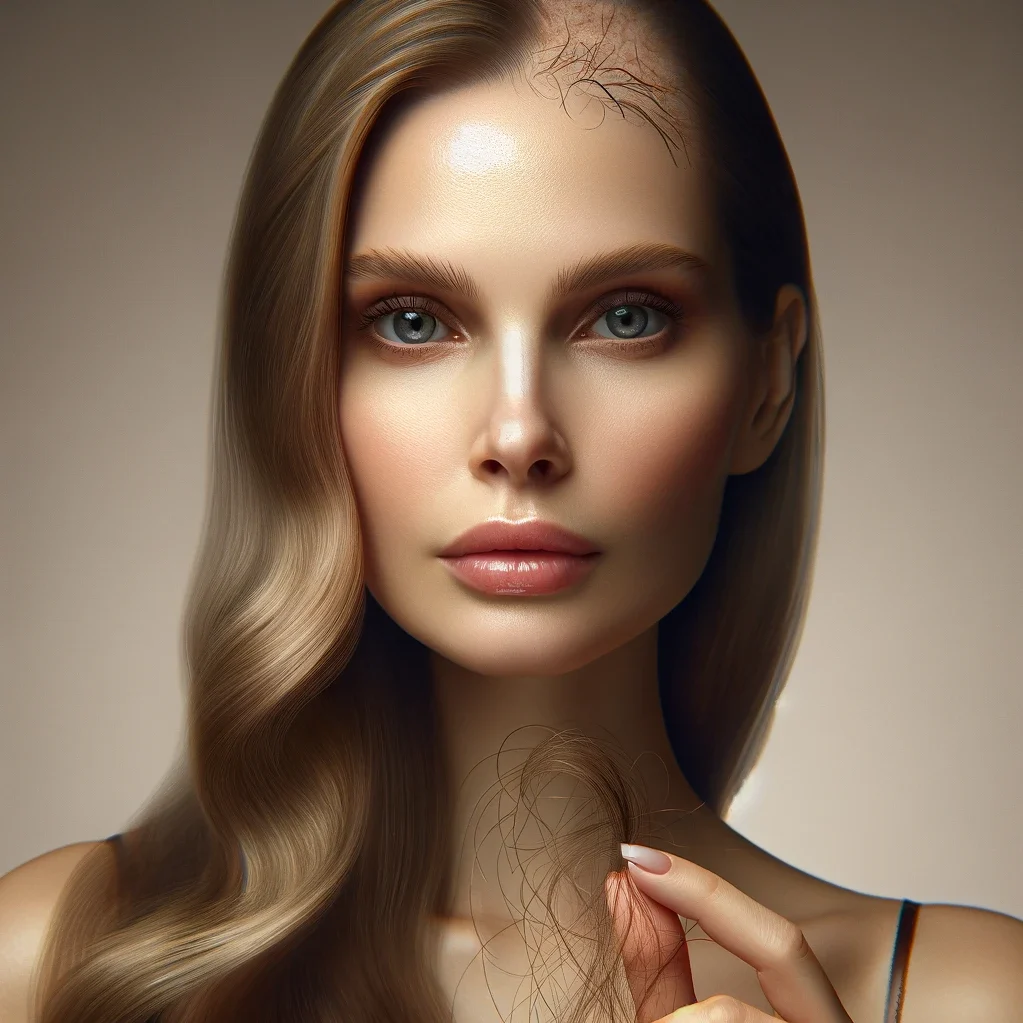

Polycystic ovary syndrome (PCOS) is a condition that affects women of reproductive age and is characterized by hormonal imbalances, leading to various symptoms such as irregular periods, weight gain, acne, and hair loss. One of the common symptoms of PCOS is androgenic alopecia, also known as male-pattern hair loss. Androgenic alopecia is characterized by hair thinning and loss, particularly around the temples and frontal regions of the scalp. This type of hair loss is different from male-pattern baldness, which involves a receding hairline and thinning on the crown of the head. The excessive production of androgens, such as testosterone, in women with PCOS affects hair growth and leads to hair loss. Hair loss in women with PCOS is not as common as excess hair growth, but for those experiencing it, there are various treatment options available, including medications like Rogaine, birth control pills, oral medications like spironolactone, and natural remedies such as scalp massages and low-level laser therapy.
Key Takeaways:
- PCOS is a condition that affects women of reproductive age and is characterized by hormonal imbalances.
- Androgenic alopecia is a common symptom of PCOS, characterized by hair thinning and loss.
- Excessive production of androgens, such as testosterone, in women with PCOS affects hair growth and leads to hair loss.
- Treatment options for PCOS-related hair loss include medications like Rogaine, birth control pills, oral medications like spironolactone, scalp massages, and low-level laser therapy.
- Consulting with healthcare providers and seeking support from online communities dedicated to PCOS and hair loss can provide valuable guidance and emotional support.
Causes of Hair Loss in PCOS
Hair loss in women with PCOS is primarily caused by hormonal imbalances associated with the condition. PCOS leads to the overproduction of androgens, such as testosterone, which can negatively impact hair growth. The excessive androgen levels in women with PCOS can result in hair thinning and loss, particularly in the temples and frontal scalp areas. It’s crucial to note that PCOS-related hair loss differs from male-pattern baldness, as it doesn’t involve receding hairlines or crown thinning.
In addition to hormonal imbalances, genetic and environmental factors can contribute to hair thinning in women with PCOS. These factors synergistically play a role in the onset and progression of hair loss. Understanding these underlying causes is essential in developing effective treatment strategies.

Treating Hair Loss in PCOS
When it comes to treating hair loss in women with PCOS, there are various options available. One of the most effective lines of treatment is the medication Rogaine (minoxidil), which can help stimulate hair regrowth. Starting a birth control regimen is another common tactic for managing PCOS-related hair loss, as it can help lower testosterone levels.
Birth control pills work by increasing sex-hormone-binding globulin, which helps control hair growth in certain areas, such as the upper lip or chin. In addition to medication, other treatment options for PCOS-related hair loss include spironolactone, an oral medication that can be used alone or in combination with other treatments.
Some less-studied methods for hair growth stimulation include daily hair and scalp massages and low-level laser therapy. These treatments have shown potential in stimulating hair regrowth, although more research is needed to fully understand their efficacy. Additionally, certain vitamins and supplements like biotin, collagen, and zinc may also help stimulate hair growth, but it is important to consult with a healthcare provider before starting any supplements.
| Treatment Options | Method | Efficacy |
|---|---|---|
| Rogaine (minoxidil) | Topical application | Stimulates hair regrowth |
| Birth control pills | Oral medication | Helps lower testosterone levels |
| Spironolactone | Oral medication | Reduces androgen activity |
| Daily hair and scalp massages | Physical stimulation | Potential for hair regrowth |
| Low-level laser therapy | Non-invasive treatment | Promotes hair growth |
Consulting a Healthcare Provider
If you are considering treatment options for hair loss related to PCOS, it is important to consult with a healthcare provider who specializes in the condition. They can provide a proper diagnosis, assess your individual needs, and recommend the most suitable treatment plan. Additionally, healthcare providers can monitor your progress and make any necessary adjustments to optimize results.
Remember, treatment for PCOS-related hair loss may take time to show visible improvements, and patience is key. It is also essential to address any underlying hormonal imbalances and manage other symptoms of PCOS for comprehensive care.
“Treating hair loss in PCOS involves a personalized approach, considering individual factors and goals. A healthcare provider can guide you through the available treatment options and help you make informed decisions.”
In the next section, we will explore the importance of seeking help from healthcare providers who specialize in PCOS-related hair loss and the benefits of connecting with online communities and support groups dedicated to PCOS and hair loss.
Seeking Help for PCOS-Related Hair Loss
If you are experiencing hair loss and suspect it may be related to PCOS, it is important to seek help from a healthcare provider who specializes in the condition. Dermatologists are experts in hair loss and can assist in diagnosing and treating PCOS-related hair loss. They can also refer you to other specialists, such as OB-GYNs or reproductive endocrinologists, who can provide additional guidance and support.
It is important to note that hair loss may not be the only symptom of PCOS, and a comprehensive evaluation by a healthcare provider is necessary to address all the potential signs and symptoms. They can help guide you through various treatment options and develop a personalized plan to manage your hair loss.
Additionally, finding support from online communities and support groups dedicated to PCOS and hair loss can be emotionally helpful and may provide valuable insights into treatment options and coping strategies. These communities allow you to connect with others who understand your experience and can offer support and advice. Sharing your journey and engaging with others who are going through similar challenges can provide a sense of community and empowerment.
Recommended PCOS and Hair Loss Support Groups
| Support Group | Website |
|---|---|
| PCOS Awareness Association | www.pcosaa.org |
| Soul Cysters | www.soulcysters.net |
| The Polycystic Ovary Syndrome Association (PCOSA) | www.pcosupport.org |
Quote:
“Finding a supportive community can make a world of difference when dealing with PCOS-related hair loss. Connect with others who understand your journey, exchange tips, and find comfort in knowing you’re not alone.”
– Dr. Emily Roberts, Dermatologist
Conclusion
PCOS is a condition that affects many women and can lead to hair thinning and loss. Understanding the link between PCOS and female hair loss is crucial in finding appropriate solutions. The hormonal imbalances in PCOS, especially the excess production of androgens, disrupt hair growth and contribute to hair thinning in women.
Fortunately, there are various solutions available to address hair thinning in women with PCOS. Medications like Rogaine and spironolactone can help stimulate hair regrowth and manage the effects of androgenic alopecia. Birth control pills are also commonly used to lower testosterone levels and control hair growth. Additionally, scalp massages and low-level laser therapy have shown promise in stimulating hair growth.
It is important to note that finding the right solution may take time and patience. Seeking help from healthcare providers, particularly dermatologists who specialize in hair loss, can ensure a proper diagnosis and personalized treatment plan. In addition, connecting with online communities and support groups dedicated to PCOS and hair loss can provide invaluable emotional support and insights into coping strategies.
Remember, you are not alone in dealing with PCOS-related hair loss. There are resources available to help you navigate this challenge and find solutions that work for you. Together, we can overcome the effects of PCOS and regain confidence in our hair.
FAQ
What is PCOS and how does it relate to female hair loss?
PCOS, or Polycystic Ovary Syndrome, is a hormonal condition that can affect women of reproductive age. One of the common symptoms of PCOS is hair loss, specifically androgenic alopecia or male-pattern hair loss.
What is androgenic alopecia and how does it differ from male-pattern baldness?
Androgenic alopecia is characterized by hair thinning and loss, particularly around the temples and frontal regions of the scalp. Unlike male-pattern baldness, it does not involve a receding hairline or thinning on the crown of the head.
Why does PCOS cause hair loss in women?
Excessive production of androgens, such as testosterone, in women with PCOS affects hair growth and leads to hair loss.
What are the treatment options for hair loss in women with PCOS?
Treatment options include medications like Rogaine, birth control pills, oral medications like spironolactone, as well as natural remedies such as scalp massages and low-level laser therapy.
Can Rogaine help with hair regrowth in women with PCOS?
Yes, Rogaine (minoxidil) is an effective medication that can help stimulate hair regrowth in women with PCOS.
How do birth control pills help with PCOS-related hair loss?
Birth control pills can help lower testosterone levels in women with PCOS, which can in turn help control hair growth and manage hair loss.
What is spironolactone and how does it treat hair loss in PCOS?
Spironolactone is an oral medication that can be used alone or in combination with other treatments to reduce hair loss in women with PCOS.
Can scalp massages and low-level laser therapy stimulate hair regrowth in women with PCOS?
While less-studied, scalp massages and low-level laser therapy have shown potential in stimulating hair regrowth in women with PCOS.
Are there any vitamins or supplements that can help with hair growth in PCOS?
Certain vitamins and supplements like biotin, collagen, and zinc may help stimulate hair growth, although it is important to consult with a healthcare provider before starting any supplements.
Who should I seek help from for PCOS-related hair loss?
It is advisable to seek help from a healthcare provider who specializes in PCOS, such as a dermatologist or an OB-GYN. They can provide proper diagnosis and guidance.
Are there any online communities or support groups for PCOS and hair loss?
Yes, there are online communities and support groups dedicated to PCOS and hair loss that can provide emotional support and helpful insights into treatment options and coping strategies.