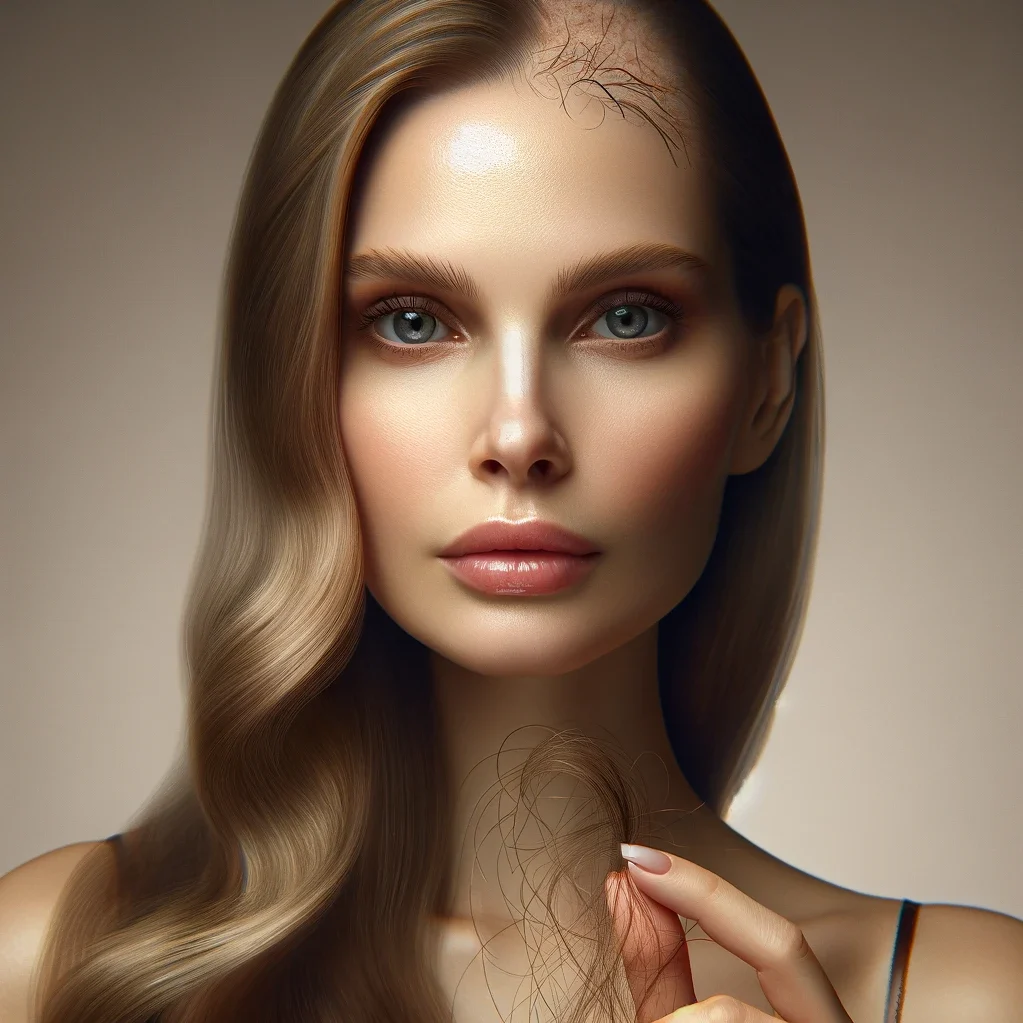
As women age, they may encounter various physical changes, including the onset of menopause. While menopause is commonly associated with symptoms like hot flashes and mood swings, many women may also experience another distressing side effect: hair loss. Contrary to popular belief, menopause-related hair loss is not limited to men; in fact, more than half of women aged 50 and older may experience thinning hair or noticeable hair loss during this stage of life.
The main culprit behind menopausal hair loss is the hormonal changes that occur during this transitional phase. Dwindling levels of estrogen and progesterone, two key hormones regulating hair growth, can disrupt the delicate balance and lead to hair thinning and loss. Additionally, the hormone testosterone, which promotes hair growth on the body, can inhibit growth on the scalp, exacerbating the issue. It’s essential to recognize the symptoms of gradual hair loss occurring over several years and consider conducting blood tests to rule out any nutrient deficiencies.
To better understand the relationship between menopause and hair loss, it’s crucial to grasp the basics of the hair growth cycle. During menopause, hormonal fluctuations can disrupt this cycle, resulting in shorter growth phases and longer shedding phases. This disruption ultimately leads to hair thinning and reduced hair density. The hormonal imbalance, including a decrease in estrogen and progesterone levels and an increase in androgens, can also contribute to weakened and brittle hair strands.
Menopausal hair loss typically manifests in the form of androgenic alopecia or female pattern hair loss. This common condition is closely linked to hormonal changes and may cause significant distress for women. However, it’s essential to recognize that hormonal changes alone aren’t the sole factors contributing to hair loss during menopause. Certain medications and lifestyle factors can also play a role in exacerbating the issue. Determining the specific cause of hair loss is crucial in designing an effective treatment plan.
Key Takeaways:
- Menopause can trigger hair loss in women, with more than half of women aged 50 and older experiencing thinning or loss of hair.
- The hormonal changes during menopause, particularly a decrease in estrogen and progesterone levels, can disrupt the hair growth cycle and contribute to hair thinning.
- Hormonal imbalances, including an increase in androgens, can cause weakened and brittle hair strands.
- Menopausal hair loss is often characterized by androgenic alopecia or female pattern hair loss.
- Treatment options for menopausal hair loss include lifestyle modifications, medications, and professional treatments such as laser therapy or microneedling.
Understanding Hair Thinning and Hormonal Changes
Menopausal hair loss is a common concern for women and is often characterized by hair thinning. This thinning is primarily caused by hormonal changes that occur during menopause. To fully understand the effects of menopausal hair loss, it is important to delve into the hair growth cycle, the role of hair follicles, and the hormonal imbalance that can lead to conditions like androgenic alopecia.
The Hair Growth Cycle
The hair growth cycle consists of three main phases:
- Anagen phase: This is the active growth phase of the hair follicles. The hair grows approximately half an inch per month and can last between two to seven years.
- Catagen phase: This is a transitional phase where the hair follicles shrink and detach from the blood supply. This phase lasts for about two weeks.
- Telogen phase: Also known as the resting phase, the hair follicles remain dormant for about three months. It is during this phase that the old hair sheds and new hair begins to grow in the anagen phase.
During menopause, the hormonal changes, particularly the decrease in estrogen and progesterone levels, can disrupt the hair growth cycle. This disruption can shorten the anagen phase, prolong the telogen phase, and result in hair thinning and reduced hair density.
Hormonal Imbalance and Androgenic Alopecia
One of the key hormonal imbalances that occur during menopause is the increase in androgens, such as testosterone. Androgens can negatively impact hair growth on the scalp by inhibiting the growth phase and promoting the shedding phase. At the same time, the decrease in estrogen and progesterone levels can weaken the hair strands, making them more susceptible to breakage and hair loss.
Androgenic alopecia, also known as female pattern hair loss, is a common form of hair loss in menopausal women. It is characterized by a progressive thinning of hair on the scalp, especially in the frontal and crown areas. The underlying cause of androgenic alopecia is believed to be a genetic predisposition to hair follicles that are sensitive to androgens.
Causes and Types of Menopausal Hair Loss
Menopausal hair loss is primarily caused by the hormonal changes that occur during menopause. As estrogen and progesterone levels decline, androgen levels may become more dominant, leading to hair loss. This hormonal imbalance can result in a condition called androgenic alopecia, also known as female pattern hair loss, which is a common type of hair loss in menopausal women.
In addition to hormonal changes, other factors can contribute to hair loss during menopause. Certain medications, such as those used for treating hormonal imbalances or high blood pressure, may have side effects that affect hair growth. It’s important to consult with a healthcare professional to understand if medications could be contributing to hair loss. Lifestyle factors, including stress, poor nutrition, and smoking, can also contribute to hair loss during menopause.
To address menopausal hair loss, various treatment options are available. Lifestyle modifications, such as reducing stress levels, maintaining a balanced diet, and avoiding smoking, can help promote overall hair health. Certain medications, such as minoxidil, finasteride, or spironolactone, may be prescribed to counteract the hormonal imbalances that contribute to hair loss. Professional treatments like microneedling or laser therapy can stimulate hair regrowth by promoting circulation and activating hair follicles.
Types of Menopausal Hair Loss:
- Androgenic Alopecia (Female Pattern Hair Loss)
- Diffuse Hair Thinning
- Alopecia Areata
- Telogen Effluvium
Treatment Options for Menopausal Hair Loss:
When considering treatment options for menopausal hair loss, it’s essential to consult with a healthcare professional to determine the most suitable approach based on individual needs and medical history. The following are some commonly used treatment options:
| Treatment | Description |
|---|---|
| Lifestyle Modifications | Includes stress reduction techniques, balanced diet, exercise, and hair care practices to promote overall hair health. |
| Medications | Prescribed medications like minoxidil, finasteride, or spironolactone to counteract hormonal imbalances and promote hair regrowth. The exact medication will depend on individual factors. |
| Professional Treatments | Includes microneedling, laser therapy, and platelet-rich plasma (PRP) injections, which can stimulate hair growth by activating hair follicles and improving circulation. |
| Hair Transplant | In severe cases of hair loss, a hair transplant procedure may be considered to restore hair density and regrow hair in areas of thinning or baldness. |
Treatment Options for Menopausal Hair Loss
When it comes to managing menopausal hair loss, there are several treatment options available. These options aim to promote hair regrowth, improve hair density, and restore confidence. Here are some of the most effective treatment options for menopausal hair loss:
Medications
Medications like minoxidil (Rogaine), finasteride (Propecia), and spironolactone can be used to alter hormone activity and stimulate hair regrowth [3]. Minoxidil is a topical solution that can be applied directly to the scalp, while finasteride and spironolactone are oral medications that work internally to combat hormonal changes contributing to hair loss.
Professional Treatments
In addition to medications, there are professional treatments that can help stimulate hair growth. Microneedling is a technique that involves creating micro-injuries on the scalp to promote the production of collagen and stimulate hair follicles. Another effective professional treatment is laser therapy, also known as low-level light therapy. This treatment uses red light to increase blood flow to the scalp, nourish hair follicles, and stimulate hair growth [3].
Hair Transplant
In severe cases of menopausal hair loss, a hair transplant may be considered. This surgical procedure involves taking hair follicles from areas of the scalp with healthy hair growth and transplanting them to the areas experiencing hair loss. A hair transplant can result in natural-looking hair growth and restore hair density.
Lifestyle Modifications
In addition to medical interventions, certain lifestyle modifications can also help manage menopausal hair loss. Stress reduction techniques, such as meditation and yoga, can help minimize the impact of stress on hair health. Regular exercise not only helps reduce stress but also improves blood circulation to the scalp, promoting nutrient delivery to hair follicles. A balanced diet rich in essential nutrients, including vitamins, minerals, and proteins, can provide the building blocks necessary for healthy hair growth [3].
| Treatment Option | Description |
|---|---|
| Medications (Minoxidil, Finasteride, Spironolactone) | Alters hormone activity and promotes hair regrowth |
| Professional Treatments (Microneedling, Laser Therapy) | Stimulates hair growth through micro-injuries or low-level light therapy |
| Hair Transplant | Surgical procedure to restore hair density |
| Lifestyle Modifications (Stress Reduction, Exercise, Balanced Diet) | Minimizes stress, improves blood circulation, and provides essential nutrients for hair health |
By exploring these treatment options and adopting a comprehensive approach, menopausal women can effectively manage hair loss and achieve healthier, fuller hair.
Conclusion
Menopausal hair loss is a common symptom experienced by many women and is often a result of hormonal changes during menopause [3]. While it cannot be completely prevented, there are various treatment options available to manage and potentially promote hair regrowth [3].
Seeking medical advice is crucial in understanding the underlying cause of hair loss and exploring suitable treatment options [3]. A healthcare professional can provide personalized guidance and recommend appropriate interventions based on individual needs and medical history.
It’s important to remember that hair changes are a natural part of the aging process and do not define one’s beauty or worth [3]. Managing menopausal hair loss involves a holistic approach that goes beyond external treatments. Lifestyle modifications, such as stress reduction techniques, regular exercise, and a balanced diet high in nutrients, can contribute to overall hair health [3].
By understanding the natural process of aging and seeking professional guidance, women can proactively manage menopausal hair loss and embrace their evolving beauty with confidence.
FAQ
Is hair loss common during menopause?
Yes, more than half of women 50 and older may experience thinning hair or hair loss during menopause.
What causes hair loss during menopause?
Hair loss during menopause is mainly caused by the hormonal changes that occur, including a decrease in estrogen and progesterone levels and an increase in androgens.
What is androgenic alopecia?
Androgenic alopecia, also known as female pattern hair loss, is a common type of hair loss in menopausal women caused by hormonal imbalances.
Are there any treatment options available for menopausal hair loss?
Yes, treatment options for menopausal hair loss may include medications such as minoxidil, finasteride, or spironolactone, as well as professional treatments like microneedling or laser therapy. Lifestyle modifications and stress reduction techniques can also help manage hair loss.
Can hair regrowth be promoted during menopause?
Yes, various treatment options, including medications like minoxidil and lifestyle modifications, can help promote hair regrowth during menopause.
Should I seek medical advice if I am experiencing hair loss during menopause?
Yes, it is important to consult a healthcare professional to determine the underlying cause of hair loss and explore suitable treatment options.
Is hair loss during menopause a natural part of the aging process?
Yes, hair changes are a natural part of the aging process, and it is important to understand that they do not define one’s beauty or worth.
How can menopausal hair loss be managed?
Managing menopausal hair loss involves a holistic approach, including lifestyle modifications, proper hair care, and potentially medical interventions.