
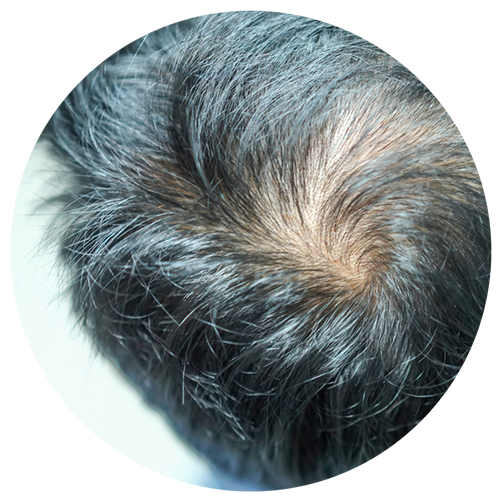
Hair loss affects many people, causing stress and lowering self-esteem.
We’re excited to share some new treatments that could change the game for hair regrowth.
These options range from cutting-edge science to natural remedies.

One standout is AMP-303, a promising new treatment for male pattern baldness.
This breakthrough shows measurable improvements in hair regrowth after just one treatment cycle, with effects lasting up to 150 days.
It’s a big step forward in science-backed solutions for hair loss.
We’re also seeing progress with other novel treatments.
These include CRISPR gene editing, 3D bioprinting of hair follicles, and nanotechnology.
Natural options like rosemary oil and caffeine-infused products are gaining attention too.
As research continues, we hope to see more effective and personalized ways to combat hair loss and boost hair growth.
Innovative Therapies in Hair Regrowth

New treatments are emerging that show promise for regrowing hair.
These range from injectable compounds to gene editing and even 3D printing of hair follicles.
AMP-303: Pioneering the Way
AMP-303 is an exciting new hair loss treatment. This intradermal injectable developed by Amplifica Holdings Group has shown great results in clinical trials.
Patients saw more non-vellus hairs and higher hair density after just one treatment cycle. The effects lasted up to 150 days.
The placebo-controlled study found AMP-303 to be safe and effective.
Participants had few side effects. This is a big step forward compared to daily pills or creams.
CRISPR and Gene Editing Technologies
CRISPR gene editing offers new hope for hair regrowth.
This tool can change genes in hair follicle cells to boost growth.
We’re learning more about the genes that control hair growth and loss.
CRISPR may let us fix harmful mutations or enhance helpful genes.
This could lead to long-lasting treatments that work at the root cause of hair loss. But more research is needed before it’s ready for patients.
Advancements in 3D Bioprinting
3D bioprinting is opening up new paths for hair loss treatments. This tech can create custom-designed hair follicles.
We can print tiny structures that mimic real hair follicles. These can be made to match a patient’s exact needs.
The printed follicles could be transplanted to bald areas. This may offer more natural-looking results than current hair plugs.
It’s still early days, but 3D bioprinting could change how we approach hair restoration.
Cutting-edge Nanotechnology
Nanotechnology is bringing new hope to hair loss treatments. Tiny particles can deliver drugs right to hair follicles.
This targeted approach may make treatments more effective. It could also reduce side effects elsewhere in the body.
Nanoparticles might carry growth factors or medicines to wake up dormant follicles. They could also block DHT, a hormone linked to male pattern baldness.
We’re excited about nanotech’s potential to create better, more precise hair loss treatments.
Exploring Exosome Therapy
Exosome therapy is a cutting-edge approach to hair regrowth. Exosomes are tiny bubbles released by cells.
In hair treatments, we use exosomes from healthy hair follicles. These contain growth factors and genetic material.
When applied to the scalp, exosomes may wake up inactive follicles. They can boost cell growth and help form new hairs.
Early studies show promise, but more research is needed. Exosome therapy could be a powerful tool in regenerative medicine for hair loss.
Emerging and Alternative Hair Loss Treatments

We’re seeing exciting new developments in hair loss treatments.
These options aim to boost hair growth and regrowth using innovative approaches.
The Role of Redensyl
Redensyl is a promising ingredient for hair loss treatment. It works similarly to Minoxidil but with fewer side effects. Studies show Redensyl can increase hair count and density.
We’ve found Redensyl targets hair follicle stem cells. This helps activate dormant follicles and promote new growth. It’s especially useful for people with androgenetic alopecia (AGA).
Redensyl is often used in serums and shampoos. These products are easy to use at home. Many users report seeing results within a few months of regular use.
Natural Alternatives: Rosemary Oil
Rosemary oil is gaining attention as a natural hair growth treatment. Research suggests it may be as effective as 2.5% Minoxidil.
We’ve seen rosemary oil improve scalp circulation. This can nourish hair follicles and encourage growth. It also has anti-inflammatory properties that may help with scalp health.
To use rosemary oil, mix a few drops with a carrier oil. Massage it into your scalp daily. Some people add it to their shampoo or conditioner. It’s gentle and safe for most people to use long-term.
Caffeine-infused Innovations
Caffeine is more than just a morning pick-me-up. It’s now being used in hair loss treatments. Caffeine can help block the conversion of testosterone to dihydrotestosterone (DHT). DHT is a key factor in male pattern baldness.
We’re seeing caffeine in shampoos, conditioners, and scalp treatments. These products aim to stimulate hair follicles and promote growth. They may be especially helpful for people with AGA.
Caffeine-infused products are easy to use. Just apply them to your scalp as directed. They’re often combined with other hair-boosting ingredients for better results.
Potential of JAK Inhibitors
JAK inhibitors are showing promise in hair loss treatment. These drugs target specific enzymes involved in hair growth cycles. Early studies suggest they could be groundbreaking for certain types of hair loss.
We’re particularly excited about their potential for treating alopecia areata. This is an autoimmune condition that causes patchy hair loss. JAK inhibitors might help regrow hair in these cases.
Research is still ongoing. Clinical trials are testing different JAK inhibitors for safety and efficacy. If approved, they could offer new hope for people with hard-to-treat hair loss.
Stem Cell Therapy: A Future Outlook
Stem cell therapy is an emerging field in hair restoration. It aims to regenerate hair follicles using the body’s own cells.
Researchers are exploring ways to use stem cells from fat tissue or the scalp.
We’re seeing promising results in early studies. Stem cells can help create new hair follicles.
They may also revive dormant follicles. This could lead to natural-looking hair regrowth.
The process involves extracting stem cells and injecting them into the scalp.
It’s still experimental, but it could offer a long-lasting solution for hair loss.
More research is needed to prove its safety and effectiveness.