
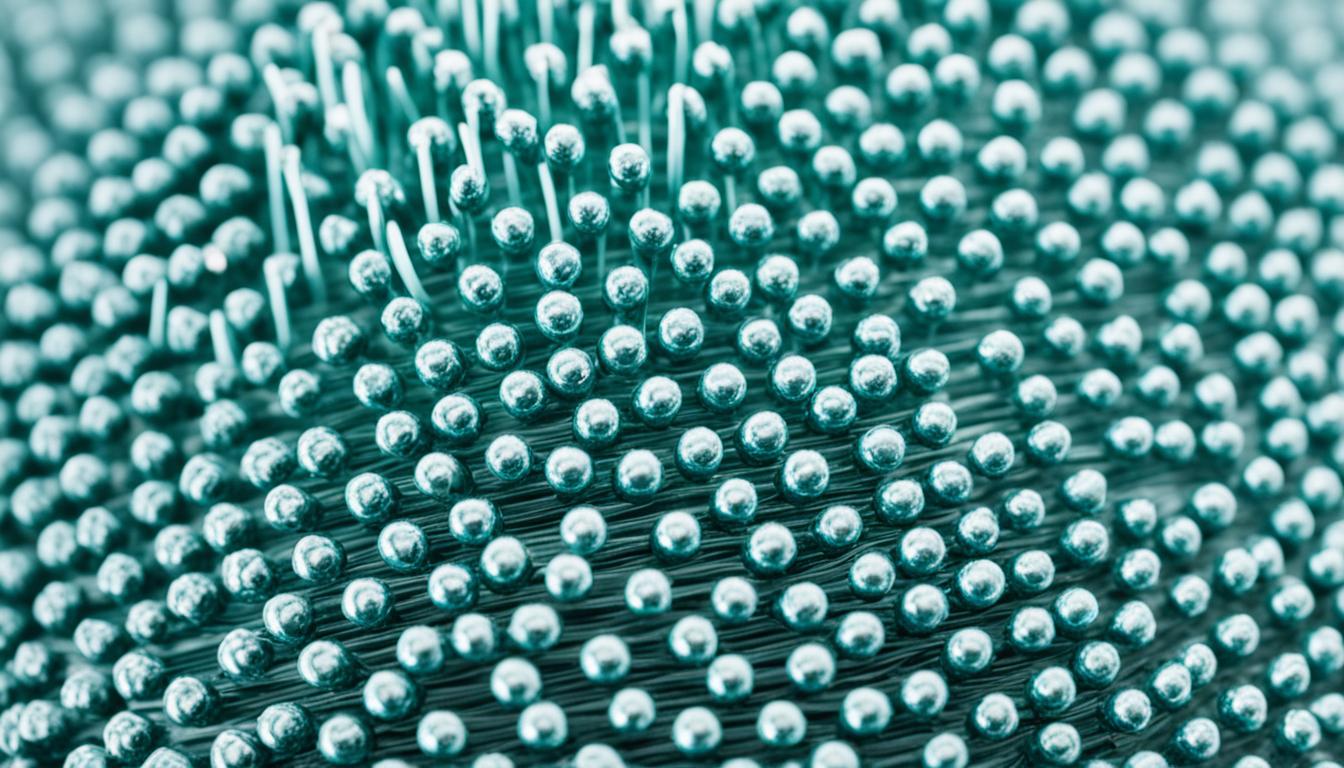
Did you know that nanotechnology is reshaping the field of hair restoration, offering groundbreaking solutions for individuals experiencing hair loss? With its nanoscale particles and advanced applications, nanotechnology is at the forefront of advancements in hair restoration treatments.
Key Takeaways:
- Nanotechnology is revolutionizing hair restoration treatments.
- Nanosystems enable targeted drug delivery to hair follicles, improving treatment efficacy and reducing side effects.
- Nanoparticles have the potential to stimulate hair growth and regenerate follicles through gene therapy.
- Nanotechnology provides a more precise, effective, and personalized approach to treating hair loss.
- Further research and development in nanotechnology-based strategies are needed to unlock its full potential in hair restoration.
Nanosystems for Hair Loss Treatment
Nanosystems, such as lipid nanoparticles, nanostructured lipid carriers, and polymeric nanoparticles, are emerging as promising strategies for treating hair loss. These advanced delivery systems offer several advantages over conventional formulations, making them an exciting area of research in the field of hair restoration.
One of the key advantages of nanosystems is their ability to improve patient compliance. Traditional hair loss treatments often require frequent application or ingestion, leading to potential non-compliance and reduced efficacy. Nanosystems, on the other hand, enable controlled drug release over an extended period, reducing the frequency of treatment and enhancing patient convenience.
Moreover, nanosystems have the ability to target hair follicles directly. By encapsulating drug compounds within nano-sized structures, these systems can reach the hair follicles with greater precision, allowing for increased local drug concentration. This targeted approach minimizes systemic exposure and reduces the risk of side effects associated with traditional treatment methods.
Lipid nanoparticles, including solid lipid nanoparticles (SLNs) and nanostructured lipid carriers (NLCs), have shown great potential in delivering hair loss drugs like minoxidil and finasteride directly to the hair follicles. These nanosystems provide improved stability, better permeability, and enhanced bioavailability, thereby maximizing the effectiveness of the treatments.
To better understand the advantages of nanosystems for hair loss treatment, refer to the following table:
| Nanosystem | Advantages | ||
|---|---|---|---|
| Lipid Nanoparticles | – Improved drug stability | – Enhanced permeability for targeted delivery | – Increased drug concentration at the hair follicles |
| Nanostructured Lipid Carriers | – Enhanced drug encapsulation efficiency | – Controlled release over an extended period | – Reduced systemic side effects |
| Polymeric Nanoparticles | – Versatile platform for drug encapsulation | – Tailored release profiles | – Enhanced skin penetration |
Through the development of nanotechnology-based drug delivery systems, researchers are revolutionizing the treatment of hair loss. These innovative approaches have the potential to provide safer, more effective, and long-lasting solutions for individuals experiencing hair loss, promoting not only hair follicle regeneration but also improved self-confidence and quality of life.
Nanoparticles for Hair Regeneration
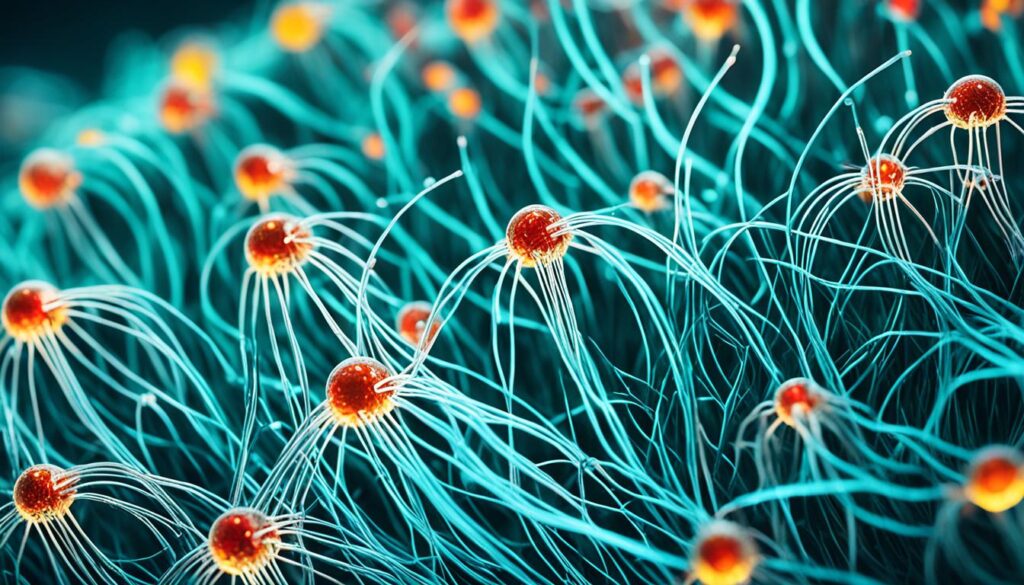
Nanoparticles have emerged as a powerful tool for hair regeneration. These tiny particles can penetrate the skin and reach deep into hair follicles, delivering therapeutic compounds directly to the target cells.
Nanoparticles can carry genes that promote hair growth or regulate the factors causing hair loss. By encapsulating these genes and delivering them to the hair follicles, nanotechnology allows for precise and targeted treatment. Nanoparticles can wake up dormant hair follicles and stimulate the growth of new, healthy hair.
This targeted approach offers a more effective and personalized treatment option for individuals with hair loss.
Nanotechnology holds great potential in the field of hair regeneration and has the ability to address the root causes of hair loss.
With the ability to target hair follicles and deliver therapeutic compounds directly to the cells, nanotechnology-based treatments provide a more precise and effective approach. This targeted treatment can help individuals regain their confidence and restore their natural hair.
Conclusion
Nanotechnology is revolutionizing the field of hair restoration by offering innovative solutions for treating hair loss. With its ability to target hair follicles and deliver therapeutic compounds directly to the cells, nanotechnology-based treatments provide a more precise and effective approach than traditional methods. By stimulating hair growth and regenerating follicles, nanotechnology has the potential to address the underlying causes of hair loss.
Unlike current treatments, which often have limitations and potential side effects, nanotechnology offers a safer and more long-lasting solution for individuals experiencing hair loss. Through further research and development in nanotechnology-based strategies, we can unlock its full potential in hair restoration and improve the quality of life for those affected by this condition.
Nanotechnology is poised to revolutionize the treatment of hair loss. Its innovative solutions, such as nanosystems and nanoparticles, hold great promise for follicle regeneration and the development of targeted treatments. With its ability to deliver therapeutic compounds directly to the cells, nanotechnology provides an exciting avenue for the future of hair restoration.
FAQ
What is nanotechnology and how is it revolutionizing hair restoration?
Nanotechnology is an innovative field that uses nanoscale particles to target hair cells and promote new growth and follicle regeneration. It offers a promising avenue for treating hair loss by delivering treatments directly to hair follicles and addressing the underlying causes of hair loss.
What are nanosystems and how are they used for treating hair loss?
Nanosystems, such as lipid nanoparticles, nanostructured lipid carriers, and polymeric nanoparticles, are being explored as promising strategies for treating hair loss. These systems improve patient compliance, enable controlled drug release, and reduce systemic side effects by specifically targeting hair follicles and increasing local drug concentration.
How do nanoparticles contribute to hair regeneration?
Nanoparticles can penetrate the skin and reach deep into hair follicles, delivering therapeutic compounds directly to the target cells. They can carry genes that promote hair growth or regulate the factors causing hair loss, effectively stimulating the growth of new, healthy hair and addressing the root causes of hair loss.
How do nanotechnology-based treatments differ from current hair loss treatments?
Nanotechnology-based treatments provide a more precise and effective approach by targeting hair follicles and delivering therapeutic compounds directly to the cells. Unlike current treatments that have limitations and potential side effects, nanotechnology offers a safer and more long-lasting solution for hair restoration.
What is the potential of nanotechnology in the field of hair restoration?
Nanotechnology holds great potential in stimulating hair growth, regenerating follicles, and addressing the underlying causes of hair loss. Further research and development are needed to unlock its full potential and revolutionize the treatment of hair loss, improving the quality of life for individuals affected by this condition.
1 thought on “Nanotechnology: Revolutionizing Hair Restoration”