
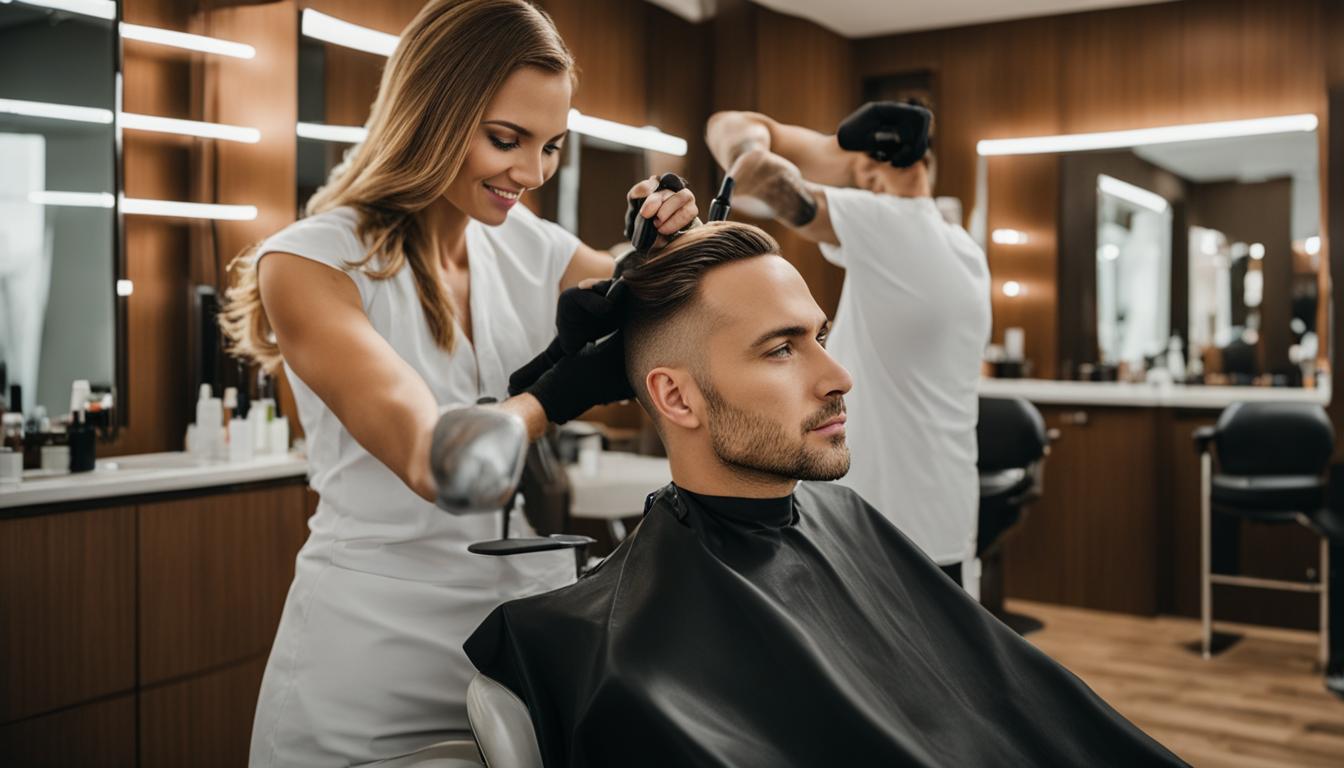
Did you know that hair loss affects approximately 50 million men and 30 million women in the United States alone? It’s a widespread issue that can have a significant impact on a person’s self-esteem and confidence. Thankfully, there are affordable hair restoration treatments available that can help you regain your luscious locks without breaking the bank.
Key Takeaways:
- Hair loss affects millions of people in the United States.
- There are budget-friendly hair restoration options available.
- Affordable treatments can help boost self-esteem and confidence.
- Prescription medications and non-prescription alternatives are viable options.
- Consulting with a healthcare professional is essential to determine the best course of action.
Prescription Medications for Hair Restoration
Prescription medications play a crucial role in hair restoration and have received FDA approval for effectively treating hair loss. These medications are backed by extensive research and clinical trials, providing a reliable option for those seeking to address their hair loss concerns.
Two of the most commonly prescribed medications for hair loss are minoxidil and finasteride. Let’s take a closer look at each:
Minoxidil:
Minoxidil, commonly known by the brand name Rogaine, is an over-the-counter medication that comes in the form of a topical solution or foam. It is applied directly to the scalp and works by increasing blood flow to the hair follicles, promoting hair growth. Minoxidil is recommended for both men and women experiencing hair loss and can be used as a standalone treatment or in combination with other medications.
Finasteride:
Finasteride, marketed under the brand name Propecia, is an oral medication that is prescribed specifically for men. It works by inhibiting the production of the hormone dihydrotestosterone (DHT), which is responsible for hair follicle shrinkage and eventual hair loss in individuals with a genetic predisposition. By reducing DHT levels, finasteride helps to prevent further hair loss and stimulate regrowth. It is important to note that finasteride needs to be taken consistently over an extended period to maintain its effectiveness.
In addition to minoxidil and finasteride, there are other prescription medications such as Olumiant (baricitinib) that are being investigated for their potential to treat hair loss. However, it is essential to consult a medical professional to determine the most suitable prescription medication based on individual circumstances and medical history.
It’s important to note that prescription medications may have possible side effects, and it is essential to follow the guidance of a healthcare professional when using them.
Non-Prescription and Alternative Hair Restoration Options
If you’re looking for non-prescription alternatives to address your hair loss, there are several options available that can potentially help in hair restoration. These alternatives can be used alongside or instead of prescription medications, providing you with additional choices to combat hair loss.
One of the alternative options that you may consider is low-level laser therapy (LLLT). This treatment involves the use of a specialized laser device that emits low-level laser light onto the scalp. It is believed that this therapy can stimulate hair growth by increasing blood flow and promoting cell activity in the hair follicles.
Supplements are another non-prescription option that you can explore. Certain supplements, such as biotin, saw palmetto, and marine collagen, are thought to support hair health and growth. While they may not provide overnight results, consistent use over time might assist in reducing hair loss and promoting hair regrowth.
Additionally, Platelet-Rich Plasma (PRP) injections have gained popularity as an alternative hair restoration option. This treatment involves injecting a concentrated solution derived from your blood into the scalp, which contains growth factors that may promote hair growth and stimulate hair follicles. PRP injections are typically offered by specialized clinics and may require multiple sessions for optimal results.
Lastly, for those seeking more permanent and significant hair restoration, hair transplant surgery remains a popular choice. During this procedure, hair follicles are taken from areas of the scalp with active hair growth and transplanted to areas with thinning or balding hair. Hair transplant surgery offers the potential for natural-looking results and long-term hair regrowth.
FAQ
Are there affordable hair restoration treatments available?
Yes, there are affordable hair restoration treatments available that can fit within your budget.
What are the most common prescription medications for hair restoration?
The most common prescription medications for hair restoration include minoxidil (Rogaine), finasteride (Propecia), and Olumiant.
Are there non-prescription and alternative options for hair restoration?
Yes, there are non-prescription and alternative options available for hair restoration. These options include low-level laser therapy, supplements, PRP injections, and hair transplant surgery.
Are prescription medications for hair restoration FDA-approved?
Yes, prescription medications for hair restoration, such as minoxidil and finasteride, have been approved by the FDA for treating hair loss.
What is the cost of hair transplant surgery?
The cost of hair transplant surgery varies depending on several factors, including the extent of hair loss and the number of grafts needed. It’s best to consult with a hair restoration specialist to get an accurate cost estimate.