
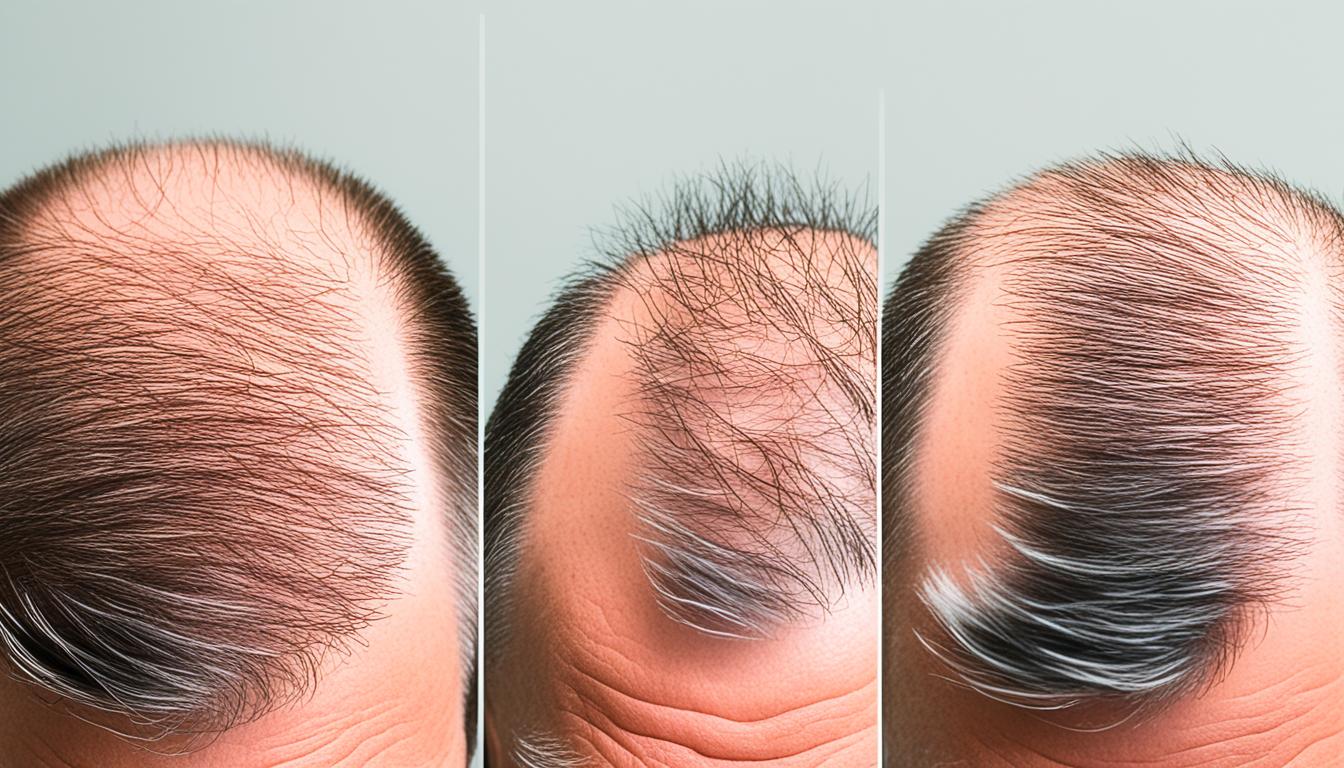
Male pattern hair loss, commonly known as androgenetic alopecia, is a widespread concern among men. It is characterized by a gradual thinning of hair and a receding hairline, eventually leading to baldness. This condition affects a significant number of men, with more than half of white men displaying visible signs of male pattern hair loss by the age of 50.
Male pattern hair loss usually starts in the late teens or early twenties, but it can also occur later in life. It is primarily caused by genetic factors and hormonal changes, specifically the influence of dihydrotestosterone (DHT) on hair follicles. While it is not a serious medical condition, male hair loss can have a significant impact on self-esteem and confidence.
If you are experiencing male hair loss, there are several treatment options available that can help slow down the progression of hair loss and promote regrowth. In this article, we will explore the most effective tips and treatments for male hair loss.
Key Takeaways:
- Male pattern hair loss is a common condition characterized by gradual hair thinning and receding hairline.
- Genetic factors and hormonal changes, particularly DHT, play a significant role in male hair loss.
- Treatment options are available to reduce hair loss and promote regrowth.
- FDA-approved medications, such as topical minoxidil and oral finasteride, are commonly used to treat male pattern hair loss.
- Other treatments, including hair transplant, platelet-rich plasma (PRP) therapy, and laser treatment, may also be considered.
FDA-Approved Medications for Male Pattern Hair Loss
When it comes to treating male pattern hair loss, there are FDA-approved medications that have been proven to be effective. Two commonly used medications are topical minoxidil and finasteride. These medications have undergone rigorous testing and have been deemed safe and effective for use in men experiencing hair loss.
Topical Minoxidil: A Widely Used Treatment
Topical minoxidil is a popular choice for treating male pattern hair loss. It is available over the counter and has been shown to reduce hair loss, stimulate hair growth, and strengthen existing hair strands. Clinical trials have demonstrated the efficacy of topical minoxidil in promoting hair regrowth, although complete regrowth may not be achieved.
To use topical minoxidil, simply apply the solution or foam directly to the scalp twice a day. It is important to note that results may take time to become noticeable, typically between six to 12 months of consistent use. It is also important to follow the application instructions provided with the medication to maximize its effectiveness.
While topical minoxidil is generally well-tolerated, some men may experience side effects. These can include an irritated scalp or headaches. If you experience any adverse reactions, it is recommended to consult with a healthcare professional.
Finasteride: An Oral Medication for Hair Loss Treatment
Finasteride is an oral medication that is also commonly used to treat male pattern hair loss. It works by reducing the levels of dihydrotestosterone (DHT), a hormone that contributes to hair loss in men. By lowering DHT levels, finasteride can slow down hair loss and even promote hair regrowth in some cases.
Finasteride is available by prescription and should be taken as directed by a healthcare professional. It is important to note that results may take time to become noticeable, and the medication should be taken consistently to maintain its benefits.
As with any medication, finasteride may cause side effects in some individuals. These can include sexual side effects such as decreased libido or erectile dysfunction. It is important to discuss any concerns or potential side effects with a healthcare professional before starting finasteride.
Overall, both topical minoxidil and finasteride are FDA-approved medications that have been shown to be effective in treating male pattern hair loss. They offer viable options for men seeking to slow down hair loss, stimulate hair regrowth, and improve the overall appearance of their hair.
Topical minoxidil and finasteride are FDA-approved medications that have undergone extensive testing. They have been shown to be safe and effective in treating male pattern hair loss, offering hope for men seeking to address their hair loss concerns.
Other Treatments for Male Pattern Hair Loss
In addition to FDA-approved medications, there are other treatments available for male pattern hair loss. These include hair transplant, platelet-rich plasma (PRP) therapy, and laser treatment.
Hair Transplant
A hair transplant is a surgical procedure where healthy hair follicles from the back and sides of the head are transplanted to the balding areas. This procedure can provide permanent, natural-looking results. The transplanted hair follicles are resistant to the hormone responsible for male pattern hair loss, allowing them to continue growing even after the surrounding hair may have thinned or fallen out. It’s a highly effective solution for individuals with advanced hair loss.
However, it’s important to note that hair transplant procedures can be costly and may require multiple sessions to achieve the desired outcome. The recovery time can also vary, with some individuals experiencing temporary redness, swelling, or discomfort in the treated areas. It’s crucial to consult with a qualified hair transplant surgeon to determine if this treatment option is suitable for you.
Platelet-Rich Plasma (PRP) Therapy
Platelet-rich plasma (PRP) therapy is a non-surgical treatment for male pattern hair loss. It involves extracting a small amount of the patient’s blood and processing it to separate the platelet-rich plasma. The concentrated platelets are then injected into the scalp, where they release growth factors that stimulate hair growth.
PRP therapy is believed to promote hair growth by increasing blood flow to the hair follicles and nourishing them with essential nutrients. It can help to strengthen existing hair strands, thicken thinning hair, and stimulate the regrowth of dormant hair follicles. The procedure is relatively quick, minimally invasive, and requires no downtime.
Laser Treatment
Laser treatment, also known as low-level laser therapy (LLLT), is an FDA-cleared non-invasive treatment option for male pattern hair loss. It involves using red or near-infrared light to stimulate hair follicles and promote hair growth. The light energy is absorbed by the hair follicles, stimulating cellular activity and improving blood circulation in the scalp.
Laser treatment can be performed at home using handheld devices or in specialized clinics using larger, more powerful devices. It’s a painless procedure that requires regular sessions over an extended period to achieve optimal results. Laser treatment may help to slow down hair loss, strengthen existing hair, and promote the growth of thicker, healthier hair.
It’s essential to consult with a qualified healthcare professional to determine the most suitable treatment option for your specific needs and to ensure that the chosen treatment is safe and effective for you.
Conclusion
Male hair loss is a common issue that affects many men and can significantly impact their self-esteem. While there is no cure for male pattern hair loss, there are several solutions and remedies available to slow down its progression and promote hair regrowth.
Many men turn to FDA-approved medications such as minoxidil and finasteride, which have shown promising results in reducing hair loss and stimulating new hair growth. These medications can be effective when used consistently and as directed.
In addition to medication, other treatment options like hair transplants, platelet-rich plasma (PRP) therapy, and laser treatment can also be considered. Hair transplant procedures involve transplanting healthy hair follicles from areas of the scalp resistant to hair loss to the balding areas. PRP therapy utilizes the growth factors in a person’s own blood to stimulate hair regrowth, while laser treatment uses low-level laser therapy to promote hair growth.
It is important to consult with a dermatologist to determine the best treatment approach for male hair loss based on individual needs and preferences. They can provide personalized recommendations and guidance to ensure the most effective results. Additionally, adopting a healthy lifestyle, managing stress levels, and avoiding smoking can contribute to the prevention and minimization of hair loss.
FAQ
What is male pattern hair loss?
Male pattern hair loss, also known as androgenetic alopecia, is the most common cause of hair loss in men. It is characterized by thinning hair, receding hairline, or balding, and typically starts in the late teens or early twenties.
How common is male pattern hair loss?
By the age of 50, more than half of white men have visible signs of male pattern hair loss. It is a widespread issue that can significantly impact a man’s self-esteem.
Are there any FDA-approved medications for male pattern hair loss?
Yes, there are FDA-approved medications available for male pattern hair loss. Topical minoxidil and oral finasteride are commonly used treatments. Minoxidil is applied to the scalp twice a day and has been shown to reduce hair loss and stimulate hair growth. Finasteride is taken orally and works by blocking the hormone responsible for hair loss.
How effective is minoxidil in treating male pattern hair loss?
Topical minoxidil is the most commonly used treatment for male pattern hair loss. It has been shown in clinical trials to reduce hair loss, stimulate hair growth, and strengthen existing hair strands. However, full regrowth is unlikely, and it may take several months to see noticeable results.
What are the side effects associated with minoxidil?
Some men may experience side effects like an irritated scalp or headaches when using minoxidil. It is important to follow the instructions provided and consult a healthcare professional if any concerns arise.
Are there any treatments other than medications for male pattern hair loss?
Yes, there are other treatments available for male pattern hair loss. Hair transplant, platelet-rich plasma (PRP) therapy, and laser treatment are alternative options that may be considered for individuals looking for different approaches to address hair loss.
What is a hair transplant?
A hair transplant is a surgical procedure where healthy hair follicles from the back and sides of the head are transplanted to the balding areas. This procedure can provide permanent, natural-looking results, but it can be costly and may require multiple sessions.
Can lifestyle factors affect male pattern hair loss?
Maintaining a healthy lifestyle, reducing stress, and avoiding smoking can contribute to the prevention or minimization of hair loss. While there is no guaranteed way to prevent male pattern hair loss, adopting a healthy routine can help promote overall hair health.