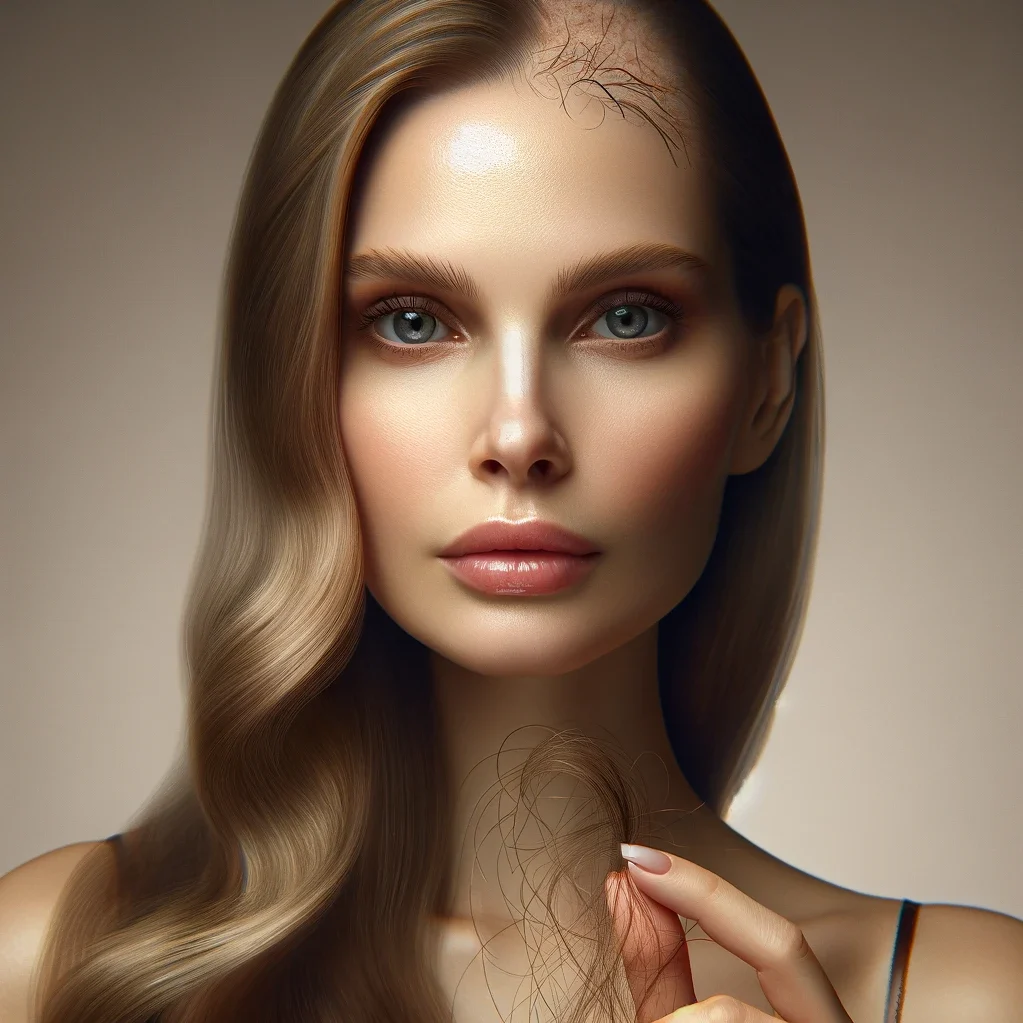
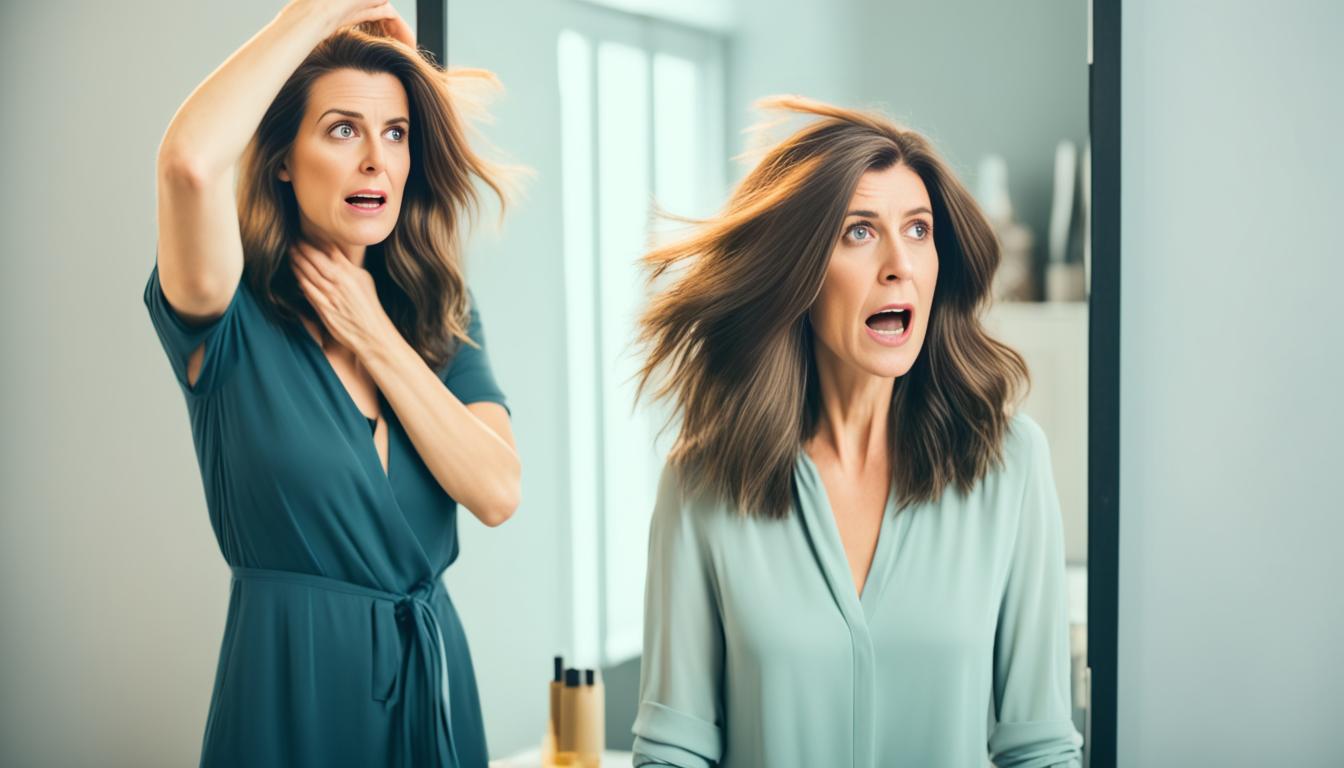
Experiencing hair loss after pregnancy? You’re not alone. Postnatal hair shedding, also known as postpartum hair loss, is a common occurrence for many women. It’s a result of hormonal changes that take place during pregnancy and the postpartum period. While it can be a frustrating experience, there are solutions and tips to help manage and alleviate the effects of postpartum hair fall.
Postpartum hair loss typically begins around one to six months after childbirth and can last for up to 18 months. The main culprit is a decrease in estrogen levels after pregnancy. This sudden drop triggers the shedding of excess hair that was retained during pregnancy. Although postpartum hair loss is a natural process, it can be distressing for many women.
Key Takeaways:
- Postpartum hair loss is a common occurrence among women after giving birth.
- Hormonal changes during pregnancy and the postpartum period contribute to hair shedding.
- Estrogen levels drop after childbirth, leading to excess hair loss.
- Postpartum hair fall usually starts around one to six months post-delivery and lasts up to 18 months.
- Managing postpartum hair fall involves various solutions and tips to minimize its effects.
Understanding the Hormonal Changes
During pregnancy, hormones play a crucial role in a woman’s body, orchestrating various physical and emotional changes. Estrogen, progesterone, oxytocin, and prolactin levels rise to accommodate the growing baby and prepare the body for childbirth and breastfeeding.
This surge in hormone levels often leads to some noticeable changes, one of which is thicker and healthier hair. The increased estrogen and progesterone levels during pregnancy can prolong the hair’s growth phase, resulting in more voluminous locks.
However, these hormone levels return to normal after giving birth, causing a shift in the hair’s growth cycle. The decrease in estrogen and progesterone triggers a shedding phase known as postpartum hair loss. This temporary condition affects many women and typically begins around one to four months after childbirth.
Postpartum hair loss can be a concern for new mothers, but it is important to understand that it is a natural process. The hair sheds as the body readjusts its hormone levels to the non-pregnant state. It is a self-limiting condition that usually subsides within six to twelve months after delivery. It is important to note that postpartum hair loss is not a cause for concern and should not be confused with permanent hair loss conditions.
Effects of Hormonal Fluctuations on Hair
The fluctuations in estrogen and progesterone levels influence the hair growth cycle. During pregnancy, the increased hormone levels keep hair in the growth phase, resulting in thicker and stronger locks. However, after childbirth, hormone levels drop abruptly, pushing the hair into the shedding phase.
“The sudden decrease in estrogen and progesterone levels after giving birth causes the hair follicles to shift into the shedding phase. This results in a higher rate of hair shedding and the appearance of thinning hair.”
While it can be distressing to witness postpartum hair loss, it is important to remember that it is a temporary condition. The body needs time to readjust the hormonal balance, and the hair cycle will eventually return to its normal pattern. It is crucial to give yourself grace and patience during this transition period.
Tips for Managing Postpartum Hair Fall
While postpartum hair loss cannot be entirely prevented, there are several tips and treatments that can help manage the condition. These natural ways to combat postpartum hair fall can promote hair regrowth and prevent excessive hair fall after giving birth. Here are some effective methods:
1. Maintain a Healthy Diet
Ensuring that you have a balanced and nutritious diet can contribute to healthy hair growth. Include foods rich in vitamins, minerals, and proteins such as fruits, vegetables, lean meats, fish, nuts, and seeds in your diet. Additionally, consider incorporating foods that are known to promote hair health, such as eggs, spinach, sweet potatoes, and avocados.
2. Practice Gentle Hair Care
Avoid harsh brushing or combing that can further weaken the hair. Use a wide-toothed comb or a brush with soft bristles to detangle your hair. Be gentle while washing your hair, and use a mild shampoo and conditioner suitable for your hair type. Minimize the use of heat styling tools such as straighteners and curling irons, as excessive heat can damage the hair shaft.
3. Try Scalp Massages
Massaging your scalp can help stimulate blood flow and promote hair growth. Gently massage your scalp using your fingertips in circular motions for a few minutes each day. You can also use natural oils such as coconut oil, olive oil, or almond oil during the massage for added nourishment.
4. Consider Postpartum Hair Treatments
There are various postpartum hair treatments available that can help reduce hair fall and promote regrowth. Consult with a dermatologist or a trichologist who can recommend suitable treatments such as topical solutions, oral supplements, or laser therapy based on your specific hair condition.
5. Manage Stress Levels
High stress levels can contribute to hair fall. It is essential to manage stress through relaxation techniques, exercise, and adopting a healthy lifestyle. Engaging in activities that you enjoy, practicing mindfulness or meditation, and getting enough sleep can help reduce stress levels and improve overall well-being.
By following these tips and incorporating them into your daily routine, you can effectively manage postpartum hair fall and promote healthy hair regrowth. Remember that each person’s hair growth journey is unique, and it may take time to see noticeable results. Be patient and consistent with your hair care routine, and consult with a healthcare professional if you have any concerns.
Conclusion
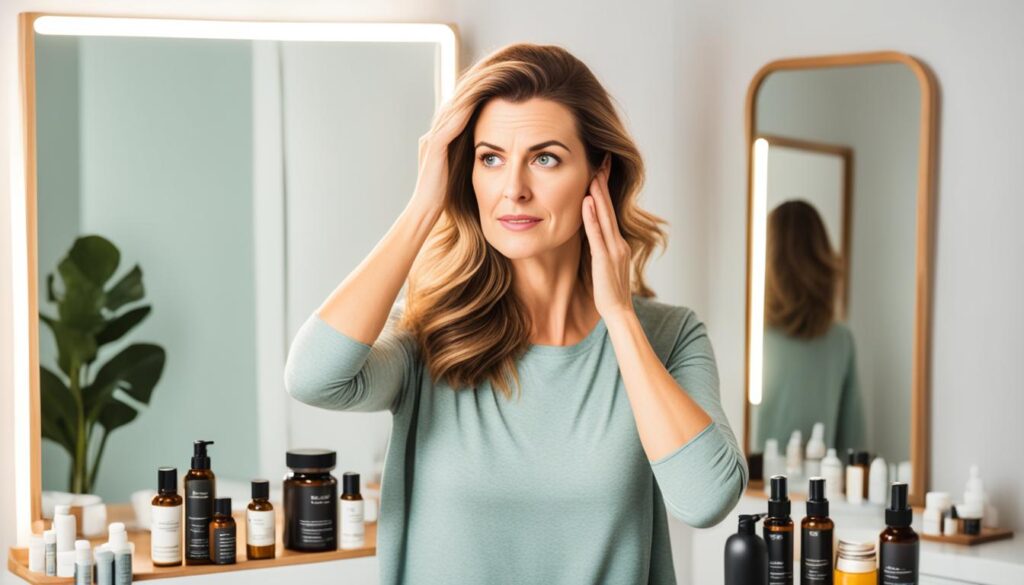
Postpartum hair loss is a common and temporary condition experienced by many women after giving birth. The hormonal changes that occur during pregnancy and the subsequent drop in estrogen levels contribute to excessive hair shedding. While it cannot be completely prevented, there are remedies and tips available to manage postpartum hair thinning and promote healthy hair growth.
To manage postpartum hair loss, it is important to avoid excessive heat styling, as heat can further weaken and damage the hair. Additionally, maintaining a healthy diet rich in vitamins and minerals can support hair health and growth. Continuing prenatal vitamin intake can provide the necessary nutrients to support the hair follicles and prevent further hair fall.
Using volumizing shampoos can also help create the appearance of thicker hair, providing temporary relief from postpartum hair thinning. However, it is important to remember that postpartum hair loss is a natural process that usually resolves itself within 18 months.
If postpartum hair loss persists beyond your child’s first birthday or is accompanied by other concerning symptoms, it is advisable to consult with a dermatologist. They can help rule out any underlying issues and provide further guidance on managing post-pregnancy hair care.
FAQ
What causes postpartum hair loss?
Postpartum hair loss is caused by hormonal changes after giving birth. The drop in estrogen levels triggers excessive shedding of hair.
When does postpartum hair loss occur?
Postpartum hair loss usually starts around one to six months after childbirth and can continue for up to 18 months.
Is postpartum hair loss permanent?
No, postpartum hair loss is a temporary condition. It typically resolves on its own within 18 months after giving birth.
Can postpartum hair loss be prevented?
Postpartum hair loss cannot be entirely prevented, but there are several tips and treatments that can help manage the condition.
What can I do to manage postpartum hair fall?
To manage postpartum hair fall, you can try avoiding excessive heat styling, maintaining a healthy diet, continuing prenatal vitamin intake, and using volumizing shampoos.
When should I consult a dermatologist about postpartum hair loss?
If hair loss persists beyond your child’s first birthday or is accompanied by other symptoms, it is advisable to consult with a dermatologist to rule out any underlying issues.