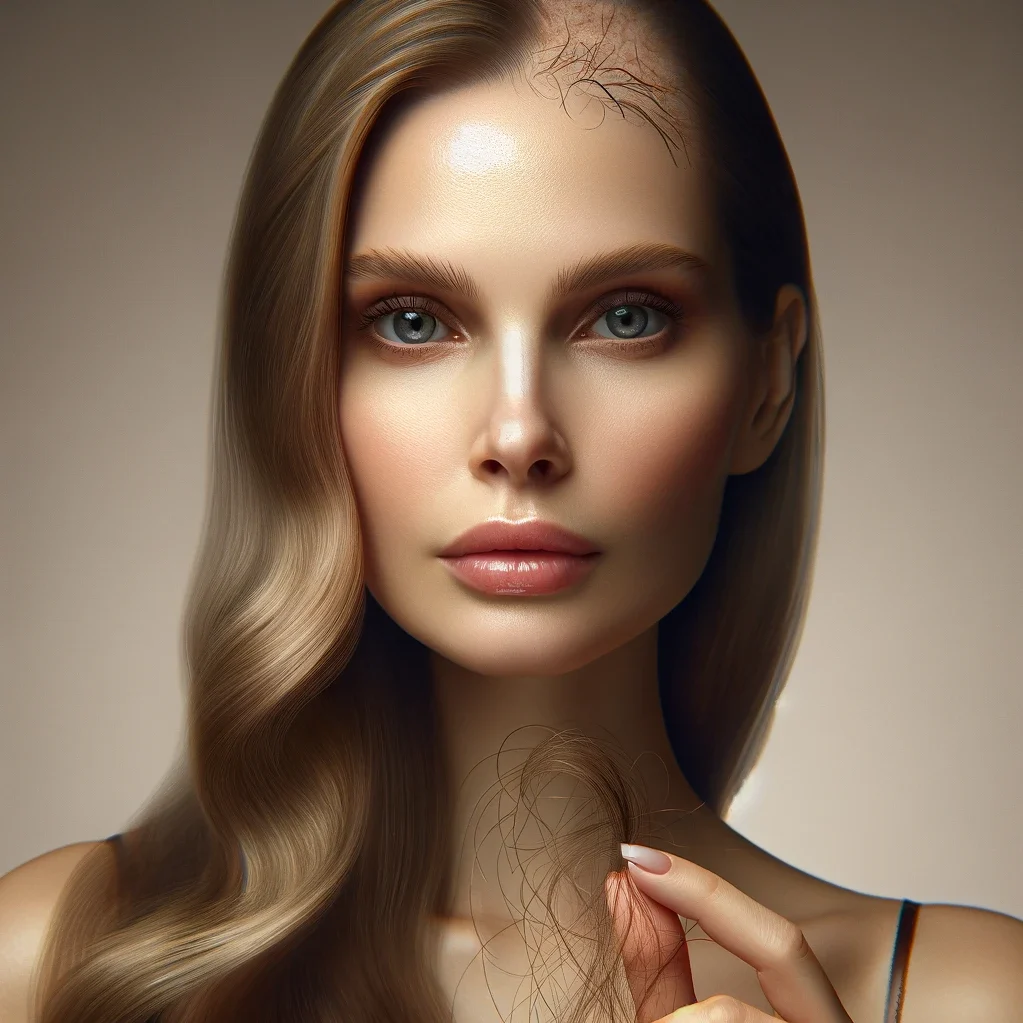
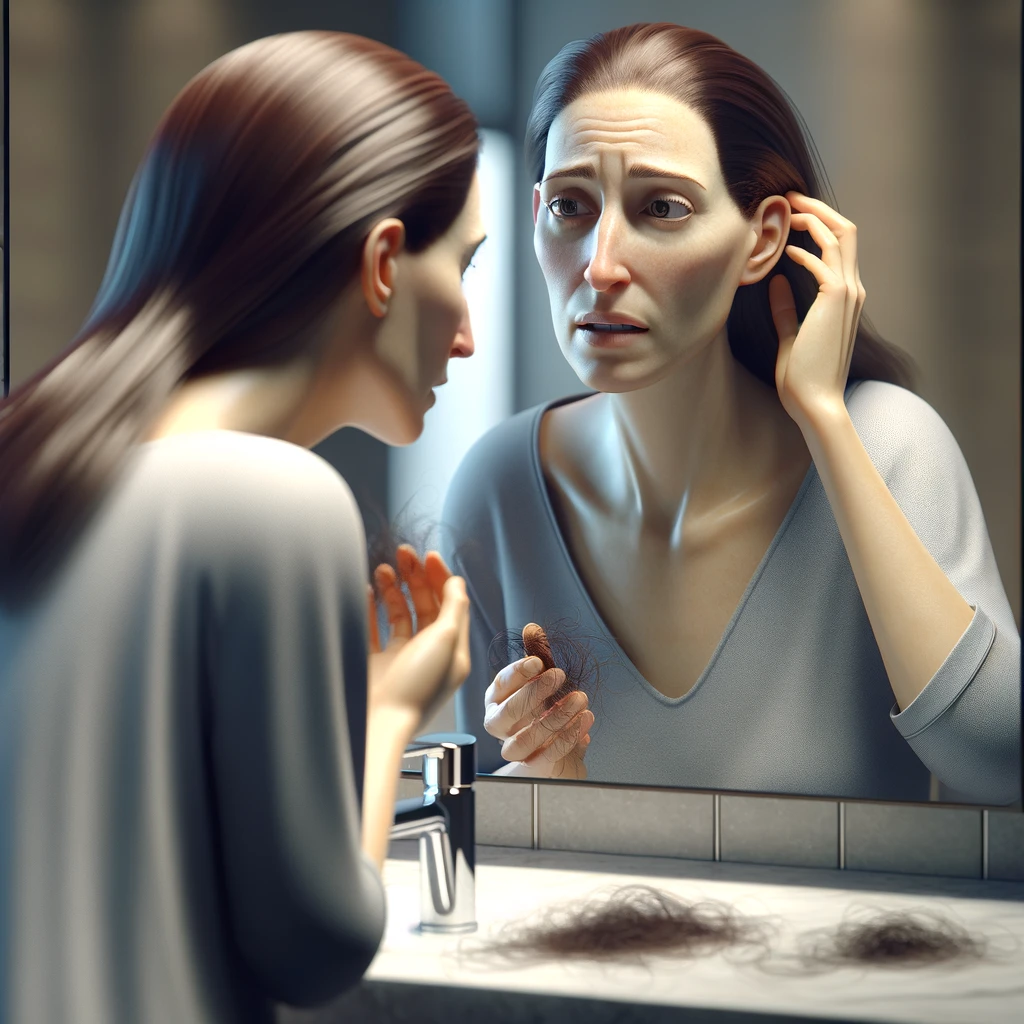
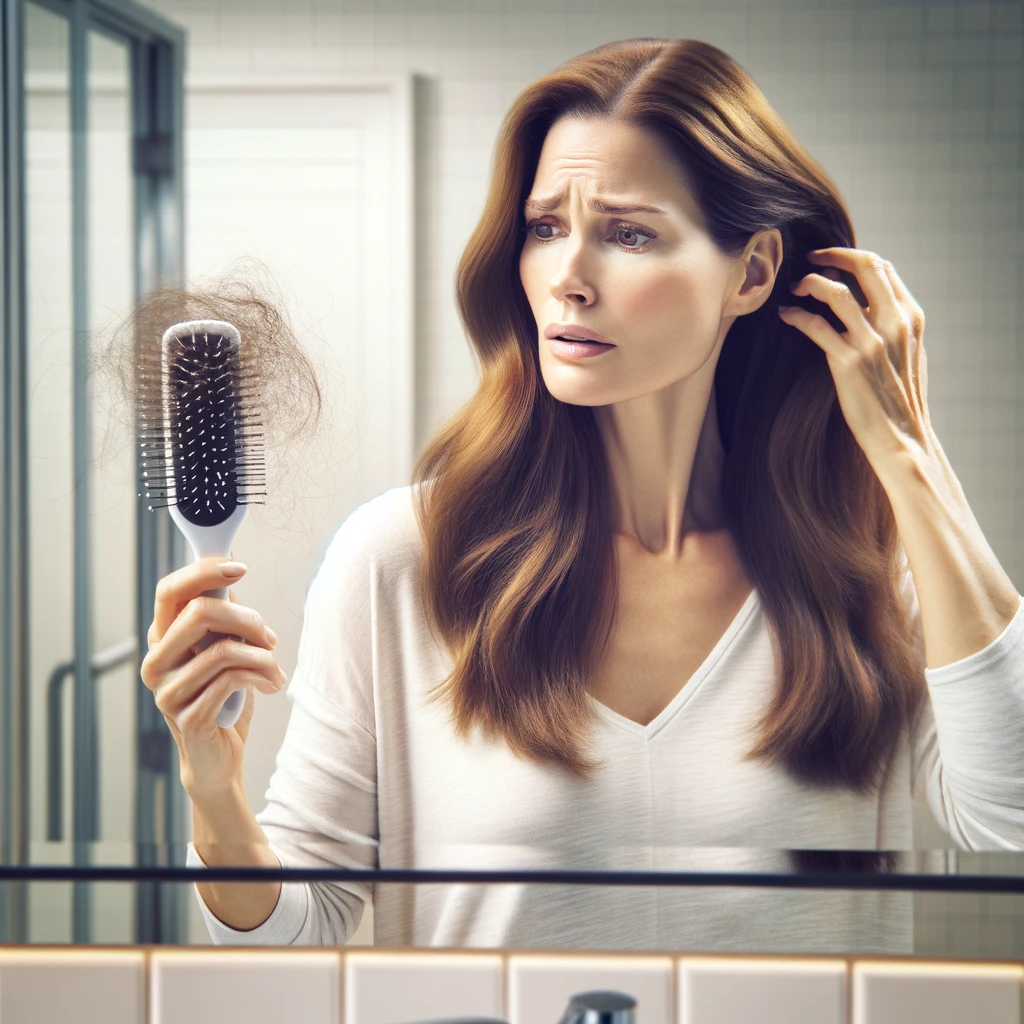
Hair loss is a topic often shrouded in silence, but the reality is that millions of women around the world experience it. Whether it’s a gradual thinning, patchy bald spots, or sudden shedding, hair loss can be a deeply personal and challenging experience. This website is here to offer support, information, and a sense of community for women navigating this journey.
Understanding Your Hair Loss
No two hair loss experiences are exactly alike. Different types of hair loss have distinct causes and require different approaches. We dive deep into several common types, including:
Androgenetic Alopecia
Androgenetic alopecia, commonly known as female pattern hair loss, is the most common cause of hair loss in women. Over 30 million women in the United States suffer from this condition, which is often linked to hormones and genetics.
The key characteristics of androgenetic alopecia include:
- Gradual thinning of hair on the top of the head and crown area
- Widening of the center hair part
- Visible loss of volume and density over time
Androgenetic alopecia develops when hair follicles have a genetic sensitivity to dihydrotestosterone (DHT), a byproduct of the hormone testosterone. As DHT accumulates and binds to receptors in the follicle, it causes them to shrink and grow thinner and lighter hair until they stop producing hair altogether.
Telogen Effluvium
Telogen effluvium is a form of temporary diffuse hair loss that often occurs after pregnancy, major surgery, traumatic stress, or severe illness. It is estimated that up to 50% of women experience telogen effluvium after giving birth.
The hallmarks of telogen effluvium include:
- Noticeable increase of hair shedding, typically 2-3 months after a trigger event
- No recession of the hairline
- Even thinning and loss of volume across the scalp
- Complete recovery within 6-9 months for most patients
In telogen effluvium, stress pushes a large number of hair follicles into the “telogen” or resting phase prematurely. As they rest, the hair strands detach and begin to shed excessively all over the scalp. As the stressful event passes, new hair growth typically resumes.
Alopecia Areata
Alopecia areata is an autoimmune disorder that causes hair to fall out in round patches, often the size and shape of a quarter. It can occur at any age but often has early onset between ages 15-29. Lifetime risk is estimated to be up to 2% globally.
Distinct traits of alopecia areata include:
- One or more fully bald patch with smooth, poreless skin
- Possible nail defects such as small dents or grooves
- Regrowth in 3-6 months without treatment in mild cases
- Potential to progress to complete scalp and body hair loss
Experts believe alopecia areata is an immune system reaction, causing white blood cells to attack the hair follicles and halt hair production. Genetics and stress can contribute to susceptibility.
Traction Alopecia
Traction alopecia is hair loss caused by excessive, prolonged tension on the hair roots. Hairstyles that pull tightly at the edges of the scalp often cause tapering breakage along the front hairline and temples. Up to one third of African American women suffer from traction alopecia.
Signs and symptoms include:
- Thinning edges around hair margins, especially near ears and neckline
- Missing patches along hair part or perimeter of scalp
- Short broken hairs that don’t grow past a few centimeters
Eliminating traumatic hairstyles can help encourage regrowth in the early stages. Without intervention, sustained traction can permanently scar hair follicles over time.
Scalp Infections
Both bacterial and fungal scalp infections can instigate localized hair loss and itching. Folliculitis is an inflammation of hair follicles caused by bacteria like Staphylococcus aureus. Fungal infections may manifest as ringworm, formally known as tinea capitis.
Infections display the following:
- Visible red, flaky, weeping rash on scalp
- Pinpoint red bumps or raised tender lumps
- Brittle broken hairs easily plucked from scalp
- More common in children but can happen at any age
Anti-fungal or antibiotic creams usually clear infections. Seeking treatment is vital both to heal the infection and prevent permanent scarring alopecia.
Exploring Treatment Possibilities
Once you understand the type of hair loss you may have, the next step is to explore your treatment options. Hair loss comes with a vast spectrum of solutions, and what works for one person may not work for another. We explore and compare various treatment possibilities:
Medications
Currently, two drugs have FDA approval for treating hair loss:
- Minoxidil (Rogaine): Available over-the-counter, minoxidil helps enhance blood flow and nutrient delivery to hair follicles, reviving growth in some women. It requires twice daily usage for ongoing effectiveness. About 40% of women see moderate regrowth with minoxidil.
- Finasteride: A prescription oral tablet that stops production of DHT to thwart further damage to hair follicles. Roughly 90% of women maintain or improve hair fullness with finasteride over 4-12 months of use.
Both medications need to be used continuously to sustain benefits. They are more effective at enhancing and maintaining hair than regrowing lost hair permanently.
Low-Level Laser Therapy
Low-level laser therapy (LLLT) is a treatment option that uses light energy to stimulate cells within hair follicles. Hand-held devices are combed through the hair at regular intervals. The efficacy of LLLT is debated, but some controlled studies have shown measurable growth in a portion of female users. By the numbers:
- Roughly 19 out of 20 patients experience some degree of improvement after 26 weeks of treatment
- Average increase in hair density is 18.2 hairs per cm2 of the scalp
- More effective for mild to moderate hair loss
- Requires frequent, consistent application 2-3 times per week
LLLT is also completely non-invasive, safe, and has no major side effects. For some women this therapy offers modest improvement.
Hair Transplants
For women with extensive permanent hair loss, hair transplantation is an option to restore fullness in thinning areas. Grafts of 10-15 hairs are harvested from the back of the scalp and artfully transplanted into balding sections a few follicles at a time:
- Produces very natural results when performed by a skilled surgeon
- Success rate exceeds 95% if grafts are placed properly into healthy scalp tissue
- Only viable option for regenerating hair permanently in scarred areas
- Large sessions can require up to 4000 grafts transplanted over 8 hours.
The cost of hair transplant surgery ranges vastly depending on the extent of coverage needed, starting around $4 per graft up to $15 per graft.
Non-Surgical Options
For women uninterested or ineligible for medical treatment, cosmetic solutions offer aesthetic improvements without surgery:
- Hairpieces and extensions: Semi-permanent woven or glued extensions produce instant fullness. High-quality pieces are customizable for comfort and natural looking wear over long durations.
- Wigs: Either synthetic or human hair wigs afford versatility in color, length, thickness and styling preferences. Availability ranges from affordable catalog styles to premium custom units with undetectable craftsmanship.
- Scalp micropigmentation: Tattoo-like SMP deposits tiny dots matching hair follicles throughout thinning regions, effectively camouflaging signs of hair loss when viewed at a normal distance. Provides appearance of shaved stubble as hairline frames face shape.
These non-invasive options have tradeoffs of cost, convenience, and level of realism. But they meaningfully improve self-confidence for the majority women utilizing them.
Living With Hair Loss: You’re Not Alone
Coping with changes in your appearance due to hair loss extends far beyond the physical elements. For many women, losing hair also impacts self-esteem, body image, and emotional well-being. But remember – you are not alone in navigating these feelings and challenges.
The Emotional Impact
Hair is interwoven with perceptions of femininity, beauty, and identity. When hair thins or sheds, it disrupts our sense of self. Common emotional reactions include:
- Anxiety or depression about current and future hair loss
- Poor self-esteem and distorted body image
- Shame, embarrassment, low self-worth
- Grieving over lost locks
- Social isolation or withdraw from others
These feelings underscore why supportive spaces for transparent, judgment-free conversations are so vital.
Building Coping Strategies and Resilience
While the emotions surrounding hair loss are valid and real, there are also ways to build coping strategies over time. Areas to focus on include:
- Self-care practices: Get adequate rest, nutrition, and physical activity. Make time for therapeutic outlets that soothe internal distress.
- Cognitive behavioral therapy (CBT): CBT helps identify distorted thought patterns and replace self-criticism with realistic assessments to improve coping ability and resilience.
- Foster positive self-talk: Write down empowering affirmations and truths that connect to your inner and outer beauty. Repeat them daily.
- Find beauty inspiration: Connect with influencers, mentors and public figures who radiate confident, non-conforming attractiveness.
Telling Your Story and Finding Your Voice
Part of building resilience includes embracing your uniqueness and stepping into your power. The women below model what it means to tell their stories unapologetically:
- [Share stories of positive influencers and role models who publicly discuss hair loss with authenticity and advocacy.]
Seeing other courageous women openly discuss the raw, real emotions around hair loss has a normalizing effect. It helps neutralize feelings of loneliness and isolation. Their leadership calls on each of us to honor our journeys and lend our voices.
Connecting With Others In a Shared Space
Another vital way women can move forward in their hair loss journey is by connecting with a community of others experiencing similar challenges. Together we can share information, inspiration, insights – and hugs during difficult moments.
Our online forum facilitates this supportive environment. We invite you to:
- Read and share stories from women living positively with hair changes. Be inspired by their grace and grit.
- Ask questions related to different types of hair loss, treatment methods, styling tips, emotional support systems, or anything else on your mind!
- Offer encouragement by reacting to posts, giving compliments, and sending virtual hugs.
- Share your own experiences living and growing through hair loss. What has helped you most?
- Connect on social media to stay updated on the latest community discussions. Follow our Instagram and Facebook pages.
In this judgment-free, compassionate space you can reveal sensitivities and find reassurance. Others relate because they’ve been there too. Together we help lift each other up.
Featured Stories: Celebrating Examples of Strength and Beauty
On this platform we spotlight incredible women who have traversed hair loss and emerged confidently embracing their unique beauty. Get inspired by their grace and grit:
Anne Overcomes Emotional Challenges of Alopecia Areata
- At age 32, Anne was shocked when a large bald patch appeared suddenly. She was diagnosed with alopecia areata.
- Struggling deeply with self-consciousness and shame whenever she left home, Anne spiraled into isolation and depression.
- With therapy, journaling, support groups, and practicing self-love mantras, she rebuilt her confidence from within.
- Today Anne proudly rocks head wraps to work and speaks transparently about her journey to help others feel at ease with visible differences. Her warmth and wisdom have made her an admired leader.
Anne’s story inspires us to confront even debilitating insecurities – we can get to the other side and thrive authentically.
Tanya Raises Awareness and Empowers Others
- Tanya managed her thinning hair privately for years until an embarrassing incident where her topper unexpectedly shifted in public.
- Motivated by compassion for others experiencing hair anxiety, Tanya shared her story openly online and was astounded by the tremendous responses of support.
- Realizing the isolating stigma around female hair loss, Tanya launched a popular podcast and online community providing candid personal narratives, style advice, up-to-date treatment info, and everyday confidence boosts.
- Now a leading influencer and author on hair wellness, Tanya uses her platform to advocate, educate and empower those on changing hair journeys.
Tanya ignites our ability to turn personal adversity into positive impact that uplifts others. We can transform pain into purpose.
Robin Embraces Her Truth and Challenges Beauty Norms
- Bullied as a child for her abnormal spot baldness, Robin internalized hurtful messages about her worth and appeal. She masked her struggle by wearing wigs daily.
- When the pandemic hit, Robin had time for self-reflection. She asked herself, “Who determines what beauty means? And what do I really want?”
- Robin stopped wearing wigs and cut her remaining hair into a short cropped style. As she apprehensively ventured out bald, she discovered liberating self-assurance in revealing her authentic self.
- Now Robin beams with tenacious confidence. She openly discusses embracing hair diversity and urges rejecting one-dimensional beauty ideals. Robin inspires others to fearlessly honor their unique magnificence.
Robin emboldens us to challenge superficial standards of attractiveness. Our truthful, unconventional beauty can catalyze revolutionary positive change.
These remarkable women prove hair does not define worth or femininity. With resilience, grit and support systems, it is possible to claim joy and purpose despite hair shedding or loss. By revealing their vulnerability and strength, they pave the way for others to welcome themselves unconditionally.
We all have reservoirs of power within and beauty beyond the skin deep. This community exists to nurture those superpowers in one another.
Joining Together With Hope
If anything resonates with you in this piece, please know there is a seat waiting for you in our compassionate community. We are here to listen, learn, link arms in solidarity, and uplift one another as sisters.
1 thought on “Understanding and Supporting Women on Their Hair Loss Journey”