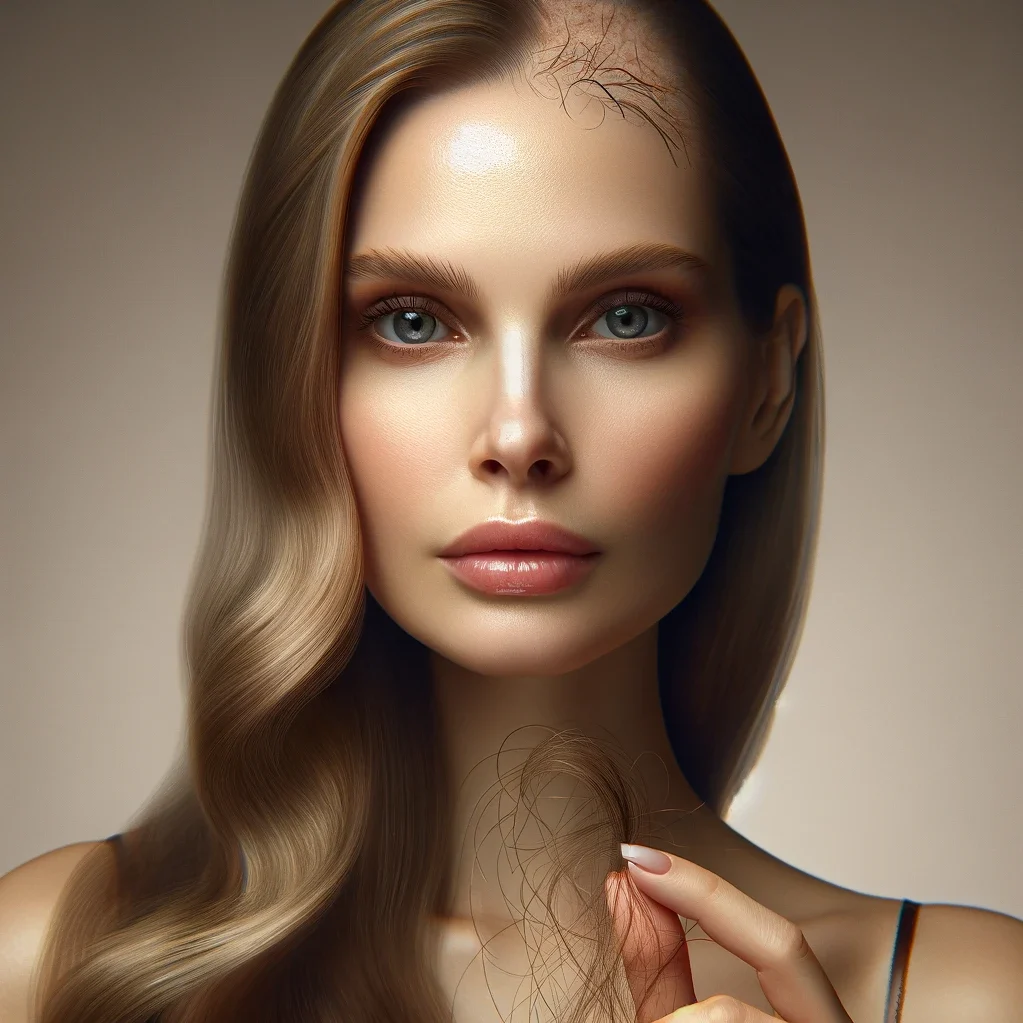
Did you know that female pattern hair loss affects approximately 40% of women by age 50? It’s a common and often distressing condition that can greatly impact a woman’s confidence and self-esteem. While hair loss treatments have traditionally focused on men, there is growing evidence that minoxidil, a popular hair growth solution, may also be effective for women.
Key Takeaways:
- Female pattern hair loss is a prevalent condition that affects 40% of women by age 50.
- Minoxidil, a hair growth solution, has shown promising results in promoting hair growth in women.
- A 48-week study found that 5% topical minoxidil was superior to placebo in improving hair count and scalp coverage.
- Both 5% and 2% concentrations of minoxidil were well tolerated, but 5% minoxidil had a higher incidence of local side effects.
- Although minoxidil is the only FDA-approved treatment for female pattern hair loss, new treatments are being explored.
Safety and Tolerability of Minoxidil in Women
When considering minoxidil as a treatment option for female pattern baldness, it is essential to understand its safety and tolerability in women.
Both concentrations of topical minoxidil, 5% and 2%, were well tolerated by the women in the study. There was no evidence of systemic adverse effects, providing reassurance that minoxidil is a safe choice for women with hair loss concerns.
However, it is worth noting that an increased occurrence of specific side effects was observed with 5% topical minoxidil compared to 2% topical minoxidil and placebo.
Minoxidil Side Effects in Women
Women using 5% topical minoxidil may experience:
- Pruritus (itchiness)
- Local irritation
- Hypertrichosis (increased hair growth)
These side effects are generally localized to the application site and tend to diminish over time. It is important to discuss any concerns or discomfort with a healthcare professional to ensure appropriate management.
Despite these potential side effects, the overall safety profile of minoxidil in women is favorable. It is crucial to weigh the benefits of hair regrowth against the potential risks when considering a treatment plan.
| Side Effect | 5% Topical Minoxidil | 2% Topical Minoxidil | Placebo |
|---|---|---|---|
| Pruritus | Higher occurrence | Lower occurrence | Minimal |
| Local Irritation | Higher occurrence | Lower occurrence | Minimal |
| Hypertrichosis | Higher occurrence | Lower occurrence | Minimal |
Emerging Treatments for Female Pattern Hair Loss
While topical minoxidil remains the only FDA-approved treatment for female pattern hair loss (FPHL), researchers are actively exploring new options to address this common concern. Two potential treatments that have shown promise are oral spironolactone and microneedling.
In recent studies, oral spironolactone has demonstrated effectiveness as an adjunct therapy for FPHL. This medication, originally used to treat high blood pressure and heart failure, may help improve hair growth in women with FPHL. Spironolactone works by reducing the production of androgens, hormones that contribute to hair loss in female patients.
Microneedling, on the other hand, involves the use of a device with tiny needles to create micro-injuries in the scalp. This process stimulates the production of collagen and activates hair follicles, potentially leading to improved hair growth. As an adjunct therapy, microneedling may enhance the effectiveness of topical minoxidil in treating FPHL.
While both oral spironolactone and microneedling show promise as potential remedies for women experiencing hair loss, it is crucial to note that further research is needed to validate their safety and efficacy. These emerging treatments offer hope for women seeking alternative options to promote hair growth and manage FPHL in the future.
FAQ
Does minoxidil work for women?
Yes, minoxidil has been shown to be effective for women with female pattern hair loss. In a 48-week study, 5% topical minoxidil was found to be superior to placebo in promoting hair growth for women.
What is the effectiveness of minoxidil in women?
Both concentrations of topical minoxidil (5% and 2%) have been shown to improve hair count and hair growth/scalp coverage in women with female pattern hair loss. The 5% concentration demonstrated statistical superiority in patient assessment of treatment benefit.
What are the side effects of minoxidil in women?
Some common side effects of topical minoxidil in women include pruritus (itching), local irritation, and hypertrichosis (excessive hair growth). These side effects are more frequently observed with the 5% concentration compared to the 2% concentration and placebo.
Is minoxidil safe for women?
Both concentrations of topical minoxidil (2% and 5%) were well tolerated by the women in the study without evidence of systemic adverse effects. However, local side effects such as itching, irritation, and increased hair growth may occur.
Are there any other treatments for female pattern hair loss?
While topical minoxidil is the only FDA-approved treatment for female pattern hair loss, new treatments are being explored. Oral spironolactone and microneedling have shown promise as effective and well-tolerated options for female pattern hair loss as adjunct therapy, but further research is needed to confirm their efficacy and safety.
What are some female hair growth products?
In addition to minoxidil, there are various female hair growth products available in the market. These products may include supplements containing vitamins and minerals essential for hair health, hair growth serums, and shampoos specifically formulated to promote hair growth.
What are some remedies for women’s hair loss?
Aside from medical treatments like minoxidil, there are natural remedies that may help with women’s hair loss. These remedies can include maintaining a healthy diet, managing stress levels, avoiding excessive heat styling and chemical treatments, maintaining scalp health, and using gentle hair care practices.