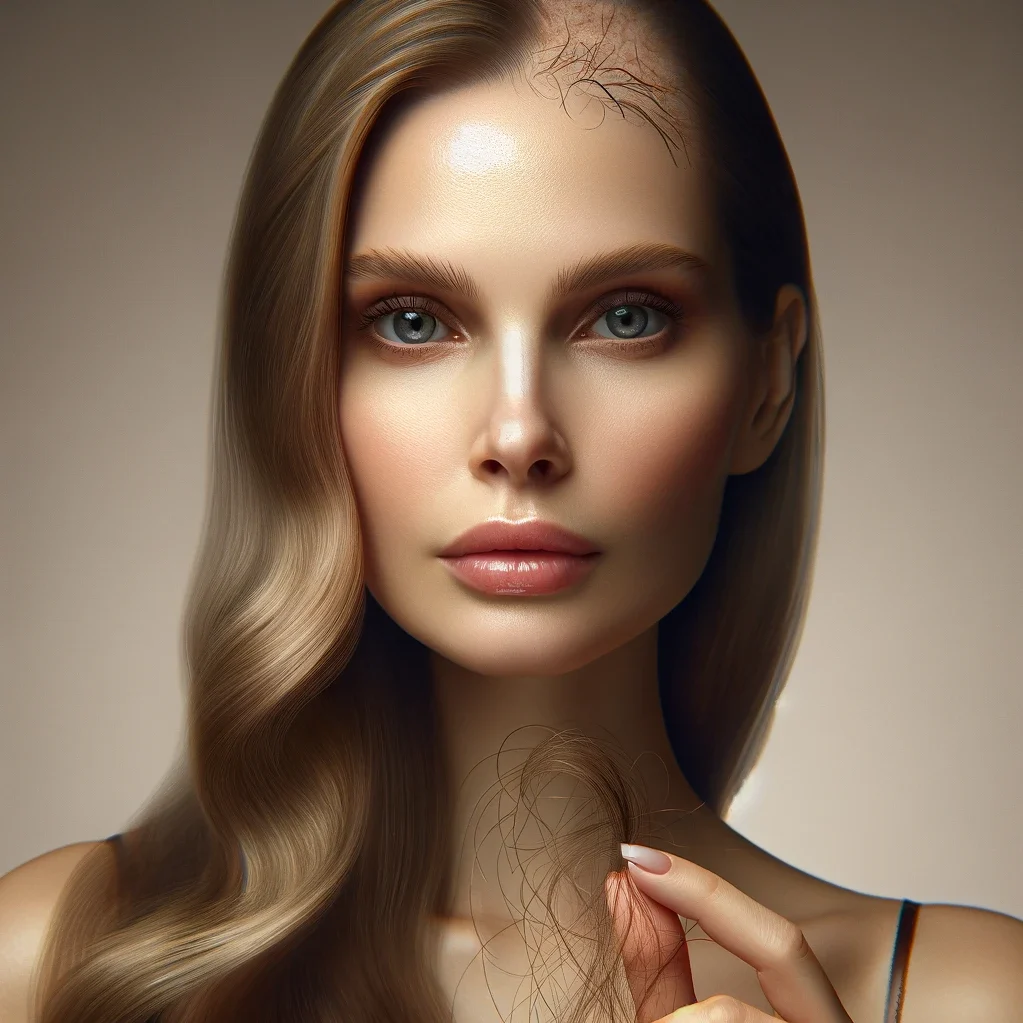

Alopecia, or hair loss, is a common concern among women that can have significant emotional and psychological effects. It can impact self-esteem, body image, and overall well-being. In this article, we will explore the different types of alopecia in women, their causes, and available treatment options.
Female pattern hair loss, also known as androgenetic alopecia, is the most common form of alopecia in women. It is characterized by thinning hair in a defined pattern, typically starting at the crown of the head. Another type, alopecia areata, presents as patchy bald spots on the scalp or other areas of the body. Both these conditions can have a distressing impact on women’s lives.
Key Takeaways:
- Alopecia in women can have significant emotional and psychological effects
- Female pattern hair loss and alopecia areata are the most common types of alopecia in women
- Understanding the causes of alopecia is essential for effective treatment
- Treatment options for alopecia in women include medications, topical treatments, and lifestyle changes
- Managing alopecia involves finding coping strategies and seeking emotional support
Pathophysiology of Alopecia in Women
Hair loss in women can be attributed to abnormalities in the hair growth cycle and damage to the hair follicles. The hair follicle goes through three phases: anagen (growth), catagen (transition), and telogen (resting). During the anagen phase, the hair actively grows, while in the catagen phase, it transitions into a dormant state. The telogen phase is the resting period before the hair falls out and is replaced by a new hair.
In some cases of hair loss, there are abnormalities in the hair growth cycle. This can lead to a disruption in the regular pattern of hair growth and result in excessive shedding or thinning of the hair. Other hair loss disorders are characterized by damaged hair follicles. These abnormalities can be caused by various factors such as genetics, hormonal imbalances, nutritional deficiencies, or certain medical conditions.
One of the most common forms of hair loss in women is androgenetic alopecia. It is mediated by dihydrotestosterone (DHT), an androgen hormone that activates genes involved in shortening the anagen phase and shrinking the hair follicles. Androgenetic alopecia is characterized by a progressive thinning of the hair, typically starting at the crown or the top of the head. Over time, the affected hair follicles become smaller and produce finer hair, eventually leading to hair loss.
In autoimmune hair loss, such as alopecia areata, the immune system mistakenly attacks the hair follicles. This attack leads to inflammation and results in patchy hair loss. The exact cause of autoimmune hair loss is not fully understood, but it is believed to involve a combination of genetic and environmental factors.
Understanding the pathophysiology of hair loss is crucial for diagnosing and treating alopecia in women. By identifying the underlying causes and abnormalities in the hair follicles, healthcare professionals can develop targeted treatment strategies to manage hair loss and promote hair regrowth.
Diagnosing Alopecia in Women
Diagnosing alopecia in women involves a comprehensive approach that includes a detailed history, physical examination, and, in some cases, additional laboratory tests. Understanding the patient’s history of hair loss is crucial to determine the duration, pattern, and associated factors such as shedding or thinning. It is also essential to inquire about any relevant medical conditions or medications that may contribute to hair loss.
History of Hair Loss
The patient’s history should include questions about the onset and progression of hair loss, any triggering events or stressors, and any associated symptoms such as itching or pain. It is important to document any previous treatments or interventions and their effectiveness. Additionally, inquiring about family history can provide valuable insights into genetic predisposition or hereditary patterns of hair loss.
Physical Examination for Hair Loss
The physical examination plays a crucial role in diagnosing alopecia in women. A thorough evaluation of the scalp allows for the identification of inflammation, scarring, or any other visible abnormalities. Assessing the density and distribution of hair helps determine the extent of hair loss. Examining the hair shaft for caliber, length, shape, and fragility provides further clues about the underlying condition.
One simple technique used during the physical examination is the “pull test.” This involves gently pulling on a small bunch of hairs to assess the amount of shedding. A positive pull test, where more than six hairs are extracted, suggests active hair loss. However, it is essential to interpret the results within the context of the patient’s overall presentation.
Laboratory Tests for Hair Loss
In certain cases, laboratory tests or biopsies may be necessary to confirm the diagnosis or evaluate underlying causes of hair loss. These tests can include blood tests to assess hormonal imbalances, nutritional deficiencies, or autoimmune markers. Scalp biopsies may be performed to examine the hair follicles microscopically and identify any specific abnormalities.
The decision to perform laboratory tests or biopsies is based on the clinical judgment of the healthcare provider. These tests are typically reserved for cases where the diagnosis is unclear or when there is a suspected underlying medical condition contributing to hair loss.

Diagnosing alopecia in women requires a stepwise approach, combining a thorough history, physical examination, and if needed, further investigations. By following this systematic process, healthcare providers can accurately identify the cause of hair loss and develop an appropriate treatment plan tailored to each patient’s needs.
Androgenetic Alopecia in Women
Androgenetic alopecia is the most common form of hair loss in both men and women. In women, it typically manifests as diffuse hair thinning, with more pronounced thinning in the frontal and parietal regions. Even severe cases of androgenetic alopecia usually leave a thin fringe of hair in the frontal area.
Women with androgenetic alopecia do not have higher levels of circulating androgens but have higher levels of 5α-reductase and more androgen receptors. Most women with androgenetic alopecia have normal hormonal levels, but an endocrine evaluation may be warranted in those with irregular menses, abrupt hair loss, hirsutism, or acne recurrence.
Understanding the patterns of hair loss in women with androgenetic alopecia is crucial for accurate diagnosis and appropriate treatment. The Norwood-Hamilton classification system, commonly used to assess male pattern hair loss, can also be used to describe hair thinning in women with androgenetic alopecia. However, modifications have been made to account for the unique hair configuration in women.
To determine the appropriate management approach for androgenetic alopecia in women, a careful evaluation of the hair thinning pattern, hair quality, and associated symptoms is essential. In some cases, a hormonal work-up may be recommended to rule out any underlying endocrine disorders that could contribute to hair loss.
| Feature | Androgenetic Alopecia in Women |
|---|---|
| Hair Loss Pattern | Diffuse hair thinning, more pronounced in the frontal and parietal regions |
| Androgen Levels | Normal circulating androgens |
| Hormonal Evaluation | Recommended in cases of irregular menses, abrupt hair loss, hirsutism, or acne recurrence |
Developing a comprehensive treatment plan for androgenetic alopecia in women involves a combination of medical and non-medical interventions. Topical minoxidil, available in different strengths, is the preferred treatment option due to its effectiveness in increasing hair count and stimulating hair regrowth. Other treatments may include exogenous estrogen, spironolactone, finasteride, or tretinoin. Hair transplantation and cosmetic hairstyling options can also be considered to enhance hair density and improve overall appearance.
By understanding the unique characteristics of androgenetic alopecia in women and conducting a thorough hormonal work-up when necessary, healthcare professionals can provide tailored treatment plans that address individual needs and promote optimal hair health.
Treating Androgenetic Alopecia in Women
The preferred treatment for androgenetic alopecia in women is topically applied 2 percent minoxidil. Minoxidil is a medication that can help counteract hair loss and promote hair regrowth. It works by increasing the length of time hair follicles spend in the growth phase, stimulating dormant follicles, and enlarging the follicles. Minoxidil has been shown to effectively increase hair count and improve hair density in women with androgenetic alopecia.
However, it’s important to note that the effectiveness of minoxidil can vary from person to person. Some women may experience significant regrowth and improvement in hair density, while others may see more modest results. It’s recommended to use minoxidil consistently for several months to evaluate its effectiveness.
One of the most common side effects of minoxidil is hypertrichosis, which is the excessive growth of hair in areas where it is applied. This side effect is usually temporary and can be managed cosmetically if necessary. Other less common side effects may include scalp irritation or dryness.
It’s worth mentioning that minoxidil is not the only treatment option for androgenetic alopecia in women. There are alternative treatments available that can be considered in consultation with a healthcare professional. These may include:
- Exogenous estrogen: This hormone therapy may be an option for women with androgenetic alopecia, as estrogen can have a positive effect on hair growth.
- Spironolactone: This medication, originally designed to treat high blood pressure, has anti-androgen effects and can help reduce hair loss in women.
- Finasteride: While commonly used to treat male pattern baldness, finasteride may also be prescribed to women with androgenetic alopecia under certain circumstances.
- Tretinoin: This topical medication can help improve the absorption of minoxidil and enhance its effectiveness.
It’s important to discuss these alternative treatment options with a healthcare professional to determine the most appropriate course of action based on individual needs and circumstances.
Comparison of Treatment Options for Androgenetic Alopecia in Women
| Treatment Option | Effectiveness | Side Effects |
|---|---|---|
| Minoxidil | Varies; moderate to good hair regrowth in many women | Hypertrichosis (excessive hair growth), scalp irritation or dryness |
| Exogenous Estrogen | Can have a positive effect on hair growth | Potential side effects associated with hormone therapy |
| Spironolactone | Reduces hair loss by blocking androgen receptors | Potential side effects include dizziness, breast tenderness, and low blood pressure |
| Finasteride | May be effective in select cases | Potential side effects include decreased libido and breast tenderness |
| Tretinoin | Enhances the effectiveness of minoxidil | Potential side effects include skin irritation and dryness |
Note: The decision to pursue alternative treatments should be made in consultation with a healthcare professional, taking into account individual needs, medical history, and potential risks and benefits.

When considering treatment options for androgenetic alopecia, it’s important to weigh the potential benefits against the possible side effects and discuss any concerns with a healthcare professional. Additionally, hair transplantation and cosmetic hairstyling options can be considered for those seeking more extensive or immediate results.
Remember, finding the most suitable treatment approach for androgenetic alopecia may require some trial and error, as individual responses can vary. It’s essential to consult with a healthcare professional who specializes in hair loss to develop a personalized treatment plan.
Understanding Alopecia Areata in Women
Alopecia areata is a type of autoimmune hair loss that can affect both men and women equally. It is characterized by the development of patchy bald spots on the scalp or other areas of the body. The exact cause of alopecia areata is not fully understood, but it is believed to involve a combination of genetic and environmental factors.
When it comes to alopecia areata in women, hair loss typically presents as round or oval patches without any rash or scarring. These patches may vary in size and can appear anywhere on the body, although they most commonly occur on the scalp. It’s important to note that alopecia areata does not cause any physical discomfort or pain.
One unique characteristic of alopecia areata is the presence of “exclamation point” hairs. These hairs are narrower at the base than at the tip and can be found at the edges of the bald patches. Nail changes, such as ridges and pits, can also occur in some individuals with alopecia areata.
Although the exact mechanisms behind alopecia areata are not fully understood, it is known to be an autoimmune condition. In autoimmune diseases, the immune system mistakenly attacks healthy cells and tissues within the body. In the case of alopecia areata, the immune system targets the hair follicles, leading to hair loss.
While there is no cure for alopecia areata, there are treatment options available to help promote hair regrowth. These treatments include corticosteroid injections, topical corticosteroids, topical immunotherapy, minoxidil, and systemic immunosuppressive medications. The choice of treatment depends on the extent and severity of the hair loss.
Nail Changes in Alopecia Areata
In addition to hair loss, nail changes can occur in some individuals with alopecia areata. These changes may manifest as ridges, pitting, or white spots on the nails. Nail abnormalities tend to occur more frequently in individuals with more severe forms of alopecia areata.
| Nail Changes in Alopecia Areata | Description |
|---|---|
| Ridges | Vertical or horizontal lines on the nails |
| Pitting | Small depressions or dents on the nails |
| White spots | Small white patches on the nails |
Alopecia areata can have a profound impact on the emotional well-being and self-esteem of individuals, including women. It is important to provide support and understanding to those affected by this condition and to raise awareness about the available treatment options.
Treatment and Coping Strategies for Alopecia in Women
While there may not be a cure for alopecia areata, several treatment options can help promote hair regrowth and manage the condition. The choice of treatment depends on the extent and severity of the hair loss.
Treatments for Alopecia Areata
Some of the treatments for alopecia areata include:
- Corticosteroid injections: These are often used for localized hair loss and help to reduce inflammation and halt hair loss.
- Topical corticosteroids: Creams or ointments containing corticosteroids can be applied directly to the affected areas to stimulate hair regrowth.
- Topical immunotherapy: This involves the application of chemicals to the scalp to provoke an allergic reaction and stimulate hair regrowth.
- Minoxidil: This over-the-counter medication is FDA-approved for the treatment of hair loss and can promote hair regrowth.
- Systemic immunosuppressive medications: In severe cases of alopecia areata, medications that suppress the immune system may be prescribed to help regrow hair.
It’s important to consult with a healthcare professional to determine the most appropriate treatment option for individual needs.
Managing Hair Loss in Women
Alongside the medical treatments, there are various coping strategies that can help women manage hair loss:
- Using wigs or hairpieces: Wearing a wig or hairpiece can help restore confidence, allowing individuals to maintain their desired appearance.
- Exploring different hairstyles: Experimenting with different hairstyles, including shorter cuts or adding volume with styling products, can help conceal hair loss and create a fresh look.
- Seeking support from support groups or counseling: Joining support groups or seeking professional counseling can provide emotional support, helping individuals cope with the impact of hair loss.
It’s crucial to address the emotional aspects of hair loss and take steps to boost self-esteem and body image. Remember, everyone’s journey is unique, and finding the right strategies that work for each individual is key.
Conclusion
Alopecia in women can have a profound impact on their emotional well-being, with decreased self-esteem and body image concerns being common. However, by understanding the causes and treatment options available, women can effectively manage this condition and regain their confidence.
Androgenetic alopecia, the most prevalent form of hair loss in women, can be treated with minoxidil, a preferred medication that has shown promising results in increasing hair count and stimulating regrowth. Furthermore, for women experiencing alopecia areata, a type of autoimmune hair loss characterized by patchy bald spots, various treatment options including corticosteroid injections and topical medications are available.
Coping with hair loss is a personal journey, and it is essential for each individual to find strategies that work best for them. This may include using wigs or exploring different hairstyles to enhance their appearance, or seeking emotional support through support groups or counseling to address the psychological impact of hair loss. With the right support and resources, women living with alopecia can lead confident and comfortable lives.
FAQ
What causes alopecia in women?
Alopecia in women can be caused by abnormalities in the hair growth cycle and damage to the hair follicles. The most common form of hair loss in women is androgenetic alopecia, which is mediated by the hormone dihydrotestosterone.
How is alopecia in women diagnosed?
Diagnosing alopecia in women involves taking a careful history of hair loss, conducting a physical examination to assess the scalp and hair, and sometimes performing laboratory tests or biopsies.
What is androgenetic alopecia and how does it affect women?
Androgenetic alopecia is the most common form of hair loss in women. It typically manifests as diffuse hair thinning, with more pronounced thinning in the frontal and parietal regions. It is caused by the hormone dihydrotestosterone, which shortens the growth phase of the hair follicles and shrinks them.
What treatments are available for androgenetic alopecia in women?
The preferred treatment for androgenetic alopecia in women is minoxidil, which has been shown to increase hair count and stimulate hair regrowth. Other treatments include exogenous estrogen, spironolactone, finasteride, and tretinoin.
What is alopecia areata and how does it affect women?
Alopecia areata is a type of autoimmune hair loss that presents as patchy bald spots on the scalp or other areas of the body. It can occur at any age and affects both men and women equally. Nail changes, such as ridges and pits, can also occur in some individuals with alopecia areata.
Can alopecia areata be cured?
There is currently no cure for alopecia areata, but there are treatment options available to help promote hair regrowth. These include corticosteroid injections, topical corticosteroids, topical immunotherapy, minoxidil, and systemic immunosuppressive medications.
How can women manage the emotional impact of alopecia?
Coping with alopecia involves finding strategies that work for each individual. This can include using wigs or hairpieces, exploring different hairstyles, seeking support from support groups or counseling, and addressing body image concerns to boost self-esteem.