

Are you a woman experiencing hair loss and looking for an effective solution? Scalp reduction surgery for females may be the answer you’ve been seeking. This surgical hair restoration procedure offers numerous benefits for women with hair loss related to age or genetics.
Scalp reduction surgery involves the removal of bald areas on the scalp and the movement of healthy skin to cover these areas, resulting in improved hair density. It is particularly recommended for women with healthy scalp skin and significant hair on the sides and back of the head.
Before considering scalp reduction surgery, it is important to note that it may not be suitable for individuals with multiple small bald patches or temporary hair loss. Additionally, it is recommended to try hair loss medications, such as minoxidil or finasteride, before opting for surgery.
During the recovery period, which usually lasts several weeks, some hair may fall out, but new hair growth may also occur. It is important to note that scalp reduction surgery carries certain risks, including infection, scarring, and temporary hair loss.
Key Takeaways:
- Scalp reduction surgery is a surgical hair restoration procedure for women with hair loss related to age or genetics.
- The procedure involves removing bald areas on the scalp and moving healthy skin to cover these areas, resulting in improved hair density.
- Scalp reduction surgery is not suitable for individuals with multiple small bald patches or temporary hair loss.
- Recovery from scalp reduction surgery can take several weeks, during which some hair may fall out and new hair growth may occur.
- Risks associated with scalp reduction surgery include infection, scarring, and temporary hair loss.
What is Scalp Reduction Surgery?
Scalp reduction surgery is a cosmetic procedure used to treat hair loss, specifically top-hair baldness. This innovative surgery involves removing skin from the sides of the head and suturing it together to cover the bald area on the top of the head, resulting in a more natural-looking hairline.
This hair loss treatment is an excellent option for individuals who have healthy scalp skin and significant hair on the sides and back of the head. It is particularly effective in cases of hair loss caused by age or genetics. However, it is important to note that scalp reduction surgery is not recommended for those with multiple small bald patches or those experiencing temporary hair loss due to factors such as stress or hormonal changes.
During the procedure, which is typically performed under general anesthesia, the surgeon carefully removes the bald part of the scalp and skillfully stretches and sutures the surrounding hair-bearing skin to cover the removed area. The goal is to achieve a balanced and natural-looking result that enhances the patient’s overall appearance.
| Advantages of Scalp Reduction Surgery | Considerations |
|---|---|
|
|
Following scalp reduction surgery, a period of recovery is essential for the body to heal properly. It is normal for some hair to fall out initially due to the surgical manipulation of the scalp. However, new hair growth typically begins within six weeks, giving patients renewed confidence and a rejuvenated look.
Note: As with any surgery, there are risks and potential complications associated with scalp reduction surgery. It is essential to discuss these with your surgeon and have a thorough understanding of the procedure before making a decision.
Candidacy for Scalp Reduction Surgery
Not everyone is a suitable candidate for scalp reduction surgery. Before considering surgery, it is typically recommended to start with hair loss medications such as minoxidil or finasteride. These medications can help slow down or halt further hair loss and promote hair growth.
Scalp reduction surgery is most effective for individuals who meet certain criteria:
- Healthy scalp skin: Candidates for scalp reduction surgery should have healthy scalp skin that is capable of healing properly after the procedure.
- Significant hair on the sides and back of the head: The surgery involves moving hair-bearing skin to cover bald areas, so having enough hair on the sides and back of the head is crucial.
- Hair loss related to age or genetics: Scalp reduction surgery is typically recommended for individuals with hair loss that is attributable to aging or genetic factors.
However, scalp reduction surgery is not suitable for those with multiple small bald patches or temporary hair loss caused by factors such as hormonal changes, stress, or certain medical conditions. It is important to consult with a healthcare professional to determine the underlying causes of hair loss and to explore non-surgical options before considering surgery.
Medical Evaluation for Candidacy
A thorough evaluation by a doctor or a qualified hair restoration specialist is necessary to determine if scalp reduction surgery is the right option. During the evaluation, the healthcare professional will assess the individual’s hair loss causes, overall health, and the condition of the scalp. Diagnostic tests, such as blood tests or scalp biopsies, may be performed to rule out any underlying conditions causing hair loss.
The medical evaluation will also involve discussing the potential risks, benefits, and expected outcomes of scalp reduction surgery. It is essential to have realistic expectations and understand that the surgery may not achieve the desired outcome for everyone. Open communication with the healthcare professional is crucial in making an informed decision about scalp reduction surgery or exploring alternative treatments.
Remember, scalp reduction surgery is a permanent decision, and it is important to weigh the potential benefits against the risks and any other treatment options available.

| Eligibility Criteria for Scalp Reduction Surgery | Not Eligible for Scalp Reduction Surgery |
|---|---|
| Healthy scalp skin | Multiple small bald patches |
| Significant hair on the sides and back of the head | Temporary hair loss |
| Hair loss related to age or genetics | Hair loss caused by factors other than age or genetics |
The Scalp Reduction Surgery Procedure
Scalp reduction surgery is an outpatient procedure that allows patients to return home on the same day. The procedure begins with the removal of the bald area of the scalp. Then, the surrounding hair-bearing skin is stretched and sutured to cover the removed area, resulting in improved hair density.
During the surgery recovery period, it is important to rest and avoid engaging in major physical activities for approximately three weeks. This allows the body to heal and promotes successful hair growth in the treated area. Initially, the hair in the treated area may appear slightly different and thinner, and some hair may fall out. However, new hair growth typically starts within six weeks.
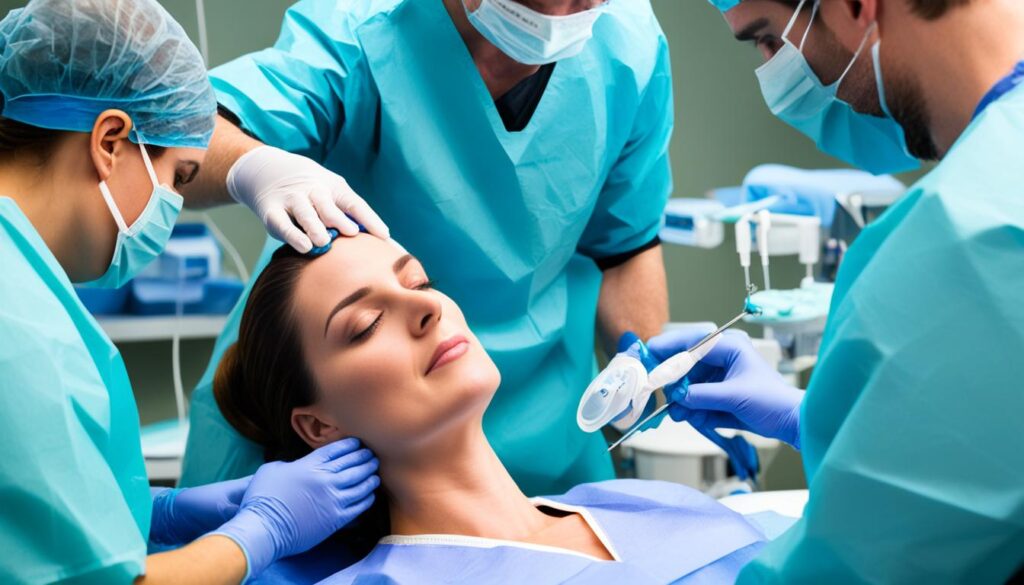
Recovering from scalp reduction surgery requires patience and following post-operative care instructions provided by your surgeon. It is essential to maintain good scalp hygiene and protect the treated area from excessive sunlight or trauma during the recovery period.
Risks and Complications of Scalp Reduction Surgery
Scalp reduction surgery, like any surgical procedure, comes with its own set of risks and potential complications. It is important to be aware of these before making a decision. Here are some of the risks associated with scalp reduction surgery:
- Infection: There is a risk of developing an infection after scalp reduction surgery. It is crucial to follow post-operative care instructions and keep the surgical site clean to minimize this risk.
- Tingling Sensations: Some patients may experience tingling sensations on the scalp following the surgery. This is usually temporary and will subside as the healing process progresses.
- Swelling: Swelling is a common side effect after scalp reduction surgery. It is important to keep the head elevated and apply cold compresses as recommended by the surgeon to reduce swelling.
- Numbness: Numbness in the scalp can occur after the surgery. This is typically temporary but may persist for a few weeks or months while the body heals.
- Temporary Hair Loss: It is not uncommon to experience temporary hair loss in the treated area after scalp reduction surgery. This is a normal part of the healing process, and new hair growth will eventually occur.
- Bleeding around the Stretched Skin Flaps: In some cases, bleeding may occur around the stretched skin flaps. This should be reported to the surgeon immediately for proper evaluation and treatment.
- Scarring: Scar formation is a possibility after scalp reduction surgery. However, with proper wound care and following the surgeon’s instructions, the scars can fade over time.
- Possibility of Skin Not Taking to New Position: There is a slight possibility that the skin may not take to its new position on the scalp as expected. In such cases, additional surgery may be required to correct the issue.
If you experience excessive swelling, redness, or oozing on the scalp after scalp reduction surgery, it is important to seek immediate medical attention. These could be signs of complications that require prompt evaluation and treatment.
It is essential to have realistic expectations regarding the results of scalp reduction surgery. Discuss any concerns or risks with your doctor before proceeding to ensure that you are well-informed and make an educated decision.
| Risks of Scalp Reduction Surgery | Complications of Scalp Reduction Surgery |
|---|---|
| Infection | Tingling Sensations |
| Swelling | Numbness |
| Temporary Hair Loss | Bleeding around the Stretched Skin Flaps |
| Scarring | Possibility of Skin Not Taking to New Position |
Alternatives to Scalp Reduction Surgery
While scalp reduction surgery can be an effective option for hair loss treatment, there are alternative methods to consider. Non-surgical options offer a range of treatments that can help address hair loss without undergoing a surgical procedure. These alternatives provide individuals with different choices depending on their needs and preferences.
Non-surgical Hair Loss Treatments
One popular non-surgical option is the use of medications specifically designed to combat hair loss. Medications like minoxidil and finasteride can help slow down hair loss and stimulate new hair growth. These medications are available in both topical and oral forms and can be used as part of a comprehensive hair loss treatment plan.
Another non-surgical alternative is the use of topical treatments. These treatments often contain ingredients such as vitamins, minerals, and natural extracts that nourish the scalp and promote healthy hair growth. Topical treatments can be applied directly to the scalp and are typically used in conjunction with other hair loss treatments.
Laser therapy is another non-surgical option that uses low-level laser light to stimulate hair follicles and promote hair growth. This treatment is believed to increase blood flow to the scalp, improving the delivery of nutrients and oxygen to the hair follicles. Laser therapy can be done at home using handheld devices or in-office with the guidance of a healthcare professional.
Hair systems, such as wigs, hairpieces, and hair extensions, are also viable alternatives to scalp reduction surgery. These systems offer individuals the ability to change their hairstyle, cover thinning areas, or create the appearance of fuller hair. Hair systems provide immediate results without the need for surgery or long-term commitment.
Hair Transplantation
For individuals seeking a surgical solution, hair transplantation is a well-established alternative to scalp reduction surgery. Hair transplantation involves transplanting healthy hair follicles from one area of the scalp (donor area) to the balding areas (recipient area). This procedure allows for natural hair regrowth in the treated areas, providing long-lasting results.
There are different techniques available for hair transplantation, including follicular unit transplantation (FUT) and follicular unit extraction (FUE). FUT involves removing a strip of scalp from the donor area, while FUE involves extracting individual hair follicles. Both techniques offer reliable results and minimal scarring.
Consulting with a qualified medical professional is essential to determine the most suitable treatment for individual needs. They can assess the extent of hair loss, discuss treatment options, and provide personalized recommendations based on the patient’s goals and preferences.
Choosing the right alternative to scalp reduction surgery is a decision that should be made after careful consideration and evaluation of individual circumstances. Non-surgical options like medications, topical treatments, laser therapy, and hair systems can provide effective solutions for managing hair loss. For those seeking surgical intervention, hair transplantation offers a proven method for restoring hair density and achieving natural-looking results.
Conclusion
Scalp reduction surgery is a viable option for females seeking to treat hair loss and improve hair density. This procedure offers various benefits, including enhanced aesthetic appearance, natural-looking results, a reduced need for hair transplants, and a shorter recovery time compared to other hair restoration procedures.
However, it is crucial to understand and consider the potential risks and complications associated with scalp reduction surgery. As with any surgical procedure, there is a possibility of infection, scarring, temporary hair loss, and other side effects. Realistic expectations are key to a successful outcome.
Before making a decision, it is advisable to explore alternative treatments for hair loss. Non-surgical options such as medications, topical treatments, laser therapy, and hair systems can provide viable alternatives. Additionally, hair transplantation, which involves transferring hair follicles from one area of the scalp to the balding areas, may be considered.
Ultimately, consulting with a qualified surgeon is essential to determine the most appropriate course of action for individuals experiencing hair loss. They can provide personalized advice, evaluate candidacy for scalp reduction surgery, explain the potential risks and benefits, and consider alternative treatment options. By seeking expert guidance, individuals can make informed decisions to address their specific hair loss concerns.
FAQ
What is scalp reduction surgery?
Scalp reduction surgery is a procedure used to treat hair loss by removing skin from the sides of the head and stitching it together to cover the bald area on the top of the head.
Who is a suitable candidate for scalp reduction surgery?
Scalp reduction surgery is recommended for individuals with healthy scalp skin, significant hair on the sides and back of the head, and hair loss related to age or genetics. It is not suitable for those with multiple small bald patches or temporary hair loss.
What is the recovery process like after scalp reduction surgery?
Recovery from scalp reduction surgery requires a period of rest and avoidance of major physical activity for about three weeks. Hair in the treated area may look slightly different and thinner initially, and some hair may fall out. It can take up to six weeks for new hair to start growing.
What are the risks and complications associated with scalp reduction surgery?
Risks and complications can include infection, tingling sensations, swelling, numbness, temporary hair loss, bleeding around the stretched skin flaps, scarring, and the possibility of the skin not taking to its new position on the scalp.
Are there alternatives to scalp reduction surgery for hair loss treatment?
Yes, there are alternatives such as medications, topical treatments, laser therapy, and hair transplantation. Each alternative has its own advantages and considerations, and it is important to consult with a qualified medical professional to determine the most suitable treatment.