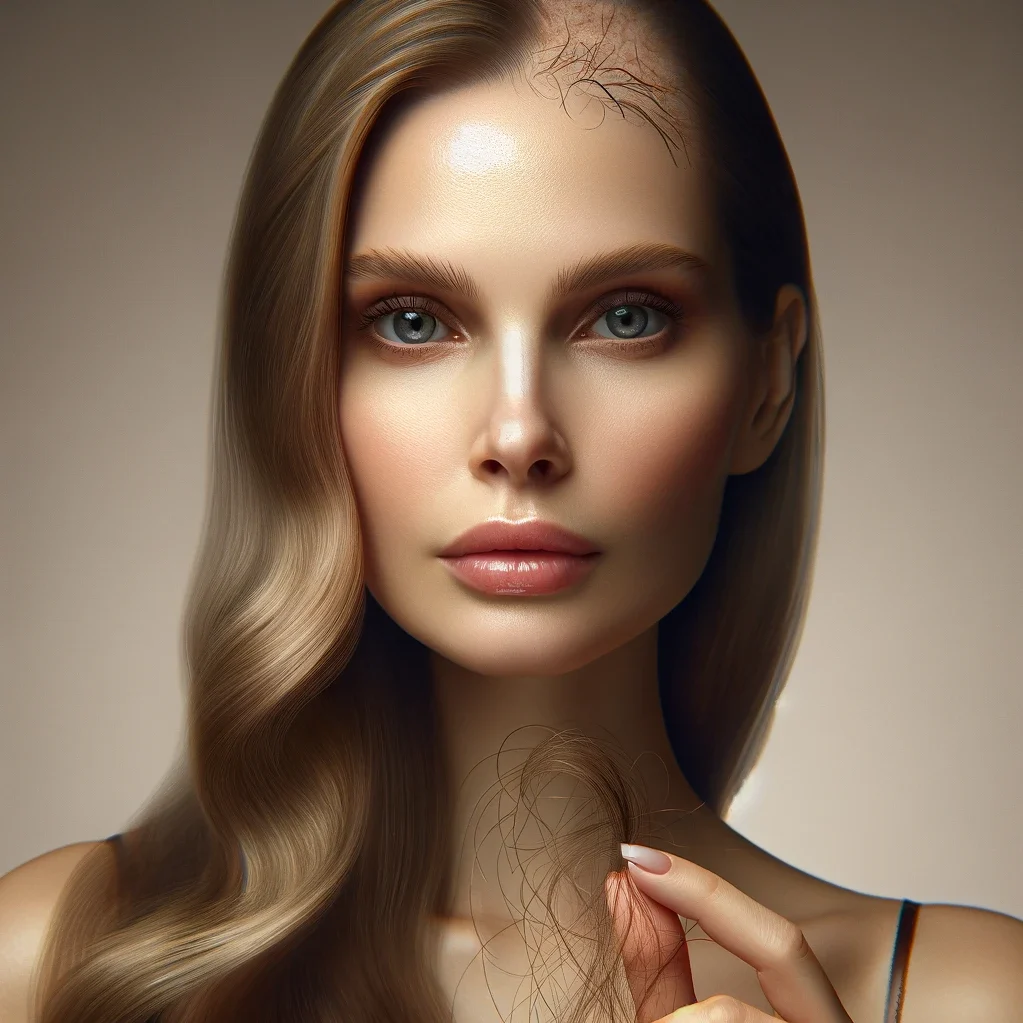
Welcome to our article on alopecia androgenetica female, a common form of hair loss in women. Hair loss can be a distressing experience for many women, affecting their self-confidence and overall well-being. In this article, we will explore the causes, diagnosis, and treatment options for female pattern hair loss, as well as provide valuable insights and solutions for women experiencing hair thinning and baldness.
Female pattern hair loss, also known as alopecia androgenetica female or female pattern baldness, is characterized by a progressive thinning of the hair, typically in the central, frontal, and parietal scalp regions. It is the most common form of hair loss in women and can have a significant impact on their psychological and social functioning.
Early diagnosis and treatment are crucial in preventing further hair loss and promoting hair restoration for women. Understanding the causes and available treatment options can empower women to take control of their hair loss journey and find effective remedies for their individual needs.
Key Takeaways:
- Alopecia androgenetica female is the most common form of hair loss in women.
- It can cause psychological distress and impaired social functioning.
- Diagnosis is usually based on medical history and physical examination, with scalp biopsy rarely necessary.
- Treatment options include oral antiandrogen therapies, topical minoxidil, hair systems, and surgery for severe cases.
- Early intervention and personalized treatment plans are essential for managing female pattern hair loss effectively.
Understanding Female Pattern Hair Loss
Female pattern hair loss (FPHL), also known as androgenetic alopecia, is a common condition that affects women. It is characterized by the progressive miniaturization of hair follicles, leading to thinning hair, especially in the central, frontal, and parietal scalp regions.
In FPHL, hair loss can be categorized into different stages based on the severity of thinning. The exact cause of FPHL is not well understood, but both genetic and hormonal factors are believed to play a role. Androgens, such as testosterone, have been associated with FPHL, but it is important to note that other nonandrogenic factors may also contribute to hair loss.
When it comes to treating FPHL, several options are available. One common medication is finasteride, which is an oral antiandrogen therapy that can help slow down hair loss and promote regrowth. Another popular treatment is minoxidil, a topical solution that stimulates hair growth and can be easily applied at home.
Finasteride and minoxidil are both effective in reducing hair loss and improving hair density in women with FPHL. These treatments should be used consistently and as directed to achieve the best results.
Platelet-rich plasma (PRP) therapy is another option for women with FPHL. It involves drawing a small amount of blood from the patient, processing it to obtain a concentrated platelet-rich plasma solution, and injecting it into the scalp to stimulate hair growth. PRP therapy is a relatively new and promising treatment modality for FPHL, although more research is needed to fully understand its effectiveness.
To summarize, understanding female pattern hair loss is essential for finding the right treatment approach. FPHL is characterized by the progressive miniaturization of hair follicles, and both genetic and hormonal factors are believed to contribute to its development. Finasteride, minoxidil, and platelet-rich plasma therapy are some of the available treatment options for women with FPHL.
| Treatment | Description |
|---|---|
| Finasteride | An oral antiandrogen therapy that can help slow down hair loss and promote regrowth. |
| Minoxidil | A topical solution that stimulates hair growth when applied to the scalp. |
| Platelet-rich plasma (PRP) therapy | A procedure that involves injecting concentrated platelet-rich plasma into the scalp to stimulate hair growth. |
Clinical Manifestations of Female Pattern Hair Loss
Female pattern hair loss can present in various ways, with specific patterns and scales used to assess the extent of hair loss. The Ludwig scale and Sinclair scale are commonly employed in the evaluation of women with FPHL.
The Ludwig scale focuses on the thinning that occurs in the upper biparietal and vertex regions. It categorizes the severity of hair loss into three stages: mild, moderate, and severe. This scale provides a standardized way to assess the progression of FPHL.
The Sinclair scale, on the other hand, categorizes the intensity of hair loss based on the normal scalp. It includes stages 1-8 and evaluates the thinning of hair strands to determine the extent of FPHL.
Ludwig Scale
| Stage | Description |
|---|---|
| Stage I | Mild thinning of hair |
| Stage II | Noticeable decrease in hair volume |
| Stage III | Pervasive hair thinning across the top of the scalp |
Sinclair Scale
| Stage | Description |
|---|---|
| Stage 1 | Normal hair density |
| Stage 2 | Slight widening of the natural parting line |
| Stage 3 | Significant decrease in hair density |
| Stage 4 | Visible scalp through thinning hair |
In FPHL, hair loss typically occurs in a specific pattern characterized by thinning in the upper bitemporal region and vertex with frontal accentuation. This leads to the formation of a triangular or Christmas tree pattern. Women may also experience a deep recession of the frontal-temporal hairline, resulting in true vertex balding.
Prevalence and Age of Onset of Female Pattern Hair Loss
The prevalence of female pattern hair loss (FPHL) varies among different population groups. In healthy women, the prevalence ranges from approximately 6% to 38%. As women age, the frequency of hair loss tends to increase, making FPHL a common concern among older individuals.
FPHL typically begins during the reproductive years, which is later compared to men. The onset of FPHL is more commonly observed in women during their late 20s to 40s. It is important to note that severe cases of FPHL during puberty are rare, but there is a higher demand for treatment among women in their reproductive years.
By the age of 29, about 12% of women develop clinically detectable FPHL. As women continue to age, the prevalence of FPHL increases significantly. By the age of 79, more than 50% of women experience some degree of FPHL.
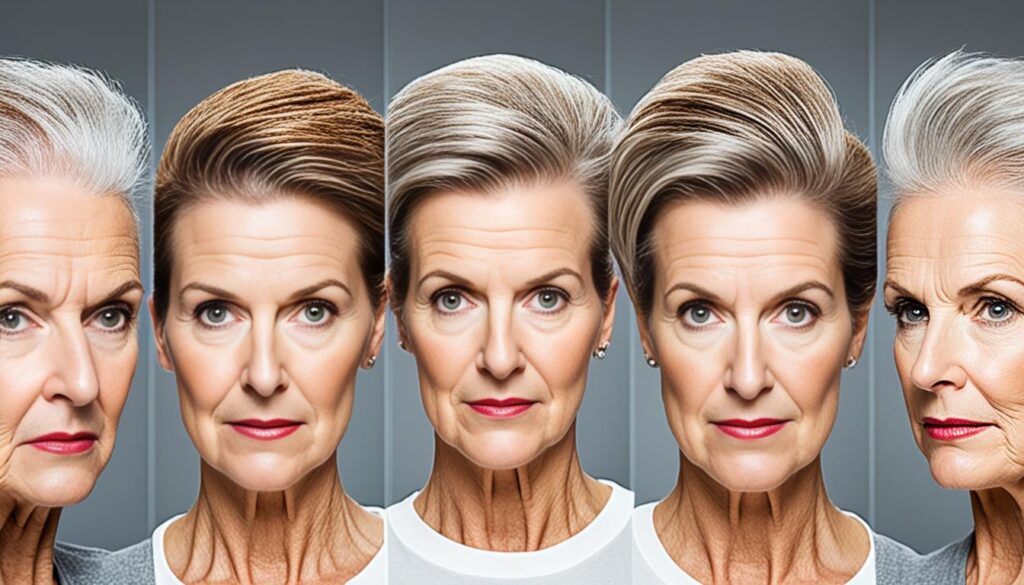
This image provides a visual representation of the prevalence of FPHL and the age of onset in women. It highlights the gradual increase in hair loss as women grow older and emphasizes the importance of early detection and intervention.
| Age | Prevalence of FPHL |
|---|---|
| 29 | 12% |
| 79 | More than 50% |
The table above further illustrates the prevalence of FPHL at the age of 29 and 79. It emphasizes the significant increase in hair loss among women as they progress through different stages of life.
Causes and Genetics of Female Pattern Hair Loss
The exact causes of female pattern hair loss (FPHL) are not completely understood. However, research suggests that genetic predisposition and androgen-independent mechanisms may contribute to the development of FPHL. While androgens, such as testosterone, are known to play a role in hair loss, some women with FPHL have normal androgen levels, indicating that genetic factors may allow normal levels of circulating androgens to affect hair follicles.
One study found that lower ferritin levels, which indicate iron deficiency, were associated with FPHL in some patients. Conversely, higher levels of ferritin were linked to an improved response to antiandrogen therapy, suggesting a potential link between iron status and hair loss in women.
FPHL is also associated with certain comorbidities. For instance, polycystic ovarian syndrome (PCOS), a hormonal disorder characterized by enlarged ovaries and irregular menstruation, has been found to be commonly present in women with FPHL. Metabolic syndrome, a cluster of conditions including high blood pressure, high blood sugar, excess body fat around the waist, and abnormal cholesterol levels, is also associated with FPHL.
Although further research is needed to fully understand the causes and genetic factors contributing to FPHL, these findings highlight the complex nature of female pattern hair loss and the interplay between genetics, hormones, and other health conditions.

Related Studies:
A study published in the Journal of Dermatological Science found that genetics play a significant role in the development of female pattern hair loss. The study analyzed the DNA of women with FPHL and identified certain genetic variants associated with increased susceptibility to hair loss.
Key Takeaways:
- Genetic predisposition and androgen-independent mechanisms may contribute to the development of female pattern hair loss
- FPHL can occur in women with normal androgen levels, suggesting a genetic predisposition that allows normal levels of circulating androgens to affect hair follicles
- Lower ferritin levels have been observed in some patients with FPHL, while higher ferritin levels may improve the response to antiandrogen therapy
- FPHL is associated with comorbidities such as polycystic ovarian syndrome and metabolic syndrome
- Further research is needed to fully understand the causes and genetic factors contributing to FPHL
Diagnosis and Treatment Options for Female Pattern Hair Loss
Diagnosing female pattern hair loss (FPHL) involves ruling out other possible causes of hair loss and carefully evaluating the appearance and pattern of hair loss. In some cases, a scalp biopsy or blood tests may be recommended by a healthcare professional to confirm the diagnosis.
Once FPHL is diagnosed, various treatment options are available to help manage and potentially slow down hair loss. The most commonly used treatment for FPHL is minoxidil, which is an FDA-approved medication for female pattern baldness. Minoxidil is applied topically to the scalp and helps stimulate hair growth.
Another medication frequently used in the treatment of FPHL is spironolactone, which is an oral antiandrogen. Spironolactone works by reducing the effects of androgens on the hair follicles, helping to slow down hair loss and promote hair regrowth.
In some cases, other medications such as finasteride and birth control pills may also be prescribed as part of the treatment plan for FPHL. Finasteride is an oral medication that helps block the conversion of testosterone to dihydrotestosterone (DHT), a hormone that can contribute to hair loss. Birth control pills containing antiandrogenic properties may also be prescribed to help regulate hormone levels and prevent further hair loss.
In more severe cases of FPHL where medical treatments are ineffective or when substantial cosmetic improvement is desired, hair transplant surgery may be considered. Hair transplant involves transferring healthy hair follicles from other areas of the body to the thinning or balding areas of the scalp, resulting in more natural hair growth.
It is important to consult with a qualified healthcare professional to discuss the diagnosis and treatment options available for FPHL. They will be able to provide personalized recommendations based on individual circumstances and help determine the most suitable course of action.
Treatment Options for Female Pattern Hair Loss
| Treatment | Description |
|---|---|
| Minoxidil | Topical medication applied to the scalp to stimulate hair growth |
| Spironolactone | Oral antiandrogen medication that reduces the effects of androgens on hair follicles |
| Finasteride | Oral medication that blocks the conversion of testosterone to DHT |
| Birth control pills | Contains antiandrogenic properties to regulate hormone levels |
| Hair transplant | Surgical procedure to transplant hair follicles from other areas of the body to the scalp |
Conclusion
Managing hair loss can be a challenging journey for women, impacting their self-esteem and causing psychological distress. If you’re experiencing hair loss, it’s crucial to consult with a knowledgeable healthcare provider who specializes in hair loss management. They can guide you through treatment options and help address the psychological impact.
There are effective medical treatments available, such as minoxidil and finasteride, that can help manage hair loss in women. It’s important to remember that these treatments require consistency and long-term use for sustainable results. Additionally, non-medical solutions like hair systems, hairstyles, or embracing your natural hair can also be effective in coping with hair loss.
Support from loved ones and therapeutic interventions are invaluable in navigating the psychological impact of hair loss. Connecting with others who have experienced similar challenges can provide a sense of community and understanding. Remember, you are not alone in this journey, and seeking support is an essential part of coping with hair loss and maintaining your self-esteem.
FAQ
What is female pattern hair loss?
Female pattern hair loss (FPHL), also known as alopecia androgenetica female, is the most common form of hair loss in women. It is characterized by the progressive thinning of hair, particularly in the central, frontal, and parietal scalp regions.
What causes female pattern hair loss?
The exact cause of female pattern hair loss is not well understood, but it is believed to be influenced by both genetic and hormonal factors. Androgens, such as testosterone, are thought to play a role in FPHL, but other nonandrogenic factors may also contribute.
How is female pattern hair loss diagnosed?
Diagnosis of female pattern hair loss can usually be made based on medical history and physical examination. In some cases, scalp biopsy or blood tests may be performed to rule out other causes of hair loss.
What are the treatment options for female pattern hair loss?
Treatment options for female pattern hair loss include oral antiandrogen therapies, such as cyproterone acetate and spironolactone, as well as topical minoxidil. Other medications, such as finasteride and birth control pills, may also be used. In severe cases, hair systems or surgery may be considered.
How common is female pattern hair loss?
The prevalence of female pattern hair loss varies among population groups, ranging from approximately 6% to 38% in healthy women. The frequency of hair loss typically increases with age, and more than 50% of women have some degree of FPHL by age 79.
Are there any non-medical solutions for managing female pattern hair loss?
Yes, hair loss can also be managed with non-medical solutions such as hairstyles, hair systems, or accepting and embracing one’s natural hair. Support from loved ones and therapeutic interventions can also help individuals cope with the psychosocial impact of hair loss.