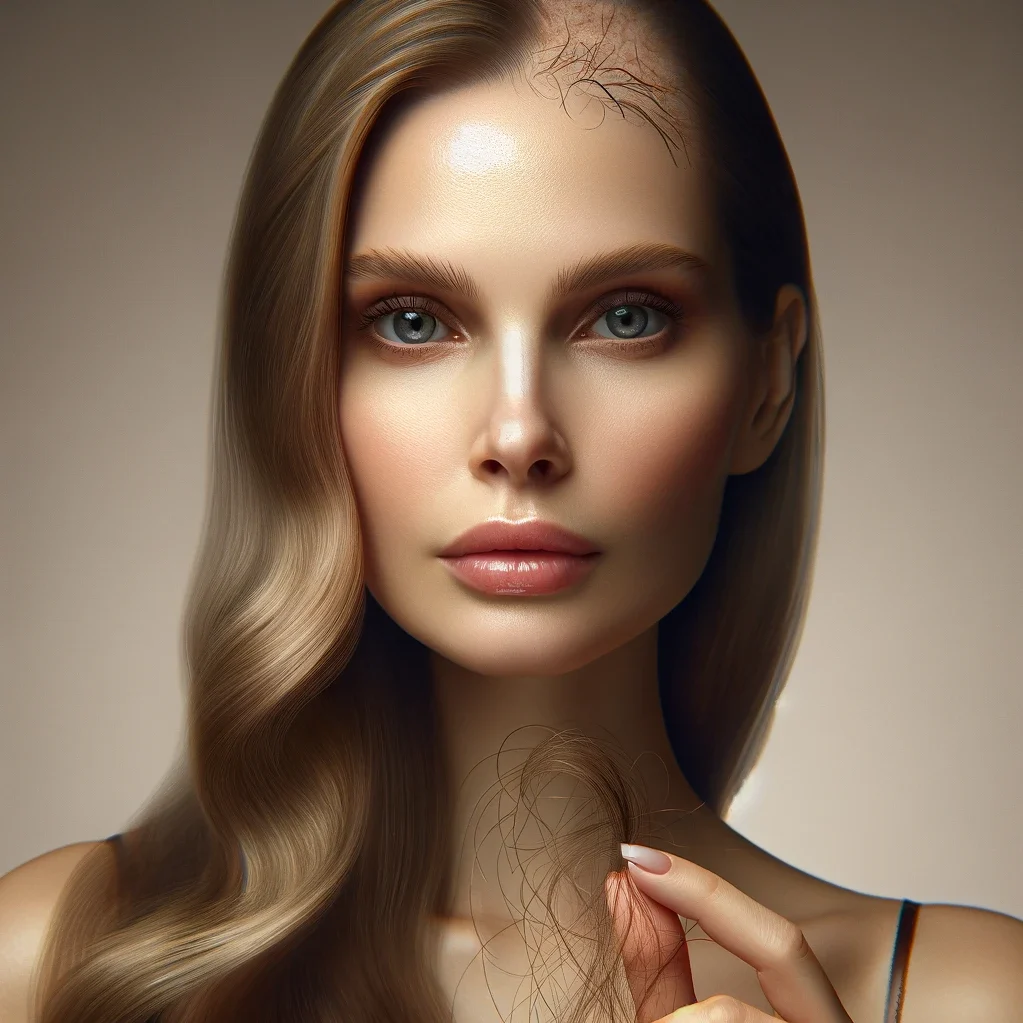
Androgenic alopecia, also known as female pattern hair loss, is a common form of hair loss in women. It is characterized by gradual hair thinning in the crown and frontal areas of the scalp. Many women experience distress and a significant impact on their overall quality of life due to this condition. Fortunately, there are effective treatments available to address androgenic alopecia in women.
Key Takeaways:
- Androgenic alopecia, or female pattern hair loss, can be a distressing condition for women.
- Treatments for androgenic alopecia in women include medication and non-surgical procedures.
- Minoxidil, finasteride, and spironolactone are commonly prescribed medications for promoting hair regrowth.
- Surgical procedures, laser therapy, and platelet-rich plasma injections can also be effective treatment options.
- It is essential for women with androgenic alopecia to seek professional help and support to address the psychological impact of hair loss.
Causes and Diagnosis of Androgenic Alopecia
Androgenic alopecia, also known as female pattern hair loss, is a condition that affects many women worldwide. Understanding the causes and diagnosing the condition is essential for effective treatment.
Causes:
Androgenic alopecia in women is believed to be caused by a combination of genetic factors and hormonal imbalances. These factors can contribute to the shrinking of hair follicles, leading to the production of shorter and thinner hairs. While the exact mechanisms are complex, it is clear that genetics and hormones play significant roles in the development of female pattern hair loss.
Diagnosis:
Diagnosing androgenic alopecia in women involves a comprehensive approach to understand the underlying causes of hair loss. Healthcare providers typically begin with a detailed medical history, taking into account any family history of hair loss, hormonal imbalances, or medical conditions. A physical examination of the scalp is conducted to assess the pattern and severity of hair loss.
In some cases, additional tests may be needed to rule out other potential causes of hair loss. This may involve blood tests to evaluate hormone levels or a scalp biopsy to examine the hair follicles more closely.
By understanding the causes and diagnosing androgenic alopecia, healthcare providers can determine the most appropriate treatment approach for each individual. In the next section, we explore the various treatment options available for female pattern hair loss.
| Causes of Androgenic Alopecia in Women: | Diagnosis of Androgenic Alopecia in Women: |
|---|---|
| Genetic factors | Comprehensive medical history |
| Hormonal imbalances | Physical examination of the scalp |
| Blood tests to evaluate hormone levels | |
| Scalp biopsy to examine hair follicles |
Medications for Androgenic Alopecia
When it comes to non-surgical hair loss treatments for women, several medications have shown promising results in promoting hair regrowth and improving hair density. The primary medications used for the treatment of androgenic alopecia in women are:
- Minoxidil
- Finasteride
- Spironolactone
Minoxidil
Minoxidil is a topical medication that can be used by both men and women. It is commonly available over the counter and does not require a prescription. Minoxidil works by directly stimulating hair follicles, promoting hair growth, and preventing further hair loss. It is typically applied twice daily to the affected areas of the scalp. Minoxidil is generally well-tolerated and has been shown to be effective in regrowing hair and improving hair density in women with androgenic alopecia.
Finasteride
Finasteride is an oral medication that inhibits the conversion of testosterone to dihydrotestosterone (DHT) in the body. DHT is a hormone that contributes to hair loss in individuals with androgenic alopecia. By reducing DHT levels, finasteride helps to prevent further hair loss and may promote hair regrowth. It is important to note that finasteride is primarily prescribed for men and is not FDA-approved for the treatment of androgenic alopecia in women. However, some healthcare providers may prescribe finasteride off-label for women with androgenic alopecia if they believe it may be beneficial.
Spironolactone
Spironolactone is an oral medication that is commonly used to treat conditions such as high blood pressure and fluid retention. However, it is also used in the treatment of androgenic alopecia in women. Spironolactone works by blocking the effects of androgens, which are male hormones that can contribute to hair loss in women with androgenic alopecia. While it is not FDA-approved specifically for hair loss, spironolactone has been shown to be effective in improving hair density and reducing hair loss in women.
In some cases, a combination of these medications may be prescribed to maximize the effectiveness of treatment. It is important to consult with a healthcare professional to determine the most suitable medication and treatment plan based on individual needs and considerations.
| Medication | Usage | Effectiveness | Side Effects |
|---|---|---|---|
| Minoxidil | Topical application | Effective in promoting hair regrowth | Minimal side effects; may cause scalp irritation |
| Finasteride | Oral medication | May prevent further hair loss and promote regrowth | Potential side effects include decreased libido and erectile dysfunction; not FDA-approved for women |
| Spironolactone | Oral medication | Effective in improving hair density and reducing hair loss | May cause dizziness, breast tenderness, and changes in menstrual cycle |
Other Treatment Options for Androgenic Alopecia
In addition to medications, there are various treatment options available for women with androgenic alopecia. These options include surgical procedures, laser light devices, platelet-rich plasma injections, and natural remedies.
Surgical Procedures for Hair Restoration
One popular surgical option for women with androgenic alopecia is hair transplantation. This procedure involves taking hair follicles from areas of the scalp with healthy hair growth and implanting them into thinning or balding areas. Hair transplantation can effectively restore hair density and improve the appearance of thinning areas, providing long-term results.

Another surgical option is scalp reduction surgery, which involves removing sections of the scalp with minimal hair growth and stretching the remaining scalp to cover the balding areas. This procedure can help improve the overall appearance of the scalp and reduce the visibility of thinning areas.
Laser Light Devices for Hair Stimulation
Laser light devices, such as low-level laser therapy (LLLT), can be used to stimulate hair growth in women with androgenic alopecia. These devices emit a specific wavelength of light that promotes hair follicle activity and improves blood circulation to the scalp. By using laser light devices regularly, women may experience increased hair growth and improved hair density over time.
Platelet-Rich Plasma (PRP) Injections
Platelet-rich plasma (PRP) injections are a non-surgical treatment option for women with androgenic alopecia. This procedure involves drawing a small amount of the patient’s blood, separating the platelets from the rest of the blood components, and injecting the concentrated platelets into the scalp. Platelets contain growth factors that can stimulate hair follicles and promote hair regrowth. PRP injections have shown promising results in promoting hair regrowth and improving hair density in women with androgenic alopecia.
Natural Remedies
In addition to medical treatments, some women with androgenic alopecia may explore natural remedies for hair thinning. These remedies often involve the use of essential oils and herbal supplements. While the effectiveness of natural remedies for androgenic alopecia is not well-established, some women may find them helpful as adjunctive treatments. It is important to consult with a healthcare provider before attempting any natural remedies to ensure their safety and appropriateness.
Psychological Impact of Androgenic Alopecia
Hair loss can be a distressing experience for women, impacting their self-esteem, body image, and overall quality of life. The pressure to maintain a youthful appearance in society adds to feelings of insecurity and emotional distress. Dealing with the psychosocial aspects of hair loss is crucial for women with androgenic alopecia, and seeking support from healthcare professionals, therapists, or support groups can be incredibly beneficial.
Individual and group therapy sessions offer valuable resources and strategies for women to adjust to and accept their hair loss. These sessions provide a safe space to express emotions, learn coping mechanisms, and gain a better understanding of their self-worth beyond appearance. Additionally, therapists can help women develop healthy self-care practices to enhance their well-being.
“Hair loss can have a profound impact on a woman’s sense of self. It’s important to recognize the emotional toll it takes and seek support from professionals who can help navigate the complex feelings associated with hair loss.”
Being part of a support group allows women to connect with others who are going through similar experiences. Sharing stories, exchanging advice, and receiving encouragement from fellow group members can provide a sense of belonging and comfort. Support groups can also serve as a platform to discuss and explore different hair loss solutions for women, such as recommended hair loss treatments and tips for managing hair thinning.
Psychological Strategies for Coping with Hair Loss
- Practice self-compassion and remind yourself that hair loss does not define your worth or beauty.
- Develop a positive mindset by focusing on other qualities and achievements that make you unique.
- Engage in stress-reducing activities like meditation, yoga, or journaling to promote emotional well-being.
- Enhance your self-confidence with styling techniques, such as hair accessories or new hairstyles that complement your appearance.
- Consider using scalp micropigmentation or wearing wigs or hairpieces as temporary solutions to boost confidence.
Incorporating these strategies into daily routines can help women build resilience, adapt to the changes caused by androgenic alopecia, and maintain a positive self-image.
| Treatment Option | Pros | Cons |
|---|---|---|
| Topical Hair Loss Products (Minoxidil) | – Easy to use – Promotes hair regrowth – Widely available |
– Regular application required – Results may vary |
| Oral Medications (Finasteride) | – Helps prevent further hair loss – May promote hair regrowth |
– Potential side effects in some individuals – Requires ongoing use for maintenance |
| Surgical Hair Transplantation | – Permanent solution – Natural-looking results |
– Invasive procedure – Expensive |
| Non-Surgical Hair Replacement Systems | – Instantly restores the appearance of a full head of hair – Customizable and undetectable |
– Requires regular maintenance – Temporary solution |
| Cognitive Behavioral Therapy | – Helps address emotional distress – Assists with coping strategies |
– Requires commitment and ongoing sessions – Results may vary |
Remember, it is essential to consult with a healthcare professional or dermatologist to determine the most suitable hair loss solutions for women with androgenic alopecia. Taking care of not just your physical but also emotional well-being is key to navigating the challenges of hair loss and maintaining a positive outlook.
Conclusion
Androgenic alopecia in women is a common form of hair loss that can be effectively managed with a range of treatment options. Among the best treatments for androgenic alopecia in women are medications like minoxidil, finasteride, and spironolactone. These medications have shown positive results in promoting hair regrowth and improving hair density.
In addition to medications, other treatment options such as surgical procedures, laser light devices, and platelet-rich plasma injections can be considered. Surgical procedures like hair transplantation and scalp reduction surgery can restore hair density and improve the appearance of thinning areas. Laser light devices, such as low-level laser therapy (LLLT), stimulate hair growth. Platelet-rich plasma (PRP) injections have also shown promising results in promoting hair regrowth.
Women with androgenic alopecia should seek professional help and support to address the psychological impact of hair loss. The societal pressure to maintain a youthful appearance can contribute to feelings of insecurity and distress. With the right treatment approach and support, women with androgenic alopecia can regain hair health and confidence.
FAQ
What is androgenic alopecia?
Androgenic alopecia, also known as female pattern hair loss, is a common form of hair loss in women. It is characterized by gradual hair thinning in the crown and frontal areas of the scalp.
What are the causes of androgenic alopecia in women?
Androgenic alopecia in women is believed to be caused by a combination of genetic factors and hormonal imbalances.
How is androgenic alopecia diagnosed?
Diagnosis of androgenic alopecia in women usually involves a thorough medical history, physical examination of the scalp, and possibly blood tests or a scalp biopsy to rule out other potential causes of hair loss.
What are the effective treatments for androgenic alopecia in women?
Effective treatments for androgenic alopecia in women include minoxidil, finasteride, and spironolactone. These medications can help to regrow hair, prevent further hair loss, and improve hair density.
Are there any non-surgical hair loss treatments for women?
Yes, in addition to medications, there are other treatment options available for women with androgenic alopecia, such as surgical procedures like hair transplantation and scalp reduction surgery, laser light devices, and platelet-rich plasma injections.
Are there any natural remedies for female hair thinning?
Yes, some women may consider using natural remedies such as essential oils and herbal supplements as adjunctive treatments for androgenic alopecia, although their effectiveness is not well-established.
What is the psychological impact of androgenic alopecia in women?
Hair loss can have a significant psychological impact on women, affecting their self-esteem, body image, and overall quality of life. It is important for women with androgenic alopecia to seek support from healthcare professionals, therapists, or support groups to help them cope with the psychosocial aspects of hair loss.