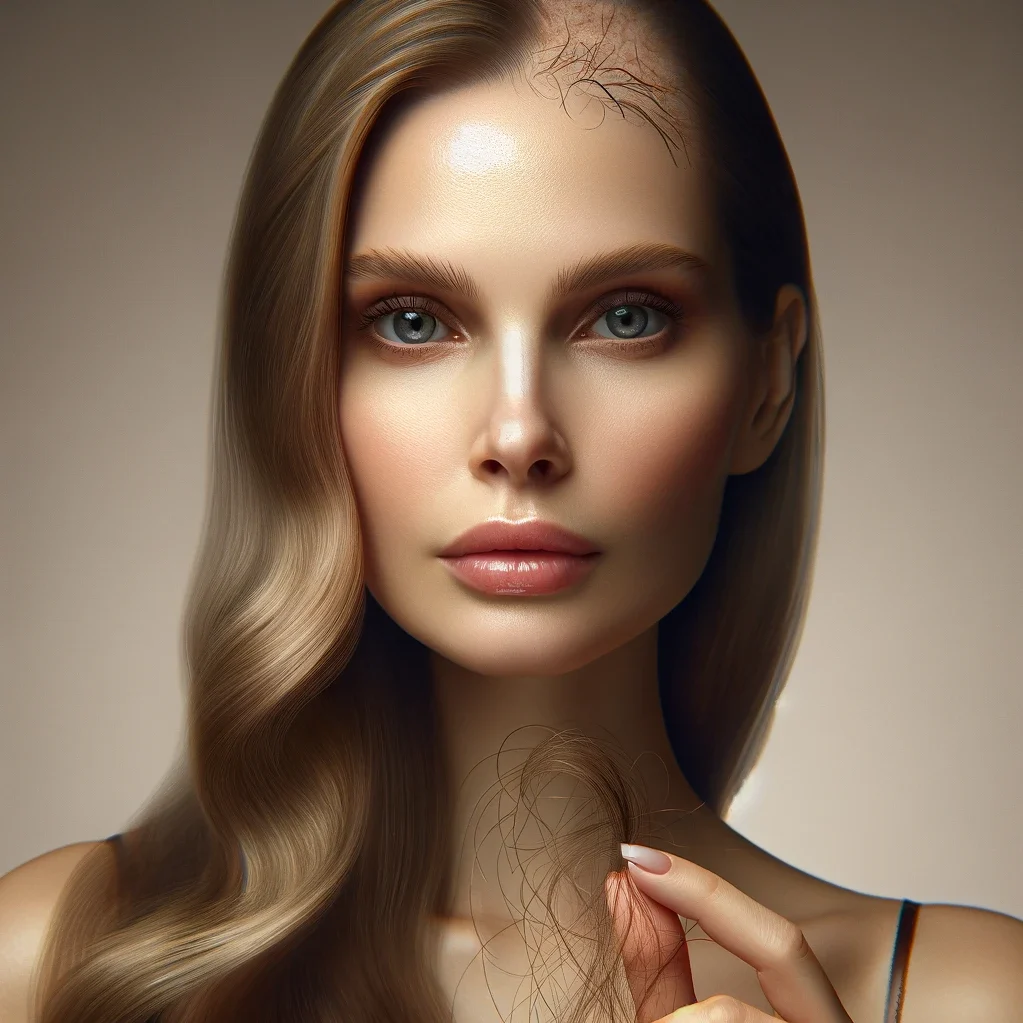
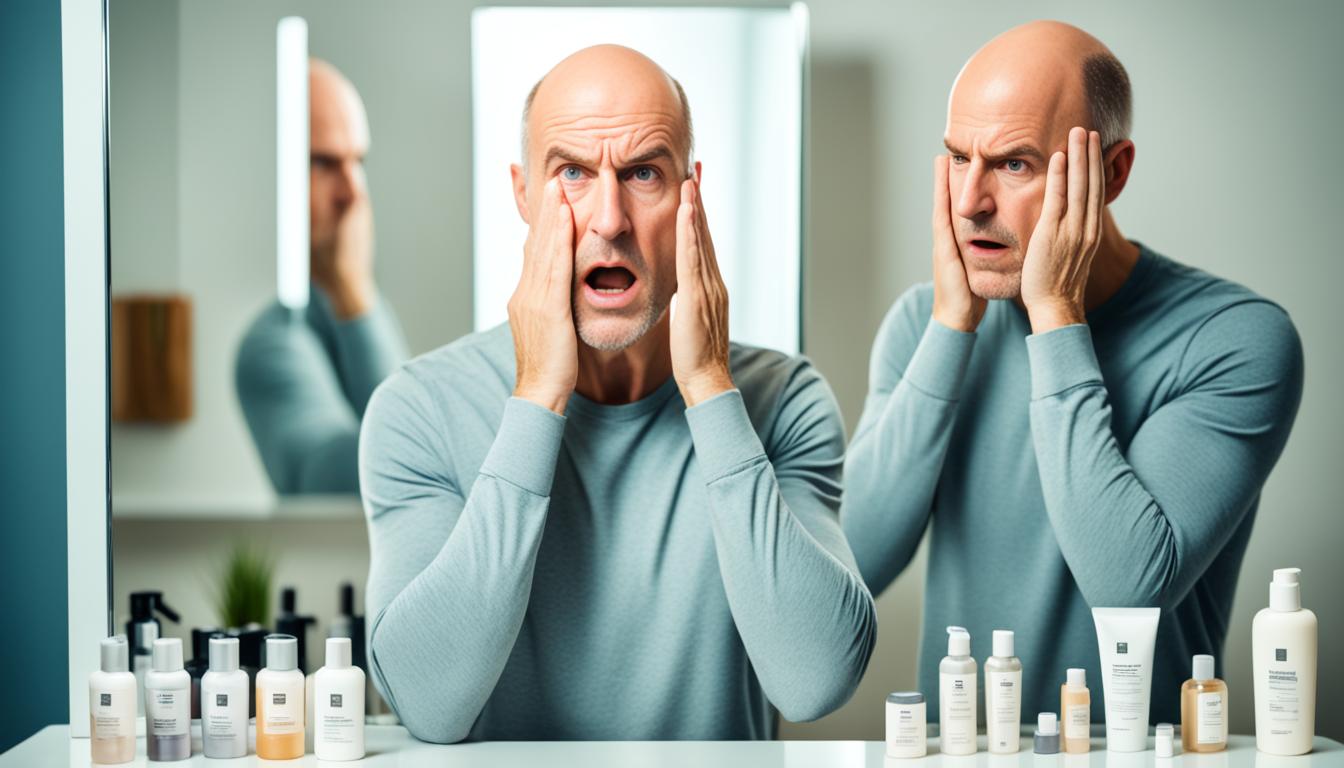
Hair loss can have a profound emotional impact on individuals, triggering a range of emotions such as shame, anger, fear, and depression. Many people may experience a loss of confidence and self-image due to hair loss. It is important to acknowledge and validate these emotions, as well as seek support and treatment to regain a sense of control and confidence. Consulting a doctor and learning about treatment options can provide hope and empower individuals to take action. Managing stress and seeking therapy can also be beneficial in coping with the emotional challenges of hair loss. Additionally, finding support groups, exploring alternative hairstyles, and considering wigs can provide practical solutions to boost self-esteem and well-being.
Key Takeaways:
- Coping with hair loss emotionally is a personal journey, and it is important to acknowledge and validate the range of emotions it may trigger.
- Consulting a doctor and learning about treatment options can provide hope and empower individuals to take action.
- Managing stress and seeking therapy can be beneficial in coping with the emotional challenges of hair loss.
- Finding support groups, exploring alternative hairstyles, and considering wigs can provide practical solutions to boost self-esteem and well-being.
- Remember, hair loss does not define one’s worth or identity, and with the right support, individuals can regain confidence and live fulfilling lives.
We understand that coping with hair loss emotionally can be challenging, but by acknowledging and validating your feelings and seeking support, you can regain control and confidence. In the following sections, we will explore the psychological impact of hair loss, coping strategies for managing hair loss emotionally, rethinking self-perception, and building emotional resilience. Together, we will navigate the emotional landscape of hair loss and empower you to embrace your unique journey.
Understanding the Psychological Impact of Hair Loss
Hair loss is not just a physical change; it can also bring about significant psychological consequences. Our hair is closely tied to our sense of youth, attractiveness, and self-expression. Losing hair can have a profound effect on how we perceive ourselves and our self-worth.
Furthermore, the emotional consequences of hair loss extend beyond our personal identity. Hair loss can impact our social relationships, leading to feelings of isolation, social anxiety, and even limitations in our professional lives. The societal values attached to having a full head of hair can be particularly challenging to navigate.
Understanding these psychological implications is key to developing effective coping strategies. By acknowledging the emotional challenges associated with hair loss and exploring ways to navigate them, individuals can regain control over their self-perception and emotional well-being.
The Self-Perception Dilemma
When we experience hair loss, we may feel a loss of confidence and struggle with our self-perception. The change in our appearance can be difficult to accept, and it may take time to adjust to our new image.
“Hair loss can be tough to deal with, especially for those who attach a lot of importance to their looks. It’s important to remember that our self-worth cannot be defined solely by our appearance. We are more than just our hair.”
Social Implications and Emotional Consequences
The social implications of hair loss can be significant. Individuals may become self-conscious and anxious about how others perceive them. This self-consciousness can impact our social interactions, leading to feelings of isolation and self-imposed limitations.
“Hair loss can lead to social anxiety and avoidance of social situations. It’s essential to recognize that our worth as individuals lies in our achievements, personal qualities, and the connections we make with others, rather than our physical appearance.”
Coping Strategies and Emotional Healing
In order to cope with the psychological impact of hair loss, it is crucial to develop effective strategies for emotional healing. These strategies may include seeking support from loved ones, joining support groups, and engaging in therapy to process emotions and gain insights.
“Finding support from others who are going through similar experiences can be immensely helpful. Whether through therapy, support groups, or online communities, connecting with others facing hair loss can provide a safe space to share feelings, gain support, and develop coping mechanisms.”
Additionally, embracing alternative options for enhancing appearance, such as exploring new hairstyles or considering wigs, can boost confidence and promote self-acceptance in the face of hair loss.
| Psychological Impact | Emotional Consequences | Self-Perception | Social Implications |
|---|---|---|---|
| Loss of confidence | Feelings of isolation | Difficulty accepting change in appearance | Social anxiety |
| Depression | Self-imposed limitations | Struggle with self-worth | Impact on professional life |
| Anxiety | Impact on relationships | Challenges in self-expression | Perceived loss of attractiveness |
Coping Strategies for Managing Hair Loss Emotionally
Experiencing hair loss can be emotionally challenging, but there are coping strategies that can help individuals navigate this journey with resilience and acceptance. Understanding and addressing the emotional impact of hair loss is crucial for maintaining overall well-being and self-esteem.
Here are some effective coping strategies for managing hair loss emotionally:
- Acknowledge and Validate Your Feelings: It’s important to acknowledge and validate your emotions surrounding hair loss. Give yourself permission to feel a range of emotions, such as sadness, frustration, or insecurity. Recognize that it is normal to have these feelings and that they are valid.
- Seek Support: Reach out to trusted individuals in your life who can provide emotional support, such as friends, family, or professionals. Sharing your feelings and experiences with others can provide a sense of comfort and understanding.
- Join Support Groups or Therapy: Consider joining support groups or engaging in therapy. These resources can offer a safe space to process your emotions, gain insights from others who have experienced hair loss, and learn coping strategies from trained professionals.
- Practice Mindfulness: Incorporating mindfulness techniques, such as meditation or deep breathing exercises, can help you stay present and reduce stress. Mindfulness can also assist in accepting and embracing changes in appearance, fostering self-compassion, and promoting emotional healing.
- Maintain a Healthy Lifestyle: Taking care of your overall well-being can positively impact your emotional state. Engage in regular exercise, eat a balanced diet, and prioritize self-care activities. Physical health and emotional healing often go hand in hand.
- Focus on Joyful Activities: Find activities that bring you joy, whether it’s pursuing hobbies, engaging in creative outlets, or spending time with loved ones. Focusing on activities that bring happiness and relaxation can provide a positive distraction and boost your overall mood.
- Explore Enhancements: Consider exploring alternative options for enhancing your appearance, such as trying out new hairstyles, experimenting with headscarves, or considering wigs. Finding an option that aligns with your personal style and preferences can boost your confidence and self-acceptance.
By implementing these coping strategies, individuals can empower themselves to navigate the emotional challenges associated with hair loss. Remember, each person’s journey is unique, and finding what works best for you is key to emotional healing and acceptance.

Rethinking Self-Perception and Building Emotional Resilience
Developing a positive mindset and reframing our self-perception can significantly contribute to building emotional resilience when faced with hair loss. It’s important to acknowledge that our self-worth extends beyond physical appearance and to focus on personal values, relationships, and accomplishments as a way to redefine our sense of identity.
Practicing self-compassion and positive self-talk can be powerful tools in countering negative thoughts and fostering self-acceptance throughout the hair loss journey. By embracing changes in our appearance and reframing our perspective, we can learn to embrace our baldness and find beauty in our unique features.
Engaging in activities that promote overall well-being and self-esteem can further enhance our emotional resilience. Regular exercise not only benefits our physical health but also releases endorphins that contribute to a positive outlook and emotional healing.
“I have learned to see my hair loss as an opportunity for personal growth and self-discovery. It has allowed me to focus on what truly matters in life and appreciate the uniqueness of my appearance.” – Anna, a hair loss survivor
Embracing Changes and Finding Confidence
Embracing changes in our appearance can be a transformative process in building emotional resilience. Instead of dwelling on what we have lost, we can focus on the new possibilities that arise. Experimenting with different hairstyles, trying out wigs, or even embracing a bald look can be empowering choices that celebrate our individuality.
Positive self-talk plays a vital role in reframing our perspective and boosting our self-esteem. By consciously challenging negative thoughts and replacing them with affirming statements, we can shift our mindset towards self-acceptance and confidence. For example, instead of dwelling on what we lack, we can remind ourselves of our inner strength, resilience, and unique qualities.

Building Emotional Resilience Through Support
Seeking support from others who have experienced or are currently going through hair loss can provide invaluable emotional support and encouragement. Support groups or online communities offer a safe space to share experiences, gain insights, and receive empathy from individuals who truly understand the emotional challenges of hair loss.
Professional therapy can also be beneficial in building emotional resilience. A therapist can provide guidance and tools to navigate the complex emotions associated with hair loss, helping individuals develop coping strategies and a sense of empowerment. Additionally, therapy can address any underlying emotional issues that may be exacerbated by hair loss, leading to long-term emotional healing.
| Emotional Resilience-Building Activities | Benefits |
|---|---|
| Engaging in regular exercise | – Release endorphins – Boost overall well-being – Enhance body confidence |
| Pursuing hobbies or new interests | – Provide a sense of fulfillment and joy – Distract from negative thoughts – Foster personal growth |
| Volunteering or giving back to the community | – Create a sense of purpose and meaning – Build social connections – Cultivate gratitude and empathy |
Building emotional resilience is a process that takes time and effort, but it is achievable. By reframing our self-perception, embracing changes in our appearance, practicing positive self-talk, and seeking support, we can navigate the emotional challenges of hair loss and emerge stronger on the other side.
Conclusion
Coping with hair loss emotionally can be a challenging journey, but it is one we do not have to face alone. We must remember that our feelings are valid and seeking support is essential. By adopting various coping strategies, reframing our self-perception, and prioritizing our emotional well-being, we can navigate the emotional challenges of hair loss and embrace our unique path.
It is crucial to recognize that hair loss does not define our worth or identity. With the right support and resources, we can regain our confidence and live fulfilling lives. Let us remember that our journey is not about the hair we have lost, but about the strength and resilience we gain along the way.
We encourage you to seek help from professionals, friends, or support groups and take proactive steps towards managing your emotional well-being with hair loss. Together, let us empower ourselves to face the challenges head-on and emerge stronger, knowing that our worth extends far beyond the strands of hair on our heads.
FAQ
How does hair loss affect a person emotionally?
Hair loss can have a profound emotional impact, triggering feelings of shame, anger, fear, and depression. It can also lead to a loss of confidence and self-image.
What can I do to cope with the emotional effects of hair loss?
Acknowledging and validating your emotions is crucial. Seeking support from trusted individuals, such as friends, family, or professionals, and engaging in therapy or support groups can be helpful in managing the emotional impact of hair loss.
Are there any practical solutions to boost self-esteem while dealing with hair loss?
Yes, exploring alternative hairstyles, considering wigs, or finding support groups can provide practical solutions to enhance self-esteem and emotional well-being.
How can I develop a positive mindset while coping with hair loss?
Developing a positive mindset involves reframing your self-perception and focusing on personal values, relationships, and accomplishments. Practicing self-compassion, engaging in activities that promote overall well-being, and fostering positive self-talk are also helpful strategies.
Is it possible to regain confidence and emotional well-being with hair loss?
Yes, with the right support, individuals can regain confidence and live fulfilling lives. Hair loss does not define one’s worth or identity, and adopting coping strategies, seeking help, and focusing on overall emotional well-being can contribute to a sense of acceptance and healing.