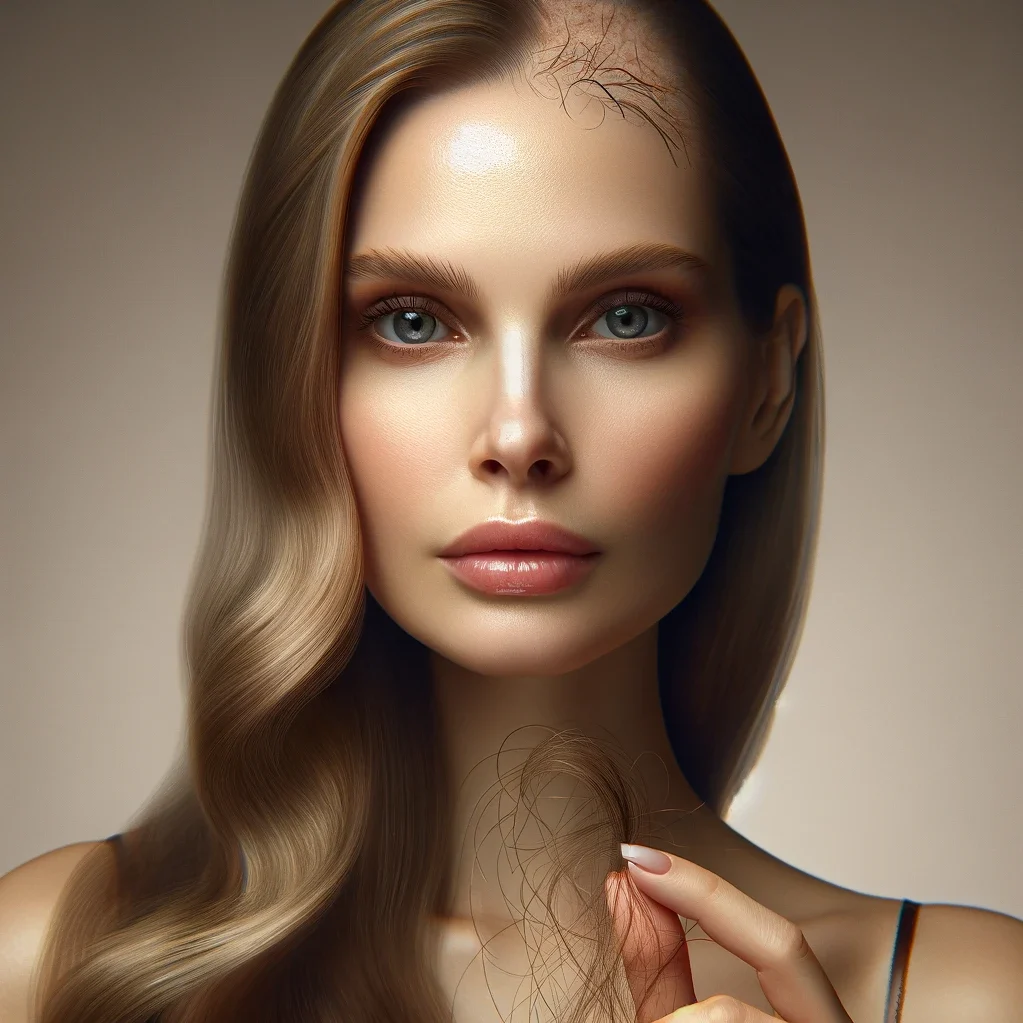
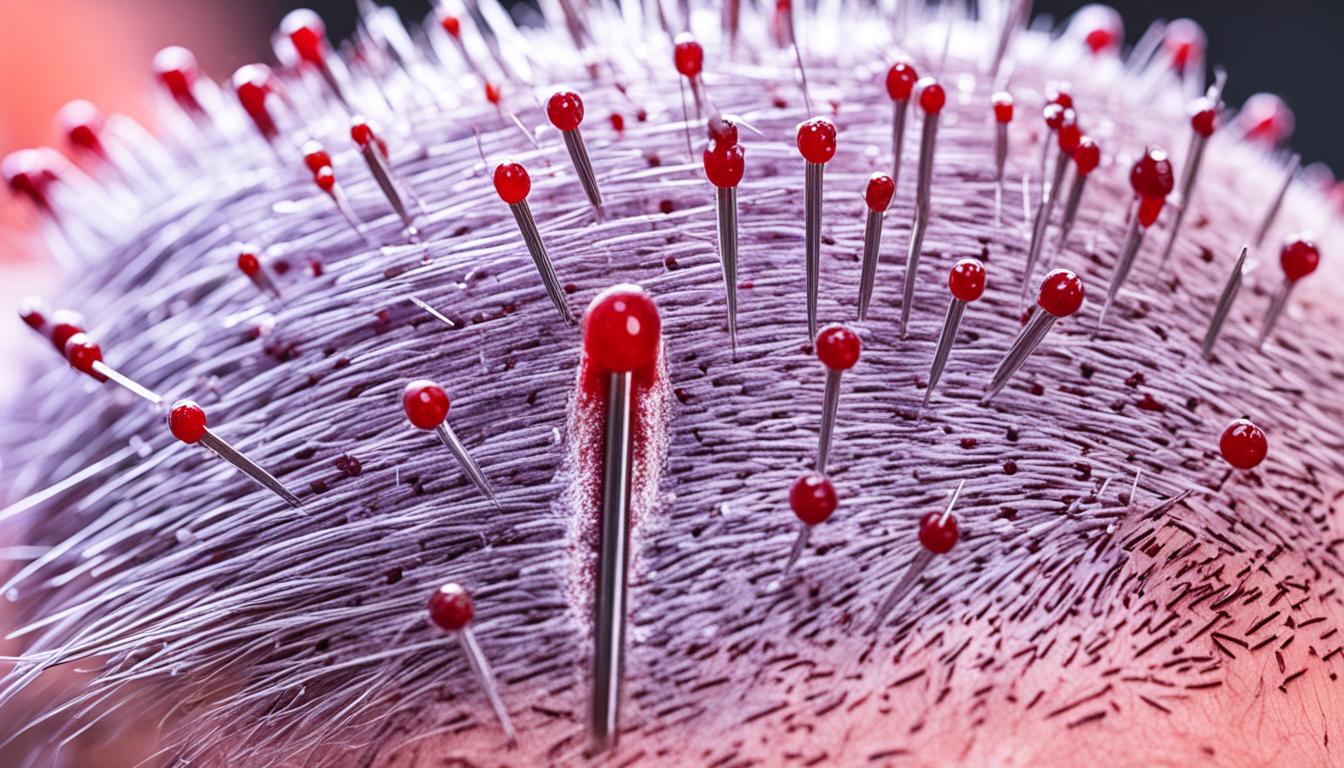
Hair loss is a common problem that affects many people, causing stress and a loss of confidence. Research suggests that about 50% of men and 40% of women will experience hair loss by the age of 50. Microneedling is a non-invasive procedure that has gained attention for promoting scalp health and hair growth. It involves creating microscopic punctures in the scalp using tiny needles, stimulating collagen production and increasing blood flow to the hair roots. Microneedling also enhances the absorption of topical treatments, creating a better environment for hair growth. The procedure should be done with the correct cartridge and needle length, and proper aftercare is essential for optimal results.
Key Takeaways:
- Scalp microneedling is a non-invasive procedure that stimulates hair growth and improves scalp health.
- About 50% of men and 40% of women will experience hair loss by the age of 50.
- Microneedling involves creating microscopic punctures in the scalp to stimulate collagen production and increase blood flow to the hair roots.
- The procedure enhances the absorption of topical treatments, creating a better environment for hair growth.
- Proper cartridge and needle selection, as well as aftercare, are crucial for optimal results.
What is Microneedling?
Microneedling is a dermatological procedure that utilizes tiny, sterile needles to create microscopic punctures in the skin. By stimulating the body’s natural healing response, microneedling promotes collagen production, which is crucial for strengthening and enhancing the quality of the skin.
One of the key benefits of microneedling is its ability to improve the absorption of topical treatments. The microscopic punctures created during the procedure allow the topical treatments to penetrate deeper into the skin layers, reaching the hair roots in the case of scalp microneedling. This enhanced absorption maximizes the effectiveness of the treatments and contributes to promoting hair growth.
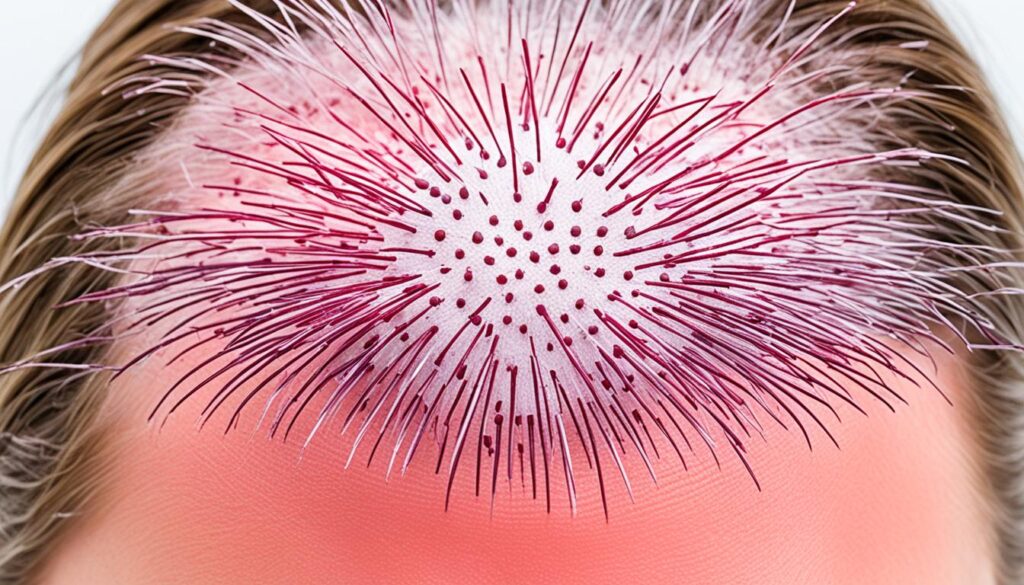
Microneedling is a safe and effective procedure when performed correctly. It is commonly used to address various skin concerns, including scalp rejuvenation and hair regrowth. The controlled micro-injuries induced by the needles trigger the skin’s repair process and stimulate the production of collagen, resulting in improved skin texture and reduced appearance of scars, wrinkles, and other imperfections.
Furthermore, the increased production of collagen contributes to hair regrowth by providing a supportive environment for hair follicles. The strengthened hair roots lead to healthier and stronger hair.
Overall, microneedling is a versatile dermatological procedure that offers significant benefits for both skin and scalp health. Its ability to stimulate collagen production, enhance topical treatment absorption, and promote hair growth makes it a valuable option for individuals seeking to improve the quality of their skin and address hair loss concerns.
How Does Microneedling Work on The Scalp?
Microneedling on the scalp works by stimulating the body’s repair mode. The tiny punctures created during the procedure trigger increased collagen production and blood flow to the scalp. This not only strengthens the existing hair but also stimulates the growth of new cells, including hair cells. The increased blood flow also brings more nutrients to the hair roots, making the hair healthier and stronger. By promoting a better environment for hair growth, microneedling can help improve scalp health and stimulate hair regrowth.
Collagen Production and Repair Mode
One of the key mechanisms behind microneedling’s effectiveness on the scalp is its ability to boost collagen production. Collagen is a protein that plays a crucial role in strengthening and maintaining the health of the hair follicles. When the tiny needles create micro-injuries on the scalp, the body goes into a repair mode, triggering an increase in collagen production. This helps in repairing damaged follicles and promoting the growth of new, healthier hair cells.
The production of collagen also leads to the formation of new blood vessels, which improves blood flow to the scalp. Increased blood flow means more nutrients and oxygen reach the hair roots, providing them with the necessary nourishment for optimal growth. Additionally, the improved blood flow aids in removing waste products and toxins from the scalp, contributing to a healthier environment for the hair follicles.
Stimulation of Hair Growth
By stimulating the body’s repair mode and increasing collagen production, microneedling promotes a more favorable environment for hair growth. The tiny punctures created during the procedure activate the hair follicles and signal them to enter the growth phase. This can help revive dormant follicles and stimulate the regrowth of thinning or receding hair.
Improved Scalp Health
Aside from its direct impact on hair growth, microneedling also offers benefits for overall scalp health. The increased blood flow and collagen production help to strengthen the scalp’s barrier function, protecting it from external aggressors and reducing inflammation. Additionally, the enhanced absorption of topical treatments following microneedling allows for better delivery of scalp-care products, addressing specific concerns such as dryness, itchiness, or dandruff.
Overall, microneedling on the scalp presents a holistic approach to addressing hair loss by targeting both the underlying causes and the overall health of the scalp. By stimulating repair mode, increasing collagen production, improving blood flow, and promoting the growth of new hair cells, microneedling offers a promising solution for those looking to rejuvenate their scalp and restore healthy hair growth.
Benefits of Microneedling on the Scalp
| BENEFITS | DESCRIPTION |
|---|---|
| Stimulates collagen production | Promotes the strength and health of hair follicles |
| Increase blood flow to the scalp | Provides more nutrients and oxygen to the hair roots |
| Stimulates the growth of new hair cells | Revives dormant follicles and promotes regrowth |
| Improves overall scalp health | Strengthens the scalp’s barrier function and reduces inflammation |
| Enhances absorption of topical treatments | Allows targeted delivery of scalp-care products |
How to Microneedle on the Scalp? A Step-By-Step Guide
Microneedling on the scalp requires proper preparation and technique. This section will guide you through the step-by-step process of microneedling for scalp treatment, including choosing the correct cartridge and needle length, preparation, the microneedling process itself, and essential aftercare.
Choosing the Correct Cartridge and Needle Length
When performing scalp microneedling, it is important to select the appropriate cartridge and needle length for optimal results. For scalp treatment, cartridges with more needles, such as the 24-pin or 36-pin, are recommended. The needle length should ideally range from 0.5mm to 1.5mm, depending on the desired treatment depth.
| Cartridge Type | Needle Length |
|---|---|
| 24-pin | 0.5mm |
| 36-pin | 1.0mm |
Preparing the Scalp
Before starting the microneedling procedure, it is crucial to ensure the scalp is clean and free from any dirt or oils. Thoroughly wash and dry your hair and scalp to minimize the risk of infection.
The Microneedling Process
Apply a numbing cream to the scalp to minimize discomfort during the microneedling process. Once the cream has taken effect, move the microneedling device across the scalp in a grid-like pattern, covering all areas experiencing hair thinning. Apply gentle pressure to create microscopic punctures. Take care not to press too hard to avoid causing excessive pain or injury.
Remember, each person’s pain tolerance may vary, so adjust the pressure as needed.
Aftercare for Optimal Healing
After the microneedling treatment, proper aftercare is crucial to ensure optimal healing and results. Here are some essential aftercare steps:
- Avoid washing your hair for at least 4 hours after the treatment to allow the scalp to heal.
- Avoid using scalp products with artificial scents for a few days to prevent irritation.
- Some peeling of the scalp may occur, which is normal. Do not scratch or pick at the peeling skin.
- Discomfort or tenderness on the scalp is normal. Take over-the-counter pain relievers if necessary.
- Avoid direct sunlight on the freshly treated scalp, as it can increase the risk of sunburn. Wear a hat or head scarf when going outside.
- Avoid intense physical activity that causes sweating for a few days after the procedure to minimize the risk of infection.
- Sleep on a clean pillowcase to prevent potential infections.
Following these aftercare steps will help promote optimal healing and maximize the benefits of microneedling for scalp treatment.
Essential Aftercare for Scalp Microneedling
After scalp microneedling, it is crucial to follow proper aftercare to ensure optimal healing and results.
Here are some essential aftercare tips to consider:
- Avoid washing your hair for at least 4 hours post-treatment to allow the scalp to heal effectively.
- Avoid using scalp products with artificial scents for a few days after the procedure to prevent irritation.
- Expect some peeling of the scalp, similar to the peeling of the skin after a sunburn. This is a normal response as the surface layer of the scalp renews itself.
- Discomfort or tenderness on the scalp is common due to the micro-injuries caused by microneedling. This should subside within a few days.
- Avoid direct sunlight as the freshly treated scalp is more susceptible to sunburn. Protect your scalp by wearing a hat or head scarf.
- Avoid intense physical activity or exercise to prevent excessive sweating, which can increase the risk of infection.
- Sleep on a clean pillowcase to minimize the risk of potential infections.
Remember, proper aftercare plays a crucial role in maximizing the benefits of scalp microneedling. By following these aftercare guidelines, you can ensure a smooth healing process and optimize your results.
Testimonials from Satisfied Customers:
“After getting scalp microneedling, I followed the aftercare instructions diligently. My scalp healed beautifully, and I noticed significant improvements in my hair growth within a few months. It’s incredible how such a simple procedure can make such a difference!” – Olivia Smith
“At first, I was a bit skeptical about scalp microneedling, but I’m glad I gave it a try. The aftercare tips provided by my dermatologist were easy to follow, and my scalp recovered quickly. Now, my hair looks fuller and healthier than ever!” – Michael Johnson
| Aftercare Tips | Benefits |
|---|---|
| Avoid washing hair for at least 4 hours | Allows proper healing |
| Avoid scalp products with artificial scents | Prevents irritation |
| Expect scalp peeling | Renewal of scalp’s surface layer |
| Avoid direct sunlight | Prevents sunburn |
| Avoid intense physical activity | Reduces risk of infection |
| Sleep on a clean pillowcase | Minimizes the risk of infection |
Conclusion
Scalp microneedling offers a promising solution for individuals seeking to address hair loss and promote hair growth. This non-invasive treatment stimulates collagen production and increases blood flow to the hair roots, creating an improved environment for hair growth. However, it is important to note that results may vary and consistency is key.
Consulting with a healthcare professional is crucial to receive personalized advice and determine the best treatment plan for individual hair loss needs. They can guide you on the correct needle length, cartridge selection, and aftercare routine to optimize your scalp microneedling experience and results.
To enhance the effects of scalp microneedling, it is recommended to incorporate additional supporting scalp care practices such as using gentle shampoos and conditioners, avoiding heat styling tools, and maintaining a healthy lifestyle. By taking a comprehensive approach to scalp care, you can maximize the potential benefits of scalp microneedling for hair growth and scalp rejuvenation.
FAQ
What is scalp microneedling?
Scalp microneedling is a non-invasive procedure that involves creating microscopic punctures in the scalp using tiny needles. This stimulates collagen production, increases blood flow to the hair roots, and promotes hair growth.
How does microneedling work on the scalp?
Microneedling on the scalp triggers increased collagen production and blood flow, stimulating the growth of new cells, including hair cells. It also brings more nutrients to the hair roots, improving scalp health and promoting hair regrowth.
How do I microneedle on the scalp? Is there a step-by-step guide?
To microneedle on the scalp, you need to choose the correct cartridge and needle length, thoroughly clean the scalp, and apply numbing cream if needed. Then, using a grid-like pattern, move the microneedling device across the scalp, covering all areas experiencing hair thinning. Finally, follow proper aftercare instructions for optimal healing and results.
What is the essential aftercare for scalp microneedling?
After scalp microneedling, it is important to avoid washing the hair for at least 4 hours to allow proper healing. Avoid scalp products with artificial scents for a few days to prevent irritation. Some peeling of the scalp may occur, and discomfort or tenderness is normal. It is crucial to avoid direct sunlight and intense physical activity, and to sleep on a clean pillowcase to prevent potential infections.