
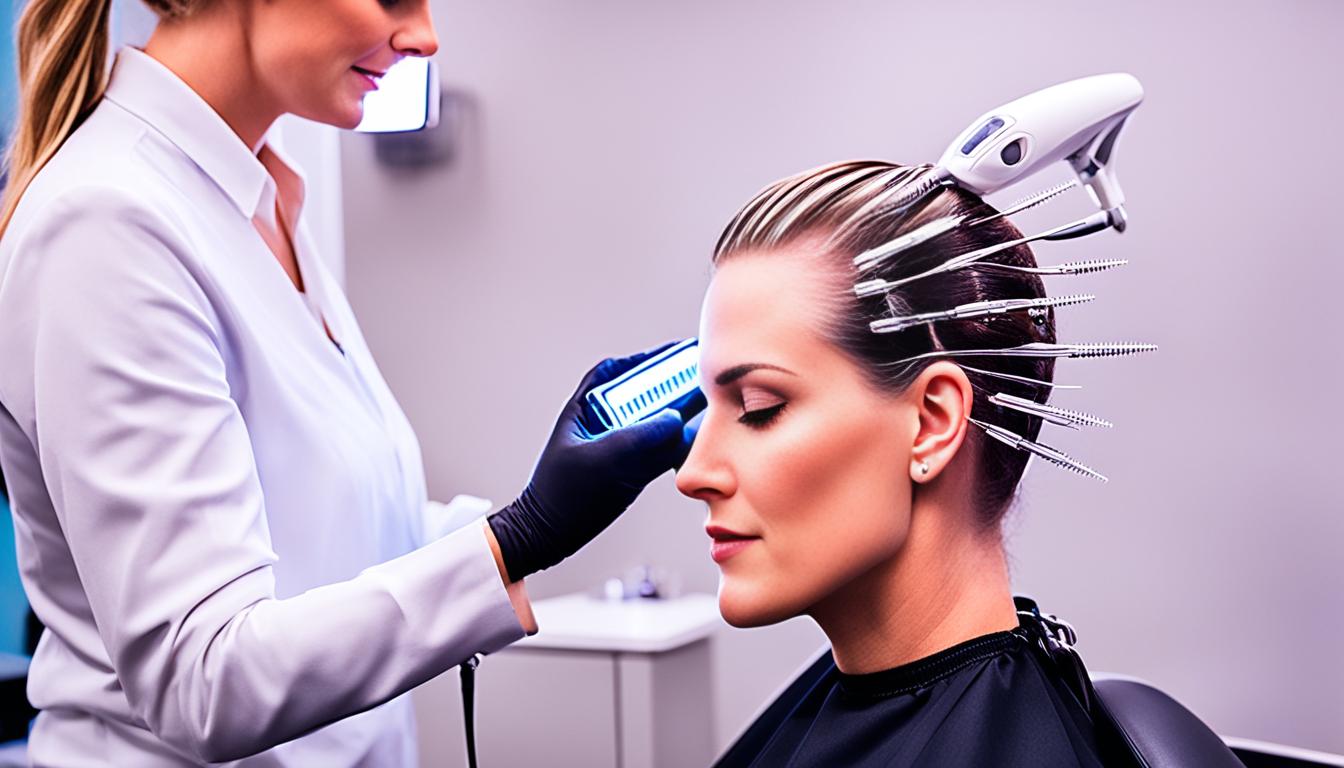
Did you know that microneedling, a minimally invasive procedure, can help stimulate hair growth and improve the thickness and volume of thinning hair? Microneedling, also known as collagen induction therapy, involves puncturing the outermost layer of skin with tiny needles attached to a dermaroller, dermastamp, or dermapen. This innovative technique can revitalize your scalp and rejuvenate your hair, giving you the confidence you deserve.
Key Takeaways:
- Microneedling is a minimally invasive procedure that stimulates hair growth and improves the thickness of thinning hair.
- Collagen induction therapy involves puncturing the skin with tiny needles attached to a dermaroller, dermastamp, or dermapen.
- Microneedling can be combined with other hair loss treatments for better results.
- Professional microneedling is generally safer and more effective than at-home microneedling.
- Consultation with a healthcare professional or dermatologist is essential to determine the most suitable treatment plan for individual needs.
Types of Hair Loss Microneedling Can Help
Microneedling is a versatile treatment that can help with certain types of hair loss, offering a potential solution for individuals seeking to combat thinning hair. While it is not effective for all types of hair loss, microneedling has shown promising results for androgenetic alopecia and telogen effluvium.
Androgenetic alopecia, commonly known as male-pattern baldness or female-pattern hair loss, is a genetic condition that causes the hair follicles to shrink over time. Microneedling can stimulate blood circulation and collagen production in the scalp, promoting hair growth and improving the thickness and volume of thinning hair in individuals with androgenetic alopecia.
Telogen effluvium is another common type of hair loss that occurs due to factors such as stress, hormonal imbalances, or nutritional deficiencies. Microneedling can help by stimulating the hair follicles and accelerating the transition from the resting (telogen) phase to the growth (anagen) phase of the hair growth cycle. This can result in increased hair density and reduced hair shedding.
It is important to note that microneedling is not effective for hair loss caused by chemotherapy treatments or advanced scarring. In the case of chemotherapy-induced hair loss, the hair follicles are temporarily damaged by the treatment, and microneedling cannot reverse this damage. Similarly, advanced scarring hair loss occurs when the hair follicles are irreversibly damaged, making microneedling ineffective in stimulating hair growth.
While microneedling can provide significant benefits for certain types of hair loss, it is often most effective when combined with other hair loss treatments. Microneedling can enhance the absorption and effectiveness of topical medications like minoxidil and can be combined with platelet-rich plasma (PRP) injections to further promote hair regrowth.
More research is needed to determine the effectiveness of microneedling as a stand-alone treatment for hair loss. However, when used in conjunction with other hair loss treatments, microneedling can be a valuable tool in the quest for fuller, thicker hair.
| Type of Hair Loss | Potential Effectiveness of Microneedling |
|---|---|
| Androgenetic Alopecia | Promotes hair growth, improves thickness and volume of thinning hair |
| Telogen Effluvium | Stimulates hair follicles, reduces hair shedding, increases hair density |
| Hair Loss from Chemotherapy | Not effective, hair follicles are temporarily damaged |
| Advanced Scarring Hair Loss | Not effective, hair follicles are irreversibly damaged |
Combining Microneedling with Hair Loss Treatments
Microneedling can be combined with other hair loss treatments to enhance their effectiveness. Studies have shown promising results when microneedling is used in conjunction with 5% minoxidil topical solution, a widely recognized treatment for hair loss. The combination of microneedling with minoxidil has been found to promote better hair growth compared to using minoxidil alone. The microneedling process creates microscopic channels in the scalp, allowing minoxidil to penetrate deeper into the follicles and stimulate hair growth.
In addition to minoxidil, microneedling can also be combined with platelet-rich plasma (PRP) injections. PRP contains growth factors that can promote hair regrowth and increase hair density. When microneedling is performed before applying PRP, the tiny channels created by the microneedles allow for better absorption of the growth factors into the scalp, maximizing their effectiveness. This combination therapy has shown great potential in stimulating hair follicles and rejuvenating the scalp.
Furthermore, microneedling can be paired with hair growth serums to further enhance the results. Hair growth serums, typically containing ingredients like biotin, vitamins, and peptides, nourish the scalp and support healthy hair growth. Microneedling creates pathways for better absorption of these serums, allowing them to penetrate deeply and provide the necessary nutrients to the hair follicles.
It is crucial to consult with a healthcare provider or dermatologist to determine the best treatment plan for individual needs. They can assess the extent of hair loss, discuss the desired outcomes, and recommend the most suitable combination of microneedling with other hair loss treatments, such as minoxidil, PRP injections, or hair growth serums.
Benefits of Combining Microneedling with Hair Loss Treatments:
- Enhanced hair growth
- Increased hair density
- Improved absorption of minoxidil, PRP, and hair growth serums
- Nourished and rejuvenated scalp
The combination of microneedling with minoxidil, PRP injections, or hair growth serums can provide synergistic effects, resulting in improved hair growth and overall scalp health.
Professional Microneedling vs. At-Home Microneedling
When it comes to microneedling for hair loss, the choice between professional and at-home treatments is an important consideration. Professional microneedling, performed by trained experts, offers several advantages over at-home microneedling.
Professional microneedling devices are equipped with longer needles that range from 0.5 mm to 2.5 mm in length. These longer needles can penetrate deeper into the skin, reaching the hair follicle niche and stimulating hair growth more effectively. The professional devices used in clinics or dermatologist offices are specially designed to ensure optimal safety and efficacy.
In contrast, at-home microneedling devices typically have shorter needles, ranging from 0.1 mm to 0.2 mm in length. While these shorter needles are safer and reduce the risk of complications, they may not penetrate deep enough to achieve significant hair growth results.
At-home microneedling with longer or unsterilized needles can lead to injury, infection, and scarring. It is important to understand and mitigate the risks associated with at-home treatments.
To achieve the best results and minimize potential complications, it is generally recommended to seek professional microneedling for hair loss treatments. By choosing professional treatment, individuals can benefit from the expertise of trained professionals who use medical-grade devices with longer needles that provide more precise and effective results.
| Professional Microneedling | At-Home Microneedling |
|---|---|
| Performed by trained professionals | Self-administered |
| Uses longer needles (0.5 mm to 2.5 mm) | Uses shorter needles (0.1 mm to 0.2 mm) |
| Reaches the hair follicle niche for enhanced hair growth | May not penetrate deep enough for significant results |
| Performed with medical-grade devices | Utilizes consumer-grade devices |
| Minimizes risks of injury, infection, and scarring | Carries higher risks with potential complications |
Overall, professional microneedling provides a safer and more effective approach to stimulate hair growth and improve scalp health. It is important to consult with a healthcare professional or dermatologist to determine the most suitable treatment plan and needle length based on individual needs and hair loss condition.
Frequency and Timing of Microneedling for Hair Loss
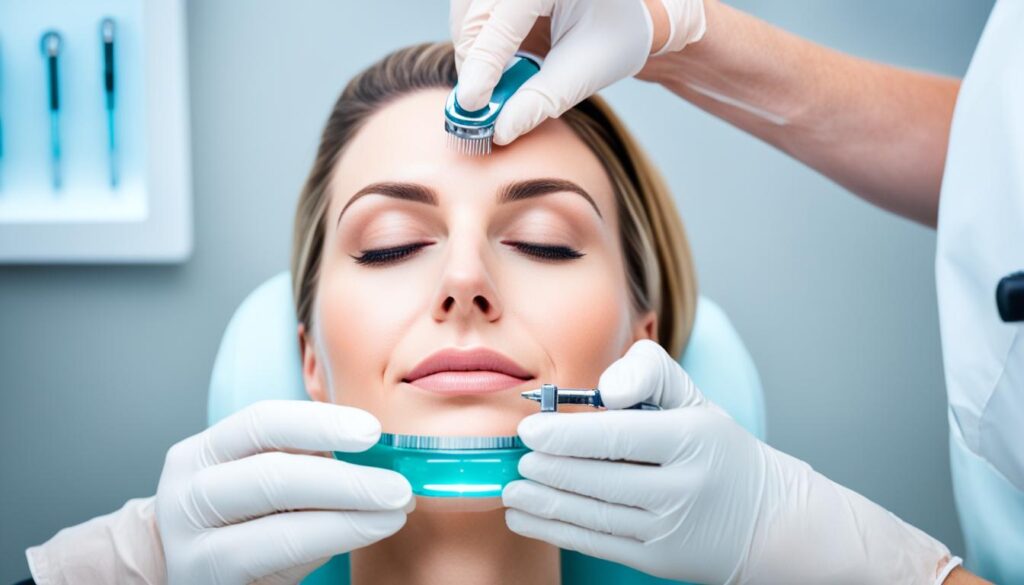
The frequency and timing of microneedling for hair loss depend on individual needs and treatment plans. Research suggests different approaches, with some studies recommending once a week treatments, while others suggest monthly sessions. Patients should consult with a healthcare provider or dermatologist to determine the ideal frequency for their specific condition.
Timing is also crucial when considering microneedling. To allow the scalp to heal between treatments, it is generally recommended to wait at least six hours before washing the hair after a microneedling session. This interval allows for proper recovery and ensures the best results.
The needle depth used during microneedling is an important factor to consider. The optimal needle depth for microneedling for hair loss is typically 1.5 mm. This depth allows the needles to reach the hair follicle niche and stimulate hair growth effectively. However, shallower needles can still be utilized, as long as the frequency of passes is increased to achieve comparable results.
Consultation with a healthcare provider or dermatologist is essential to determine the ideal frequency and timing of microneedling for hair loss. They will evaluate the individual’s condition, medical history, and treatment goals to devise a personalized treatment plan.
Potential Side Effects and Safety Considerations
Microneedling, while generally safe and effective, can have potential side effects that individuals should be aware of. The most common side effects include:
- Itchiness: Some individuals may experience itchiness at the treatment site, which is typically temporary and resolves on its own.
- Redness: The skin may appear red immediately after the procedure, but this usually subsides within a few hours to a couple of days.
- Hair Shedding: In some cases, microneedling may initially cause temporary hair shedding. However, this is often followed by the regrowth of healthier, stronger hair.
Safety considerations should be taken into account when undergoing microneedling treatments. Proper application and disinfection of the microneedling device are crucial to prevent the risk of infection and scarring. It is essential to consult with a healthcare professional or dermatologist before undergoing microneedling, especially if you have any pre-existing skin conditions or are taking medications.
If you are considering combining microneedling with medications, it’s important to note that the absorption of these medications may be enhanced. This can potentially increase the risk of systemic side effects, so it is crucial to discuss this with your healthcare provider.
Additionally, microneedling can be combined with platelet-rich plasma (PRP) or cell-rich plasma (CRP) treatments to enhance results. However, individual success may vary and it is recommended to consult with a healthcare professional to determine the most suitable treatment plan for your specific needs.
| Side Effects | Prevention and Treatment |
|---|---|
| Itchiness | Applying a soothing, hypoallergenic moisturizer or prescribed topical cream can help alleviate itchiness. Avoid scratching the treatment area. |
| Redness | Apply a cold compress to the treated area to reduce redness. Avoid direct sunlight and wear a broad-spectrum sunscreen with SPF 30 or higher. |
| Hair Shedding | This is a normal part of the hair growth cycle. The shedding should subside within a few weeks, and new hair growth will follow. |
| Risk of Infection | Ensure the microneedling device is properly sterilized before use. Follow post-treatment care instructions provided by your healthcare professional. |
| Risk of Scarring | Proper technique and application are crucial to minimize the risk of scarring. Seek professional microneedling sessions to ensure safe and effective treatments. |
Comparing Microneedling with Other Scalp Treatments
Microneedling is a popular scalp treatment option for promoting hair growth. However, it is essential to understand other available treatments and compare their benefits before making a decision. Let’s explore the effectiveness of derma rolling for hair growth, derma pen with radiofrequency, microneedling with topical medications, and microneedling with platelet-rich plasma (PRP) or cell-rich plasma (CRP) treatments.
Derma Rolling for Hair Growth
Derma rolling, also known as microneedling with a dermaroller, is a technique that involves rolling a handheld device embedded with tiny needles over the scalp. This process creates micro-injuries, stimulating the production of collagen and elastin, which can improve hair growth and thickness.
Derma Pen with Radiofrequency
Derma pen with radiofrequency is a combination therapy that involves using a microneedling device with radiofrequency energy. The device creates microchannels in the scalp while delivering radiofrequency energy, promoting collagen production and enhancing hair growth. This treatment can also improve the absorption of topical hair growth medications.
Microneedling with Topical Medications
Microneedling can increase the absorption of topical medications, such as minoxidil, directly into the scalp. By creating microchannels, microneedling allows the medication to penetrate deeper into the hair follicles, maximizing its effectiveness. This combined approach can lead to enhanced hair regrowth and improved scalp health.
Microneedling with PRP or CRP
Combining microneedling with platelet-rich plasma (PRP) or cell-rich plasma (CRP) treatments can provide a powerful boost to hair growth. PRP or CRP is obtained by processing a patient’s blood to isolate growth factors. When applied to the scalp during or after microneedling, these growth factors can further stimulate hair follicles, leading to improved hair density and thickness.
To compare these treatments and choose the right option, it is crucial to consider individual needs, preferences, and consultation with a healthcare professional or dermatologist. They can provide valuable insights, assess the suitability of each treatment, and recommend the most effective approach for hair growth.
Conclusion
Microneedling scalp therapy provides a promising solution for individuals facing hair loss or thinning hair. This innovative procedure works by stimulating hair follicle stem cells, promoting hair growth, and improving overall scalp health. When combined with other hair loss treatments like minoxidil or platelet-rich plasma (PRP) injections, microneedling can optimize results and rejuvenate the scalp.
It’s important to note that professional microneedling is typically safer and more effective than at-home microneedling. By seeking the expertise of a healthcare professional or dermatologist, you can ensure that you receive the best treatment for your specific needs. These experts can also guide you on proper timing, frequency, and potential side effects to consider when incorporating microneedling into your hair loss treatment plan.
Consultation with a healthcare professional or dermatologist is crucial in developing a personalized microneedling therapy plan that aligns with your goals. Whether you’re looking to address hair loss, enhance hair growth, or improve scalp health, microneedling scalp therapy offers a promising option for achieving your desired results.
FAQ
What is microneedling scalp therapy?
Microneedling scalp therapy is a minimally invasive procedure that involves puncturing the outermost layer of skin with tiny needles to stimulate hair growth and improve the thickness and volume of thinning hair.
What types of hair loss can microneedling help with?
Microneedling can help with certain types of hair loss, such as androgenetic alopecia (male-pattern baldness and female-pattern hair loss) and telogen effluvium hair loss. However, it is not effective for hair loss caused by chemotherapy treatments or advanced scarring.
Can microneedling be combined with other hair loss treatments?
Yes, microneedling can be combined with other hair loss treatments to enhance their effectiveness. It can be used in combination with minoxidil topical solution, platelet-rich plasma (PRP) injections, and hair growth serums.
Is professional microneedling better than at-home microneedling?
Professional microneedling is generally safer and more effective than at-home microneedling. Professional devices use longer needles that can reach the hair follicle niche and stimulate hair growth. At-home microneedling devices usually have shorter needles that may not penetrate deep enough to achieve significant results.
How often should microneedling be performed for hair loss?
The frequency of microneedling for hair loss varies depending on individual needs and treatment plans. Some studies recommend once a week treatments, while others suggest monthly sessions. It is important to allow the scalp to heal between treatments.
What are the potential side effects of microneedling?
Potential side effects of microneedling include itchiness, redness, hair shedding, risk of infection, and scarring. It is important to follow post-treatment care instructions and consult with a healthcare professional to minimize these risks.
How does microneedling compare to other scalp treatments?
Microneedling can be compared to derma rolling and derma pen with radiofrequency, as they all stimulate collagen production. However, microneedling enhances the absorption of topical medications and can be combined with platelet-rich plasma (PRP) or cell-rich plasma (CRP) treatments for hair regrowth.
What are the benefits of microneedling scalp therapy?
Microneedling scalp therapy can stimulate hair follicle stem cells, enhance hair growth, and improve scalp health. It can be combined with other hair loss treatments for optimal results.