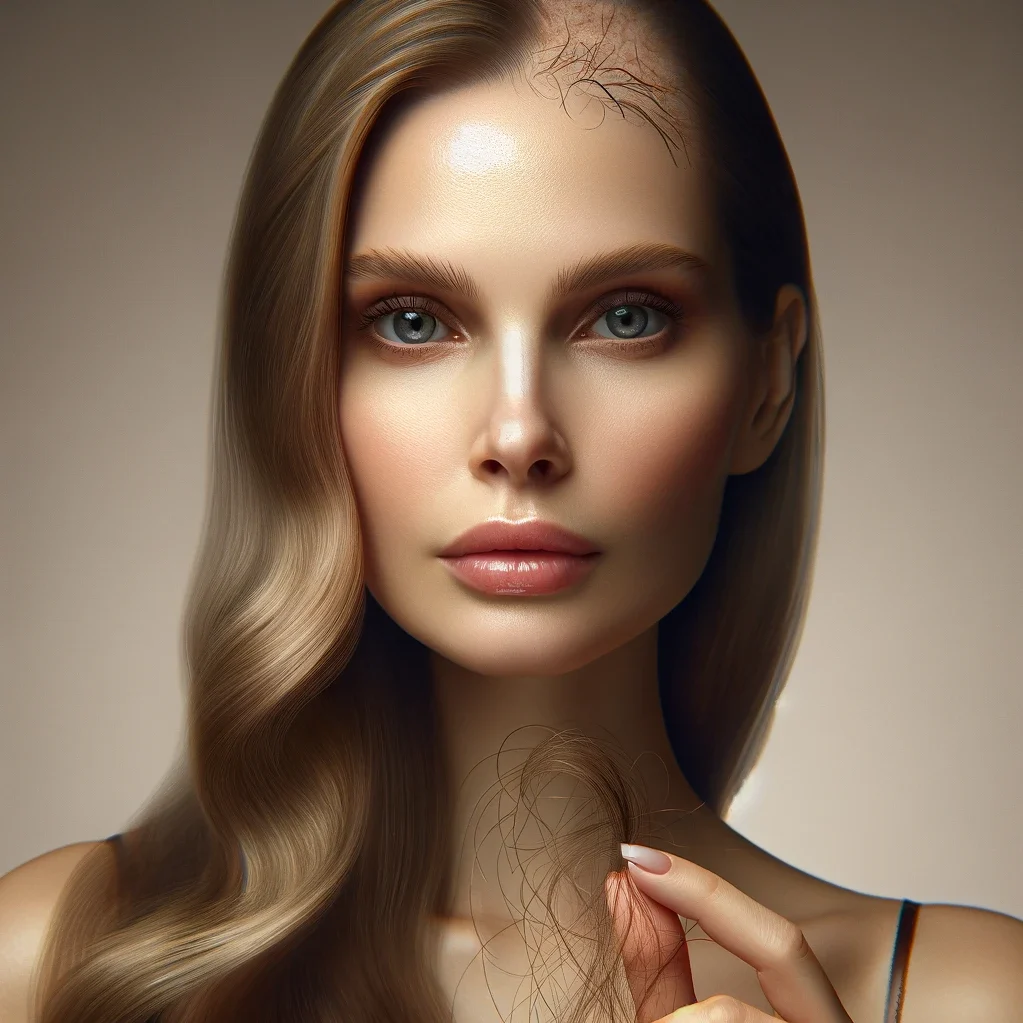
Welcome to our article on post-pregnancy hair fall solutions! Many new mothers experience postpartum hair loss, which is a normal part of the postpartum process. The hormonal changes that occur after childbirth, particularly a drop in estrogen levels, can cause hair to enter the shedding phase.
The severity of postpartum hair loss can vary from person to person, but the good news is that it is temporary and usually stops within a few months. If you’re looking for natural remedies to combat postpartum hair loss, we’ve got you covered!
Key Takeaways:
- Postpartum hair loss is a normal part of the postpartum process, caused by hormonal changes.
- The severity of postpartum hair loss varies, but it usually stops within a few months.
- Natural remedies, such as caffeine, vitamins, coconut oil, flax seed oil, and castor oil, can help combat postpartum hair loss.
- Avoid hair care products that contain parabens and sulfates, as they can worsen hair loss after pregnancy.
- Follow these tips to reduce postpartum hair loss and promote healthy hair growth naturally.
Natural Remedies for Postpartum Hair Loss
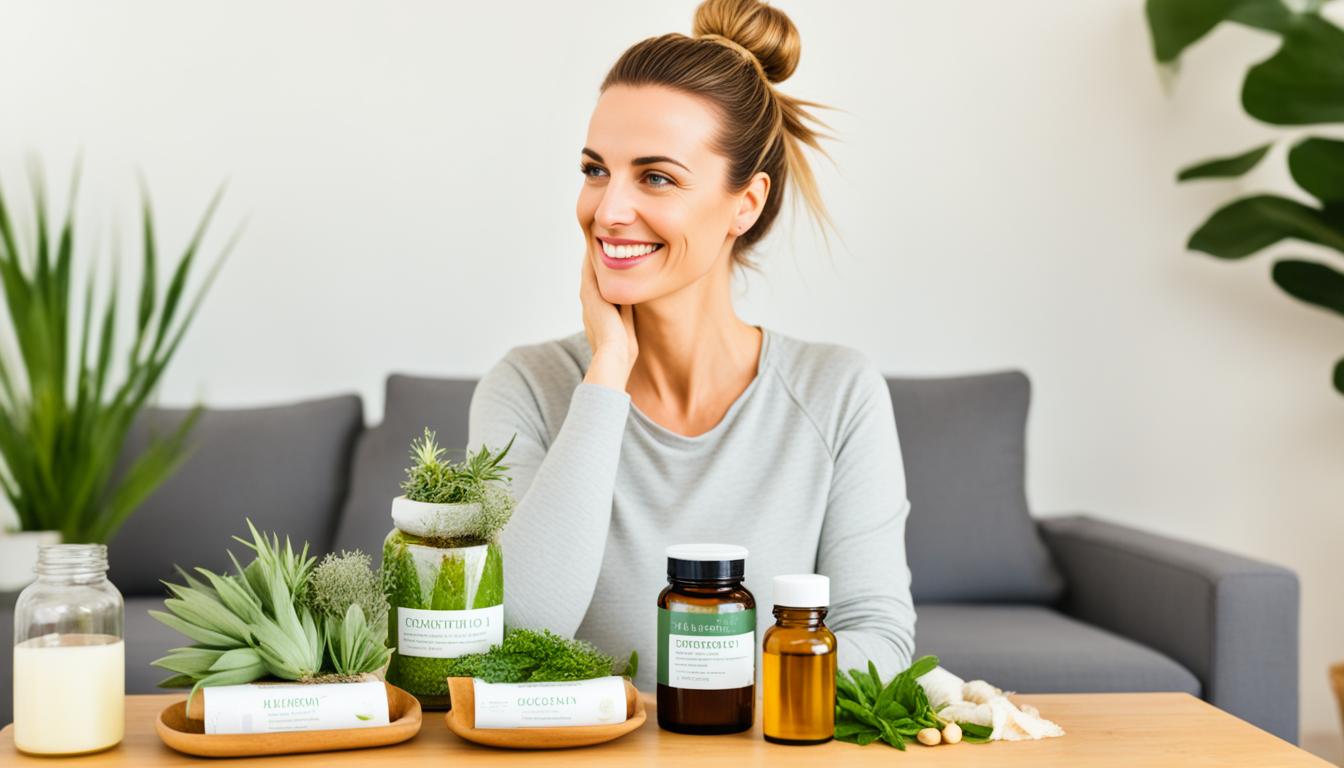
Postpartum hair loss can be a frustrating and concerning experience for new moms. However, there are several natural remedies that can help to combat hair fall and promote healthy hair regrowth. In this section, we will explore some effective home remedies for postpartum hair fall, providing new moms with solutions to stop hair loss after giving birth.
Caffeine:
Caffeine is not only a popular stimulant but also a potent ingredient for stimulating hair growth. Applying caffeine-based shampoos or conditioners directly to the scalp can help promote blood circulation, which in turn can encourage hair follicles to grow. This natural remedy can be a convenient and effective solution for tackling postpartum hair loss.
Vitamins:
Ensuring your body has an adequate supply of essential vitamins is crucial for healthy hair growth. Biotin and folic acid are particularly beneficial for promoting strong and vibrant hair. These vitamins can be obtained through a balanced diet or as supplements. Including foods rich in these vitamins, such as leafy greens, eggs, and whole grains, can also support hair health.
Coconut Oil:
Coconut oil is well-known for its moisturizing properties and can provide nourishment to both the hair and scalp. Massaging coconut oil into the scalp and leaving it on for a few hours before washing can help to strengthen hair follicles and prevent breakage. Regular use of coconut oil as a hair treatment can lead to improved hair texture and growth.
Flax Seed Oil:
Flax seed oil is a rich source of omega-3 fatty acids, which have been shown to promote healthy hair growth. Consuming flax seed oil as a supplement or using it directly as a hair oil can provide the necessary nutrients for strengthening hair follicles and reducing hair fall. Including flax seeds in your diet can also have similar benefits.
Castor Oil:
Castor oil is another natural remedy that is known for its hair growth properties. It can be used as a hair oil or added to your regular shampoo for improved hair health. Massaging castor oil onto the scalp can help stimulate hair follicles and promote hair regrowth. Regular use of castor oil can lead to thicker and stronger hair.
“These natural remedies can be affordable and convenient options for new moms looking to address postpartum hair loss without resorting to harsh chemicals or expensive treatments.”
By incorporating these natural remedies into your postpartum hair care routine, you can effectively address hair fall and promote new hair growth. It’s essential to be patient and consistent with these remedies as results may vary. Alongside these treatments, maintaining a healthy lifestyle, including a balanced diet and proper hair care, can further support the overall health of your hair.
Comparison of Natural Remedies for Postpartum Hair Loss
| Natural Remedy | Benefits | Application |
|---|---|---|
| Caffeine | Stimulates hair growth | Applied through caffeine-based shampoos or conditioners |
| Vitamins | Promotes healthy hair growth | Obtained through diet or supplements |
| Coconut Oil | Moisturizes hair and scalp | Massaged into the scalp and left on before washing |
| Flax Seed Oil | Rich in omega-3 fatty acids for hair growth | Consumed as a supplement or used as a hair oil |
| Castor Oil | Promotes hair growth | Used as a hair oil or added to shampoo |
Tips to Reduce Postpartum Hair Loss
After giving birth, many new moms experience postpartum hair loss, a temporary but common condition. While it can be disheartening to see clumps of hair in the shower or on your hairbrush, there are effective ways to minimize hair fall and promote healthy hair growth. Here are some tips to help you combat post-pregnancy hair loss naturally:
Avoid using hair care products that contain parabens and sulfates, as these can contribute to hair loss. Instead, opt for gentle, sulfate-free shampoos and conditioners that are specifically formulated to combat hair loss and support a healthy scalp.
Give your hair a break from heat styling tools and embrace a natural look. Heat can cause damage and breakage, leading to further hair loss. If you must use heat, make sure to apply a heat protectant spray or serum beforehand.
Maintain a balanced diet rich in vitamins and minerals, such as leafy greens, nuts, and fish. These nutrients are essential for healthy hair growth. Additionally, consider taking prenatal vitamins or hair growth supplements to provide your body with the necessary nutrients to support hair growth and maintain a healthy scalp.
Follow a gentle hair care routine and avoid excessive brushing or styling, as this can put stress on your hair and lead to increased hair fall. When styling your hair, opt for loose hairstyles and avoid tight ponytails or braids that can pull on the hair.
Stress can contribute to hair loss, so it’s important to practice stress-reducing techniques such as yoga, meditation, or deep breathing exercises. Taking time for self-care and relaxation can help promote a healthy scalp and minimize hair fall.
Using natural remedies such as coconut oil, flax seed oil, or castor oil can provide nourishment to your hair and scalp. Massage these oils onto your scalp, leave them on for a few hours or overnight, and then wash them out with a gentle shampoo. These oils can help promote healthy hair growth and reduce hair fall.
Remember to be patient and kind to your body. Postpartum hair loss is temporary, and with time, your hair will start to grow back. In the meantime, focus on adopting a healthy hair care routine and incorporating these natural remedies to support hair growth and keep your scalp in its best condition.
FAQ
What causes postpartum hair loss?
Postpartum hair loss is caused by hormonal changes, specifically a drop in estrogen levels, which leads to hair entering the shedding phase.
Is postpartum hair loss permanent?
No, postpartum hair loss is temporary and usually stops within a few months.
Are there any natural remedies for postpartum hair loss?
Yes, there are natural remedies that can help combat postpartum hair loss, such as caffeine, vitamins, coconut oil, flax seed oil, and castor oil.
Can caffeine stimulate hair growth?
Yes, caffeine can stimulate hair growth and can be applied to the scalp through caffeine-based shampoos or conditioners.
What vitamins are essential for healthy hair growth?
Vitamins such as biotin and folic acid are essential for healthy hair growth and can be obtained through diet or supplements.
How can coconut oil help with postpartum hair loss?
Coconut oil has moisturizing properties that can nourish the hair and scalp when massaged into the scalp and left on for some time before washing.
How can flax seed oil promote hair growth?
Flax seed oil, rich in omega-3 fatty acids, can promote healthy hair growth when consumed as a supplement or used as a hair oil.
Can castor oil help with hair loss after pregnancy?
Yes, castor oil is known for its ability to promote hair growth and can be used as a hair oil or added to shampoo.
Are there any hair care products to avoid after giving birth?
It is important to avoid hair care products that contain parabens and sulfates, as they can worsen hair loss after pregnancy.
What type of shampoo should I use to combat postpartum hair loss?
Use a volumizing shampoo specifically formulated to combat hair loss and support a healthy scalp.
Should I skip using heat styling tools to reduce postpartum hair loss?
Yes, it is recommended to skip heat styling tools and opt for a natural look to minimize damage and breakage.
Are there any dietary recommendations to reduce hair fall after having a baby?
It is important to maintain a healthy diet rich in vitamins and minerals, including foods like leafy greens, nuts, and fish.
Should I consider taking supplements to support hair growth after pregnancy?
Yes, taking prenatal vitamins or hair growth supplements can support hair growth and a healthy scalp.
What should be my hair care routine to minimize postpartum hair loss?
Follow a gentle hair care routine, avoid excessive brushing or styling, and use natural remedies such as coconut oil, flax seed oil, and castor oil to nourish the hair and promote healthy growth.
Can stress contribute to postpartum hair loss?
Yes, stress can contribute to hair loss, so practicing stress-reducing techniques such as yoga or meditation can be beneficial.
Will my hair grow back after postpartum hair loss?
Yes, postpartum hair loss is temporary, and hair will eventually grow back. It is important to be patient and kind to your body during this time.
1 thought on “Post-Pregnancy Hair Fall Solutions Naturally”