Welcome to our comprehensive guide on female crown hair thinning. Hair loss and thinning in females can occur for various reasons, with female pattern baldness being the most common cause. In this article, we will discuss the causes, treatment options, and remedies for thinning hair at the crown in women. Whether you are experiencing hair thinning at the crown or seeking preventive measures, we are here to provide you with valuable insights and solutions.
Key Takeaways:
- Female pattern baldness is the most common cause of crown hair thinning in women.
- Treatment options include topical medications, light therapy, hormone therapy, and hair transplantation.
- A nutritious diet and healthy lifestyle can help maintain healthy hair.
- Good hair care habits and avoiding damaging treatments are essential.
- Consult with a healthcare professional for personalized treatment plans.
Understanding Female Pattern Baldness at the Crown
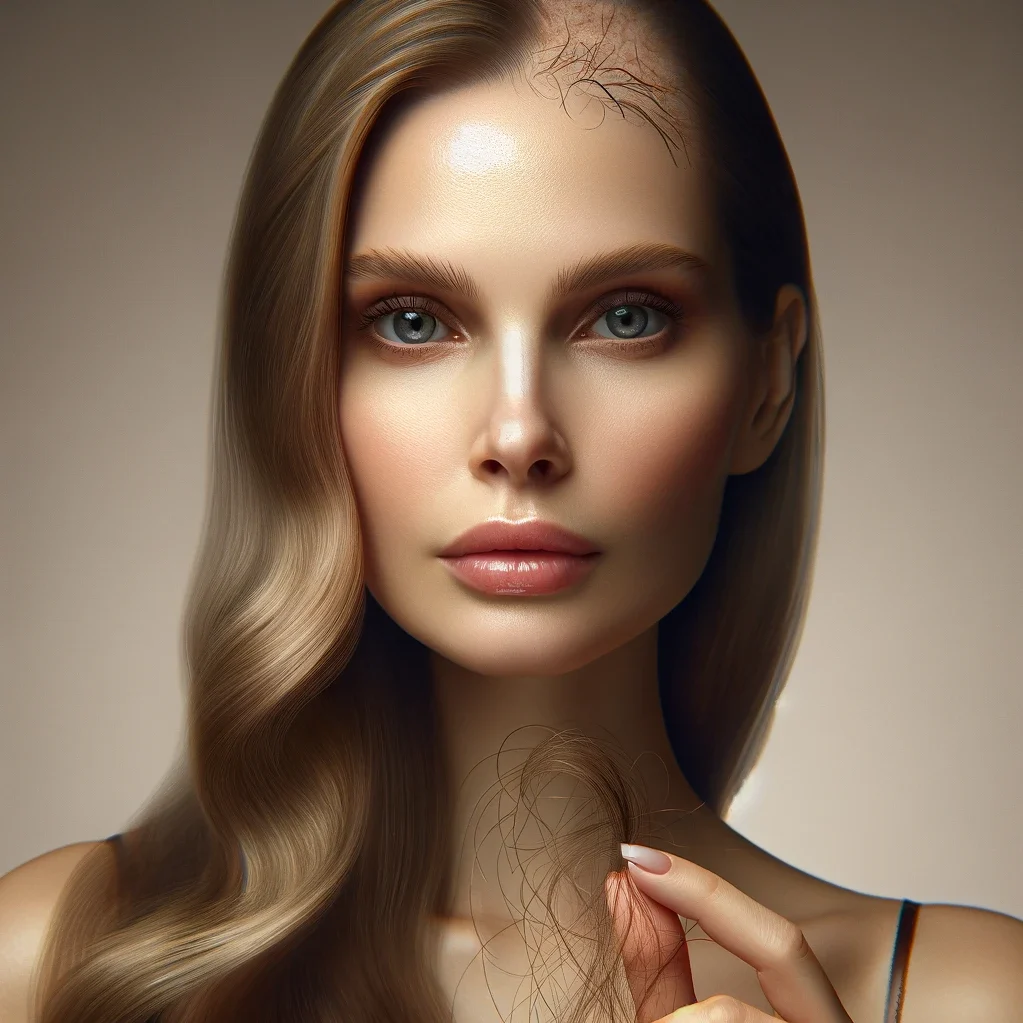
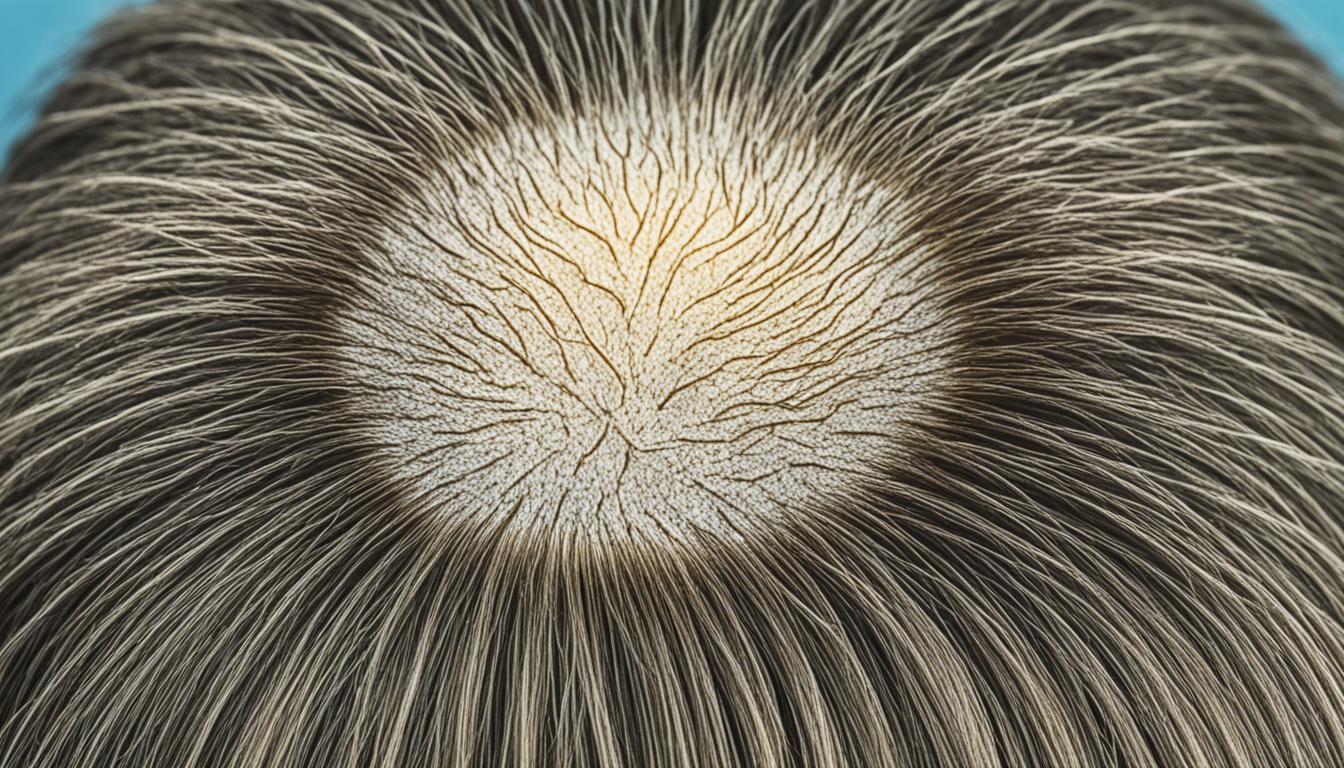
Female pattern baldness is a common condition that primarily affects the crown area of the head, leading to hair thinning and a widening hair part. It is essential to understand the causes and factors contributing to crown hair thinning in females.
Causes of Crown Hair Thinning in Females
Several factors can contribute to hair thinning on the top of the head in females:
- Hormonal changes: Fluctuations in hormones, such as increased levels of androgens, can affect hair growth cycles, leading to crown hair thinning.
- Aging: As women age, their hair follicles may become less active, resulting in overall hair thinning, including at the crown.
- Genetic factors: Female pattern baldness often has a hereditary component, with a family history of hair thinning at the crown.
- Inflammation of hair follicles: Conditions like scalp folliculitis can cause inflammation and damage to the hair follicles, leading to hair loss.
- Hormone imbalances: Imbalances in hormones, such as thyroid hormone dysfunction, can disrupt the hair growth cycle and contribute to crown hair thinning.
Thinning Hair on Top of Head in Females
Thinning hair on the top of the head in females is a gradual process that typically progresses over time. It often starts as a widening hair part and gradually leads to overall hair thinning at the crown. Female pattern baldness at the crown can be visually distressing and impact a person’s self-esteem.
Causes of Crown Hair Thinning in Females
| Cause | Description |
|---|---|
| Hormonal changes | Fluctuations in hormone levels, particularly androgens, can disrupt the hair growth cycle and result in crown hair thinning. |
| Aging | As women age, hair follicles may become less active, leading to overall hair thinning, including at the crown. |
| Genetic factors | Female pattern baldness often runs in families, indicating a genetic component in crown hair thinning. |
| Inflammation of hair follicles | Conditions like scalp folliculitis can cause inflammation and damage to the hair follicles, resulting in hair loss at the crown. |
| Hormone imbalances | Imbalances in hormones, such as thyroid hormone dysfunction, can disrupt the normal hair growth cycle and contribute to crown hair thinning. |
Treatment Options for Female Hair Thinning at the Crown
When it comes to addressing thinning hair at the crown in females, there are several treatment options available. These treatments aim to stimulate hair growth, reduce inflammation, and improve the overall health of the hair and scalp. Let’s explore some of the most effective remedies and regrowth solutions:
1. Topical Medications:
Minoxidil is a common topical medication used to treat female hair thinning at the crown. It works by stimulating hair growth and thickening the hair strands. Applying Minoxidil directly to the scalp can yield noticeable results over time.
2. Low-Level Light Therapy:
Low-level light therapy involves using specific wavelengths of light to stimulate hair growth. This treatment can amplify the effects of Minoxidil, resulting in improved hair regrowth at the crown.
3. Anti-Inflammatory Shampoo:
Ketoconazole shampoo can be used to reduce inflammation on the scalp, which may contribute to hair thinning at the crown. Regular use of this shampoo can help promote a healthier scalp environment for hair regrowth.
4. Corticosteroid Injections:
In some cases, corticosteroid injections can be used to encourage new hair growth at the crown. These injections are typically administered by a healthcare professional and can provide targeted treatment for specific areas of thinning.
5. Platelet-Rich Plasma (PRP) Injections:
Platelet-rich plasma injections involve using the patient’s own blood plasma, which is enriched with platelets, to reduce hair loss and stimulate hair growth. PRP injections can be effective in addressing hair thinning at the crown.
6. Hormone Therapy:
In certain cases, hormone therapy may be recommended to balance hormonal levels and address hair thinning. It is essential to consult with a healthcare professional to determine if hormone therapy is a suitable option.
7. Hair Transplantation:
Hair transplantation is a surgical procedure that involves taking hair follicles from one part of the body, typically the back or sides of the scalp, and transplanting them to the crown area. This treatment option can provide permanent hair regrowth at the crown.
In addition to these treatment options, practicing good hair care habits is crucial for maintaining and promoting healthy hair growth. Avoiding damaging treatments, such as excessive heat styling and tight hairstyles, and maintaining a healthy diet can contribute to overall hair health.

Remember, every individual’s experience with hair thinning at the crown may vary, so it is important to consult with a healthcare professional to determine the underlying cause of the hair thinning and develop a personalized treatment plan.
| Treatment Options | Benefits |
|---|---|
| Topical Medications (Minoxidil) | – Stimulates hair growth – Thickens hair strands |
| Low-Level Light Therapy | – Amplifies effects of Minoxidil – Promotes hair regrowth |
| Anti-Inflammatory Shampoo (Ketoconazole) | – Reduces inflammation on the scalp – Creates a healthier scalp environment |
| Corticosteroid Injections | – Encourages new hair growth – Provides targeted treatment |
| Platelet-Rich Plasma (PRP) Injections | – Reduces hair loss – Stimulates hair growth |
| Hormone Therapy | – Balances hormonal levels – Addresses hair thinning |
| Hair Transplantation | – Provides permanent hair regrowth |
Conclusion
Hair thinning at the crown in females, also known as female pattern baldness, can be a distressing condition. However, there are several effective treatment options and solutions available. From topical medications and light therapy to hormone therapy and hair transplantation, the aim is to stimulate hair growth, reduce inflammation, and improve the overall health of the hair and scalp. It is important to consult with a healthcare professional to determine the underlying cause of the hair thinning and to develop a personalized treatment plan.
Additionally, practicing good hair care habits and maintaining a healthy lifestyle can contribute to healthier hair growth. Avoiding excessive heat styling, chemical treatments, and tight hairstyles can minimize damage to the hair and promote regrowth. A balanced diet rich in essential nutrients, such as vitamins, minerals, and proteins, can also nourish the hair follicles and support optimal hair growth.
Remember, every individual’s experience with hair thinning may vary, so it is essential to find the right solution that works for you. Patience and consistency in following the recommended treatments and lifestyle changes are key to achieving the best results. Don’t hesitate to reach out to a healthcare professional for guidance and support along your journey to regaining fuller, healthier hair.
FAQ
What is female pattern baldness and how does it affect the crown area?
Female pattern baldness is a common form of hair loss in women, characterized by a gradual thinning of the hair on the crown area of the head. It often results in a widening hair part and overall thinning of the hair in that area.
What are the causes of crown hair thinning in females?
Crown hair thinning in females can be caused by factors such as hormonal changes, aging, genetic predisposition, inflammation of the hair follicles, and hormone imbalances.
What are the available treatments for female hair thinning at the crown?
There are several treatment options for female hair thinning at the crown, including the use of topical medications like Minoxidil to stimulate hair growth, low-level light therapy, ketoconazole shampoo to reduce inflammation, corticosteroid injections to encourage new hair growth, platelet-rich plasma injections to reduce hair loss, hormone therapy, and hair transplantation.
Are there any remedies for female crown hair thinning?
In addition to medical treatments, there are some remedies that can help with female crown hair thinning. These include maintaining a nutritious diet, managing stress levels, avoiding damaging hair treatments, and practicing good hair care habits.
How can I regrow hair at the crown?
Regrowing hair at the crown can be achieved through various treatments such as using topical medications like Minoxidil, undergoing low-level light therapy, receiving corticosteroid injections, or considering hair transplantation. It is important to consult with a healthcare professional to determine the most suitable option for you.